
· Food · 5 min read
Tanjia: Marrakech's Clay-Urn Dish and How to Eat It
Tanjia is Marrakech's clay-urn lunch: beef or lamb sealed with cumin and preserved lemon, cooked in hammam ash. Where to eat it, and when.
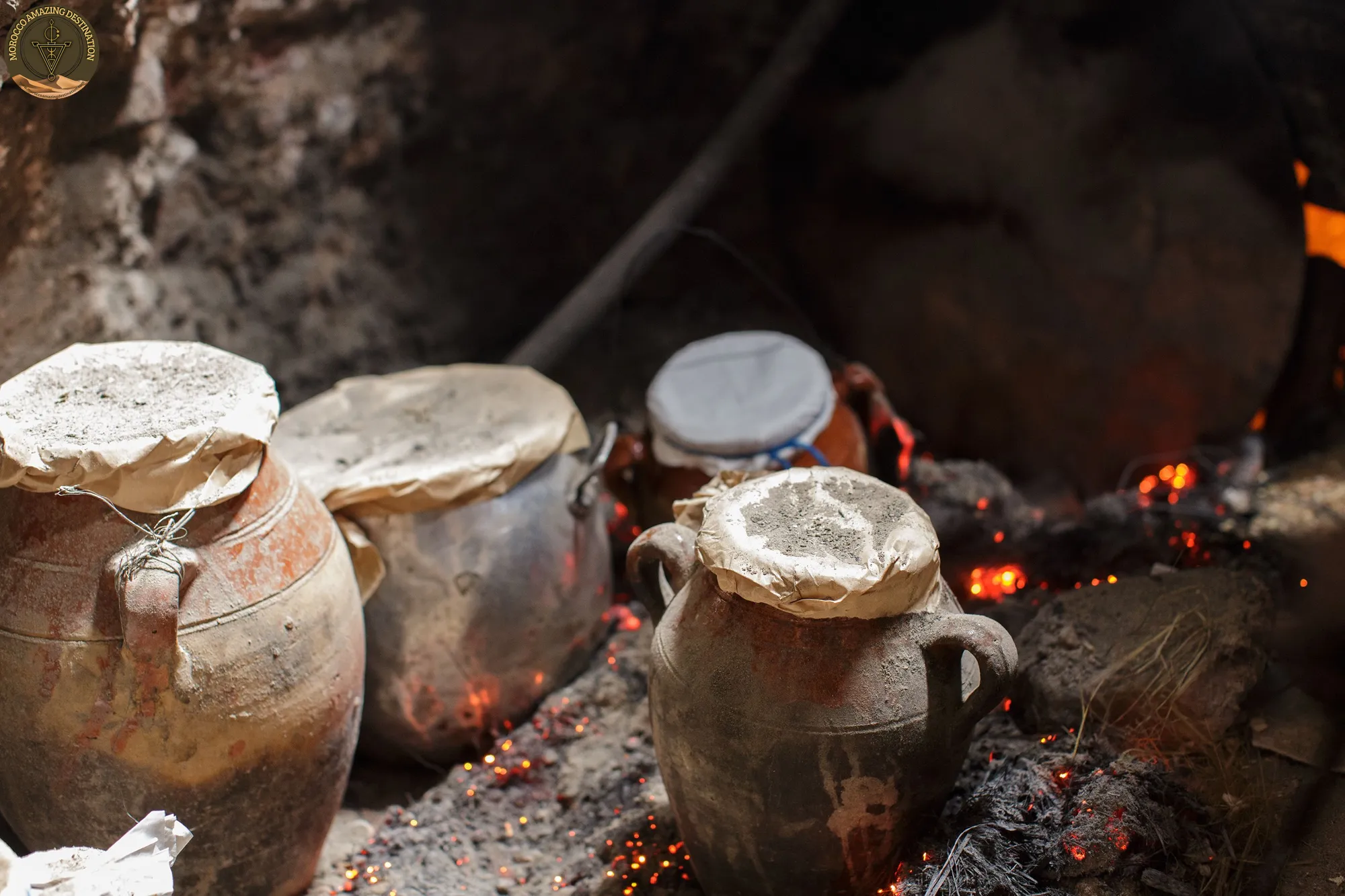
By late morning, a man in a Marrakech medina alley lifts a clay urn out of a bed of hot ash, wipes the paper seal and hands it across like a parcel. Inside is tanjia (also spelled tangia), the dish this city is known for. So what is tanjia? Tanjia is Marrakech’s slow-cooked speciality: beef shank or lamb on the bone, sealed in a narrow clay urn with cumin, garlic, preserved lemon and smen, then buried in the ash of a hammam furnace for hours. You eat it at lunch, straight from the pot, with bread.
In this guide, we will break down how the urn works, who assembles a moroccan tanjia, and how to time a tanjia Marrakech lunch so the pot is still full when you sit down.
Tanjia and Tagine: Same Clay, Different Physics
Both dishes come out of unglazed clay, and that is where the family resemblance stops.
A tagine is a wide bowl with a cone on top. Steam rises into the cone, cools and falls back over the meat, so the stew keeps its own moisture while a cook watches the flame. Vegetables go in, and so does broth.
A tanjia is a narrow-necked amphora sealed with paper and string. Nothing escapes, and nobody stirs or watches it. Marrakchis talk about putting a tanjia on rather than cooking one, because the work is really a handover to somebody else’s fire. Six hours later the meat has braised in its own fat and juice, with no water added at all.
Texture tells you which one you are eating. Tanjia sits closer to a confit, dense and glossy. For the sit-down version, with a cone, a broth and a view over the roofs, our guide to the best tagine in Marrakech covers the plates worth ordering.
The Souk Chain: Potter, Butcher, Spice Seller, Furnace Man
The urn is one part of the dish. The rest is a short chain of people, most within a few lanes of each other.
- The potter: throws the tall clay urn, unglazed, with two small handles and a mouth just wide enough for a hand.
- The butcher: cuts shank or shoulder on the bone and leaves the fat and marrow in. Many keep a stack of urns and lend one.
- The spice seller: adds crushed garlic, cumin, preserved lemon rind, saffron and a spoon of smen.
- The farnatchi (also written furnachi): seals the neck, buries the urn in the ash under the furnace that heats the neighbourhood hammam, and hands it back hours later.
None of this burns extra fuel: the fire was already heating bathwater. That may be why the dish exists at all, since a man with no kitchen could still eat well. The whole chain is walkable in an hour. Our 4-day Morocco desert tour from Marrakech spends its first morning in the medina before crossing the High Atlas.
Six Hours in Hammam Ash: Why It Tastes Different
Under the furnace the heat is low, steady and everywhere at once. There is no hot spot and no flame licking one side of the pot. The paper seal holds the steam in, so the meat bastes in its own fat and juice for as long as it takes.
Most accounts put the cooking at five to six hours, and plenty of urns go in the night before.
The spicing stays tight. Cumin leads, with preserved lemon, saffron and smen behind it, and some cooks add coriander, parsley and onion.
What arrives is dark meat falling off the bone, no vegetables anywhere, and a sauce reduced to the texture of syrup. The smell is cumin first, then something savoury and slightly fermented from the aged butter. Bread is the only utensil you need.
Friday Lunch in the Medina: The Clock, the Portion, the Price
Friday is the big day. The dish began with men who had no kitchen, souk artisans and workers who pooled money for one urn and shared it at noon, and the weekly rhythm never went away.
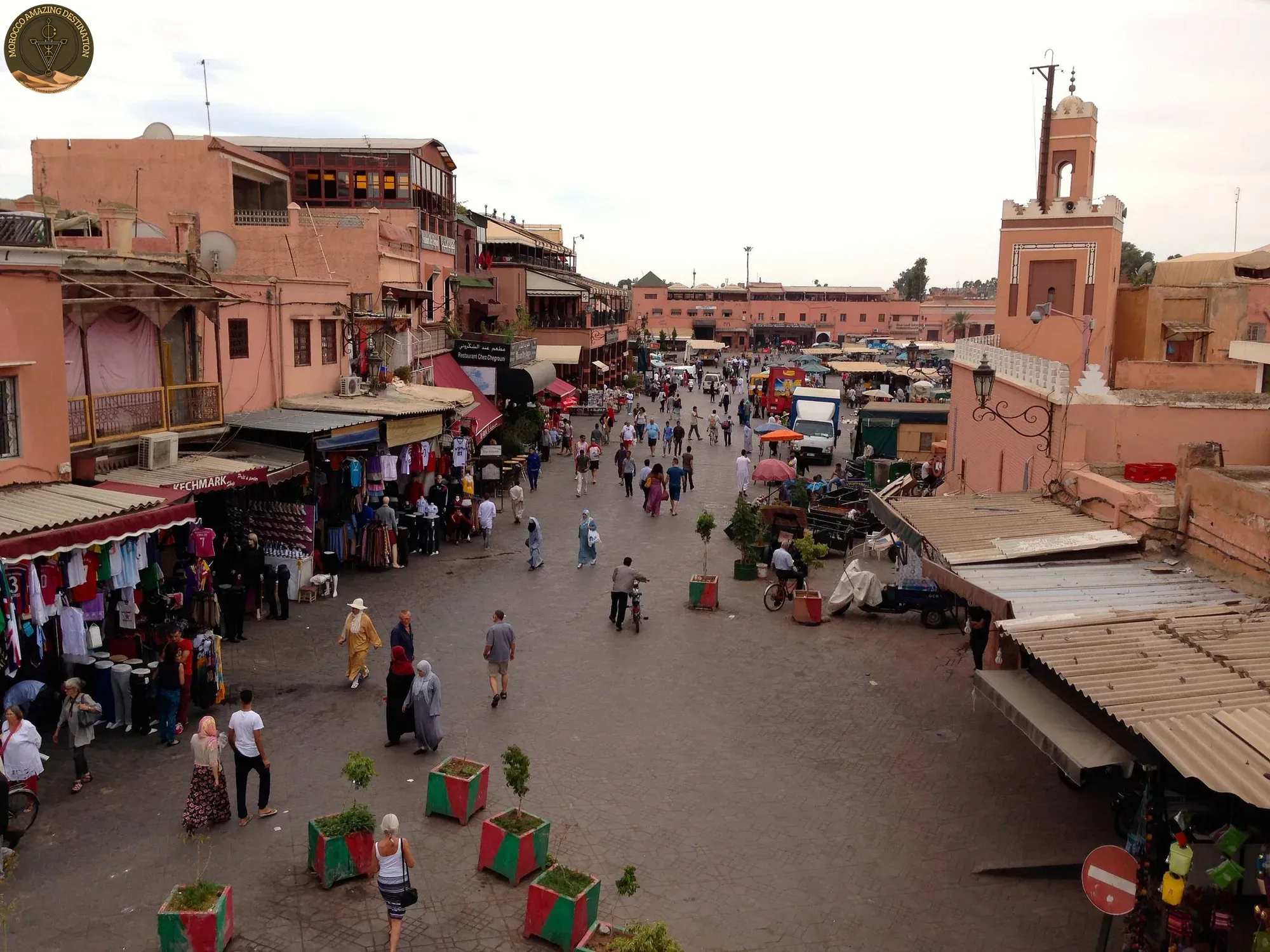
It is a lunch dish. Urns come out through the morning and the good ones are gone by early to mid afternoon, so an evening order is usually a reheated version of something better eaten at one. Ask “tanjia kayna?” (is there tanjia) before you commit to a table, because medina menus are often a wish list.
One urn feeds two to four people. On price, expect roughly 60 to 120 dirhams for a portion at a butcher-side table, and more where someone carries it to you on a tray. Confirm on the day.
Nobody serves it plated. You get the urn, a basket of khobz and a plain table.
Restaurant Urns, Butcher-Side Tables - and a Local Who Knows
Marrakech serves two tanjias, and they are barely related.
The restaurant version is the one you notice first: rows of urns stacked in a doorway as decoration, heavier spicing, dried fruit in the sauce. It arrives plated, at a price to match, and makes a softer introduction.
The other is sold by portion where the butcher counters are: cooked that morning, eaten at a shared table before the kitchen shuts. That is the one locals queue for.
- Ask which meat: lamb on the bone or beef shank, and which the cook prefers today.
- Ask when it went in: a straight answer tells you more than any menu.
- Ask if it is still there: by mid afternoon the answer is often no.
A guide who knows the lanes turns this from a lucky find into a lunch you can plan. Our 9 Days Morocco Tour from Marrakesh opens in the medina, and the first meal is timed to the urn. We handle the driving, the translating and the table.
We can customize a tour to match your needs - design your perfect itinerary
If you found this helpful, add us as your preferred source on Google.
Frequently Asked Questions
What is tanjia made of?
Tanjia is beef shank or lamb on the bone, cooked with crushed garlic, cumin, preserved lemon, saffron, smen (aged butter) and olive oil. Little or no water goes in, and the sealed urn keeps everything inside.
Is tanjia the same as tagine?
No. A tagine is a wide pot with a cone lid, braised over a flame and watched. Tanjia is a narrow urn, sealed and left in hammam ash, so the meat cooks in its own fat. The result is closer to a confit.
What time of day should I eat tanjia in Marrakech?
Lunch. Urns come out through the morning and the best ones are gone by early to mid afternoon. It is not an evening dish, and an evening order is usually reheated.
Can vegetarians eat tanjia?
No. Tanjia is meat only, and no vegetables go into the pot. Ask for a vegetable tagine or a couscous instead, and mention it when you book so the kitchen plans for it.
Ready for an Adventure?
Have questions? Feel free to contact us using the form below. We're here to help!