· Travel · 6 min read
Moroccan Art: A Traveler's Guide to Craft and Museums
Moroccan art through zellij, cedar, textiles and pottery, plus the museums and contemporary galleries where each layer is visible.
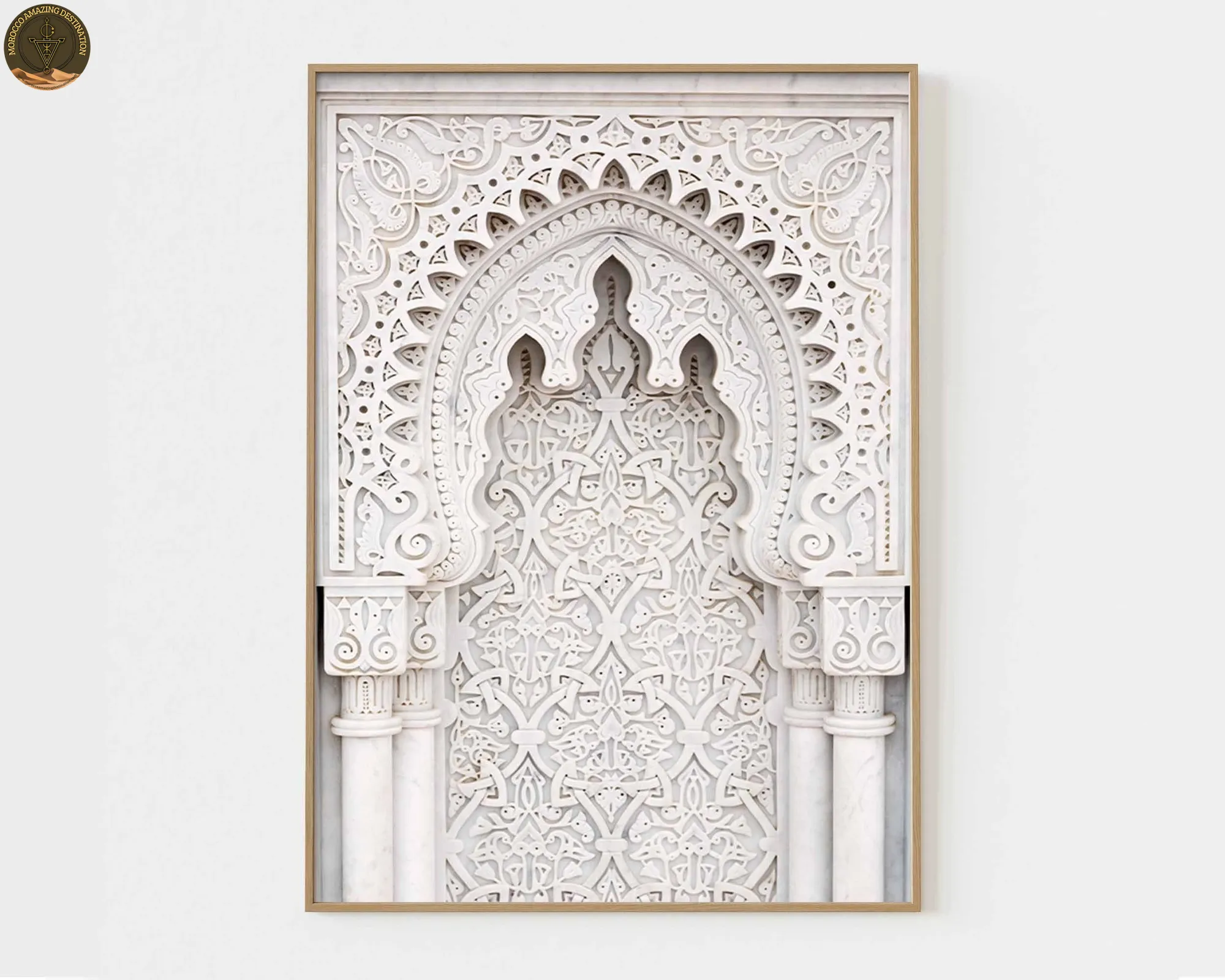
A wall in Fes is a document. Read it from the bottom and you find glazed tile cut by hand, then carved stucco, then cedar beams dark with age. Each layer came from a different workshop, and together they tell you which century you are standing in. Moroccan art works the same way nationally: a craft tradition you can touch, a rebuilt museum network, and a contemporary scene with its own arguments.
This guide maps those layers nationally rather than city by city, so you know what to look for and how to route a trip around it. Street-level detail belongs to our guides to Marrakech art galleries and Casablanca art galleries.
Zellij, Cedar and Carved Stucco: Reading a Moroccan Wall
Zellij is the right place to start because it teaches you how to look at every other surface. Craftsmen glaze square tiles of roughly ten centimetres, then chisel each one by hand with a small hammer, following patterns they learn through apprenticeship. The pieces are laid face down, bonded with plaster and flipped onto the wall. Fez remains the production centre, and the Kutubiyya minaret in Marrakech carries the earliest securely dated zellij in Morocco. The technique never fell out of use here after the fifteenth century.
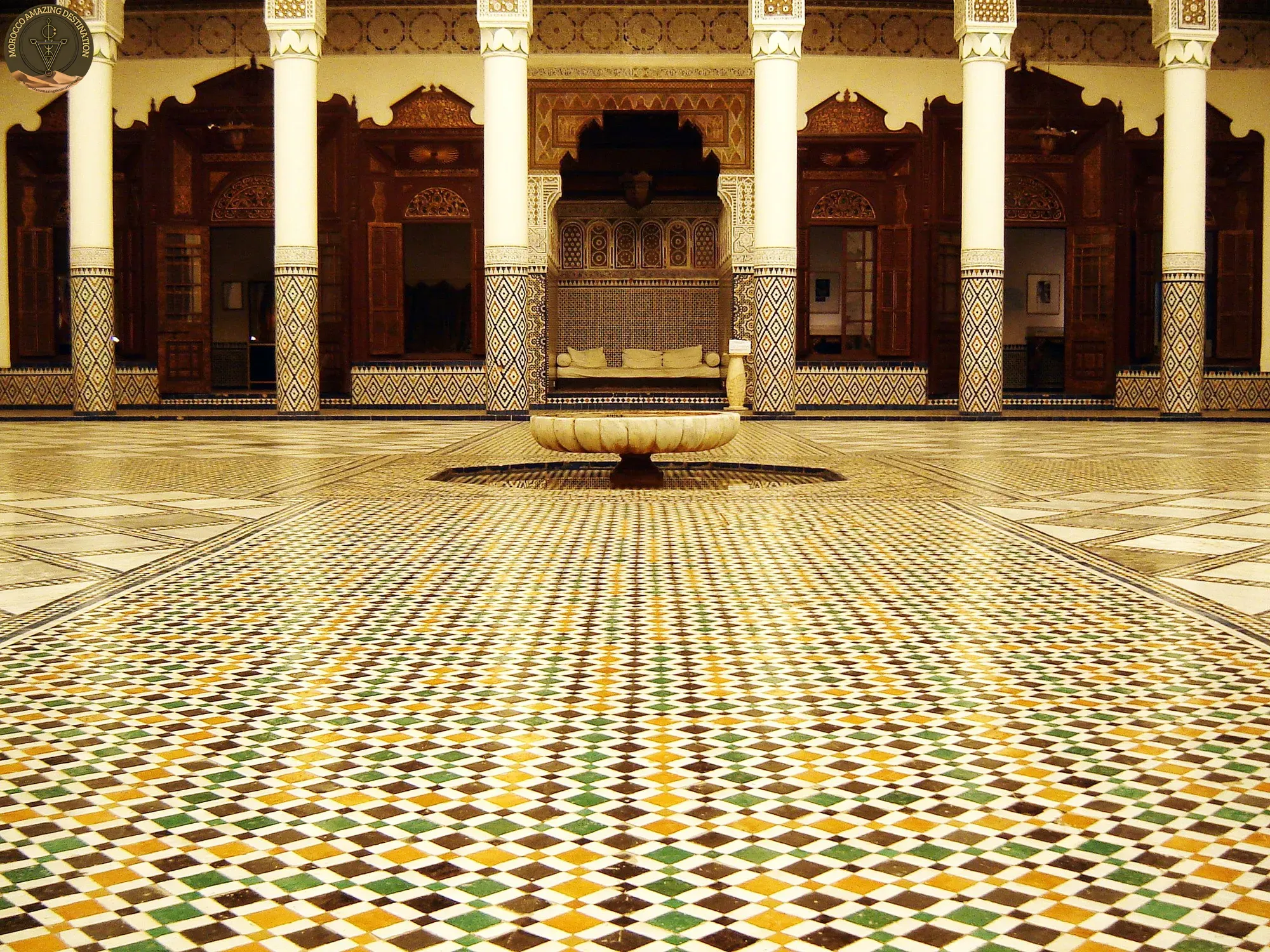
In situ the sequence repeats: a zellij dado at the bottom, carved stucco in the middle band, carved cedar at the eaves and doors. The Ben Youssef Madrasa in Marrakech and the Bou Inania and al-Attarine madrasas in Fez show the full stack within a few metres. Cedar comes from the Middle Atlas, which is why the woodwork carries a faint resin smell in warm rooms. The Nejjarine funduq in Fes, now a museum of wood crafts, is the best building for reading carved cedar.
Beni Ouarain Rugs, Metalwork and Pottery: A Regional Craft Map
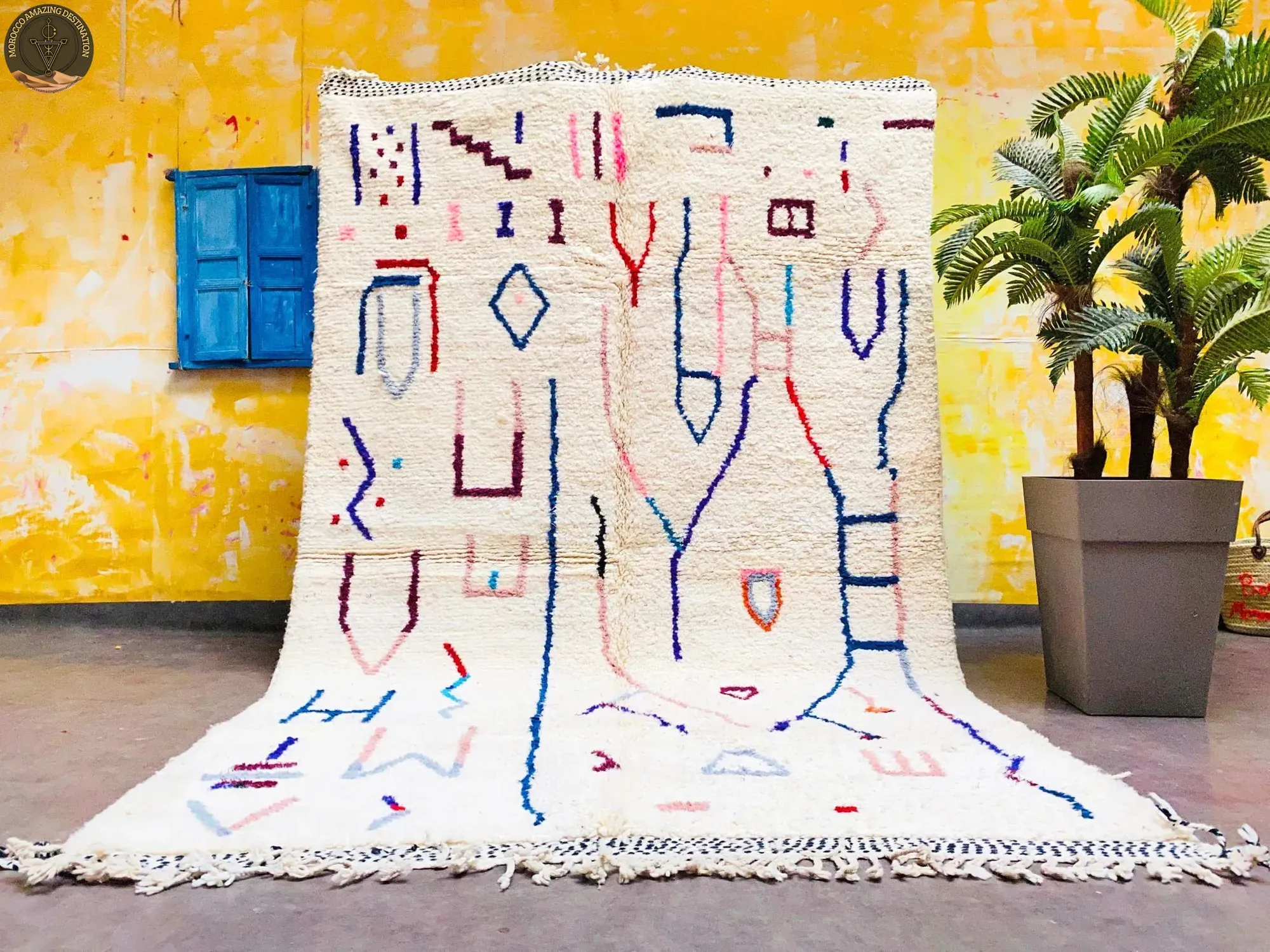
Moroccan crafts are regional, which is why the craft map follows geography. In the Beni Ouarain country of the Middle Atlas, Amazigh weavers work undyed wool into a diamond lattice that looks plain from a distance and dense up close. Azilal, in the High Atlas, works in brighter colours and figurative motifs. Where sheep are scarce, weavers use recycled cloth.
Metalwork is on the UNESCO intangible heritage list, where the arts of engraving gold, silver and copper were inscribed. Place Seffarine in Fez has copper beaters hammering within earshot of the madrasas, and lantern workshops cluster around Place des Ferblantiers in Marrakech. Pottery splits three ways.
- Fes fires the blue ware most visitors recognise.
- Safi glazes a brighter pottery and keeps a national ceramics museum.
- Tamegroute, a single oasis in the south, is known for its green glaze.
Buy from fixed-price cooperatives if you want the money to reach the maker. Two of these crafts have their own guides: Beni Ouarain rugs and Fes pottery.
The Museum Layer: Where the Nation Keeps Its Art
Moroccan museums are a recent rebuild. A foundation set up to run the state network took over roughly a dozen collections and pushed through renovations and new builds, so what you visit now is a mix of palace museums, private foundations and small municipal collections.
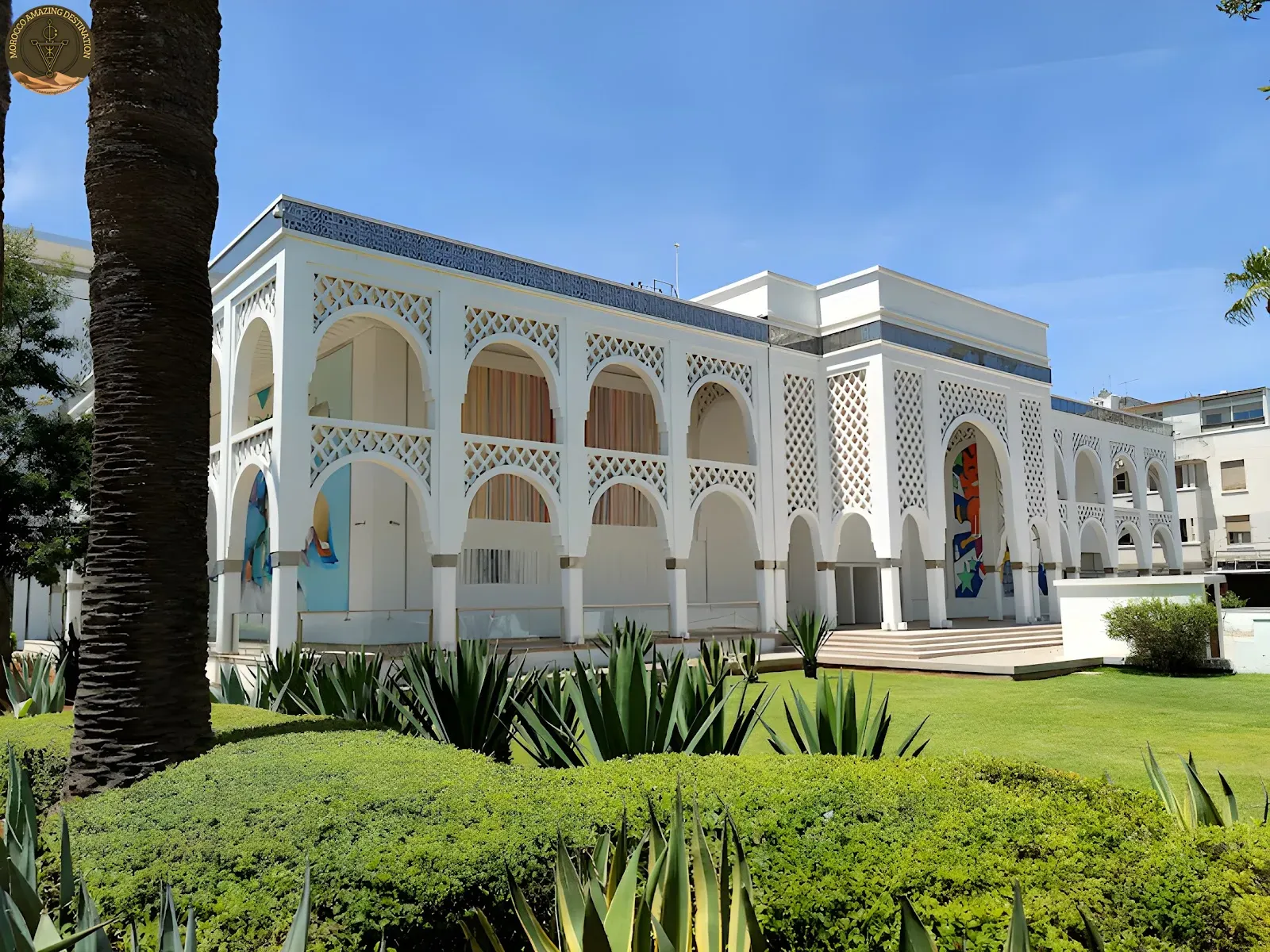
Rabat’s Mohammed VI Museum is the anchor, and the first large-scale museum built since independence. Its collection covers about 200 Moroccan artists, the facade reproduces paintings at building scale, and the columns inside were carved by Fes artisans in nickel silver. Craft and modernism share the same building.
Fes holds the deepest craft collection. Al Batha, in a late nineteenth-century palace, reopened as a museum of Islamic arts with around 6,500 objects, including the minbar from the Bou Inania madrasa. Marrakech spreads its holdings across smaller houses: Dar Si Said for decorative arts, and the Berber Art Museum inside the Jardin Majorelle for silver, textiles and dress. Tangier’s Kasbah museum and Essaouira’s instrument collection fill out the map, though both have long closure histories, so check before you go.
From the Casablanca School to the Present
The Casablanca School is where contemporary Moroccan art begins. The city’s fine arts school opened during the protectorate to train Moroccan students as technicians for French architects. From the early sixties, under Farid Belkahia and then with Mohamed Melehi and Mohamed Chabaa, the curriculum was rebuilt around local materials and craft. By the end of that decade the group was exhibiting in Jemaa el-Fna square instead of waiting for a gallery. That gesture is why Moroccan modernism reads as public and political.
Today the infrastructure is public and private at once. Rabat supplies the institutional anchor; in Marrakech, the museum of African contemporary art reopened after earthquake damage with eight galleries and more than 2,000 works built around Ahmed Cherkaoui. A sculpture park sits next door. Commercial galleries cluster in Casablanca’s Bourgogne district and Marrakech’s Gueliz. Asilah adds the outdoor version: its cultural moussem has repainted the medina walls with murals each summer since the late seventies, so the town is a changing exhibition.
Building an Art Route Into a Real Trip
Rabat to Casablanca is under an hour by train, Rabat to Fes about two and a half hours by road, Fes to Marrakech roughly seven, and Marrakech to Essaouira about two and a half. Those distances decide the shape of a trip more than any list of sites.
- Three days: Rabat’s museum, Casablanca’s galleries and Marrakech’s smaller collections.
- A week: add Fes for the madrasas, carved cedar and Al Batha.
- Ten days or more: add the northern arc of Asilah and Tetouan.
Spring and autumn suit walking medinas. In high summer, the sensible pattern is outdoor mornings and museum afternoons. Ramadan shortens workshop and museum hours, and closing days differ by institution, so check the day before.
Once you know the wall sequence, the rest of the medina starts to make sense, from a doorway in Fes to a hotel lobby in Marrakech. Music is a separate story, covered in our guide to Gnawa and chaabi music.
Two itineraries pass most of these collections. The 15-Day Grand Cultural Tour from Tangier covers the imperial cities and the Atlantic coast, and the 12-Day Morocco Grand Tour combines Casablanca, Fes, Marrakech and Essaouira.
We can customize a tour to match your needs - design your perfect itinerary
If you found this helpful, add us as your preferred source on Google.
Frequently Asked Questions
What is zellij and where can I see it in Morocco?
Zellij is hand-cut glazed tilework. Craftsmen chisel each glazed square by hand, then lay the pieces face down and bond them with plaster. Fez is the production centre, and the Ben Youssef Madrasa in Marrakech and the Bou Inania and al-Attarine madrasas in Fez show the full wall sequence of tile, carved stucco and cedar.
Where does Morocco keep its main art collections?
The core of the national collections is in Rabat, where the Mohammed VI Museum anchors modern and contemporary work with a collection covering about 200 Moroccan artists. In Fes, the Al Batha museum holds around 6,500 objects, including the minbar from the Bou Inania madrasa. Marrakech spreads its collections across smaller houses such as Dar Si Said and the Berber Art Museum.
Where can I see contemporary Moroccan art?
Start with the Mohammed VI Museum in Rabat for the institutional collection, then the museum of African contemporary art in Marrakech, which reopened after earthquake repairs with eight galleries and more than 2,000 works. Commercial galleries cluster in Casablanca's Bourgogne district and Marrakech's Gueliz.
How long do I need for an art-focused trip to Morocco?
Three days covers the spine of Rabat, Casablanca and Marrakech. A week adds Fes for the madrasas, the wood museum and Al Batha. Add the northern arc of Asilah and Tetouan if you want murals and workshop traditions as well as collections.
Ready for an Adventure?
Have questions? Feel free to contact us using the form below. We're here to help!