· Travel · 6 min read
Beni Ourain Rug: The Middle Atlas Craft and How to Buy One
Where a beni ourain rug comes from, how Middle Atlas weavers make it, and the checks that tell real wool from a copy before you pay.
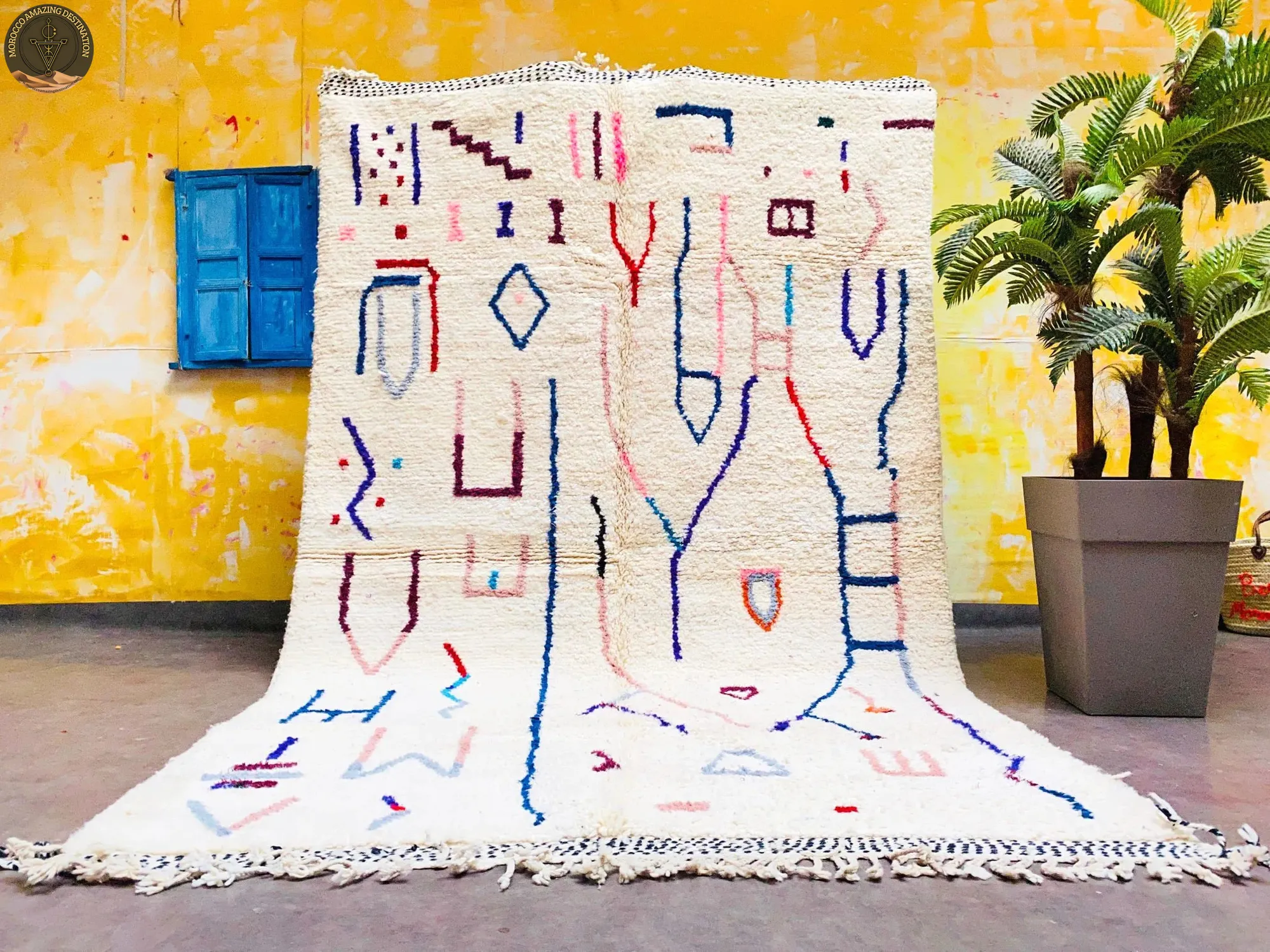
Wool from a Middle Atlas sheep, spun by hand, knotted at home, then sold three hundred kilometres south as a design object. That is roughly the life of a beni ourain rug, and the distance between the loom and the showroom explains most of what goes wrong when visitors buy one. A beni ourain rug is a thick, undyed cream wool pile rug hand-knotted by Amazigh women of the Middle Atlas, and its dark diamonds come from the fleece of darker animals.
This guide follows one from the flock to the floor: where the name comes from, how the wool gets its two colours, what happens at the loom, where the money goes, and what to check in the shop before you pay.
Where Beni Ourain Really Comes From - the Middle Atlas, Not the Medina
The Beni Ourain, or Ait Ouarain, are an Amazigh confederation usually counted at seventeen tribes. They are sedentary, and their territory sits in the north-eastern Middle Atlas between Fes and Taza. The land is cedar forest and high pasture, with winters cold enough that a thick wool covering on the floor was bedding for the family.
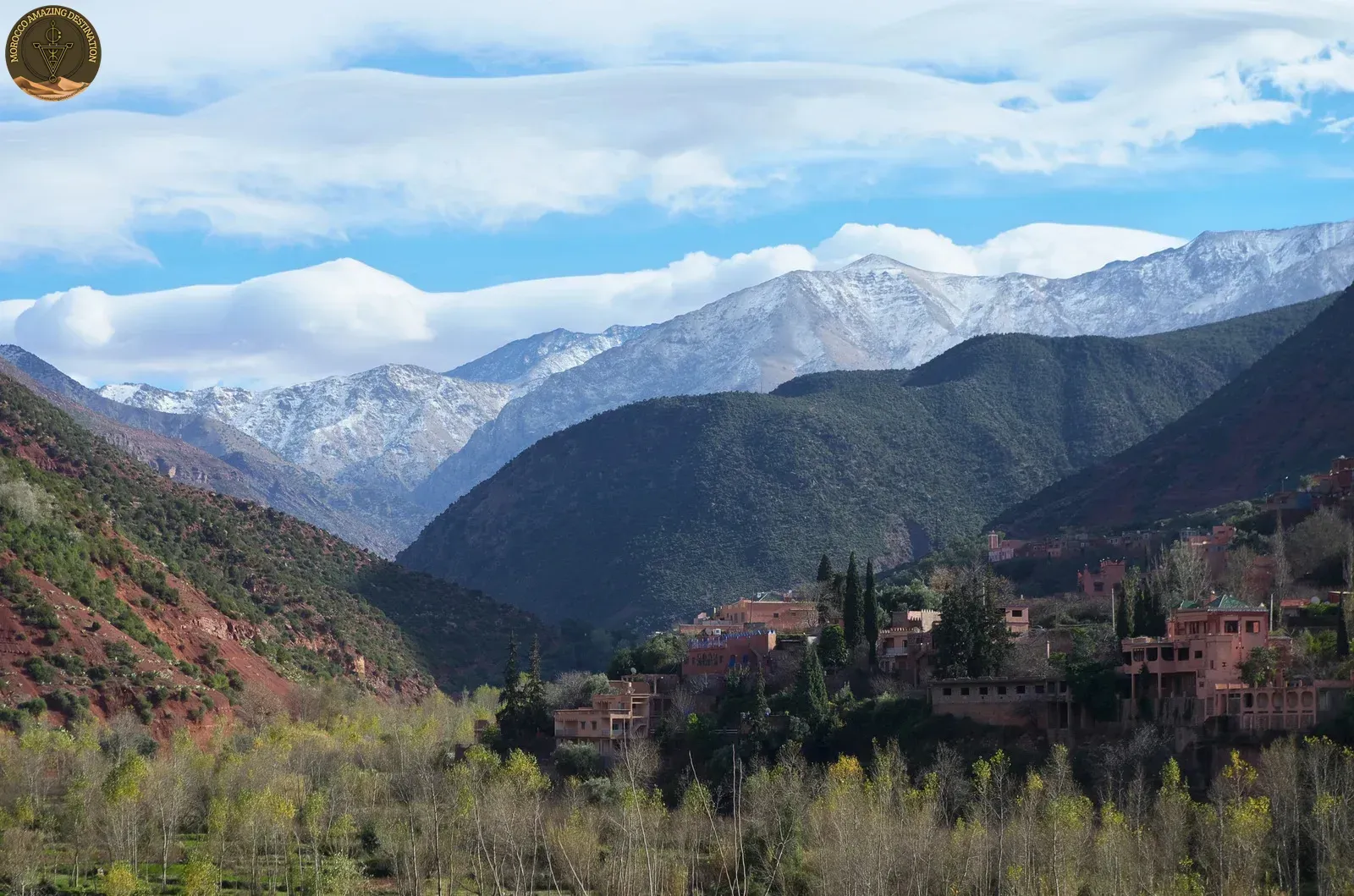
Three towns on that plateau matter if you want to see the work up close:
- Azrou: about 80 km and 1h15 south of Fes, at roughly 1,200 m, with cedar forest on its edge.
- Mrirt: 30 to 50 km on toward Khenifra, with its own denser, heavier tradition sold as Beni Mrirt.
- Khenifra: around 1,000 m on the Oum er-Rbia, another 80 km and 1h15 from Azrou.
Plenty of what hangs in Marrakech and Fes showrooms as Beni Ourain was woven by neighbouring Middle Atlas groups. The name is an origin claim. A cream ground with dark diamonds does not prove it.
Wool Before Pattern - Sheep, Shearing and the Cream Palette
Understanding how beni ourain rugs are made starts on the plateau, with a flock shorn once a year in spring. Marmoucha sheep come up most often in the trade; the documented Middle Atlas breed is the Timahdite, with a medium-coarse fleece of about 1.9 kg per animal. A 3 × 2 m rug needs far more wool than one sheep provides, so every piece draws on a small flock.
The fleece is washed, carded by hand and spun on a drop spindle. No dye pot enters the process. Ivory and cream come from light fleeces, charcoal and brown from dark-fleeced animals. Weavers sorted the wool before spinning, so the design started as a pile of fleece divided by colour.
That is why old pieces read as warm off-white, and why a bleached-white “Beni Ourain” deserves a second look.
At the Loom - Knots, Looms and Months of Work
The loom is upright and stands inside the house, often in the room where the family eats. The weaver ties a symmetrical knot around two warp threads, the Ghiordes knot that locally goes by the name Berber knot, then beats a weft row down between the knot rows. Pile on a deep piece reaches about 3 cm and gets trimmed at the end.
Small pieces come off the loom in around three weeks. A 3 × 2 m rug commonly takes two to three months, and roughly eleven weeks for a three-metre length is a fair estimate. Motifs are lozenges, lattice lines, hooks and ladder bands, and meanings vary by family, so the fertility reading of every diamond is folklore. The finished rug is cut off the frame, washed two or three times and dried in the sun.
Nothing in the process is rare. The wool is local and the knot is standard, which leaves labour as the largest line in the cost. This is the shape most people picture when they hear moroccan berber rug: cream ground, dark geometry, a pile deep enough to sink a hand into.
What You’re Really Paying For - Cooperative, Middleman, Souk
Abroad, retail ateliers price rugs by area at roughly $20 to $50 per square foot, about $215 to $540 per m². That figure works as a ceiling. Inside Morocco the same-looking rug can sit at 2,500 dirhams in one place and 12,000 in another.
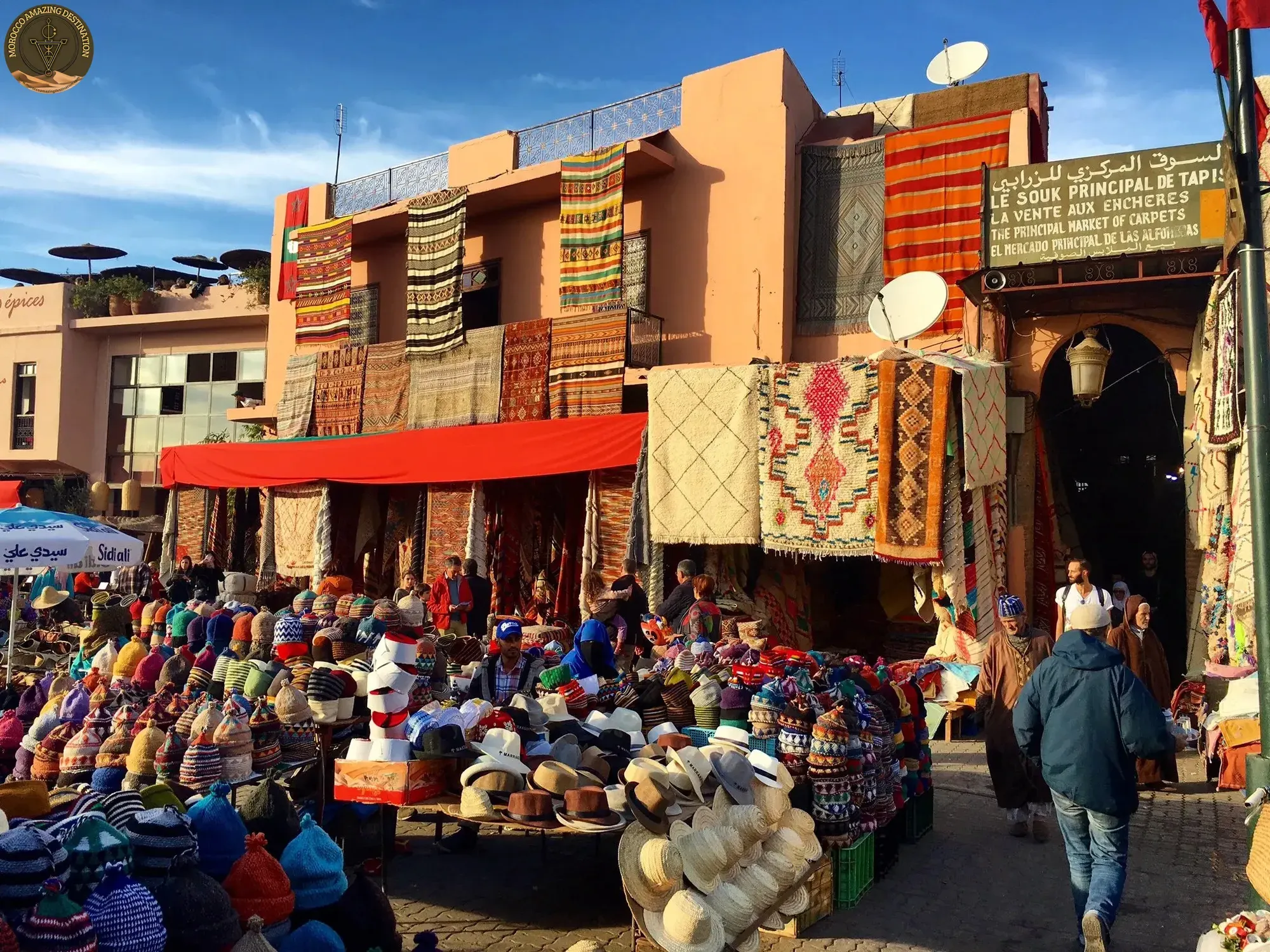
Buy direct from a cooperative and the export layer disappears. Fair-trade maker profiles put roughly two-thirds of the retail price in the makers’ hands, with the rest covering logistics and platform costs. A medina showroom adds rent, commission and sometimes three intermediaries between loom and floor.
In hedged terms, here is what people tend to pay:
- Small new pieces: from the low thousands of dirhams.
- Room-sized new pieces: commonly four figures, from the middle upward.
- Vintage and oversize: five figures.
A suspiciously low quote for a 2 × 3 m rug sold as all-wool and hand-knotted is a question, not a bargain.
How to Check a Beni Ourain Before You Pay
The practical side, buying a beni ourain rug in morocco, comes down to five checks you can run in the shop. None of them need equipment beyond a lighter.
- Turn it over: hand knots show as slightly uneven rows; a machine back is flat and regular.
- Burn a loose fibre: wool smells of burnt hair, self-extinguishes and leaves crumbly ash; acrylic smells chemical and forms a hard bead.
- Feel for lanolin: a faint greasy softness. Plastic slickness usually means a blend.
- Check the fringe: knotted into the weave on an older piece, sewn on for a quick finish.
- Read the colour: synthetic dyes fade flat and even, while natural wool mellows.
“Vintage” is a dealer’s claim with no agreed definition, so ask what makes the piece old and see whether the answer holds. A modern rug travels normally if you keep the invoice. A piece sold as genuinely antique needs paperwork, because Morocco protects cultural property by law. For the other crafts that travel well, see our guide to Moroccan souvenirs worth carrying home.
Both private itineraries below cross this ground and can take in a weaver or cooperative stop. The 12-day Morocco grand tour goes over the Middle Atlas at Ifrane and Azrou and gives you a full day in the Fes medina. The 9-day tour from Fes to Tangier adds a weaving visit with nomadic families and an Azrou stop.
Cooperatives around Azrou, Mrirt and Khenifra welcome visitors. Buy where you can see the loom.
We can customize a tour to match your needs - design your perfect itinerary
If you found this helpful, add us as your preferred source on Google.
Frequently Asked Questions
How can I tell a real Beni Ourain rug from a fake?
Turn it over first: hand knots sit in slightly uneven rows, while a machine-made back is flat and regular. Burn a loose fibre, since wool smells of burnt hair and leaves crumbly ash while acrylic smells chemical and forms a hard bead. Feel for a faint greasy softness from lanolin, check that the fringe is knotted into the weave rather than sewn on, and treat a bleached-white rug with suspicion because old wool is ivory.
How long does it take to weave a Beni Ourain rug?
A 3 × 2 m rug usually takes two to three months on an upright loom, and roughly eleven weeks for a three-metre length is a common estimate. Small pieces can come off the loom in about three weeks. The work is done at home between other tasks, which is why timing varies between families.
Why do two similar-looking rugs cost so differently?
The difference is the number of hands between the loom and the floor. Buying from a cooperative can put around two-thirds of the retail price in the weaver's hands, while a medina showroom adds rent, commission and sometimes three intermediaries. The same piece can carry a very different tag in Azrou and in Marrakech.
Can I visit the women who weave Beni Ourain rugs?
Yes. Cooperatives around Azrou, Mrirt and Khenifra welcome visitors, and many weaving families work at home in the villages between those towns. A private driver makes the plateau reachable in a day from Fes, and a guide can arrange a stop where you see the loom itself rather than a showroom shelf.
Ready for an Adventure?
Have questions? Feel free to contact us using the form below. We're here to help!