
· Travel · 5 min read
Fez Pottery Guide: Fassi Blue Ceramics and Workshops
Fez pottery means cobalt blue on white glaze. See how Fassi pieces are made, what to buy, and where to shop in Ain Nokbi.
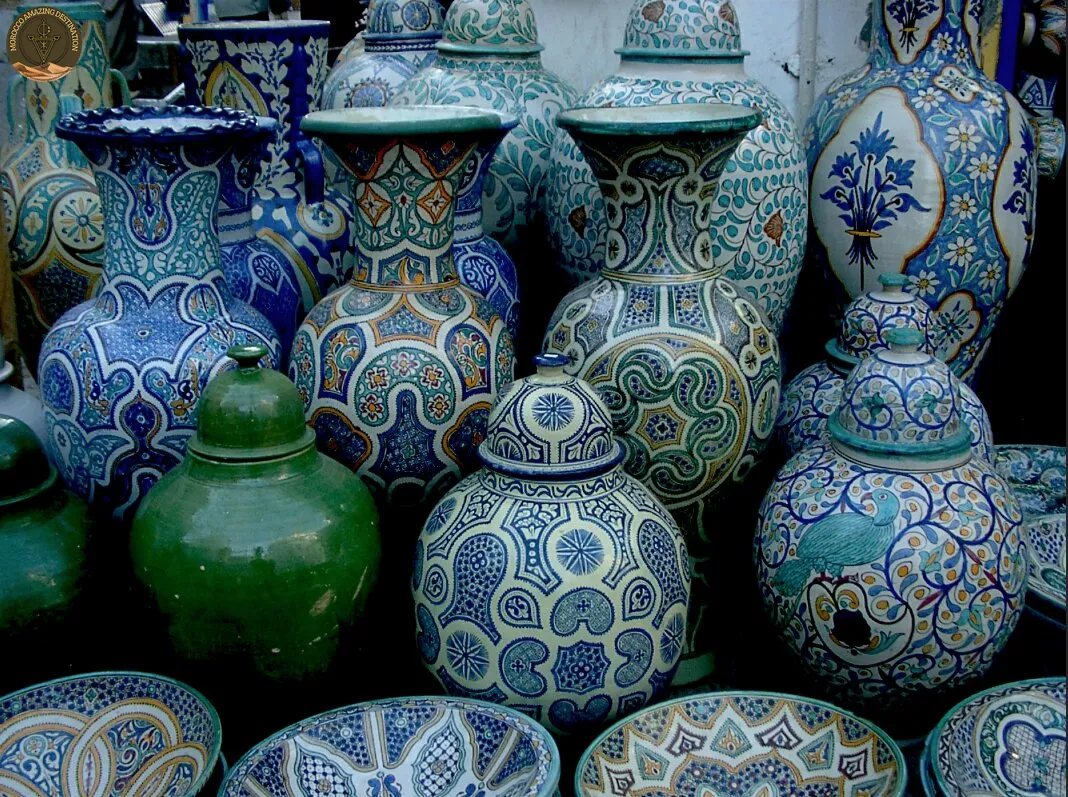
Walk into a Fez showroom and the color reaches you before anything else: deep cobalt flowers and stars on a milky white ground. That blue-and-white look is fez pottery at its most classic. The short version: pieces thrown from fine grey clay, covered in white glaze, and painted freehand in cobalt blue, then fired twice. Once you hold that definition in mind, shopping here gets much easier.
In this guide, we explain what makes Fassi blue different, how each piece is made, and how you can visit a workshop in Ain Nokbi.
What makes Fassi blue different
The clay itself sets Fassi ceramics apart. Potters around Fez work a fine grey clay from the Sefrou and Meknes area, smoother than the red earth used further south. Each piece takes an opaque white glaze, then painters add cobalt designs entirely by hand. The result is the crisp blue-on-white style known as Bleu de Fes, or simply blue pottery from Fez.
The craft carries Andalusian roots, brought by families who settled in Fez and passed glazing and painting skills down through generations. That long teaching line shows in the brushwork: steady lines, balanced spacing, and patterns drawn from memory instead of stencils.
Other Moroccan centers look different, which helps you read a shelf at a glance. Safi leans multicolour, and Tamegroute fires a deep green glaze. If coastal styles interest you too, our El Jadida pottery crafts guide covers a separate tradition. In Fez, blue on white is the signature to look for.
How a Fez piece is made, from clay to second firing
A workshop visit usually starts in the yard, where grey earth is soaked, trampled, and kneaded until smooth. Throwers shape each form on a foot-powered wheel, then the raw pieces dry in the sun until they turn pale and firm.
Dry pieces enter the kiln for a first biscuit firing, which hardens them enough to paint. Painters then draw every motif by hand with cobalt pigment, working fast because the bare surface drinks the color in. No two pieces come out identical, and up close you can spot the small wobbles that prove a human hand held the brush.
After painting, each piece is dipped in glaze and fired a second time, often in wood or olive-pit kilns around Ain Nokbi. That firing melts the glaze into glass and turns the dull grey pigment vivid blue. If the kiln mouth is cool enough, ask to look inside: the stacked shelves explain the whole process better than any speech.
Motifs and shapes worth knowing before you shop
Learning a few patterns changes the way you shop, because you start picking pieces you actually understand. The eight-pointed star sits at the center of many plates, ringed by arabesque vines, tiny fish, or birds. Calligraphy bands and mosque-lamp outlines appear on larger display pieces meant for walls and shelves.
Match the shape to your luggage, since size decides what survives the trip. Small bowls and salad plates fly well; big chargers and vases need professional packing.
Shapes worth a look:
- Small bowls: Serve nuts, olives, or dips, and they nest inside each other for the flight.
- Salad plates: Flat, stackable, and easy to wrap between clothes in a suitcase.
- Decorative tagines: Made for the table rather than the flame, so ask before cooking in one.
- Tiles and panels: Cut for walls and fountains, best for buyers who can arrange freight.
- Vases and jars: Lovely on a shelf, but heavy; have the workshop pack them.
Visiting a Fez pottery workshop and spotting the real thing
Most Fez pottery workshops cluster in Ain Nokbi, the potters quarter just outside the old medina walls. Demos cost nothing and walk you from wheel to kiln in about half an hour. Go in the morning, when the throwers and painters are at their benches.
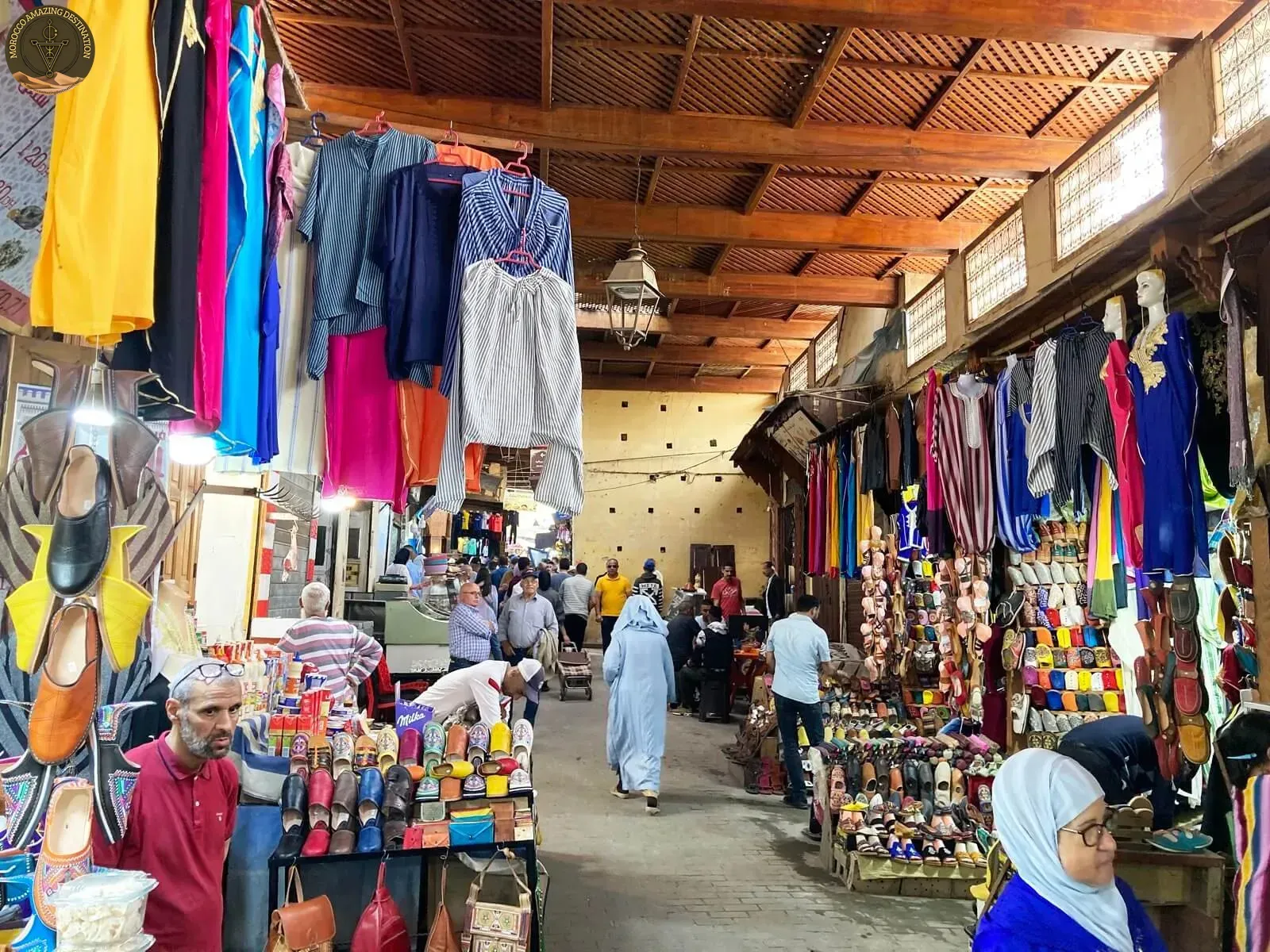
When you wonder where to buy pottery in Fez, a working cooperative beats a medina reseller, because you watch who made the piece. Expect hand-painted work to cost more than printed copies; that gap reflects hours at the bench.
Quick authenticity checks:
- Brush wobble: Tiny uneven lines mean a hand held the brush; perfect edges suggest a print.
- Base signature: A mark reading Fes or Fez is a good sign, though never proof alone.
- Clear ring: Tap the rim gently; a solid piece gives a clean, bell-like note.
- Even glaze: The surface should feel smooth, with no dry patches or bubbles.
- Fair price: Real hand painting takes time, so suspiciously cheap blue-and-white deserves doubt.
Getting pottery home and fitting Fez into your trip
Small pieces ride home in hand luggage wrapped in clothes. For anything large, let the workshop pack it or ship it, and confirm price, timing, and tracking in writing before you pay. Keep the receipt and a photo of each piece until it arrives.
What travels best:
- Bowls and plates: Sturdy shapes that stack and pad easily around soft clothes.
- Small cups: Light and simple to cushion, with little risk of chipping rims.
- Flat tiles: Slim profile, though corners need hard reinforcement on both sides.
- Large vases: Ship these; the workshop crates them far better than a suitcase can.
Ask the workshop before using a piece with hot or acidic food, and check microwave or dishwasher use piece by piece. Decorative glazed ware is safest kept to dry serving.
Fez usually sits between Chefchaouen and the desert on a longer route. The 7-Day Morocco Tour from Fes starts in the pottery city and continues to the Sahara, while the 8-Day Imperial Cities and Desert Tour from Casablanca folds Fez into the four imperial cities. For the wider shopping trail beyond ceramics, see where to buy souvenirs in Fez.
We can customize a tour to match your needs - design your perfect itinerary
If you found this helpful, add us as your preferred source on Google.
Frequently Asked Questions
What is Bleu de Fes?
Bleu de Fes is the classic Fez style: cobalt blue motifs painted freehand on a white glaze over fine grey clay, then fired twice. Blue on white is the signature to look for, unlike the multicolour ware of Safi or the green glaze of Tamegroute.
Where is the Fez pottery quarter and can I visit a workshop?
Most workshops sit in Ain Nokbi, the potters quarter just outside the old medina. Visits are free and walk you from wheel to kiln in about half an hour. Mornings are best, when throwers and painters are at work, and a private driver makes the trip simple.
How can I tell real Fez pottery from a copy?
Look for small wobbles in the brushwork, an even glaze, a clear ring when tapped, and a signature reading Fes or Fez on the base. The signature is a good sign but never proof alone, so combine all four checks and expect hand-painted pieces to cost more than printed copies.
Can I bring Fez pottery home, and is it food safe?
Yes. Small bowls and plates travel well in hand luggage, and workshops pack or ship larger pieces if you confirm price, timing, and tracking in writing. For food use, ask the workshop piece by piece whether it suits hot or acidic food, and never assume microwave or dishwasher safety.
Ready for an Adventure?
Have questions? Feel free to contact us using the form below. We're here to help!