· Travel · 5 min read
Casablanca Art Galleries: Where to See Moroccan Modernism
Casablanca art galleries cluster in Bourgogne's Triangle d'Or: where they are, what the Casablanca Art School changed, and how to plan a half-day.
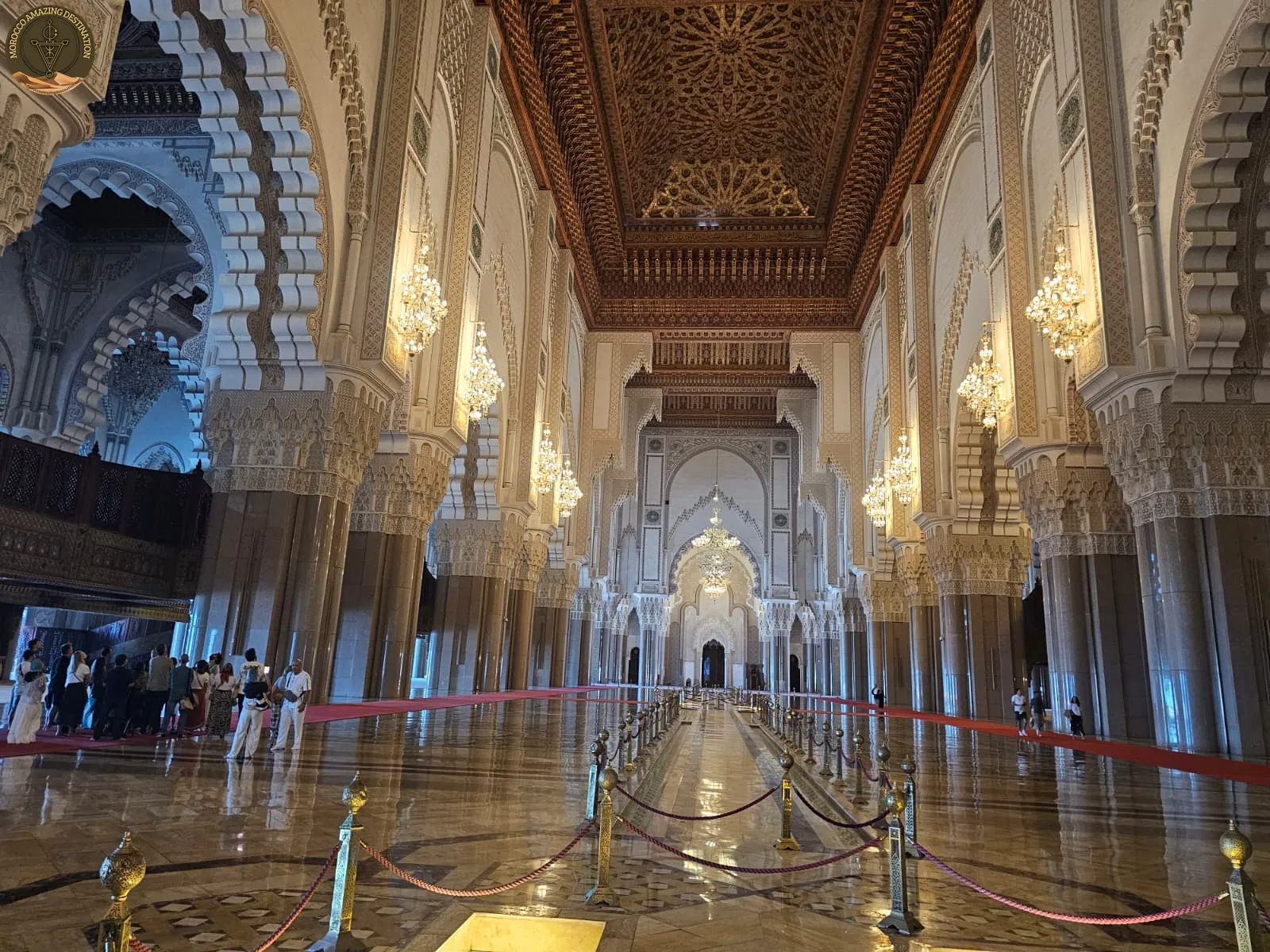
Casablanca is where Moroccan modern art was invented, and the evidence hangs on walls a short walk apart. Casablanca art galleries charge no admission, sit within about ten minutes of each other in Bourgogne’s Triangle d’Or, and close on Sundays. The core of the scene fits into a single morning.
In this guide, we will break down what the Casablanca Art School changed, the streets where today’s galleries sit, and how to time a half-day around their lunch breaks.
The Casablanca Art School: From the Medina to Moroccan Modernism
The École des Beaux-Arts de Casablanca opened in 1919, in the medina, training Moroccan students mostly as technicians for French architects. The movement that made it famous begins in 1962, when Farid Belkahia took over as director.
Belkahia held the post until 1974. With Mohamed Melehi teaching from 1964 and Mohamed Chabâa joining as professor in 1966, he rewrote the curriculum between 1964 and 1972. Ceramics, leather and metalwork entered the syllabus; the Paris-academy model left it.
What to look for on the walls:
- Copper and leather: Belkahia painted on sheet metal and hide instead of canvas.
- Henna and pomegranate bark: pigments that replaced oils and tied the work to local craft.
- Amazigh signs: geometric marks taken from rural Morocco and repeated across the group’s work.
- Public gestures: in 1969 they hung paintings outdoors for a week in Marrakech’s Jemaa el-Fnaa square, an exhibition-manifesto called Présence Plastique.
The group rejected the folklore framing expected of Moroccan painters and pulled craft practice into fine art. Art history now treats it as the founding moment of modern painting in the country. That vocabulary still shows up on gallery walls around Bourgogne.
Bourgogne and the Triangle d’Or: Where the Galleries Are
Most galleries in Casablanca sit in a small pocket of Bourgogne known as the Triangle d’Or. Three of the serious ones stand within a ten-minute walk of each other.
- Loft Art Gallery: 13 rue El Kaïssi, founded by sisters Myriem and Yasmine Berrada, with modern and contemporary African art.
- L’Atelier 21: 21 rue Abou Mahassine Arrouyani, the old rue Boissy-d’Anglas, open since 2008, showing Moroccan and diaspora artists.
- Galerie Mine d’Art: 5 rue Annaba, three floors of Moroccan and international work, closed Sunday, Monday and Friday.
L’Atelier 21 was among the first Moroccan galleries to take its artists to international fairs. Loft to L’Atelier 21 is roughly 700 m, so both fit before the 12:30 shutdown. Mine d’Art spreads over three floors and asks for more time than the others.
La Galerie 38 sits out at Aïn Diab, on boulevard Abdelhadi Boutaleb inside the Studio des Arts Vivants complex, 15 to 20 minutes away by taxi. It leans toward urban and international work and runs a second space abroad.
The Institutional Layer: Villa des Arts and Art Deco Downtown
Villa des Arts, a 1930s Art Deco villa on boulevard Brahim Roudani, is the institutional base for contemporary art in Casablanca, with around ten exhibitions a year plus a salon for young artists. Its own site lists 09:00 to 19:00, while listings disagree on closing days, so check before you go.
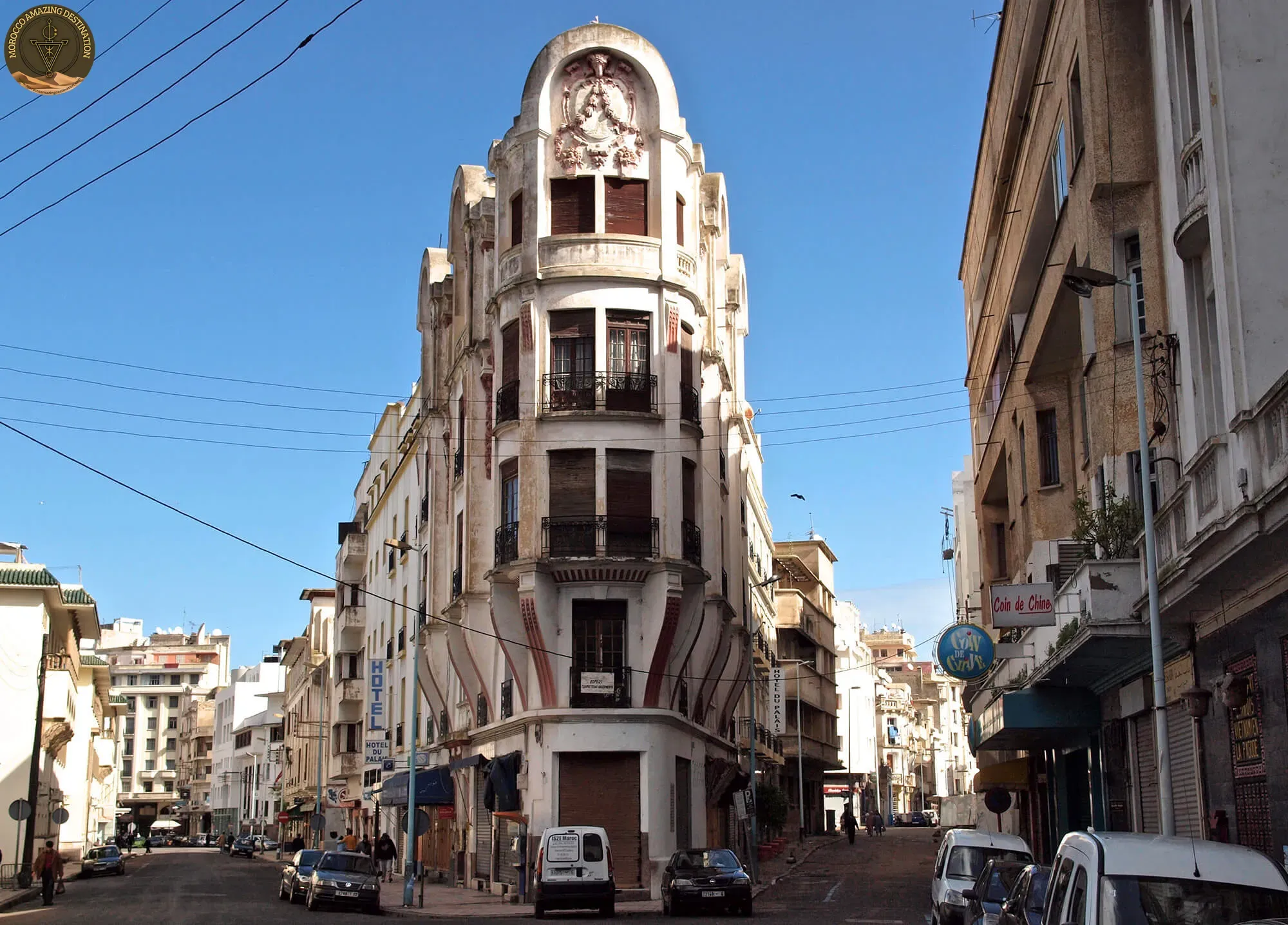
The villa is worth the detour for its architecture alone. Downtown Casablanca keeps a serious stock of Art Deco frontage, much of it from the 1930s, and the walk back toward the old centre passes facades worth a slow half hour. Our guide to the best places to visit in Casablanca follows that architecture thread further.
The young-artist salon changes with each programme, so look it up before you arrive. To see school works up close, ask at L’Atelier 21, whose roster includes Farid Belkahia, or at Loft Art Gallery, which carries alumni such as Malika Agueznay. Institutional venues may ask for a small entry fee; commercial galleries let you walk in and look for free.
Closures, Lunch Breaks and a Half-Day Route
These are working galleries with office hours, not museums. The middle of the day belongs to lunch, which catches out anyone who turns up at one o’clock.
What to expect:
- Sunday: nearly everything is shut, so do not save the visit for your last day.
- Lunch: most close between about 12:30 and 14:30 and reopen from mid-afternoon into the early evening.
- Other days: Mine d’Art closes Monday and Friday, and several spaces close for weeks in August.
- Ramadan: hours often shorten, so confirm by message the day before.
A half-day that works: a weekday morning in Bourgogne for Loft and L’Atelier 21, a long lunch, then Villa des Arts, under ten minutes away by taxi. A Saturday morning also works for the two Bourgogne rooms that stay open. Weekday mornings are the quietest of all, and a quick message the day before is standard practice here.
Skip the taxis where you can. The Triangle d’Or works best on foot, and the streets between rue El Kaïssi and rue Annaba hold small design shops and a decent café or two for the lunch gap.
Design Your Casablanca Art Itinerary
A private guide takes the guesswork out of the timing: which gallery is open, when the lunch break bites, and how to fit the Triangle d’Or into a cruise call. Hassan and our local team build that around your own pace, with a driver who knows the one-way streets of Bourgogne. Tell us which artists you follow and the day gets shaped around them. Our guides work in English, Spanish, Italian and French, so the context survives the translation. If the art history leaves you curious about the rest of the country, the Marrakech gallery scene runs on a different clock.
For the wider country, our 8-day Casablanca to Imperial Cities tour starts in the city and moves on to Fes, Meknes and Marrakech. The 12-day Grand Morocco Experience adds the Sahara and the Atlantic coast.
We can customize a tour to match your needs - design your perfect itinerary
If you found this helpful, add us as your preferred source on Google.
Frequently Asked Questions
Are Casablanca art galleries free to enter?
Yes. The commercial galleries in Bourgogne and Aïn Diab charge no admission, so you walk in, look, and leave. Institutional venues may ask for a small entry fee, so ask at the desk when you arrive.
When are galleries in Casablanca open?
Most open Monday to Saturday with a long lunch break of roughly 12:30 to 14:30, and close all day Sunday. Some spaces also shut Monday or Friday, or for several weeks in August, so message ahead.
What was the Casablanca Art School?
It is the modernist movement that formed at the École des Beaux-Arts de Casablanca after Farid Belkahia became director in 1962, with Mohamed Melehi and Mohamed Chabâa. The group broke with academic training, worked in copper, leather and henna, and drew on Amazigh forms, the starting point of Moroccan modern art.
Where can I see Casablanca Art School works today?
L'Atelier 21's roster includes Farid Belkahia, and Loft Art Gallery carries school alumni including Malika Agueznay. For twentieth-century Moroccan masters more broadly, Villa des Arts gives the widest single view.
Ready for an Adventure?
Have questions? Feel free to contact us using the form below. We're here to help!