
· Culture · 5 min read
Gnawa and Chaabi Music: Morocco's Two Living Sounds
Gnawa and chaabi music are Morocco's two defining sounds. Learn their instruments, rhythms and where to hear them live.
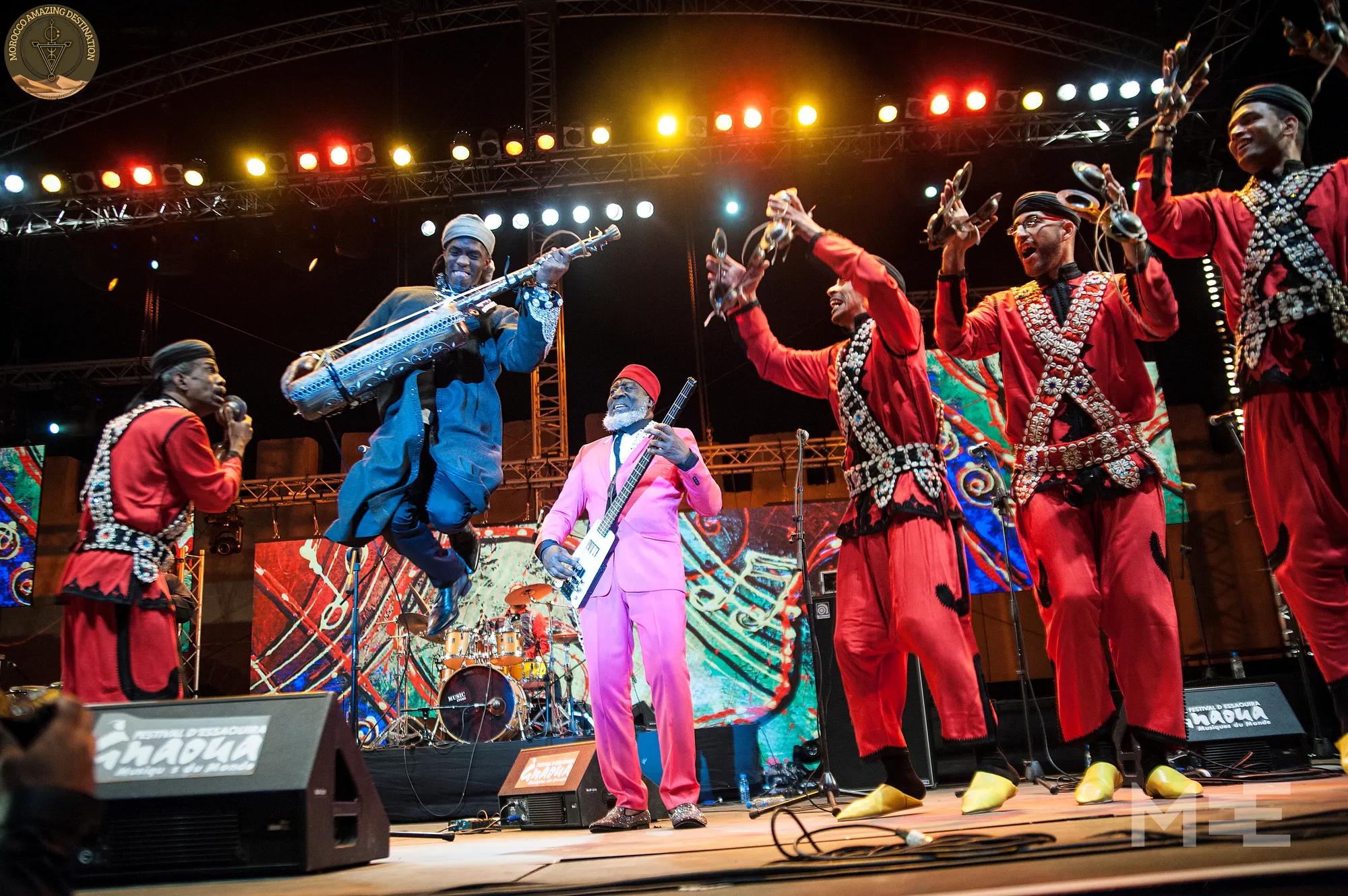
Late at night on Jemaa el-Fnaa, a circle closes around three musicians before anyone claps. A low bass line starts, iron castanets fall across it, and the crowd presses in. Across town, a wedding band is playing something much faster. Both belong to gnawa and chaabi music, the two Moroccan traditions a visitor is most likely to meet, and they were built for opposite rooms. Gnawa is Sufi healing music of sub-Saharan descent, played at all-night ceremonies. Chaabi is the country’s secular popular music, sung in Darija for weddings, moussems and street celebrations.
In this guide, we will break down what separates the two genres, the instruments that carry each one, and where you can hear them played the right way.
Gnawa and Chaabi: Two Sounds, One Country
The two genres sit at opposite ends of Moroccan music. Gnawa belongs to a brotherhood tradition with a healing purpose, and a full performance follows a fixed order. Chaabi belongs to the market, the wedding hall and the moussem, and its job is to keep a family dancing until the guests leave.
You can tell them apart in about ten seconds. Gnawa is modal: one phrase cycles and builds, and the change arrives slowly, pushed by the room. Chaabi runs on verses and a refrain, with a violin or banjo line you could hum after one hearing.
The two share more musicians than travellers expect. They turn up in the same medina, sometimes on the same evening, which is why so many visitors hear one and assume they have heard the other.
Inside Gnawa: Guembri, Krakebs and the Lila
A Gnawa group is small, and almost all of the sound comes from three sources.
- Guembri: a three-string bass lute with a camel-skin soundboard, also called sintir or hajhuj. The maalem plays it and leads.
- Krakebs: iron double castanets, also spelled qraqeb. Players describe their clatter as an echo of the shackles their ancestors wore, and that story belongs to them.
- Ganga: a large drum that adds weight underneath, with a chorus of five or six voices answering the maalem.
The full form is the lila, also called derdeba, which runs from after sundown until dawn, sometimes longer than one night. The opening kuyu section names the homelands. Then comes the mluk, suites that call seven families of spirits, each with its own colour, rhythm and incense. Families still commission lilas when someone is unwell, and the musicians are paid for a night’s work. The tradition is inscribed on UNESCO’s Representative List of the Intangible Cultural Heritage of Humanity.
Chaabi: From Casablanca to Every Wedding
Chaabi means “of the people”, and the name is accurate. It took shape in the working-class quarters and markets of Casablanca, where bands were hired for paying audiences in cafés, halls and family celebrations. The lyrics are in Darija, the words are about ordinary life, and the setting is almost never a concert hall.
A chaabi band adapts to the room it plays.
- Violin: held upright against the knee, bowing the hook that everyone sings back.
- Banjo and oud: doubling the melody, with an electric keyboard in most modern line-ups.
- Derbouka, taarija and bendir: hand drums and a frame drum carrying the groove.
- Handclaps: from the guests, who are part of the arrangement.
Most songs close with the leseb, where the tempo doubles and the floor fills. Chaabi also gets confused with rai, an Algerian genre centred on Oran and popular around Oujda. The two share a synthesizer and very little else.
Where the Music Lives: Essaouira, Jemaa el-Fnaa and the Desert
Essaouira is the obvious starting point. The Atlantic city has the deepest Gnawa roots in Morocco, a steady circuit of riad and courtyard sets, and a festival that draws maalems from across the country.
Search for gnawa music Morocco and the same three settings come up, each doing a different job.
- A riad or festival stage: an evening set in comfort, with the repertoire explained from the stage.
- Jemaa el-Fnaa: a free circle in the square every night, loud and crowded, with nothing explained.
- Khamlia, near Merzouga: desert families who play for guests over tea and talk through what the songs mean.
If you are working out where to hear gnawa music in Morocco around your own route, those three cover coast, city and desert. We wrote about the village end separately, in our guide to Khamlia’s Gnawa families and how a visit there works.
Listening With Respect, Then Planning the Trip
The one thing worth getting right is the line between a concert and a ceremony. A lila is a healing event a family has commissioned, and a stranger with a phone in the room changes it. Go only if a family or a guide invites you, ask before filming, and leave the space nearest the musicians to the people the night is for.
Timing matters more than luck. Which moussem or festival falls in your week, which riad is running a set, whether a village visit fits the drive: a local guide can answer all three before you book anything.
A festival programme can also put gnawa and chaabi music on the same bill, which is the easiest way to hear both within a few days. If you want the coast and the desert on one route, our 8-Day Morocco Tour: Marrakech, Sahara Desert & Essaouira puts Essaouira and a Sahara camp on the same itinerary. For the desert leg alone, the Fes to Merzouga 3-Day Desert Tour leaves time in Merzouga’s music houses.
We can customize a tour to match your needs - design your perfect itinerary
If you found this helpful, add us as your preferred source on Google.
Frequently Asked Questions
What is the difference between Gnawa and Chaabi music?
Gnawa is spiritual music of sub-Saharan origin, played on the guembri and krakebs at all-night lila ceremonies. Chaabi is Morocco's secular popular music, sung in Darija at weddings, moussems and street parties.
What instruments define Gnawa music?
A three-string guembri with a camel-skin soundboard carries the bass line. Iron castanets called krakebs hold the rhythm, a ganga drum adds weight, and a chorus answers the maalem's voice.
Where can travellers hear Gnawa music in Morocco?
Essaouira is the heartland, with riad sessions and its Gnawa festival. Jemaa el-Fnaa in Marrakech has troupes every night, and Khamlia near Merzouga performs for guests over tea.
Is it respectful to attend a Gnawa lila?
A lila is a private healing ceremony, not a performance. Go only if a family or a guide invites you. Riad concerts and festival stages are the right places for visitors.
Ready for an Adventure?
Have questions? Feel free to contact us using the form below. We're here to help!