
· Travel · 5 min read
Marrakech City Gates: What Each Bab Name Tells You
The stories behind Marrakech city gates: what each bab name means, why the entrances bend inward, and how to walk them on foot.
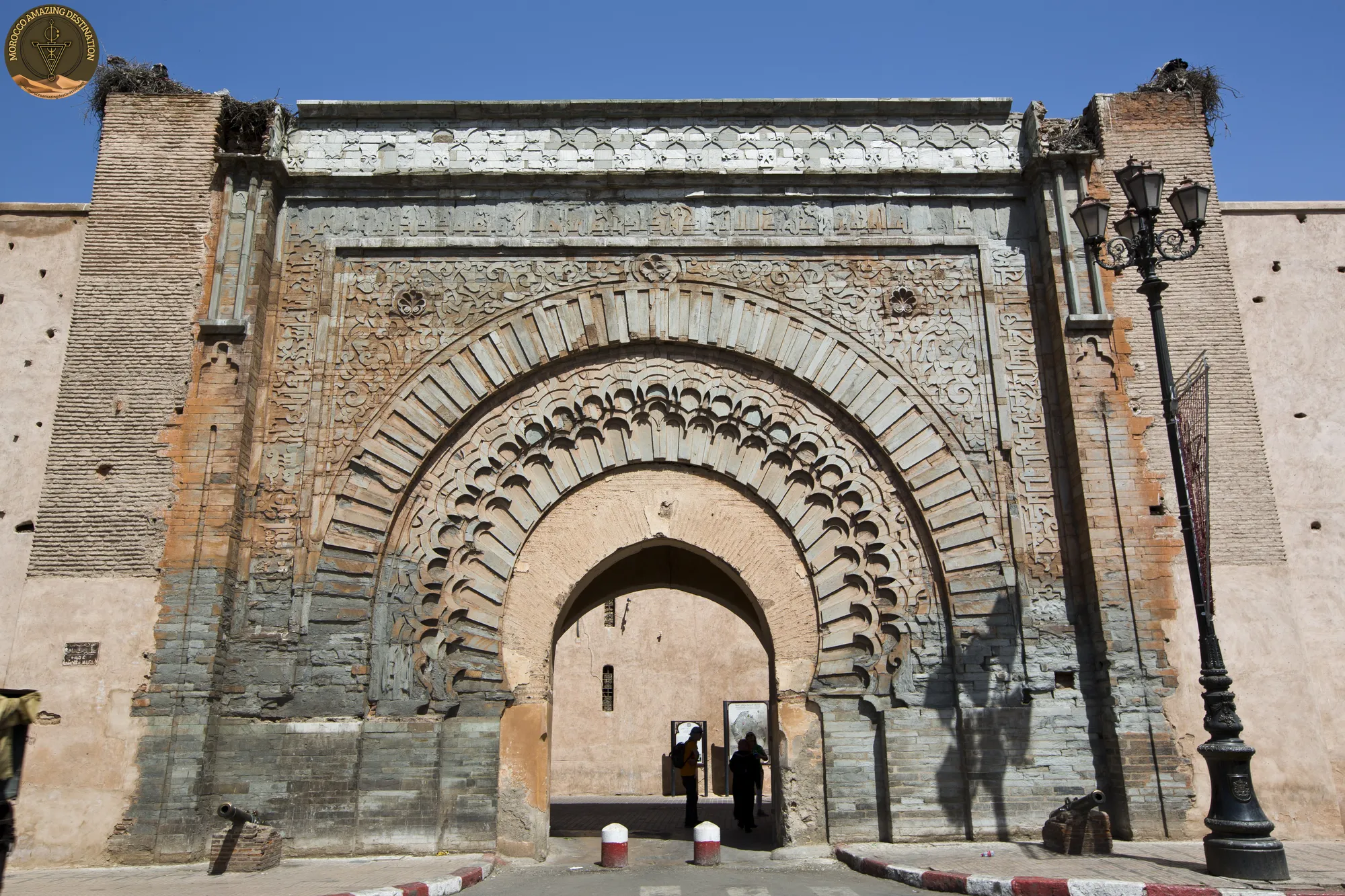
Walk through a gate in Marrakech and you cross a line that once meant something. The marrakech city gates carry names that record tribes, trades and market days, and most of them were built to slow an attacker down. Bab is the Arabic word for gate, and the wall that holds these openings went up in the 12th century, when a dynasty needed to hold a plain with no natural defence. The entrances bend inward for a practical reason: a straight arch lets a horseman ride through at a gallop, while a corner forces him to stop and turn.
In this guide, we will break down what the gate names mean, why the entrances twist, which dynasties rebuilt the circuit, and how to walk the surviving gates on foot.
Marrakech City Gates and the Stories in Their Names
Everything inside the circuit is the medina, and after sunset the gates were the only way in or out. A name worked like a street sign and a register at once: it told a carter which road he was on, and told everyone else which people, crops or crafts belonged beyond it.
The names fall into a few families:
- Tribal: Bab Doukkala points west towards the Doukkala Berber tribe and the road to Casablanca.
- Occupational: Bab Debbagh is the gate of the tanners, and the workshops still sit next door.
- Place: Bab Aghmat remembers Aghmat, the Almoravid capital that Marrakech replaced.
- Calendar: Bab el-Khemis took its name from the Thursday market held outside.
Bab Agnaou is the exception. Its Berber name has been read as mutes, as Black people or Gnawa, and as hornless ram, and no reading has won. The gate also answers to Bab al-Qasr and Bab al-Kuhl, which suggests the people who used it were not sure what the first name meant either.
Why Marrakech’s Gates Bend Inward
A gate is a hole in a wall, and a hole is where a wall fails. Build the opening straight and cavalry can ride through at speed, in formation, before the guard on the tower has moved. Bend it and the rider meets a corner, loses momentum, and enters a passage that a defender already knows in the dark.
The surviving plans show how far the Almoravids and Almohads took the idea:
- Bab Doukkala: you enter from the west, turn south, then turn east. The original plan is almost unaltered.
- Bab Debbagh: five bends, through two open courts and one vaulted chamber.
- Bab Aghmat: originally a full 180-degree turn.
- Bab el-Khemis: the Almohads added three more right angles to the bend that was already there.
The marrakech medina walls carrying these gates are rammed earth, called tabia in Arabic. They stand 6 to 8 metres high and 1.4 to 2 metres thick, with square towers every 25 to 30 metres. Marrakech’s mix contains up to 17 percent lime, against up to 47 percent in Fes and Meknes. Rammed earth needs constant repair, so every dynasty that held the city put money into the circuit.
Four Dynasties in Marrakech’s Walls
Marrakech was founded in 1070 by the Almoravid commander Abu Bakr ibn Umar. The full circuit came later: Ali ibn Yusuf began it in 1126 and finished it in January or February 1127, reportedly in eight months for 70,000 gold dinars. The line was pegged out with ropes, and the amir’s astrologers chose the day to start.
The Almoravids built the 1126 circuit and its bent entrances. Ya’qub al-Mansur added the kasbah south of the medina between 1185 and 1190, and Bab Agnaou belongs to that programme. The Saadians left the mellah and El Badi; the Alaouites pushed the wall north in the 18th century, around the zawiya of Sidi Bel Abbes.
Four Almoravid gates are gone. Bab ash-Shari’a, Bab Moussoufa, Bab Yintan and Bab as-Saliha survive only in texts. The 8 September 2023 Marrakesh-Safi earthquake brought down seven sections of rampart, and four have been rebuilt: Bab el-Khemis, Bab Aylan, Bab Debbagh and the stretch between them.
Walking the Marrakech Gates Today
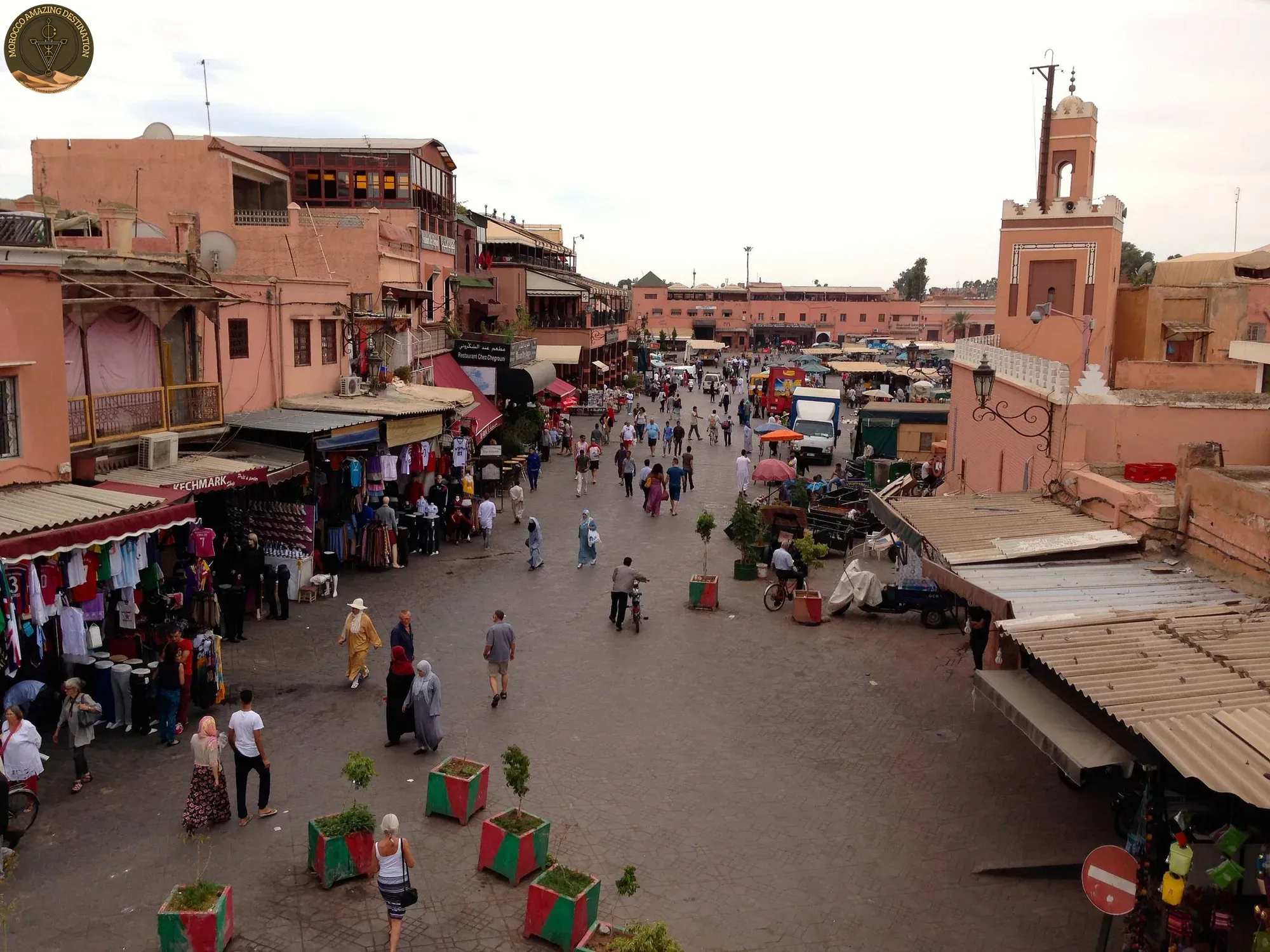
Several of the gates of marrakech are now simple openings with no defensive role left. Bab al-Makhzen, west of the Kutubiyya, and Bab al-‘Arisa, the Gate of the Bride, were walled up in the early 20th century, and a road runs through the first. Bab Agnaou lost its flanking towers and vaulted vestibule, and its arch was partly filled with a smaller brick arch, probably in the 18th century. The walk on top of the walls is closed to the public.
What still pays off:
- Bab Agnaou: the carved sandstone façade, cut around 1188 to 1190, with radiating bands, interlacing arches and a Kufic frieze quoting Surah al-Hijr.
- Bab Debbagh: the tanneries, working beside the gate since the Almoravid era.
- Bab el-Khemis: the Thursday market a few hundred metres north, with a domed marabout tomb just outside.
- Bab Doukkala: the busiest arrival gate, coming in from the Casablanca road.
Give the circuit a morning rather than an hour. Bab er-Robb, the one gate set in an angle of the walls, earns the detour: robb was a cooked wine brought down from the N’fis valley and regulated through this gate, though historians argue over whether the Almohads or the Almoravids built it. Our medina survival guide covers the navigation side.
Plan Your Marrakech Gates Walk
A guided morning puts the names in order: Bab Doukkala from the west, Bab Agnaou at the kasbah, then the eastern pair at Debbagh and el-Khemis. Our 9 Days Morocco Tour from Marrakesh gives you a full day inside the medina with a local guide, and the 10 Days in Morocco: Marrakech to the Sahara opens with a medina walk before heading over the Atlas.
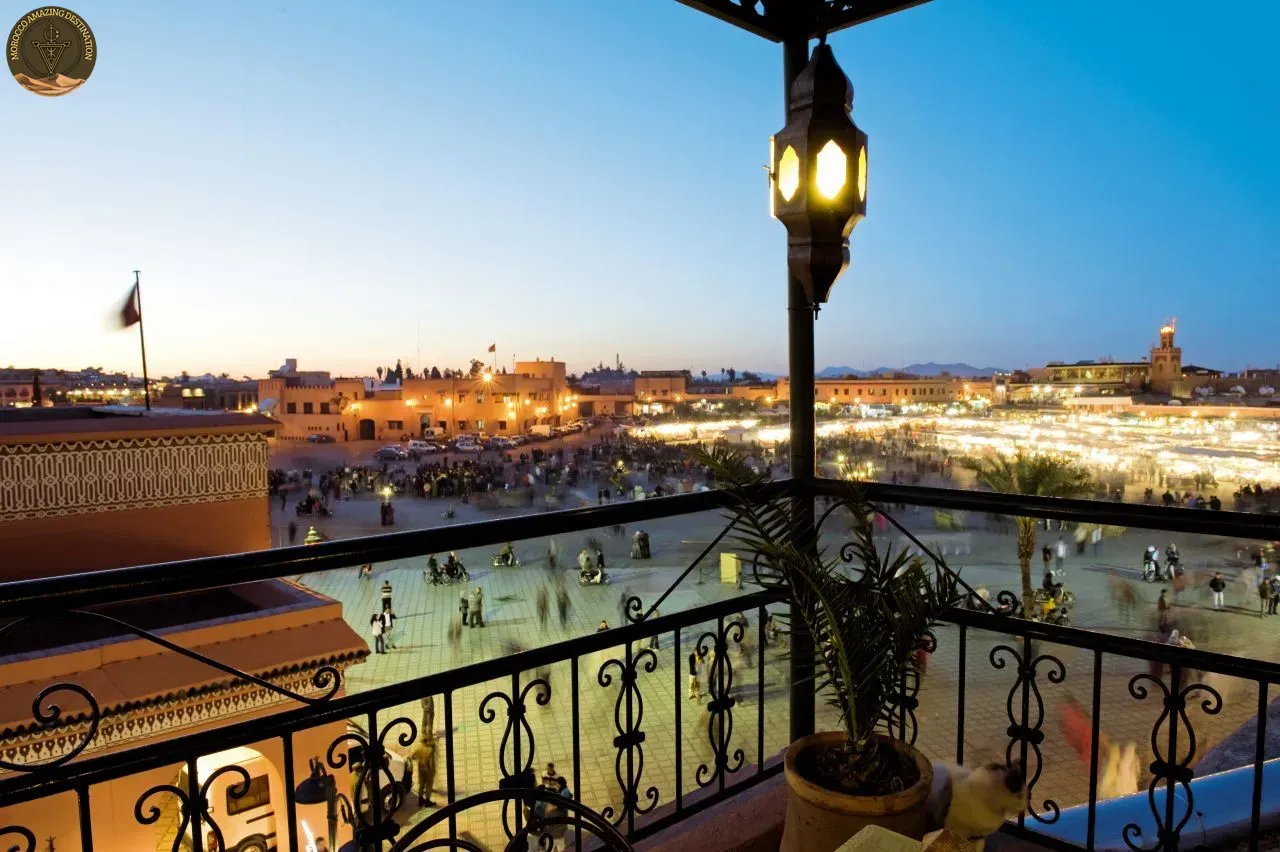
We can customize a tour to match your needs - design your perfect itinerary
If you found this helpful, add us as your preferred source on Google.
Frequently Asked Questions
What does the name Bab Agnaou mean?
Nobody knows for certain. The Berber word has been read three ways: mutes, Black people or Gnawa, and hornless ram. Scholars have not settled on a single meaning, and the gate also answers to Bab al-Qasr and Bab al-Kuhl.
Why do the gates of the Marrakech medina bend inward?
A straight opening lets cavalry ride through at a gallop. A bend forces riders to slow and turn into a passage the defenders knew, which is why Bab Doukkala, Bab Debbagh and Bab Aghmat all have angled entrances.
Which gate in Marrakech leads to the tanneries?
Bab Debbagh, in the north-east of the medina. Tanneries have worked beside it since the Almoravid period, and the gate itself turns through five bends, two open courts and one vaulted chamber.
Can you walk on top of the Marrakech city walls?
No. The wall walk is closed to the public. You can follow the ramparts at street level instead, which takes a morning, and look at the gates from outside.
Ready for an Adventure?
Have questions? Feel free to contact us using the form below. We're here to help!