· Travel · 6 min read
What Is a Medina in Morocco? Complete Old City Guide
What is a medina in Morocco? Explore walled old cities, souks and riads in Fes & Marrakech and learn how to visit with ease.
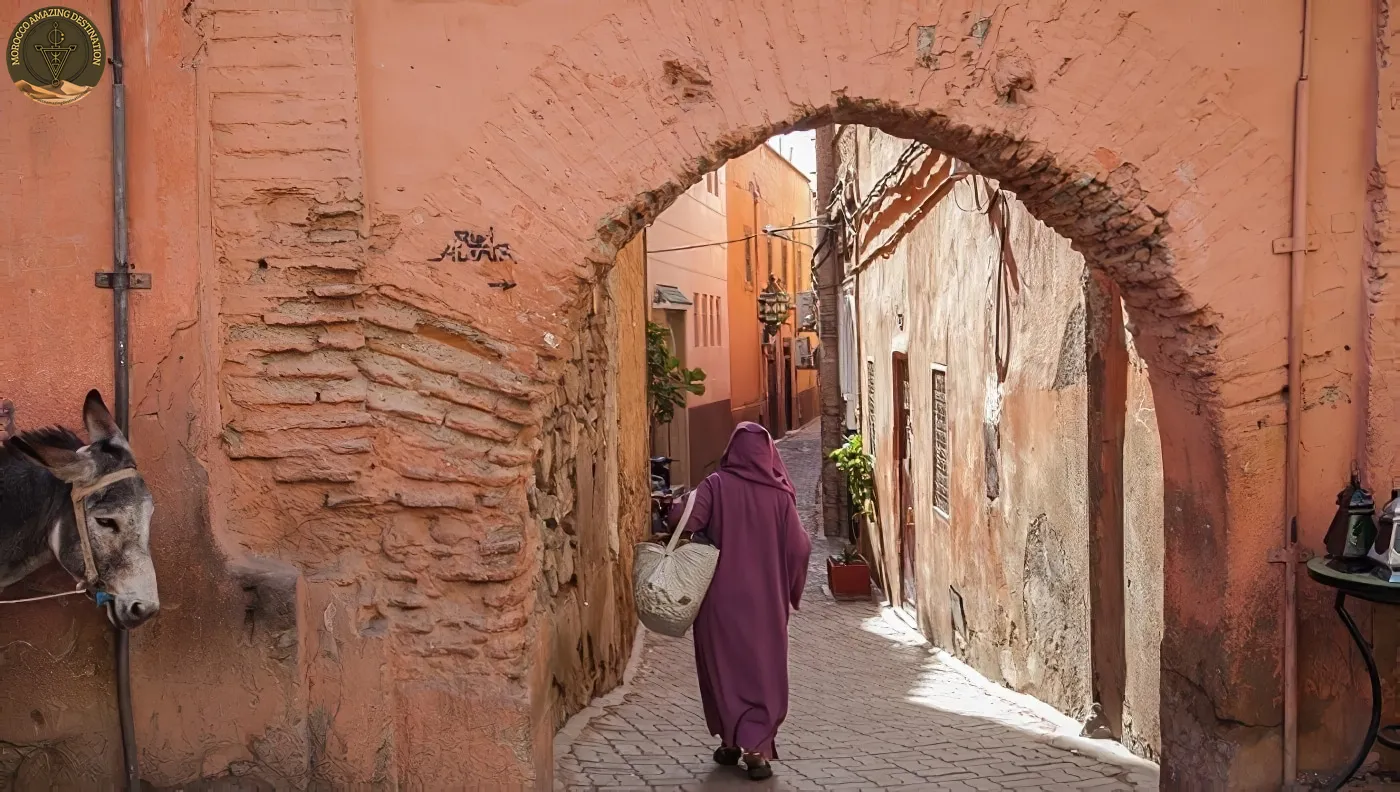
Step through a Bab gate and the modern boulevards fall away. Inside, lanes twist under slatted shade, artisans hammer metal, and scent drifts from spice pyramids. So what is a medina in morocco? It is the walled historic heart of a Moroccan city — Arabic madina simply means city — a living old town of ramparts, souks, courtyards and neighbourhood life.
In this guide, we will break down what a medina is, what you find inside, how it differs from a kasbah and ksar, and how to explore it calmly with a local guide.
What a Medina Means and Why Moroccan Cities Have Two Centres
A medina is the original city, built before cars and later expansion. It is enclosed by thick ramparts punctuated by monumental gates called Bab. Examples include Bab Boujloud in Fes and Bab Agnaou in Marrakech. The name was not invented for tourists. Locals simply call the old quarter the medina, meaning the city itself.
The double-city layout you see today has a clear reason. Rather than demolish the historic core, the later Ville Nouvelle was built alongside it. The result is two complementary centres. The medina stays dense, car-free and inward-facing. The new city adds wide boulevards, administrative districts and modern housing. Walls once marked fiscal and defensive boundaries, and they still shape daily logistics.
How the wall defines the medina:
- Ramparts and gates: High walls with Bab gates control access and frame arrival.
- Car-free mesh: Lanes are too narrow for cars, so movement stays on foot.
- Drop at the nearest Bab: Drivers stop at the closest gate and you walk the last stretch.
Inside the Walls: Souks, Riads and Everyday Life
Life inside revolves around proximity. Morocco medina souks form the commercial engine — not a single market but a network of covered lanes grouped loosely by trade. Spices, dyed wool, leather, copper, carpets and pastries each have their own stretch. Roofs filter light and shade keeps summer heat softer, while widths suit only feet, handcarts, mopeds and donkeys.
Houses turn inward for privacy and climate. Riads centre on a garden courtyard with a fountain and planting, while simpler dars use a tiled light well. Both show blank walls to the street and open to the sky inside. Many now welcome guests as intimate boutique stays. You also find fondouks, former urban caravanserais around a central courtyard, neighbourhood mosques, madrasas, public fountains and communal ovens that still bake daily bread.
What you will notice inside:
- Trade lanes: Copper hammering in Souk Haddadine, leather near the tanneries, colour in spice and textile lanes.
- Courtyard houses: Riads are garden houses inside the medina — quiet, inward and often your overnight base.
- Fondouks and madrasas: Historic courtyards like Nejjarine show craft and learning, now often museums.
- Daily rhythm: Morning deliveries by handcart, midday prayer, afternoon tea, evening calm when day visitors leave.
Medina vs Kasbah vs Ksar: How to Tell Them Apart
Travellers often ask about medina vs kasbah, and the answer clears up most confusion. A medina is a whole historic urban quarter with thousands of homes, shops and mosques inside shared walls. A kasbah is a single fortified residence or citadel for a notable family or garrison, usually square with four tapering corner towers in rammed earth. Kasbah Amridil in Skoura is a classic example.
A ksar is the third form: an entire fortified village of many houses inside collective walls and towers. The UNESCO World Heritage site of Ait Benhaddou is technically a ksar that contains several kasbahs within one fortified settlement. It shows pre-Saharan earthen architecture as a complete community, not a single house.
Quick way to remember:
- Medina: Historic walled city quarter — many families, many trades, many mosques.
- Kasbah: One fortified house or citadel — four corner towers, single residence.
- Ksar: Whole fortified village — many houses inside one set of walls.
Use medina for the big old cities like Fes and Marrakech, kasbah for a fortified mansion, and ksar for a fortified village. The words describe scale, not just age or material.
Two Living Examples: Fes and Marrakech
To picture a medina, it helps to compare two great ones. The fes medina, Fes el-Bali, is the largest car-free urban area many visitors ever walk. About nine thousand alleys weave across a vast walled footprint, dense with workshops, tanneries and madrasas. The UNESCO World Heritage site remains inhabited and working. You hear craftsmen before you see them, and the scent of leather, cedar and baking bread marks each turn.
Marrakech offers a different tempo. Its medina is vast and centres on the open square of Jemaa el-Fnaa, a UNESCO World Heritage site that draws storytellers, musicians and food stalls by day and night. Around it, souks branch like a maze and riads hide calm gardens steps from the hum.
Smaller medinas echo the same logic at human scale. Essaouira spreads along the Atlantic behind Vauban-style walls with wide sea air. Chefchaouen climbs a Rif hillside in blue-washed lanes that feel compact and calm. Each shows how walls, gates and courtyard houses adapt to place while keeping the same medina idea.
Visiting a Medina Without the Stress
Staying inside a medina makes Morocco feel close. First walks feel maze-like — part of the charm when you are prepared. Your driver drops you at the nearest Bab and a porter wheels luggage on a handcart. Inside, landmarks guide you better than a grid.
Keep it simple: agree a meeting point at a gate, use an offline map, and follow minaret silhouettes and fountains. A private guide turns noise into meaning, from artisan workshops to a quiet fondouk and a rooftop view. Evenings reward you. When day visitors leave, lanes soften and tea in a courtyard feels like home.
Morocco’s medinas are not museums. They are working cities where craft, prayer and family life continue behind plain walls. Walk gently, ask before photographing people, and you feel cared for like family while discovering the real Morocco.
For a route that pairs medina time with desert nights, consider the 8-Day Imperial Cities and Desert Tour from Casablanca with guided walks in Fes and Marrakech, medina riads and a luxury camp in Merzouga. Or choose the 12-Day Morocco Grand Tour that adds Chefchaouen and Essaouira to Fes and Marrakech for a full walled-city arc.
We can customize a tour to match your needs — design your perfect itinerary
If you found this helpful, add us as your preferred source on Google.
Frequently Asked Questions
What is a medina in Morocco?
A medina is the historic walled old town of a Moroccan city. The Arabic word madina means city. In Morocco it refers to the pre-colonial core, enclosed by ramparts and entered through monumental gates called Bab, with car-free lanes, souks, mosques and courtyard houses inside.
What is the difference in medina vs kasbah?
A medina is an entire historic urban quarter. A kasbah is a single fortified residence or citadel, usually square with four corner towers. A ksar is a whole fortified village of many houses inside shared walls, such as the UNESCO World Heritage site of Ait Benhaddou.
Can cars drive inside a Morocco medina?
Largely no. Most medina lanes are too narrow for cars and are car-free. Taxis drop you at the nearest Bab gate, and you continue on foot. Porters with handcarts, small mopeds and donkeys handle luggage and goods inside the walls.
Is the Fes medina the largest in Morocco?
Fes el-Bali is often described as the largest car-free urban area in the world, with around nine thousand alleys across a vast walled area. It is a UNESCO World Heritage site and remains fully inhabited, alongside the famed medina of Marrakech centered on Jemaa el-Fnaa.
Ready for an Adventure?
Have questions? Feel free to contact us using the form below. We're here to help!