· Travel · 5 min read
Khamlia, Morocco: The Gnawa Village Near Merzouga
Khamlia near Merzouga is a Gnawa village of Bambara descent. Meet its people, hear its music and learn how to visit with respect.
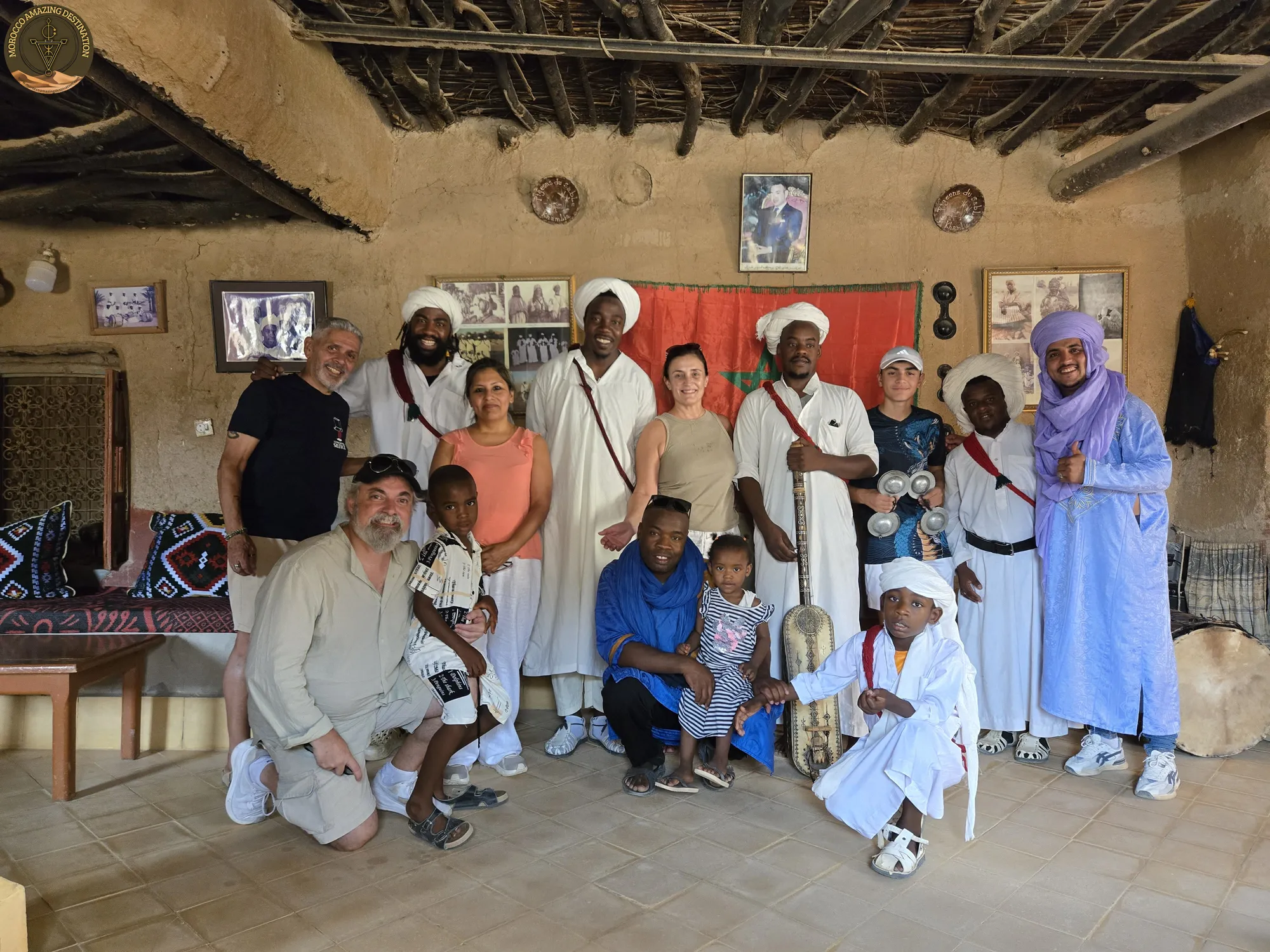
Khamlia is a small earthen village about 7 km south of Merzouga, on the western edge of the Erg Chebbi dunes in south-east Morocco. Most of the roughly 400 people who live here are Gnawa, descended from sub-Saharan Africans, mainly the Bambara of Mali, with Fulani and Hausa ancestors before them. Their songs still name the places their families left, in a mix of Arabic and older African words.
This guide covers who lives in Khamlia, where those families came from, what Gnawa music means in the village, and how to visit without turning a living tradition into a show.
Khamlia: The Gnawa Village Near Merzouga
Anyone searching for the Khamlia Morocco village on a map finds a douar of earthen houses at the foot of the Erg Chebbi, roughly 7 km south of Merzouga and about 20 km from the closed Algerian border. The name is usually linked to the Arabic khamila, meaning land of abundant vegetation, although that reading is not certain.
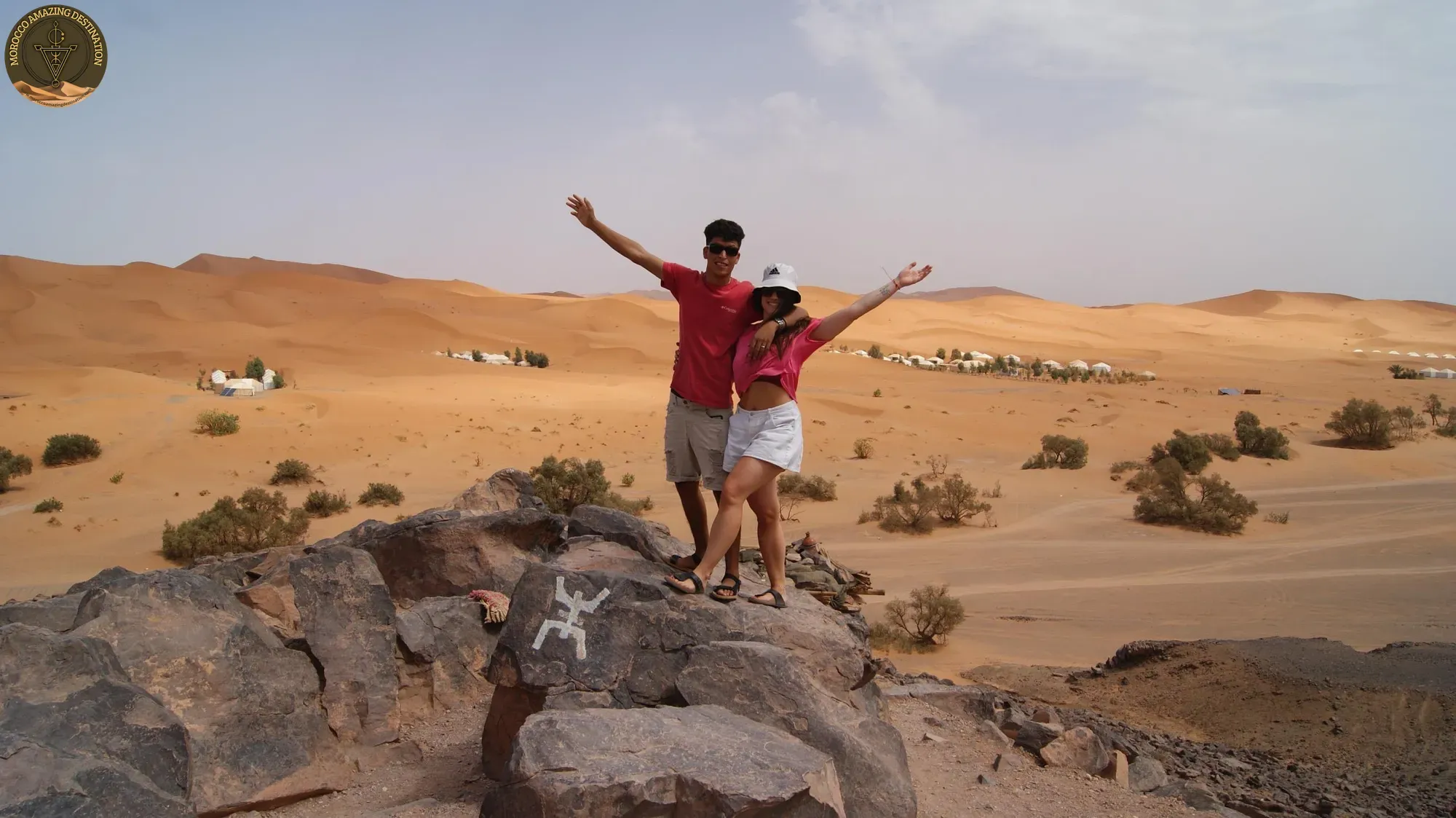
The village is younger than it looks. Families settled here around the middle of the 20th century, and until a paved road reached them the settlement counted fewer than 15 houses, with no school, mosque or piped water. People worked the khol mines at Mfis, collected fossils at Taous and herded animals.
Today:
- The setting: sand begins where the last houses end, and the dunes rise straight behind them.
- The population: Gnawa families, most of them of Bambara descent, with Fulani and Hausa roots.
- The language: Tamazight is the everyday tongue, with Arabic for school, trade and visitors.
- The music: two music houses keep the Gnawa repertoire going for guests and for the village.
Khamlia’s People: Roots Along the Rissani Caravan Routes
Khamlia’s families reached the Tafilalt through the trans-Saharan routes that linked Morocco to West Africa. The caravan hub of Sijilmasa, beside today’s Rissani, was the northern terminus of the gold and salt trade and a market in enslaved people, and the ancestors of many Khamlia families were carried north along that road.
The origins the songs still name:
- Bambara: the largest group, from the Niger river region of present-day Mali.
- Fulani and Hausa: pastoral and trading peoples whose names appear in the same repertoire.
- Timbuktu and “the Sudan”: Bilad es-Sudan, the lands south of the Sahara, not the modern state.
The community became Amazigh-speaking over time while keeping a distinctly African identity. The older Amazigh term Ismkhan refers to Black Moroccans descended from enslaved people, and in Khamlia the African, Amazigh and Arab-Islamic layers meet, with the songs keeping the African one audible.
Gnawa Music in Khamlia: A Living Heritage
In Khamlia the music is played as history. The guembri, a three-string bass lute with a camel-skin soundboard, sets a slow pulse under the qraqeb, iron castanets whose clatter is often said to echo the chains of the slave caravans. A lead singer and a chorus answer each other, mixing Arabic with Bambara and other African words that not every singer can still translate.
In its full form the lila, also called derdeba, is an all-night healing ceremony. A maâlem leads it with a female medium, calling on the mluk spirits with colour, incense and rhythm to settle what troubles a household. The opening fraja songs name the Bambara, Fulani, Hausa, Timbuktu and the Sudan, so the repertoire records the crossing itself.
UNESCO has inscribed Gnawa on the Representative List of the Intangible Cultural Heritage of Humanity. Khamlia’s own gathering, the Sadaka, brings Gnawa families together for three days of rites, shared meals and round-the-clock music, and it has older roots in nearby Taous.
Tea and Daily Life in Khamlia Today
The paved road changed the village. Since Merzouga grew, families have earned a living from guests rather than mines and fossils, and they run visits on a donation model instead of tickets: tea is poured, a group plays in a rug-lined room, and you leave a contribution.
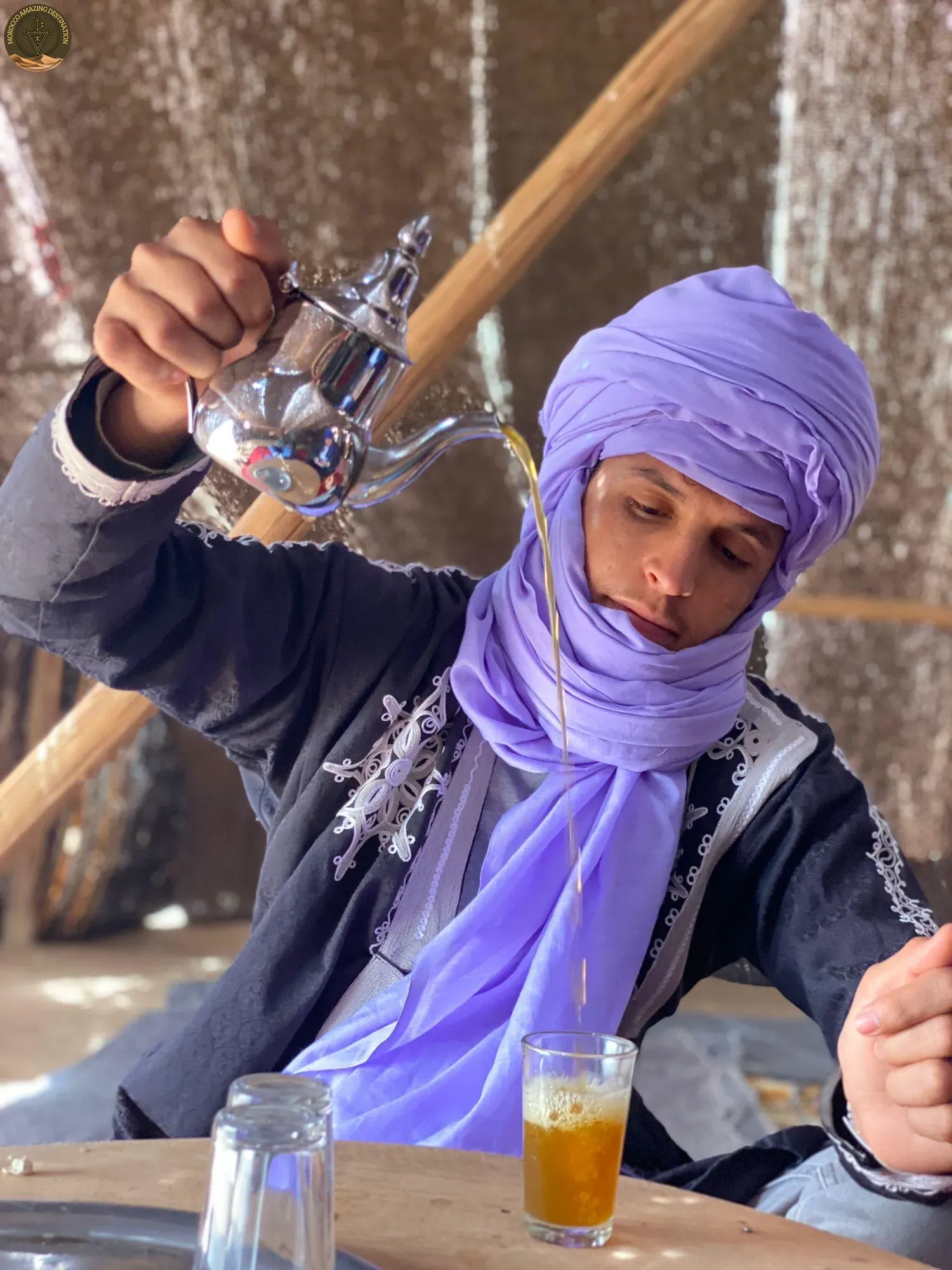
Two music houses in the village host Gnawa music Khamlia evenings. What a visit looks like:
- Tea first: mint tea and introductions before anyone picks up an instrument.
- Thirty to fifty minutes: guembri, qraqeb and voices in a rug-lined room.
- The contribution: reported amounts run from about 20 dirhams a head to 100 or more.
- The village: small shops, fossil stalls and lanes that run towards the sand.
Mornings are the quietest hours, and in high summer midday is too hot for walking. Most visitors meet a group for 30 to 50 minutes over tea rather than a sacred lila, so the show introduces a tradition that stays partly private. Ask before photographing people, and buy tea, recordings or crafts locally so the money stays in the village.
Plan Your Khamlia and Merzouga Journey
Khamlia is an easy addition to a Merzouga stay. The turning for Khamlia Merzouga sits about 7 km south of central Merzouga, and a paved road covers the distance in 8 to 10 minutes. Rissani is around 40 km away, Erfoud about 55 km, and Errachidia about 130 km, which takes two to two and a half hours. From Marrakech the drive is roughly 560 km; from Fes around 465 km.
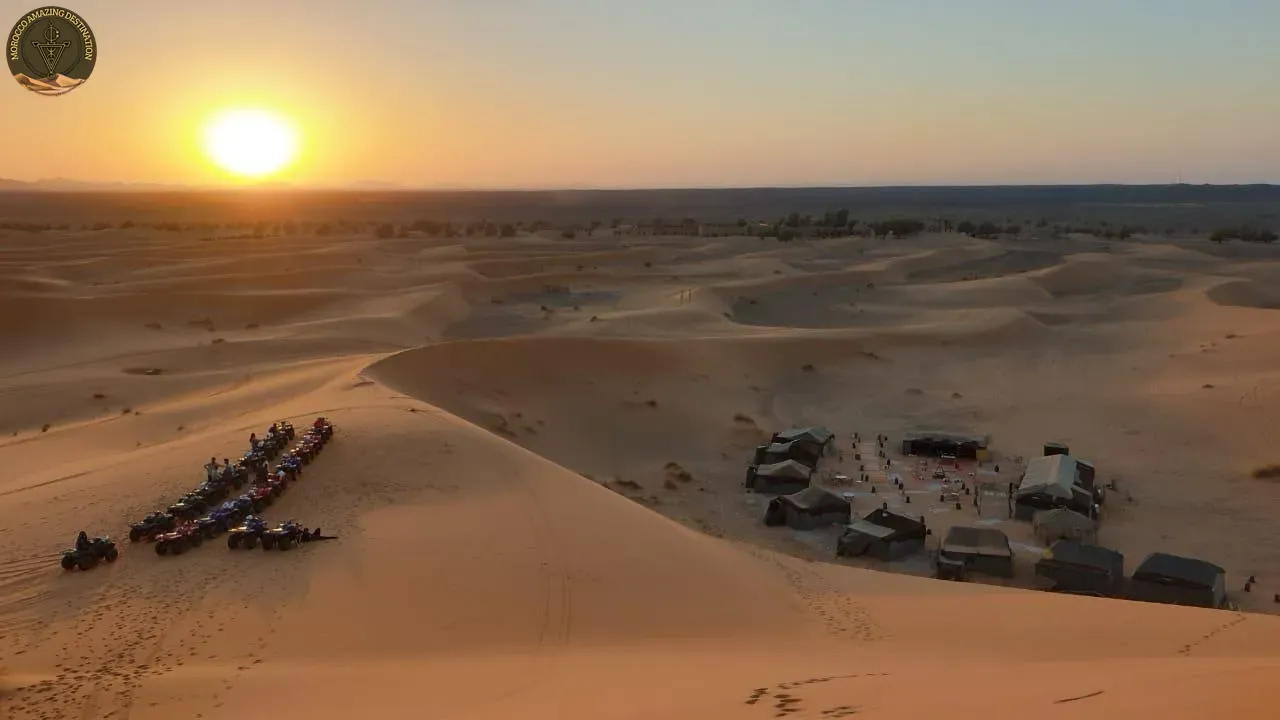
Our 3-Day Desert Tour from Fes to Merzouga crosses the Tafilalt on the way to the dunes, and the 3-Day Trip from Marrakech to Merzouga comes over the Atlas passes from the west. Either one can include a morning at a music house with a guide who explains what you are hearing. For a quieter base, see our guide to Hassi Labied, the village beside the dunes.
We can customize a tour to match your needs - design your perfect itinerary
If you found this helpful, add us as your preferred source on Google.
Frequently Asked Questions
Where is Khamlia village in Morocco?
Khamlia is about 7 km south of Merzouga, on the western edge of the Erg Chebbi dunes in Errachidia Province, in the Drâa-Tafilalet region of south-east Morocco. Rissani is around 40 km away, Erfoud about 55 km and Errachidia about 130 km.
Who are the Gnawa of Khamlia and where did they come from?
They are descendants of sub-Saharan Africans, mostly the Bambara of Mali, with Fulani and Hausa ancestors before them. Their families reached the Tafilalt through the trans-Saharan caravan routes that funnelled through Sijilmasa, beside today's Rissani, where the gold and salt trade met a market in enslaved people.
What is the Gnawa music played in Khamlia?
It is built on the guembri, a three-string lute with a camel-skin soundboard, and the qraqeb, iron castanets, with call-and-response singing in Arabic and older African words. In its full form the lila, or derdeba, is an all-night healing ceremony; visitors hear a shorter performance with tea. UNESCO has inscribed Gnawa on the Representative List of the Intangible Cultural Heritage of Humanity.
How do you visit Khamlia respectfully?
Travel with a local guide, come in the morning when the village is quieter, ask before photographing people, and leave a contribution for the performance, which runs on a donation basis rather than tickets. Reported amounts start at around 20 dirhams a person and go up from there. Khamlia is about 8 to 10 minutes by paved road from Merzouga.
Ready for an Adventure?
Have questions? Feel free to contact us using the form below. We're here to help!