
· Travel · 6 min read
Seven Saints of Marrakech: Tombs, Ziyara and City Patron
Meet the seven saints of Marrakech, follow the ziyara circuit around the medina, and see what non-Muslim visitors can actually visit.
Ask a Marrakechi about the old city’s second name and the answer usually points to a gate. Seven venerated men, judges and teachers among them, lie in shrines set around the medina walls, and they are the seven saints of marrakech. Together they give the city its other name, the city of seven saints, and the ring they trace is a practical way to read the medina’s edges.
In this guide, we will walk the seven tombs in the order the pilgrimage visits them, explain why Sidi Bel Abbes became the city’s patron, and be straight about what a non-Muslim visitor can and cannot see.
Why Marrakech Is Called the City of Seven Saints
Moroccans call the group Sab’atu Rijal, seven men, and the phrase became a second name for Marrakech. The seven died across four centuries, between the twelfth and the sixteenth, and nobody gathered them into one list until the late seventeenth century. The Alaouite sultan Moulay Ismail asked the Sufi scholar Abu Ali al-Hassan al-Yusi to pick seven from the many holy men already venerated in the city, then turned that list into a pilgrimage.
Rivalry played a part. A pilgrimage to the Regraga shrines near Essaouira had built religious and commercial weight, and Marrakech answered with its own circuit of mostly Arab scholars under royal patronage. Later rulers kept paying for repairs, which is how a private list became the marrakech patron saints of the whole city.
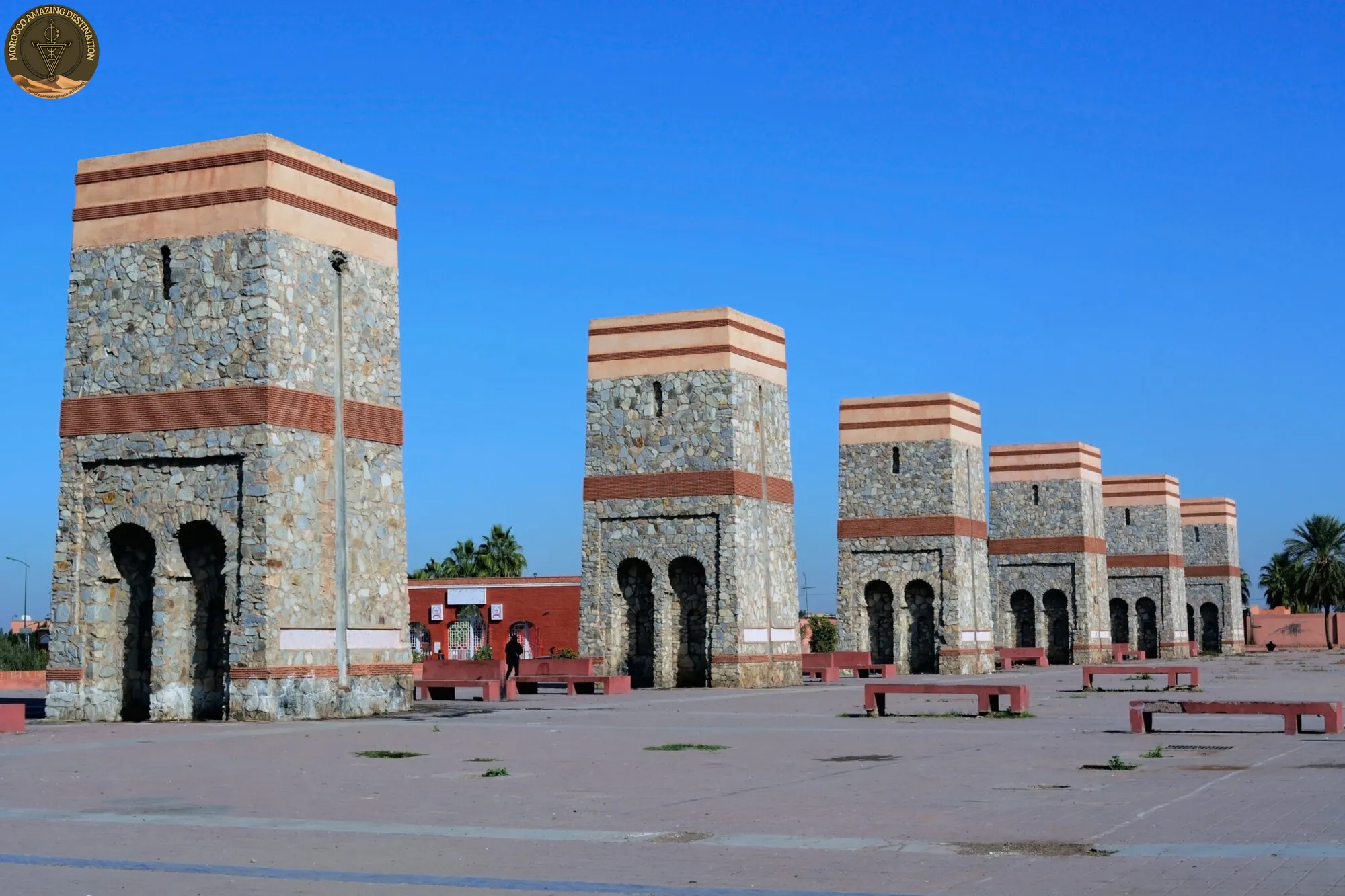
The marker on the street is modest. Just outside Bab Doukkala, the Place des Sept Saints holds seven short towers, each topped with an olive tree, added in the early 2000s. Local tradition still credits the seven with guarding Marrakech from epidemic and invasion, and their names sit on districts, a hospital and a university.
The Seven Saints of Marrakech, One by One
Names first, geography second. The order below is the one the pilgrimage follows, and each saint is tied to a gate or a quarter, so the list doubles as a map. Most tombs sit inside a zawiya, the small complex built around a saint’s grave. Al-Suhayli is the exception, resting in a cemetery mausoleum outside Bab er Robb.
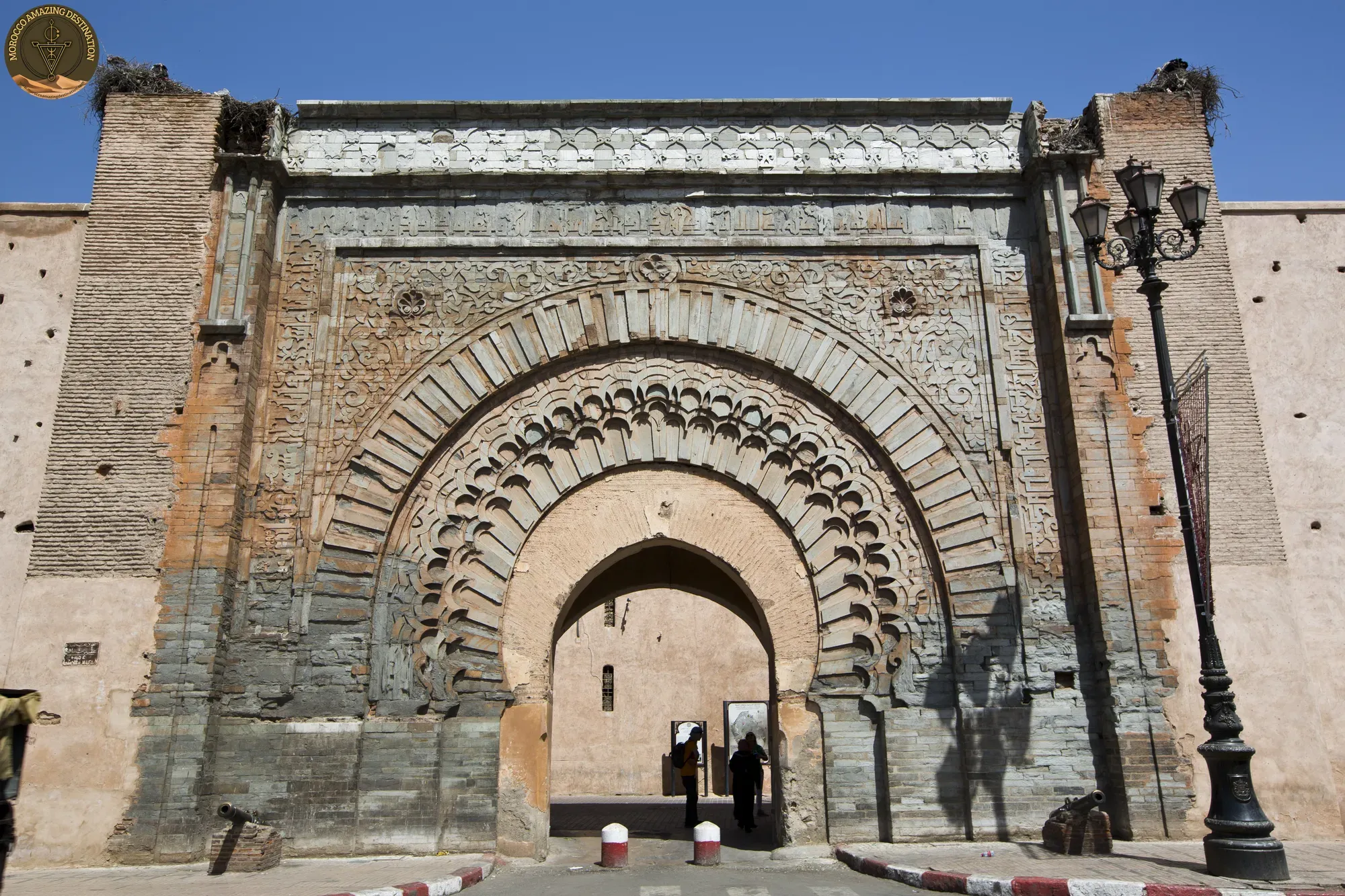
- Tuesday, Sidi Yusuf ibn Ali: a twelfth-century ascetic known as the man of the cave, buried outside Bab Aghmat in the southeast.
- Wednesday, Qadi Iyyad: chief judge of Ceuta and a celebrated legal scholar, near Bab Aylan; a university still carries his name.
- Thursday, Sidi Bel Abbes: a thirteenth-century teacher buried north of the medina, the man the city treats as its patron.
- Friday, al-Jazuli: author of the Dala’il al-Khayrat, a prayer book in seven sections; his body reached Marrakech decades after his death.
- Saturday, Sidi Abdelaziz at-Tebaa: a scholar of the Mouassine quarter, where his tomb still stands.
- Sunday, Sidi Abdallah al-Ghazwani: at-Tebaa’s student, buried northwest of Jemaa el-Fna.
- Monday, al-Suhayli: a blind Qur’an scholar from Malaga, in the cemetery outside Bab er Robb.
Sidi Bel Abbes: Patron Saint of Marrakech
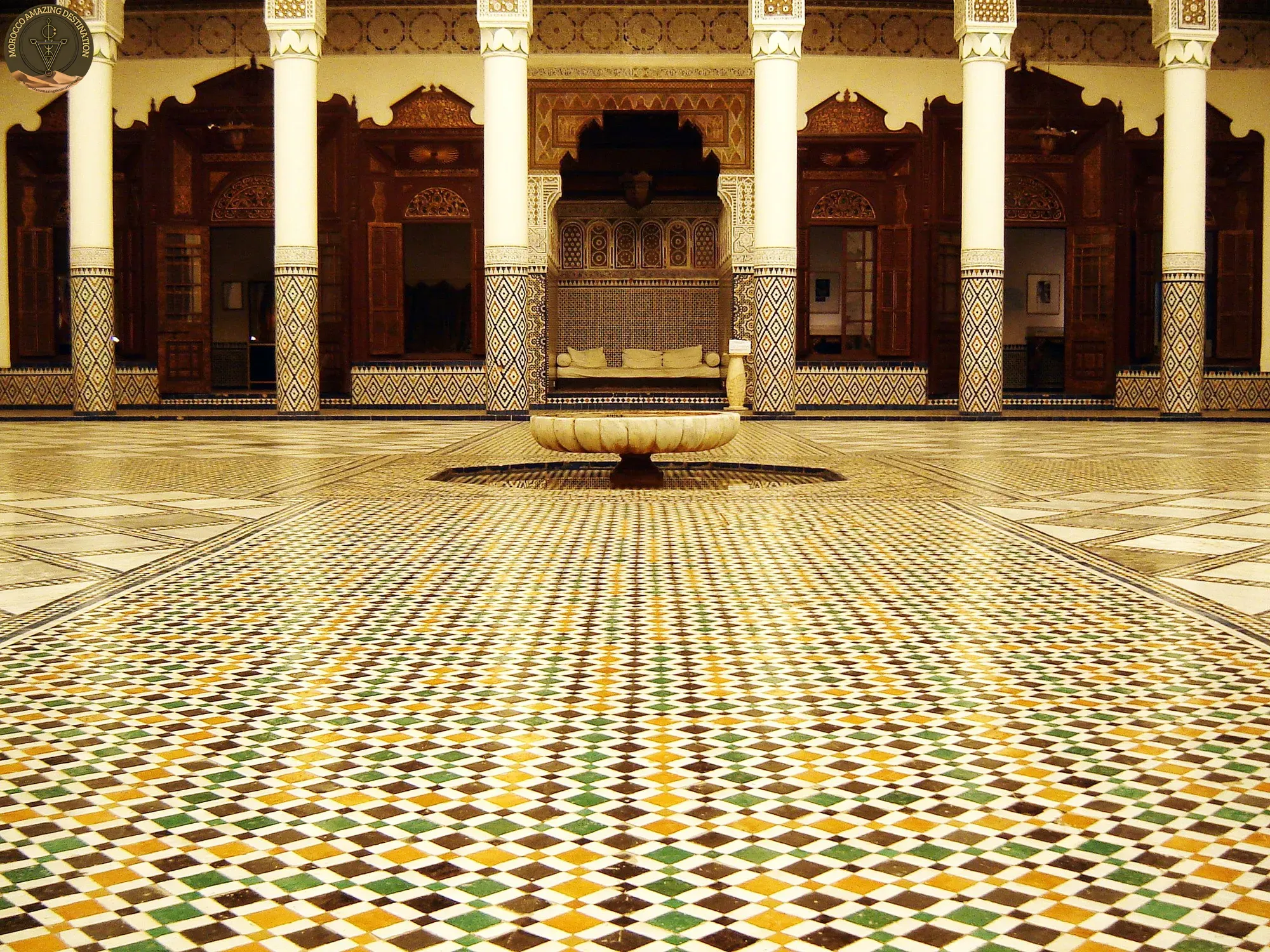
Born in Ceuta, Sidi Bel Abbes taught in Marrakech and made charity his work. He organised food and care for the blind and the destitute, and the city’s shrines served as landmarks they could navigate by. Food is still distributed at his tomb, and his green-tiled hall shows above the rooftops of the northern medina.
The complex that carries his name, marked sidi bel abbes marrakech on maps and street signs, was rebuilt in the early seventeenth century. A Saadian sultan paid for the work, hoping the saint’s blessing would ease his epilepsy. Repairs and additions have continued since. Most of the year the courtyard is a working place of charity and prayer, without a ticket window or a queue.
How the Seven-Day Ziyara Circles the Medina
The classical ziyara runs Tuesday to Monday, one saint a day, and its shape is a counterclockwise circle modelled on the tawaf. It opens outside the walls in the southeast, moves inside the medina in the middle of the week, and closes in the southwest.
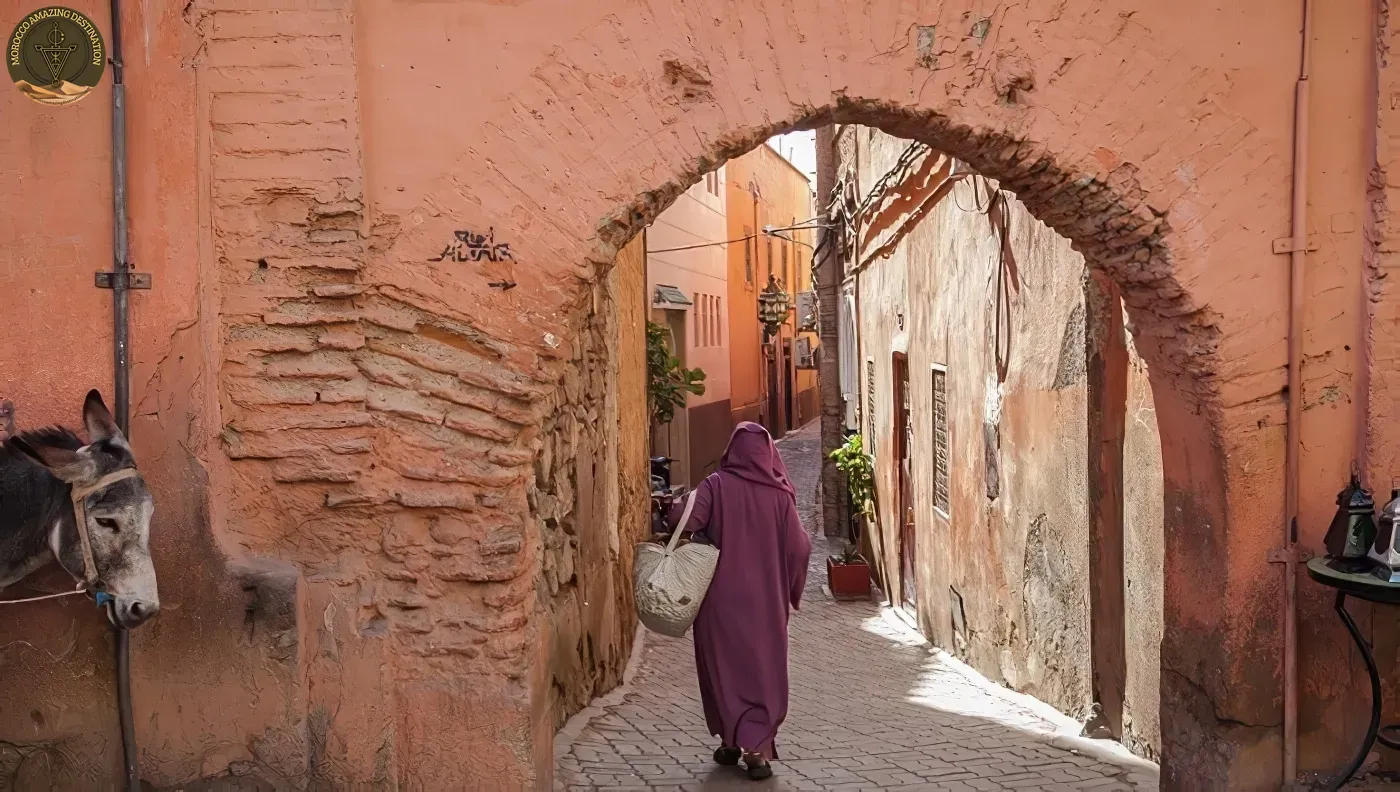
The route hugs the gates instead of the souk spine, so the week touches quarters a shopping walk never reaches.
- Tuesday to Thursday: the southeast gate, then Bab Aylan inside the walls, then the northern shrine beyond the old ramparts.
- Friday to Sunday: the middle stretch stays close to the Mouassine quarter and the lanes above Jemaa el-Fna.
- Monday: the week closes at the cemetery gate outside Bab er Robb.
Few families keep all seven days now. What survives is the single visit: a woman stopping at Sidi Bel Abbes on her way to work, students at Qadi Iyyad before exams. A continuous walk touching every tomb takes roughly half a day at an easy pace, and that is the version a visitor can do.
Visiting as a Non-Muslim: What You Can See
The mausoleum chambers are places of prayer, and in Morocco those are reserved for Muslims. That holds for all seven, whatever someone at the door may suggest. What stays open is the city around them: the lanes, the gates, the cemetery at Bab er Robb, and the outside of each shrine.
At Sidi Bel Abbes the outer courtyard is often open to non-Muslim visitors and just as often is not. Treat access as a courtesy rather than a right, and never pay a stranger who offers to open a shrine for you.
- Dress: shoulders and knees covered, shoes off at any threshold you are invited to cross.
- Voices: keep them low, and step aside if a group is praying.
- Cameras: photograph architecture freely, never people at prayer.
- A closed door: that is the answer, not the opening of a negotiation.
No shrine has a ticket office or published hours, and no official gatekeeper stands outside. For the wider picture of what is open to visitors, our guide to islamic places to visit in Morocco covers mosques, madrasas and shrines city by city.
These shrines sit in ordinary lanes, so an hour with someone who knows the doors beats a map. Hassan, our cultural guide in Marrakech, has walked this circuit with travellers who wanted the story behind each threshold, and 120 reviews at 4.9 back the slower version. Our 9 Days Morocco Tour from Marrakesh - Sahara Desert, Essaouira and Cultural Highlights keeps several Marrakech nights, and the 10 Days in Morocco: The Ultimate Private Tour from Marrakech to the Sahara is fully private from the first morning.
We can customize a tour to match your needs - design your perfect itinerary
If you found this helpful, add us as your preferred source on Google.
Frequently Asked Questions
Why is Marrakech called the city of seven saints?
Seven venerated men, mostly judges, scholars and Sufi teachers, are buried in shrines set around the Marrakech medina. A seven-day ziyara links their tombs, and the list was formalised in the late seventeenth century under the Alaouite sultan Moulay Ismail.
Who are the seven saints of Marrakech?
Sidi Yusuf ibn Ali, Qadi Iyyad, Sidi Bel Abbes, al-Jazuli, Sidi Abdelaziz at-Tebaa, Sidi Abdallah al-Ghazwani and al-Suhayli. They died between the twelfth and the sixteenth centuries and are visited one per day, from Tuesday to Monday.
Can non-Muslims visit the seven saints tombs in Marrakech?
The mausoleum chambers are reserved for Muslims, as in most of Morocco. At Sidi Bel Abbes the outer courtyard is often open to non-Muslim visitors and sometimes is not. Around the other shrines the lanes and gates are open to everyone.
How long does it take to walk the seven saints circuit?
A continuous walk touching all seven tombs takes roughly half a day at an unhurried pace. The classical ziyara spreads the same stops over seven days, one saint per day, starting outside Bab Aghmat and finishing outside Bab er Robb.
Ready for an Adventure?
Have questions? Feel free to contact us using the form below. We're here to help!