
· Travel · 6 min read
Rabat Architecture: Landmarks That Tell the City's Story
Rabat architecture in four visible layers, from the unfinished Hassan Tower to the Kasbah of the Udayas, and how to see them in a day.
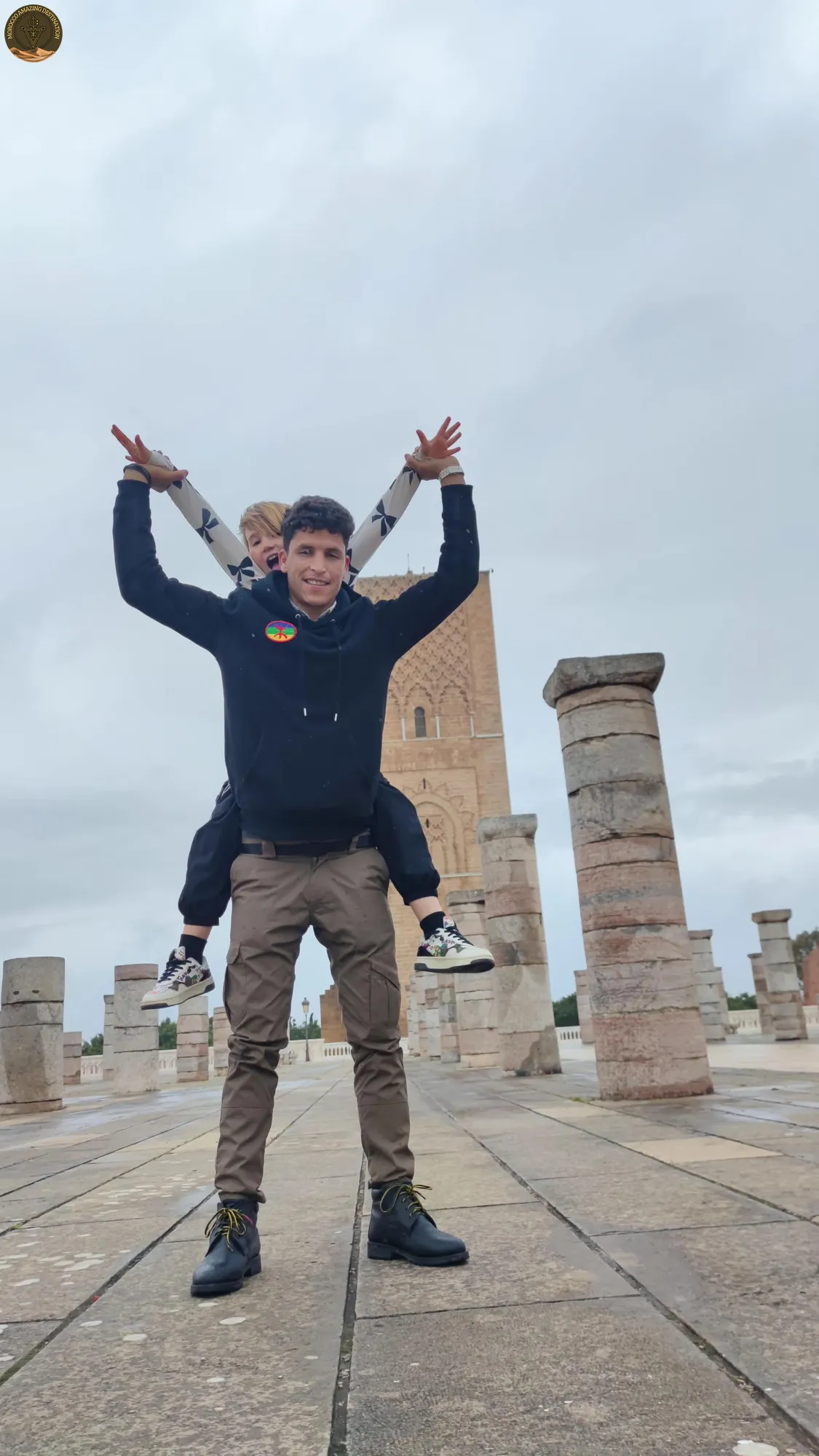
A minaret in central Rabat stops at 44 meters, cut short when the caliph who ordered it died in 1199. Across the city, the ruined minaret at Chellah carries a stork’s nest. Rabat architecture grew out of those interruptions, and the city’s UNESCO World Heritage listing describes the same blend: a 12th-century Almohad capital joined to a 20th-century modern capital.
Four layers stay visible in the old city: the unfinished imperial esplanade, a Marinid royal necropolis, a 17th-century Andalusian medina and the new town laid over them during the French protectorate. In this guide, we will break down the architectural landmarks in Rabat that anchor each layer and the order to see them in, on foot and by car.
The Almohad Esplanade: Hassan Tower and the Mausoleum of Mohammed V
Hassan Tower is half a building. The Almohad caliph Abu Yusuf Yaqub al-Mansur planned a mosque large enough for his army and began it in the late 12th century. Only the minaret rose before his death in 1199. It still stands at 44 meters, less than two-thirds of the height intended, over hundreds of stone columns that mark where the prayer hall would have been.
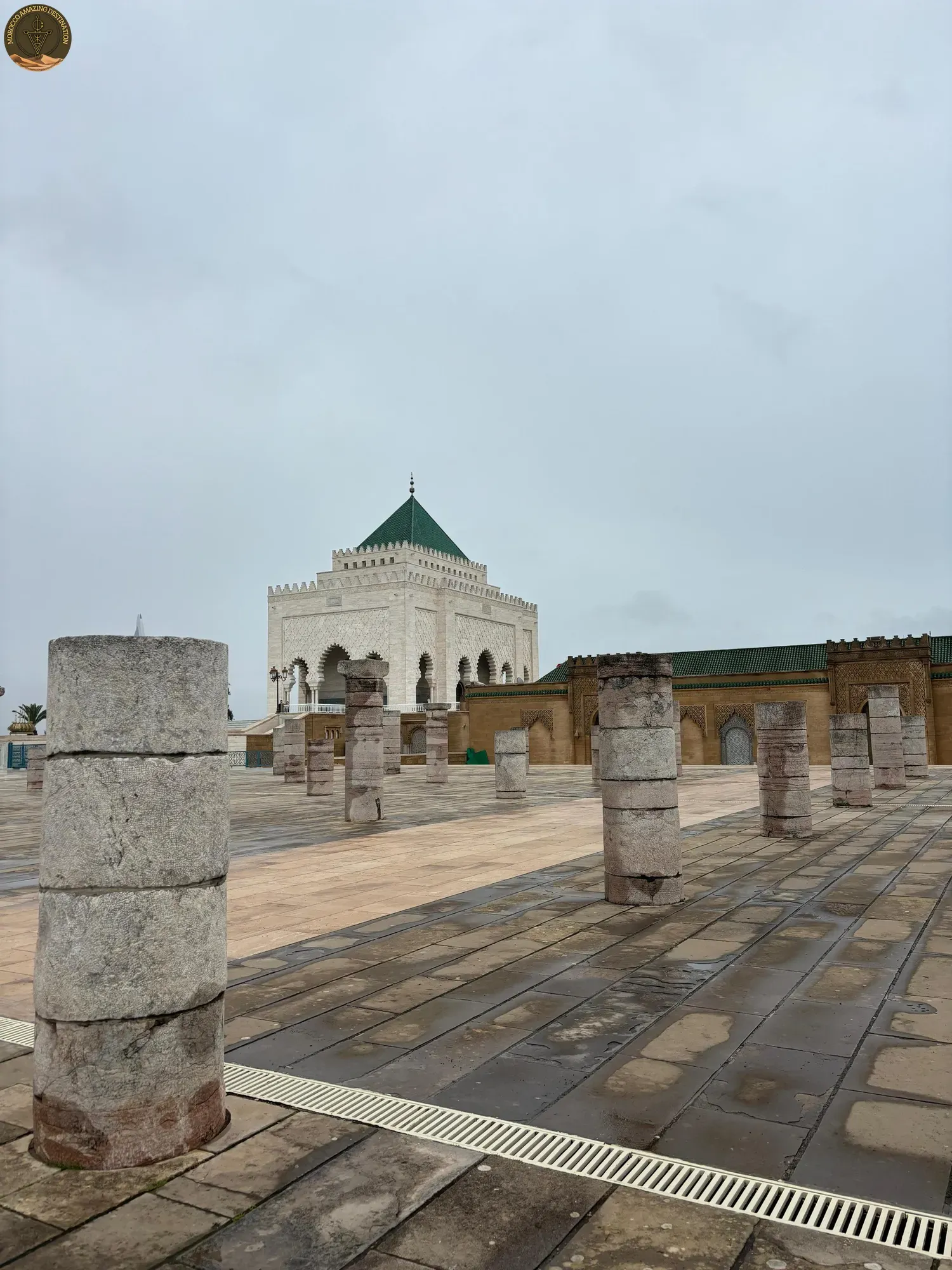
Across the square, the Mausoleum of Mohammed V answers the tower in white marble under a green pyramidal roof. Cong Vo Toan designed it, and it was completed in 1971 with zellij, carved cedar and gilding inside. From the balcony you look down at the white onyx sarcophagus; Mohammed V, Hassan II and Prince Moulay Abdallah are buried here.
What the visit involves:
- Cost: nothing. Neither the esplanade nor the mausoleum has a ticket booth.
- Access: non-Muslims enter the mausoleum, with the Royal Guard at the door.
- Timing: allow about an hour; both areas open roughly 8:00 to 18:00, and the mausoleum can close around midday for prayers.
- Dress: shoulders and knees covered, since this is a royal tomb and an active place of prayer.
Chellah: Roman Sala Colonia and the Marinid Necropolis
Chellah sits outside the walls on a hill above the Bou Regreg, and several towns overlap inside one enclosure. A Mauretanian and Punic presence came first, then the Roman town of Sala Colonia, abandoned in late antiquity. In the 13th and 14th centuries the Marinids walled the ruins and turned them into a royal necropolis behind roughly a kilometre of rampart and a monumental Marinid gate.
Roman columns and Marinid arches share the same ground. Fig trees push through mosaic floors, the 1755 earthquake left its marks, and white storks nest on the truncated minaret. The site covers about seven hectares, forms part of the UNESCO World Heritage property, and has been a classified historic monument since 1920.
The Marinid medersa of Abu al-Hasan, with its zellij, carved plaster and cedar ceilings, stands across the river in Salé beside the Grand Mosque, not in Rabat. Chellah is the only stop you cannot reach on foot: about a ten-minute drive from the medina. It is ticketed and opens 9:00 to 18:00 in winter and 9:00 to 20:00 in summer, with shorter hours during Ramadan. Adult self-entry costs 50 MAD.
Kasbah of the Udayas and the Living Medina
The Kasbah of the Udayas began as a citadel around 1150 under the Almohad caliph Abd al-Mu’min, and you still enter where travellers have entered for eight centuries, through Bab Oudaia, built between 1195 and 1199. Behind the gate the lanes run blue and white, a paint scheme that owes more to 20th-century taste than to any medieval rule.
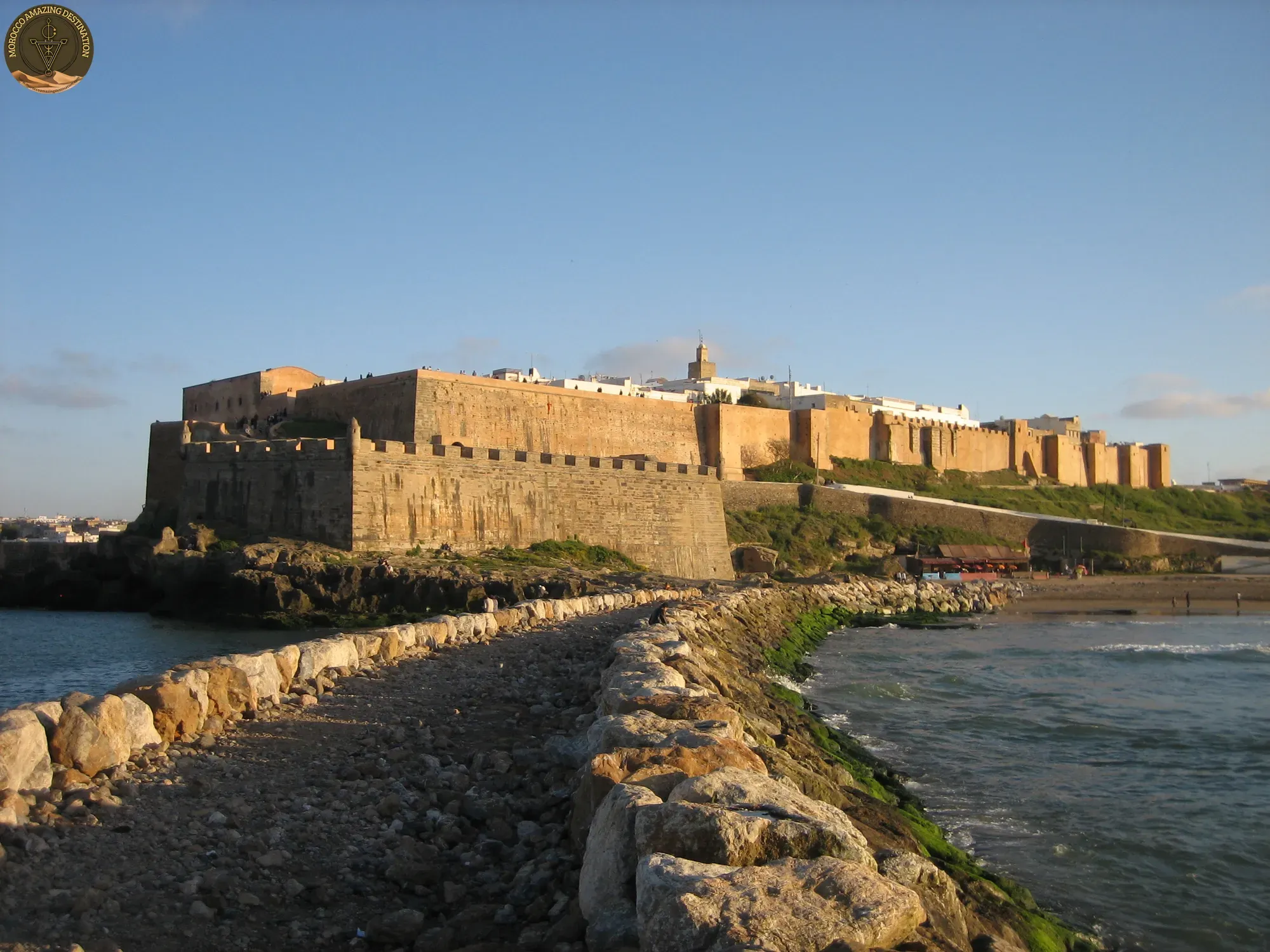
Inside, the Andalusian Garden was laid out between 1915 and 1918 by Maurice Tranchant de Lunel on the former mechouar of the palace. Entry is free, it opens roughly 8:00 to 18:00, and it smells of citrus. A 17th-century palace holds the Oudayas museum, and Café Maure looks over the river towards Salé.
Below the kasbah, the medina of Rabat explains itself through the Andalusian Wall: about 1.4 km of rampart raised from 1609 by Morisco families expelled from Spain. Their quarter became the corsair port of the Bou Regreg.
Worth a stop:
- Bab El Had: the medina’s working entrance and the busiest of its gates.
- Bab Chellah and Bab Bouiba: quieter doorways on the same wall.
- Bab Rouah: an Almohad gate that now shows contemporary art, free to enter.
Where the French Protectorate Left Its Mark
Twenty minutes on foot from the medina and the register changes. The French protectorate laid out a new town of wide boulevards and public buildings beside the old one, and the architecture separates the two cleanly.
Saint-Pierre Cathedral sits among them. Work began in 1919 to a design by Adrien Laforgue, the church was inaugurated in 1921, and the twin Art Deco towers arrived in the 1930s. It remains an active Catholic church, open to the public.
The Royal Palace, Dar al-Makhzen, closes its interior to visitors, though the mechouar opens in daylight. You can photograph the zellij and brass gates from the square, with the Royal Guard on duty at the entrance.
What to notice on this stretch:
- The change of scale: wide boulevards, planted squares and set-back facades.
- The materials: concrete and cut stone against the medina’s lime and cedar.
- The mix: cathedral, palace and administrative blocks within minutes of each other.
Seeing Rabat’s Architecture on a Private Itinerary
The old city curves along the river, so the layers stack into a walk: the Almohad esplanade first, then the riverside path to the kasbah, through Bab Oudaia into the medina, with Chellah as the short drive at the end. Hassan Tower to Bab Oudaia is about 2 to 2.5 km along the Bou Regreg, roughly 30 minutes on foot, and the whole circuit through the historic core comes to around 5 km.
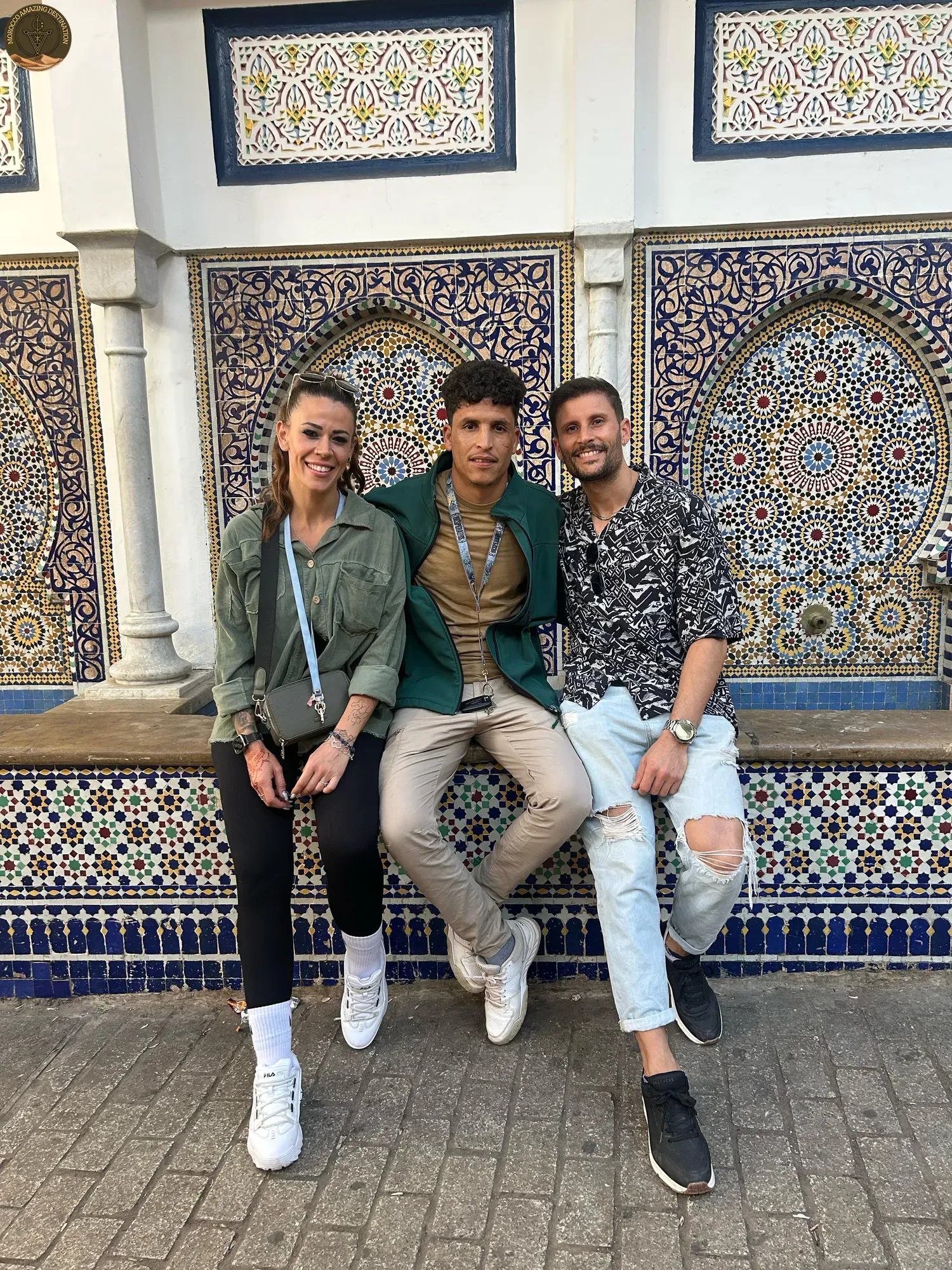
A private driver-guide changes the pacing more than the route. You can shift the order when the light or the crowds suggest it, stay longer in the Chellah necropolis, and leave out whatever does not interest you. Our local team builds the day around your interests, schedule and budget.
Our 10-day tour from Rabat to Marrakech opens with a night in Rabat, the Hassan Tower and the Kasbah of the Udayas before the imperial cities and the Sahara. Arriving from the east instead, the 4-day private tour from Fes to Rabat via Merzouga ends in the capital.
We can customize a tour to match your needs - design your perfect itinerary
If you found this helpful, add us as your preferred source on Google.
Frequently Asked Questions
Why is the Hassan Tower unfinished?
The Almohad caliph Abu Yusuf Yaqub al-Mansur died in 1199 and work on the great mosque stopped with him. The minaret was left at 44 meters, less than two-thirds of the height planned for it.
Is Chellah Roman or Islamic?
Both. The hill first held a Mauretanian and Punic settlement, then the Roman town of Sala Colonia, and from the 13th century the Marinids walled the ruins and made them a royal necropolis.
Can non-Muslims visit the Mausoleum of Mohammed V?
Yes, non-Muslims are welcome inside and entry is free. Visitors look down at the onyx sarcophagus from a balcony above the tomb chamber, and the mausoleum can close around midday for prayers.
How long do you need to see Rabat's historic architecture?
Half a day covers the Hassan Tower esplanade, the Kasbah of the Udayas and the medina on foot. Add about two hours for Chellah, which sits outside the walls a short drive from the medina.
Ready for an Adventure?
Have questions? Feel free to contact us using the form below. We're here to help!