· Travel · 5 min read
Morocco Film Industry: How Ouarzazate Became a Backlot
How the Morocco film industry grew from one desert basin near Ouarzazate into a global backlot, and which sets you can still walk today.
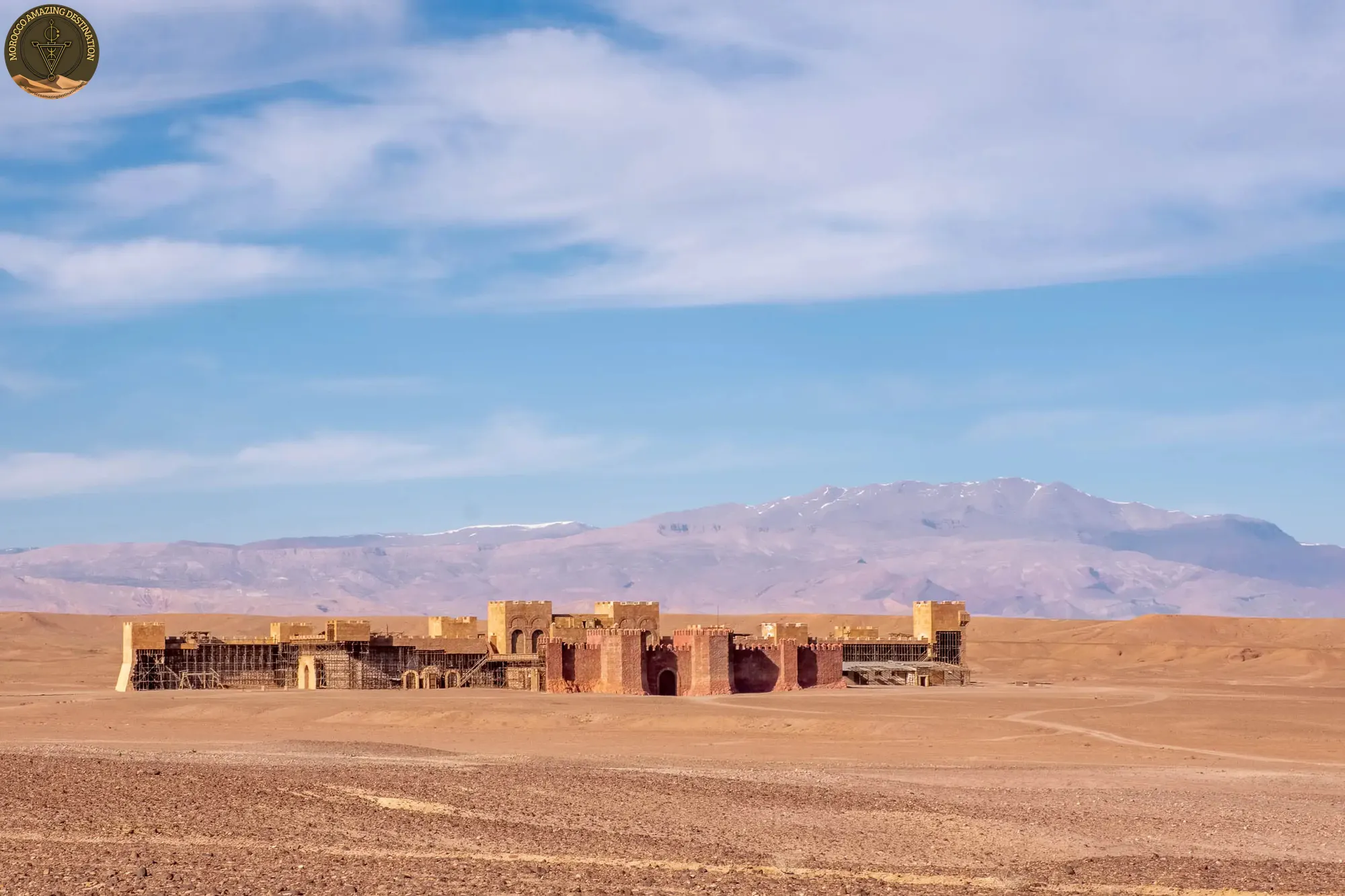
Four hours south of Marrakech, past the Tizi n’Tichka pass, the road drops into a high basin at roughly 1,150 metres, where the light is hard and the sky stays clear on about 300 days a year. That basin is where the Morocco film industry took root, and where a backlot built at the edge of town came to be billed as the world’s biggest film set. Morocco became a global backlot because one stretch of desert could pass for almost anywhere, and because local crews learned to rebuild the world inside it. David Lean shot desert sequences for Lawrence of Arabia in this region in 1962, two decades before any studio existed here.
In this guide, we trace how a workshop in the sand became an industry, why directors still fly in, and which standing sets you can still walk through on a southern route.
Why Ouarzazate’s Desert Could Play Everywhere
Drive an hour out of town in any direction and the scenery changes completely. Sand dunes give way to black volcanic ridges, palm oases, mud-brick ksour and snow on the High Atlas, all inside the same afternoon’s drive. The air is dry enough that a shooting schedule built weeks ahead usually holds.
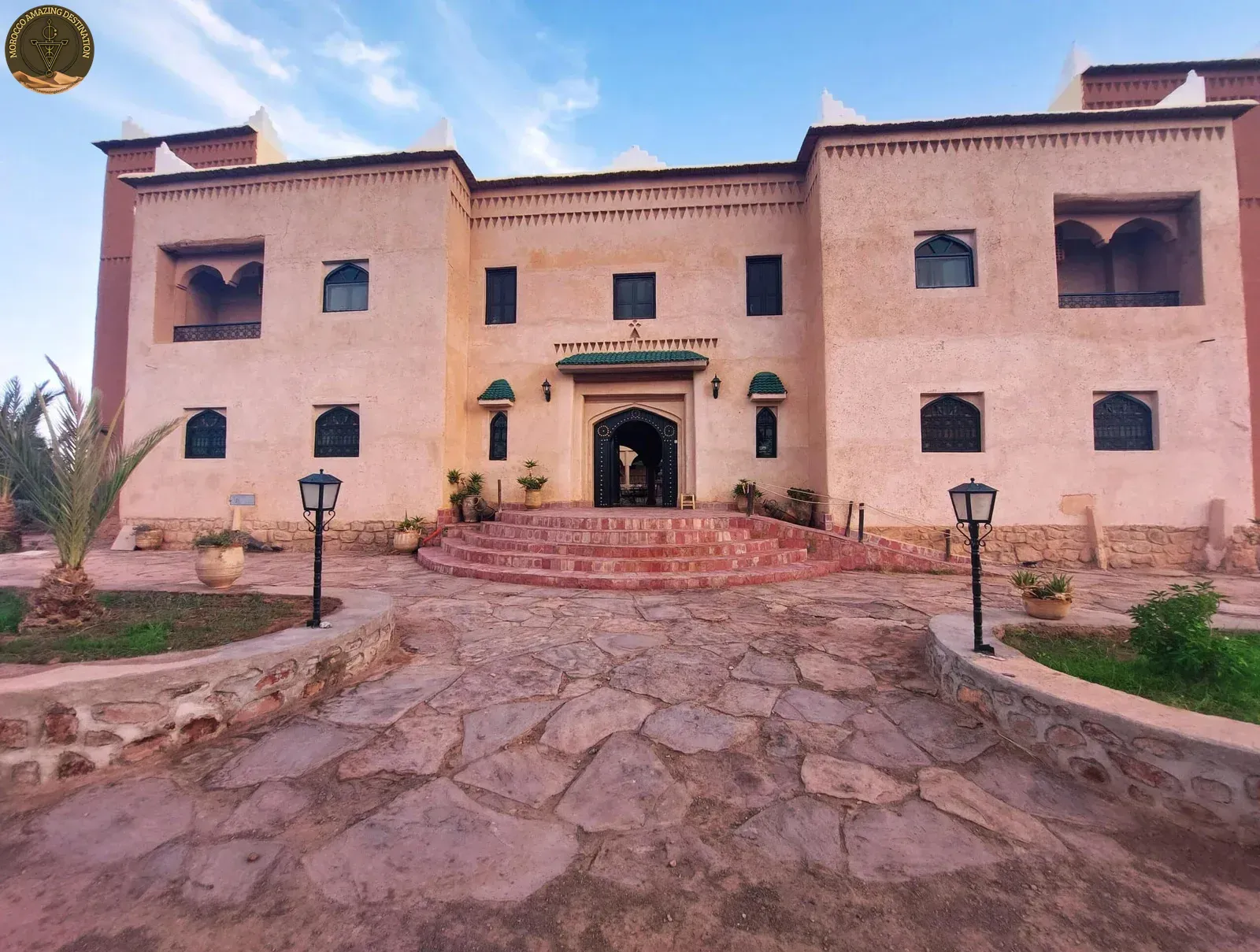
Lean’s desert work proved the basin could carry an epic. What sold it to later crews was the horizon: no power lines, no suburbs, nothing modern in frame.
What sits within an hour of Ouarzazate:
- Dune country: fine sand ridges that read as the Sahara.
- Volcanic fields: dark basalt and ash that pass for Mars or the Horn of Africa.
- Palm oases and ksour: earthen villages that stand in for Yemen or ancient Persia.
- High Atlas passes: snow and rock for mountain and Himalayan scenes.
The 1983 Gamble That Built a Backlot in the Sand
In 1983, a Moroccan entrepreneur named Mohamed Belghmi built a studio a few kilometres west of Ouarzazate, on ground that offered space, sky and nothing else. He had the site purpose-built for The Jewel of the Nile, betting that foreign crews would rather rent a base than ship one over the Atlas.
The base came with workshops, production offices, stables and its own hotel. Atlas Studios describes around 20 hectares of sets at the desert’s edge, and that is where the superlative comes from: the claim measures land, not soundstages. Neighbouring facilities are commercially described as considerably larger, which is why “billed as” is the only honest way to say it.
Sets were rarely struck. When a crew flew home the scenery stayed, and the next production simply built further out into fresh desert. The site spread because leftovers were cheaper than demolition.
Handcrafts, Crews and the Illusion of a City
Behind every temple front is a workshop order. Sets go up in plaster, polystyrene and canvas over wood and steel frames, shaped by carpenters, painters, armourers, seamstresses and animal handlers who keep about two dozen camels and donkeys on site.
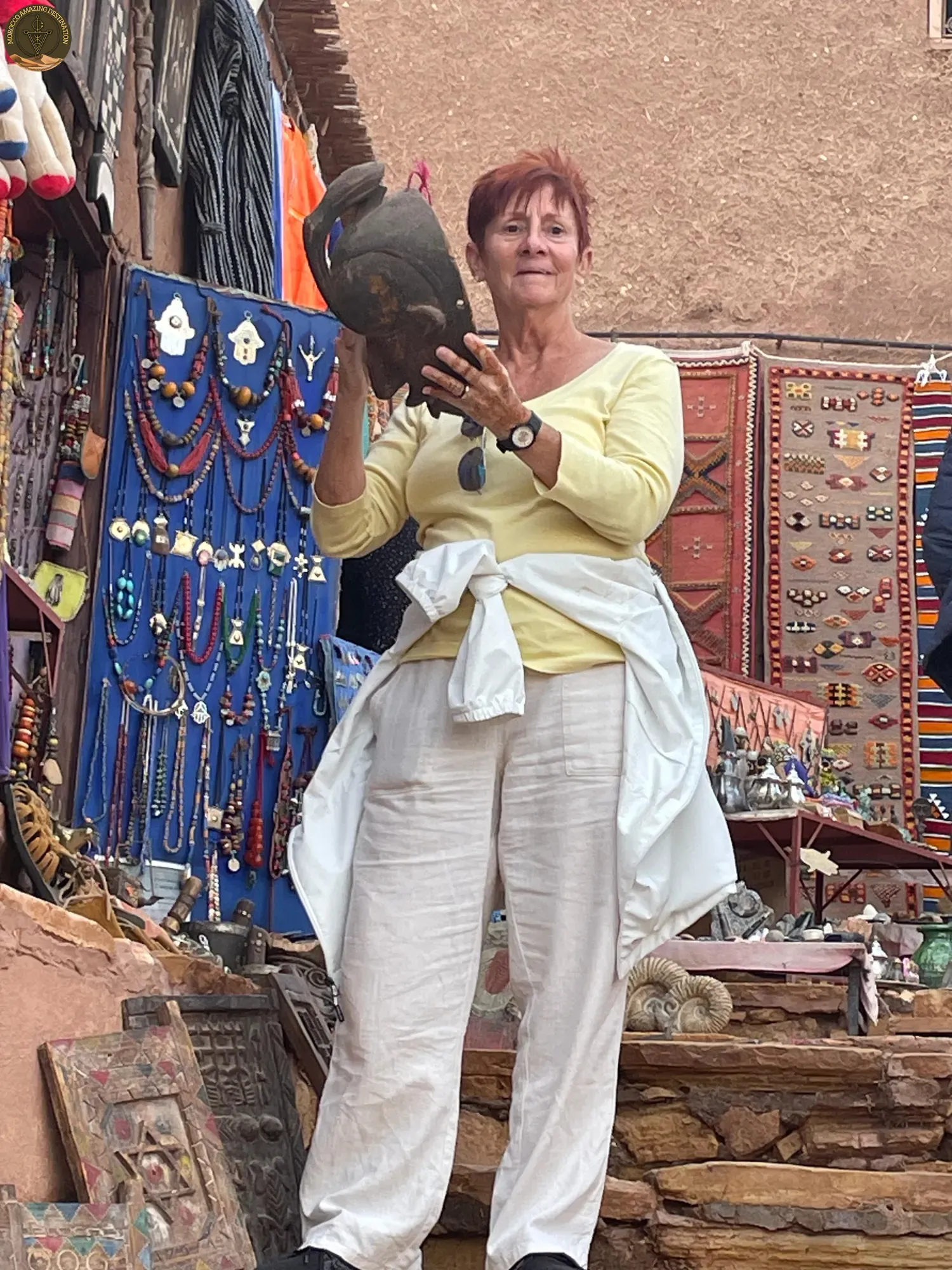
The trades behind the illusion:
- Carpenters and painters: frame, carve and paint each façade by hand.
- Armourers: forge helmets, blades and shields for crowd scenes.
- Seamstresses: cut and alter hundreds of costumes before a shoot.
- Animal handlers: move camels, donkeys and horses between takes.
The crew base changed more than the scenery did. In the 1980s, productions ran on roughly 80% foreign and 20% Moroccan labour; the ratio is now close to reversed, fed by the École de Cinéma de Ouarzazate and the local university. During A.D. The Bible Continues, some 600 artisans worked for six months. Pay is modest and steady: extras earn around $25 a day plus lunch, while hair, make-up and costume work pays about $50.
Why the World Still Shoots Here
The Ouarzazate film studios are only part of the calculation now. Morocco returns a 30% cash rebate on eligible local spend, raised from 20% and uncapped, against a minimum of 10 million dirhams and 18 shooting days. VAT is exempt, and the Centre Cinématographique Marocain handles permits through a single window.
Production costs run 30% to 50% below Western equivalents. A director can arrive with a treatment and hire the rest in town: riggers, camera crew, costumers, and a desert that needs no digital extension. Ouarzazate also has its own film commission, which covers scouting and permissions.
The next step is owning more than the shoot. A state-backed International Cinema City broke ground at the entrance to town on 24 acres, about 10.49 hectares, along the RN9. The 240 million dirham project includes a 3,000 m² sound stage, post-production suites, a training hub and a hotel, built to keep editing and visual effects work in Morocco instead of sending it abroad.
What You Can Still Walk Through Today
An afternoon here can take you from a Tibetan monastery to an Egyptian temple front and on to Roman walls. A set built for one story often spends thirty years playing others. Kundun’s Tibetan temple still stands, and the Luxor front has doubled for Constantinople, Jerusalem and Persepolis.
Where to start:
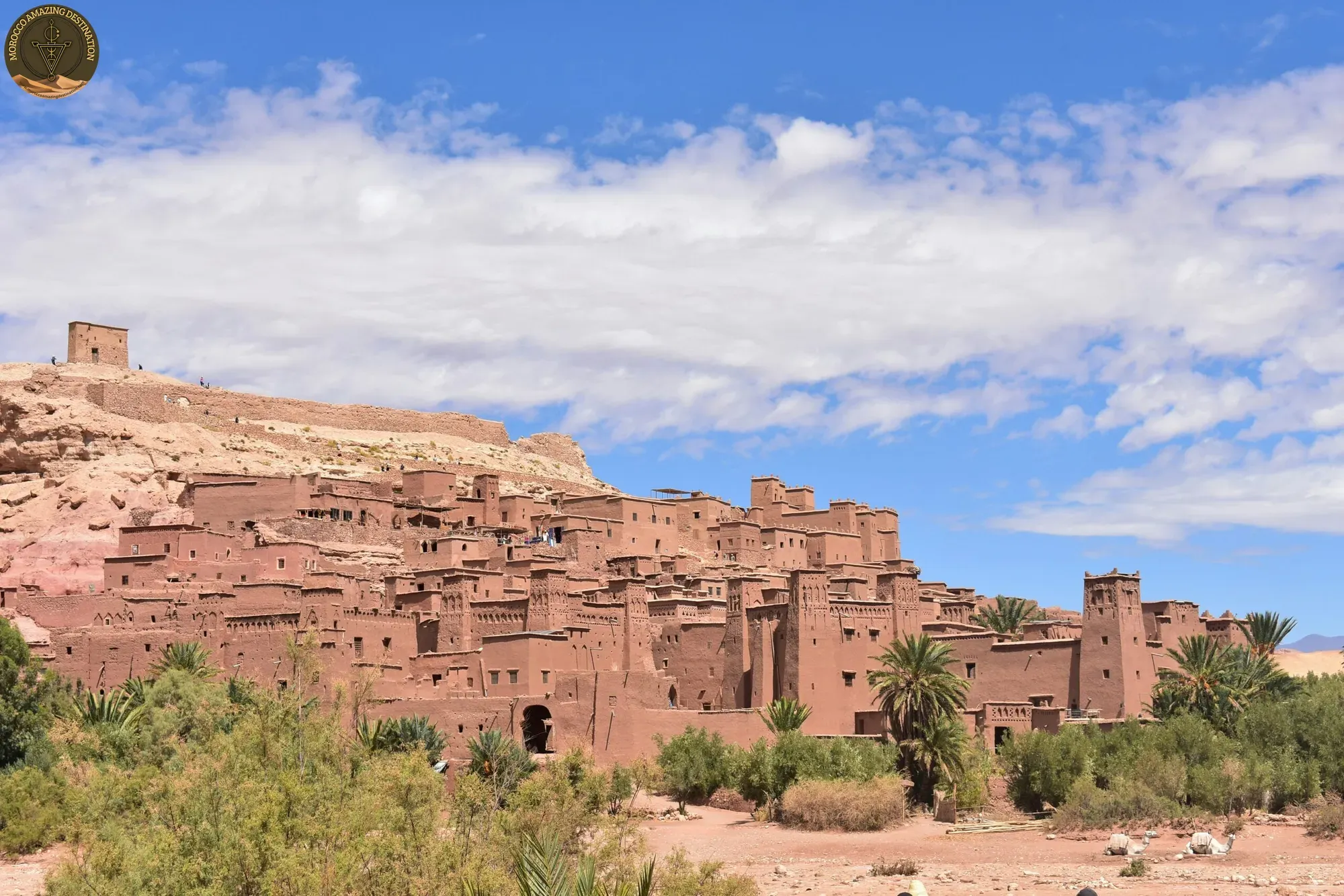
- Ait Benhaddou: the fortified ksar nearby, a UNESCO World Heritage site, has stood in for Yunkai and a dozen desert cities.
- Taourirt Kasbah: the Glaoui stronghold in town, used by crews for decades.
- Cinema museum: props and costumes from films shot in Morocco, kept in the old Aster studios.
- Open backlot: Egyptian, Roman and Tibetan pieces still standing in the sand.
For tickets, hours and the walkthrough itself, our practical guide to visiting the Atlas Studios covers the details. For one production’s footprint across the south, the Gladiator II filming locations post maps it out.
Our 4-Day Morocco Desert Tour from Ouarzazate links the studios with the Drâa valley and the Merzouga dunes, with a private driver throughout. The 4-Day Guided Morocco Tour: Ouarzazate to Marrakech runs the same country in the opposite direction.
We can customize a tour to match your needs - design your perfect itinerary
If you found this helpful, add us as your preferred source on Google.
Frequently Asked Questions
Why did Ouarzazate become a film hub?
It offers steady light, very little rain and a range of terrain within an hour of town that can pass for dunes, mountains, volcanic fields or ancient cities. A permanent backlot built there in 1983 added workshops, standing sets and a trained local workforce.
Is Atlas Studios really the biggest film set in the world?
It is billed as the world's biggest film set, and the claim measures land area rather than soundstages. Atlas Studios describes around 20 hectares of sets at the desert's edge, and neighbouring facilities are commercially described as larger.
Who works on the productions?
Mostly Moroccan crews. In the 1980s productions ran on roughly 80% foreign labour; that ratio is now close to reversed. Carpenters, painters, armourers, seamstresses and animal handlers build and run the sets, many of them trained at the École de Cinéma de Ouarzazate.
Is Ouarzazate worth a stop for film fans?
Yes, if you want to walk through standing sets rather than look at photographs. An afternoon covers a Tibetan monastery, an Egyptian temple front and Roman walls, with the ksar at Ait Benhaddou half an hour away.
Ready for an Adventure?
Have questions? Feel free to contact us using the form below. We're here to help!