
· Travel · 6 min read
Mhamid El Ghizlane: Morocco's Last Village Before the Sand
Mhamid El Ghizlane is Morocco's last village before the Sahara: old ksour, a palm grove, the Monday market and the living music of the Draa.
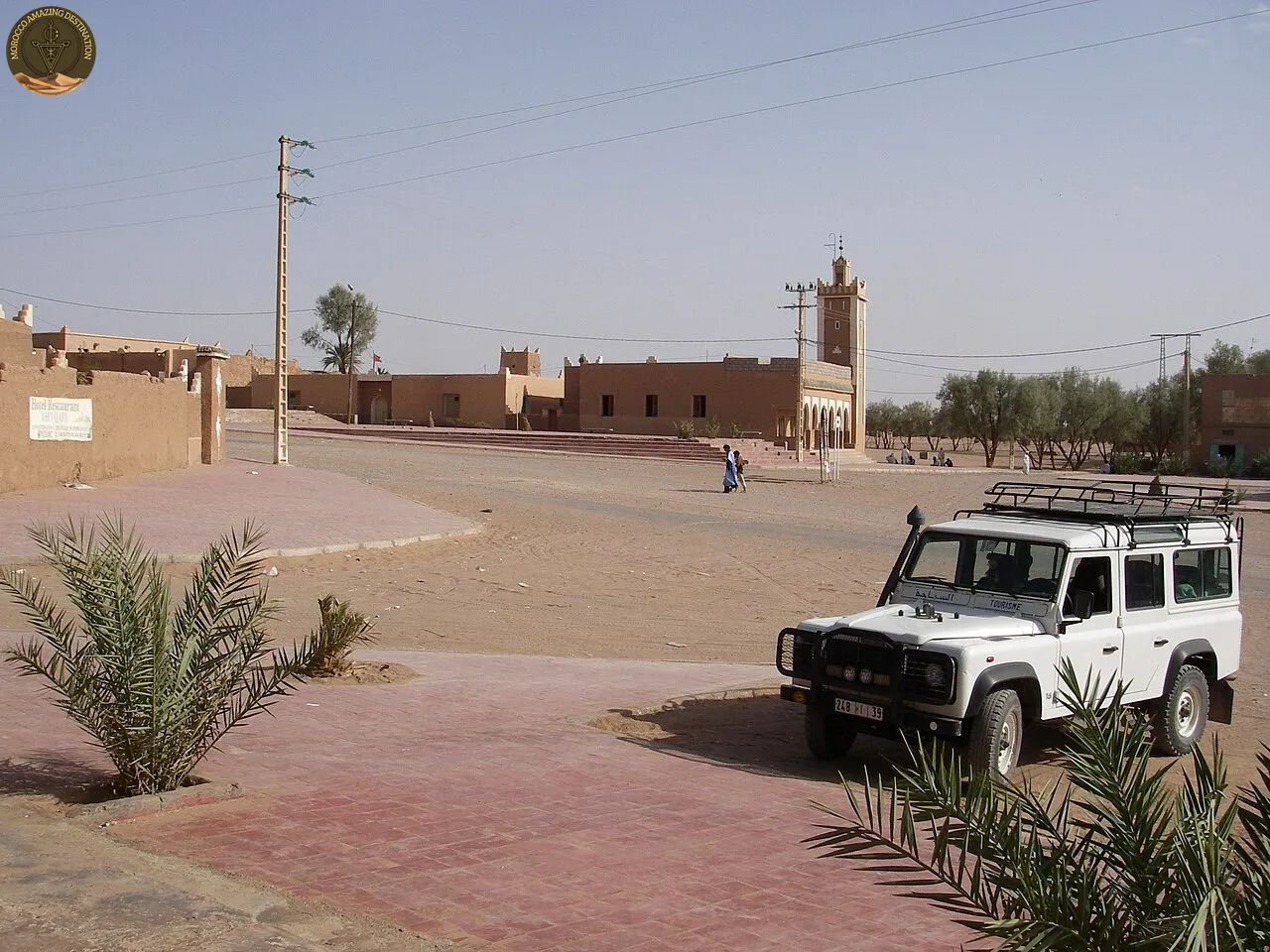
Ask where the road ends in southern Morocco and the answer is a village in Zagora Province, in the Drâa-Tafilalet region. Mhamid El Ghizlane is the last settlement on the N9, about 95 km south of Zagora and some 260 km from Ouarzazate. For centuries it was the final staging post for caravans heading to Timbuktu, and the palm grove around it still marks the end of the oasis belt.
In this guide, we will break down what Mhamid El Ghizlane village life looks like, from the old ksour and the palm grove to the Monday market and the evening music, and how to plan a visit.
Where Mhamid El Ghizlane Is
The commune sits at about 500 metres above sea level, at the far southern end of Zagora Province. The Amazigh name for the place is Taragalte, and El Ghizlane means “plain of the gazelles”. It is a place name rather than a tribe, and you will still see the older spelling M’Hamid on signs and guesthouse boards.
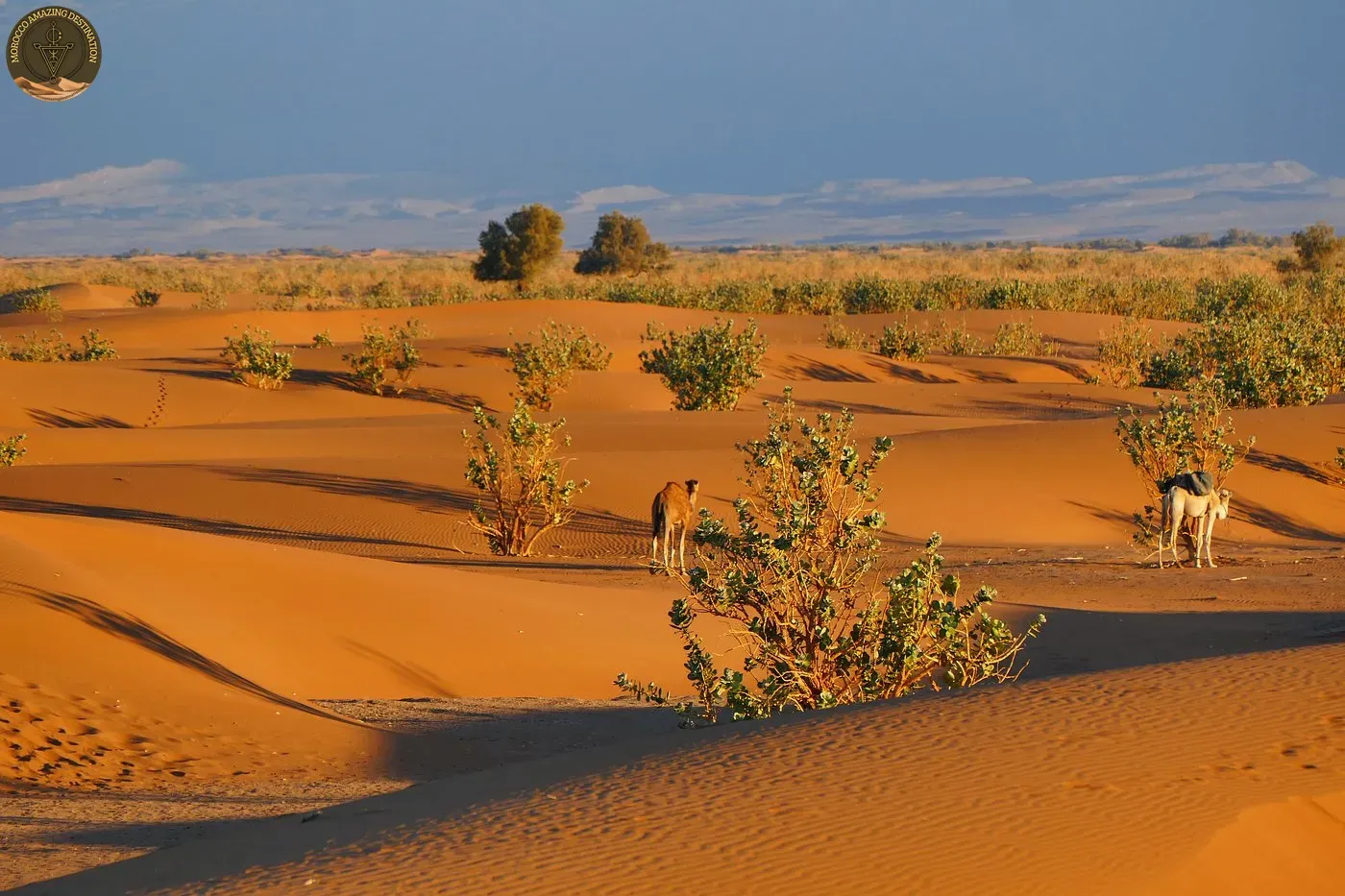
Getting there means accepting the drive. From Zagora the N9 runs about 95 km south through Tagounite and Ouled Driss, and then it stops. Ouarzazate is roughly 260 km away along the Draa Valley, and most travellers coming from Marrakech cross the Tizi n’Tichka pass and sleep in Ouarzazate or Zagora first. Our guide to Zagora covers that staging town in more detail.
The commune holds well under 7,000 people, and the number has been falling for decades as families move north. Until the late 1980s outsiders needed a special permit to enter the area, because the Algerian border runs close by, and that explains a good deal about why the village stayed off the usual trail.
Old Ksour and the Palm Grove
The village is really two villages, separated by the dry bed of the oued Draa and joined by the palm grove that runs between them.
- M’Hamid Jdid: the new village along the road, with the shops, cafés, guesthouses and agencies that handle almost everything a visitor needs.
- M’Hamid Bali: the old village across the riverbed, best reached on foot through the palms.
- The palm grove: date palms and small cultivated plots fed by wells and the traditional channels known as khettara.
Hidden in the trees are seven old ksour, most of them abandoned and slowly returning to the ground. Their pisé walls and collapsed roofs stand beside the walking paths, a few within a short stroll of the village. The settlement’s own ksar is placed around the 14th or 15th century, when it helped orient caravans leaving for Timbuktu.
Walking between the two halves shows how an oasis works: irrigation channels, tamarisks, kitchen plots, and sand that has taken over former fields. The oasis is under pressure. Winter rains have been unreliable since the 1970s, farming income has collapsed, a fungal disease has killed many palms, and the sand keeps advancing.
Who Lives There and the Monday Market
The population is a mix shaped by centuries of movement along the northern edge of the Sahara. Arabic-speaking Draoua families from the Draa Valley live alongside Saharan Arab and Hassani families, Amazigh communities, and families of sub-Saharan origin whose musical traditions are still part of village life.
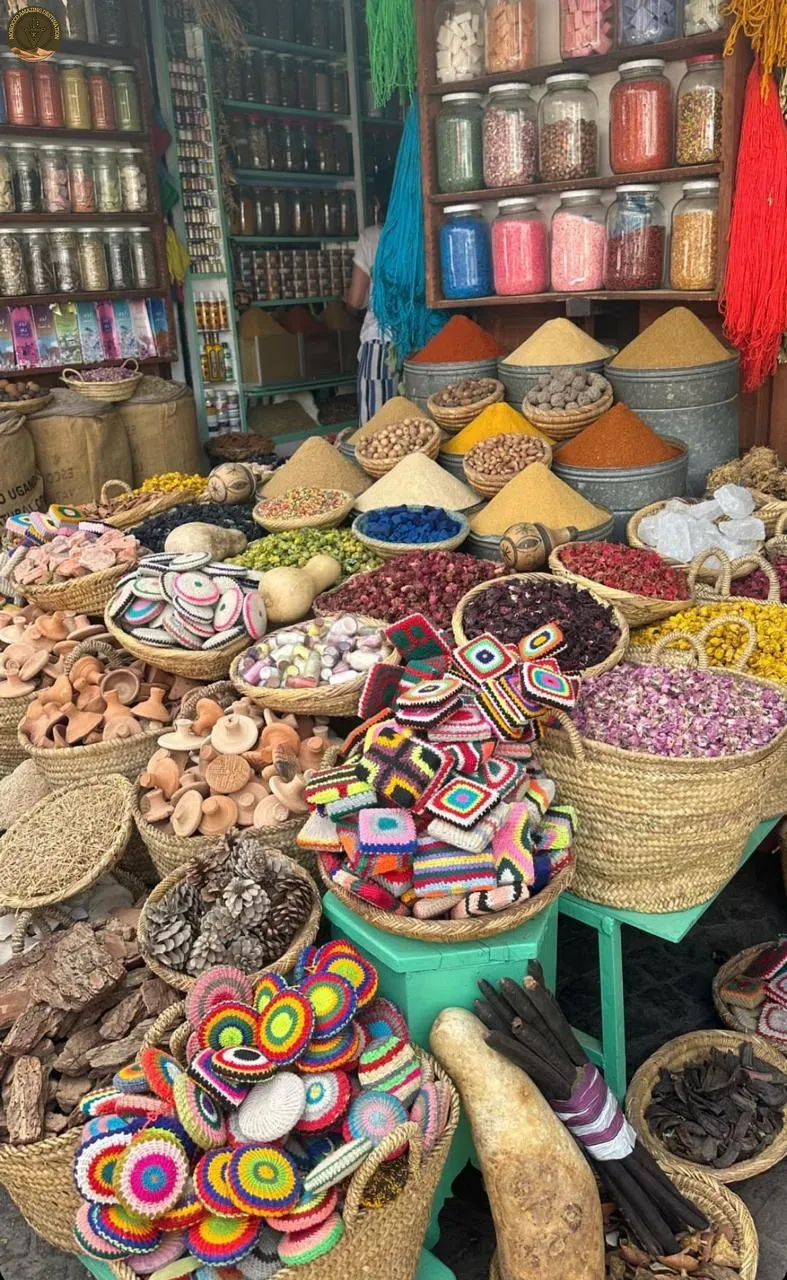
Every Monday the village holds its weekly market, and it is the week’s social event. Nomad families come in from the surrounding desert, camel herders in indigo wraps still turn up to trade, and the square fills early.
- Livestock: goats, sheep and camels change hands in the open, the busiest corner of the market by far.
- Dates and almonds: the two crops the Draa oases are known for, sold by the sack.
- Henna and saffron: sold by weight, mostly to local households rather than to visitors.
Outside Monday the village is quiet. Shops, cafés and guesthouses line the road, and the pace belongs to the people who live here year-round.
Music, Tea and Desert Hospitality
The lower Draa has a repertoire of its own, and the village keeps it in use: Ahidous, Rokba, Akalal played on the def drum, Ganga and Chamra, with strong Gnawa traditions layered on top.
Two festivals and a weekly music school keep that repertoire in public view. Taragalte is the village’s own, named for its Amazigh place name and held in autumn around nomadic heritage and three days of desert music. The Festival International des Nomades fills the guesthouses and the central square in spring, and local teenagers learn guitar, percussion and the traditional styles at the music school every week.
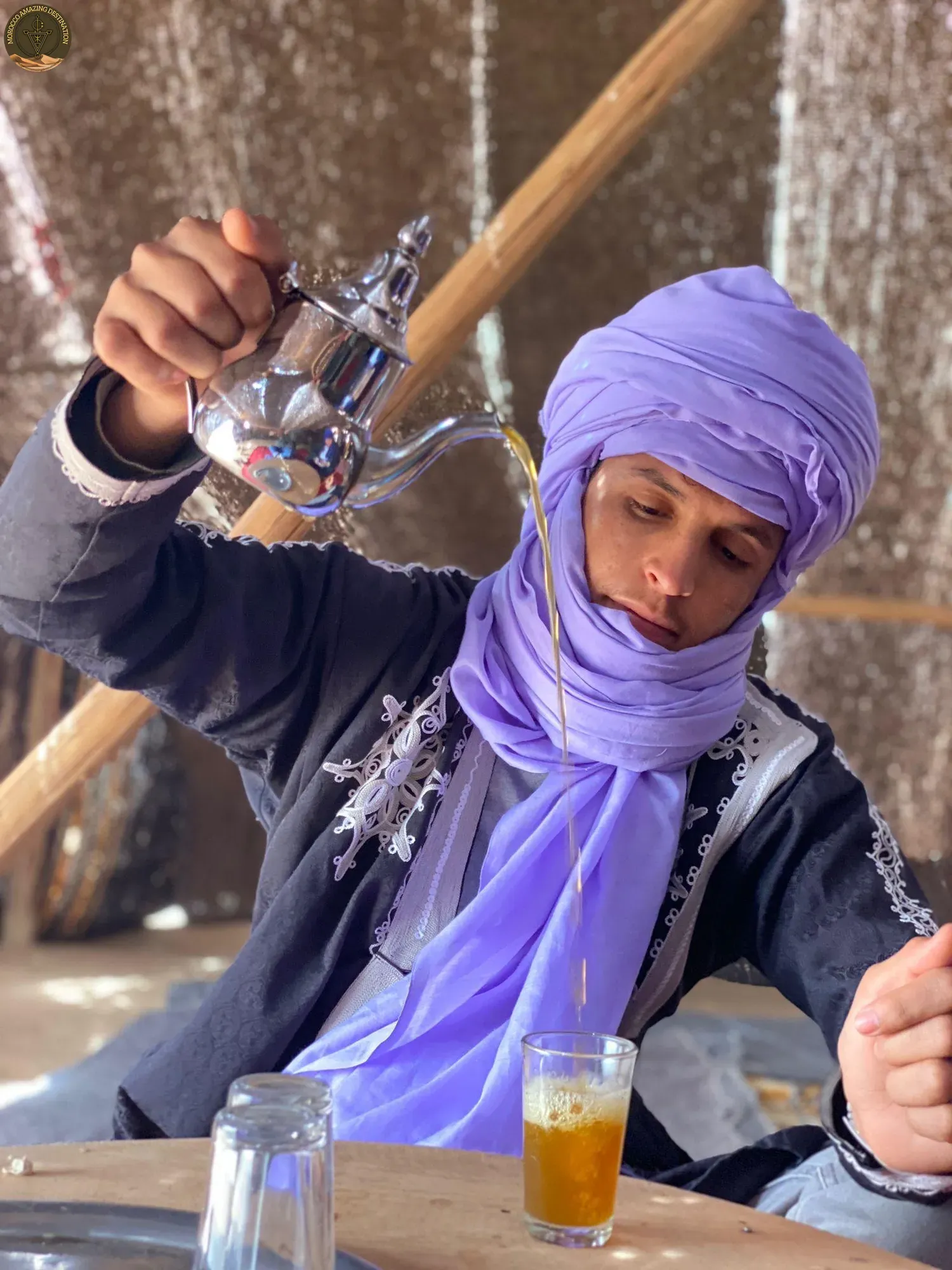
Tea is the greeting, poured from a height to work air into the glass, and the conversation starts after the first round. Nobody rushes it, so leave room in the day for it. Live music turns up at weddings, festivals and the occasional café. There is no concert hall, so ask in the village and somebody will point you to whatever is happening that week.
When to Go and How to Plan Your Visit
There is no airport and no train at Mhamid El Ghizlane, Morocco, so the drive is part of the trip: about 95 km from Zagora, or a long day from Ouarzazate down the Draa.
- October to April: warm days, cool evenings and the best conditions for walking the palm grove.
- May to September: punishing heat at midday, so mornings and late afternoons are the only sensible windows.
- Nights: cold at any time of year and genuinely cold in winter, whatever the daytime temperature.
- Wind and sand: spring afternoons can turn dusty, so keep sunglasses and a scarf within reach.
A half-day on foot covers the village. Add time for the Monday market or a festival, and consider staying overnight to see the place after the day visitors leave.
If you want the Draa Valley on your route, our 3-Day Trip from Marrakech to Merzouga crosses it on the final day with a stop in Zagora. Our 7-Day Agadir to Merzouga Desert Tour runs Ouarzazate to Nkob through the same palms. Both can be adjusted around the market or a festival.
We can customize a tour to match your needs — design your perfect itinerary
If you found this helpful, add us as your preferred source on Google.
Frequently Asked Questions
Where is Mhamid El Ghizlane?
It is a rural commune in Zagora Province, in the Drâa-Tafilalet region of southern Morocco. The N9 road ends here, about 95 km south of Zagora and roughly 260 km from Ouarzazate, past Tagounite and Ouled Driss.
Is Mhamid El Ghizlane the last village before the Sahara?
Yes. The paved road stops at Mhamid El Ghizlane, with the Draa palm corridor behind it and open stone desert ahead. For centuries it was the last staging post for caravans heading south towards Timbuktu.
What is there to do in Mhamid El Ghizlane village?
Walk between the new village and the old one through the palm grove, look for the seven decaying ksour, spend a Monday at the market, and drink tea while the oasis music plays. A half-day on foot covers the centre.
When is the best time to visit Mhamid El Ghizlane?
Roughly October to April, when days are warm and nights are cool rather than freezing. Summer is punishing. Whatever the season, bring a layer for the evening, because desert nights get cold.
Ready for an Adventure?
Have questions? Feel free to contact us using the form below. We're here to help!