
· Food · 5 min read
Marrakech Street Food: What to Eat and Where to Find It
Marrakech street food, decoded: what to eat, where to eat it and what a full day costs in dirhams — from dawn sfenj to the Jemaa el-Fnaa grills.
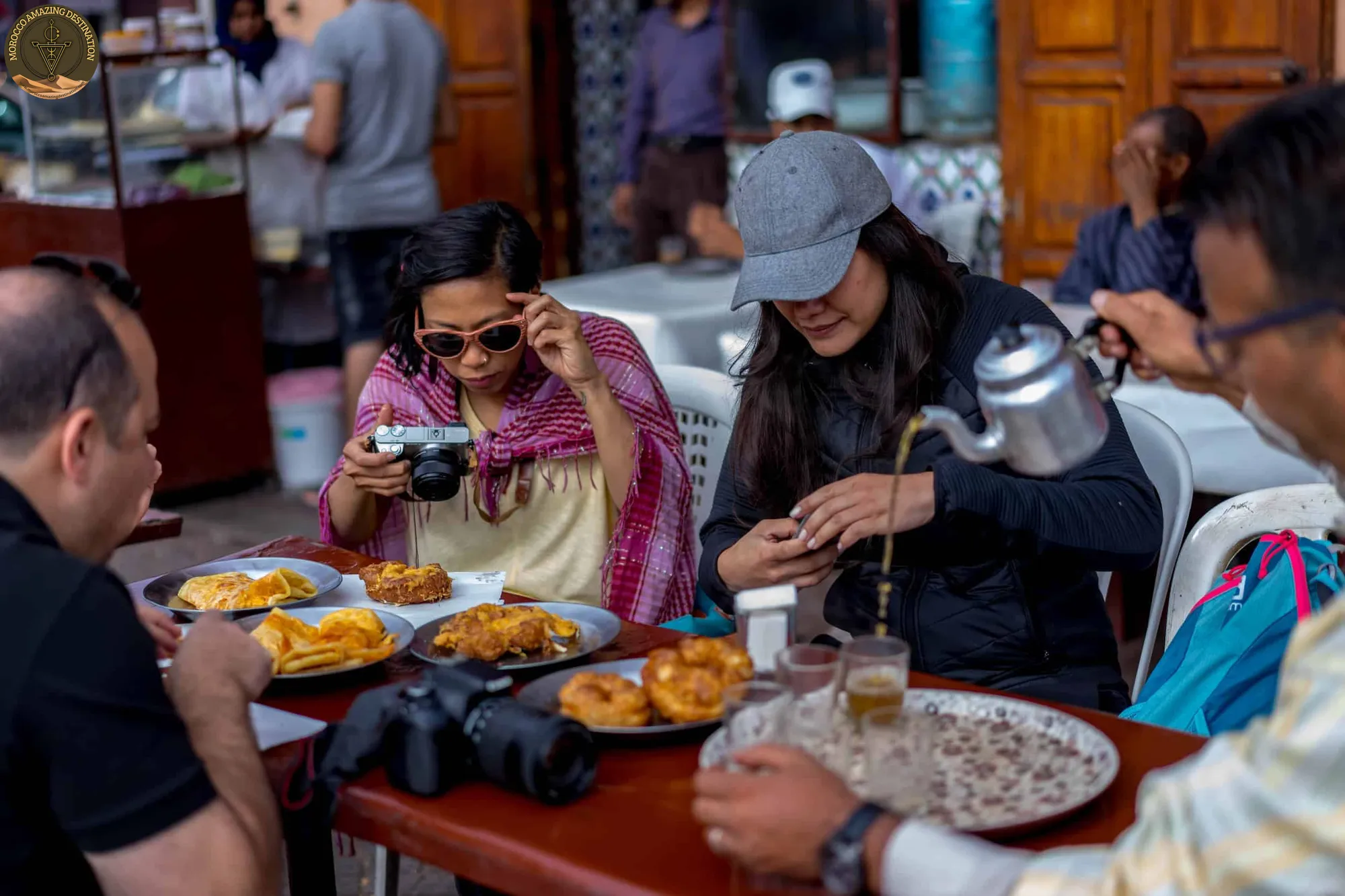
Marrakech eats on its feet, and the Marrakech street food worth planning a day around is less a menu than a timetable. Mechoui lamb is carved off the bone at midday, sfenj doughnuts leave the oil at dawn, and the Jemaa el-Fnaa grills only light up after sunset. A full day of street eating — soup, grilled meat, bread and tea — costs roughly 60 to 100 MAD when you eat at the right hour.
In this guide we will break down the best street food in Marrakech, the dishes worth hunting down, plus where to eat in Marrakech and what each stop costs in dirhams.
What to Eat in Marrakech: The Street Dishes Worth Hunting Down
Knowing what to eat in Marrakech is mostly a matter of following the clock. The street kitchen is small and repetitive in the best way, and lamb dominates: brochettes and kefta straight off charcoal, merguez in bread with harissa, mechoui by the kilo, and khlea — beef preserved in its own fat — fried and topped with eggs.
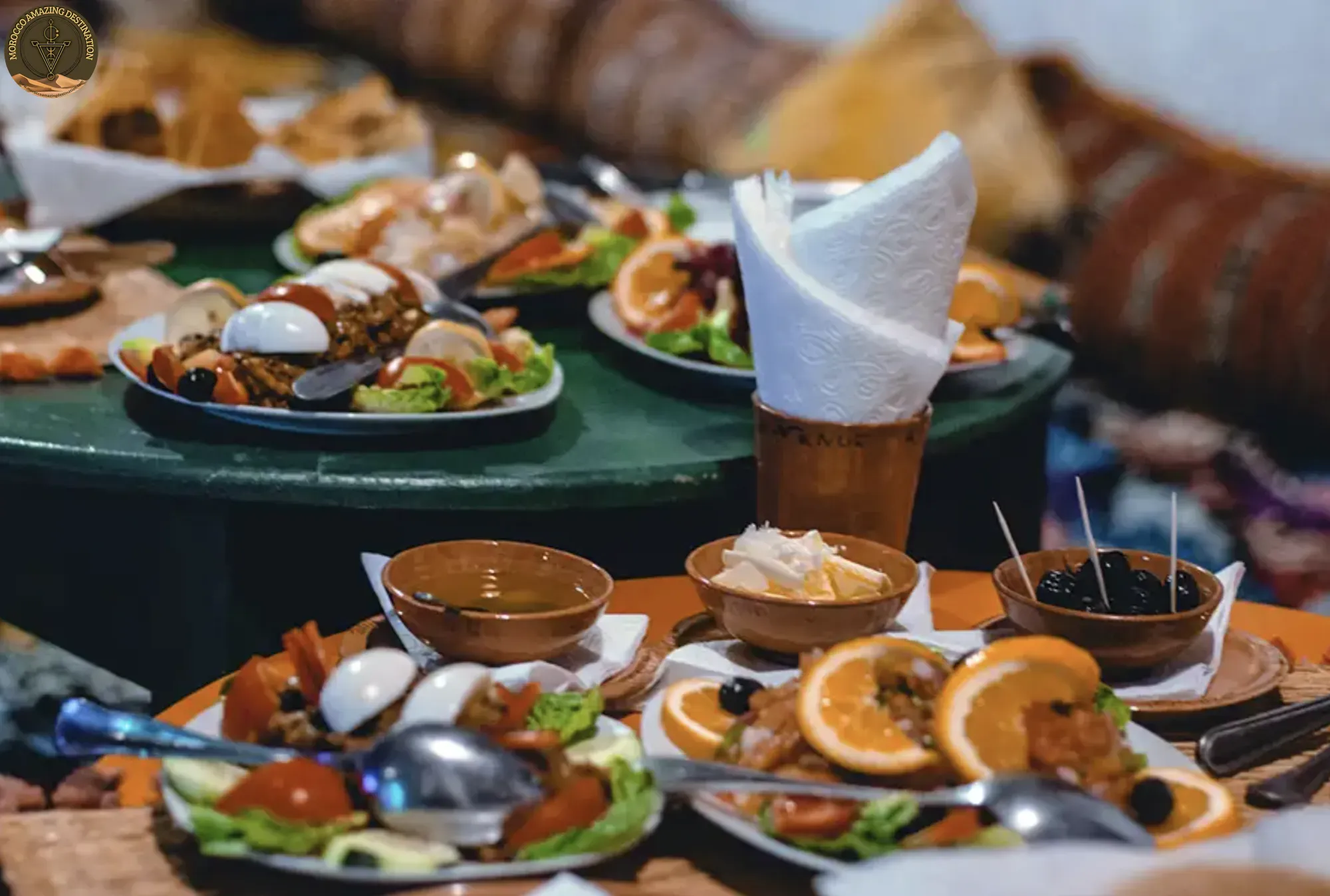
Tanjia is Marrakech’s own slow dish: lamb, garlic, cumin and preserved lemon sealed in a narrow clay urn and cooked for hours in the embers that heat a hammam’s water. Harira, the tomato, lentil and chickpea soup, sells all year, not only during Ramadan.
What locals queue for:
- Msemen and baghrir: griddled flatbread and thousand-hole semolina pancakes with honey or amlou.
- Sfenj: ring doughnuts fried to order; excellent hot, forgettable cold.
- Babbouche: small snails in a peppery thyme-and-anise broth, fished out with a pin.
- Brochettes and kefta: charcoal skewers and spiced minced lamb with khobz.
- Chebakia: honey-and-sesame pastry, best with orange juice pressed to order.
Jemaa el-Fnaa: How to Eat the Square Without Overpaying
After dusk the food stalls wheel onto the eastern side of the square, and it becomes one enormous open-air kitchen. It is also one address with two economies: the front row that catches you first charges 15 to 30% more than the rows behind it, for exactly the same plate.
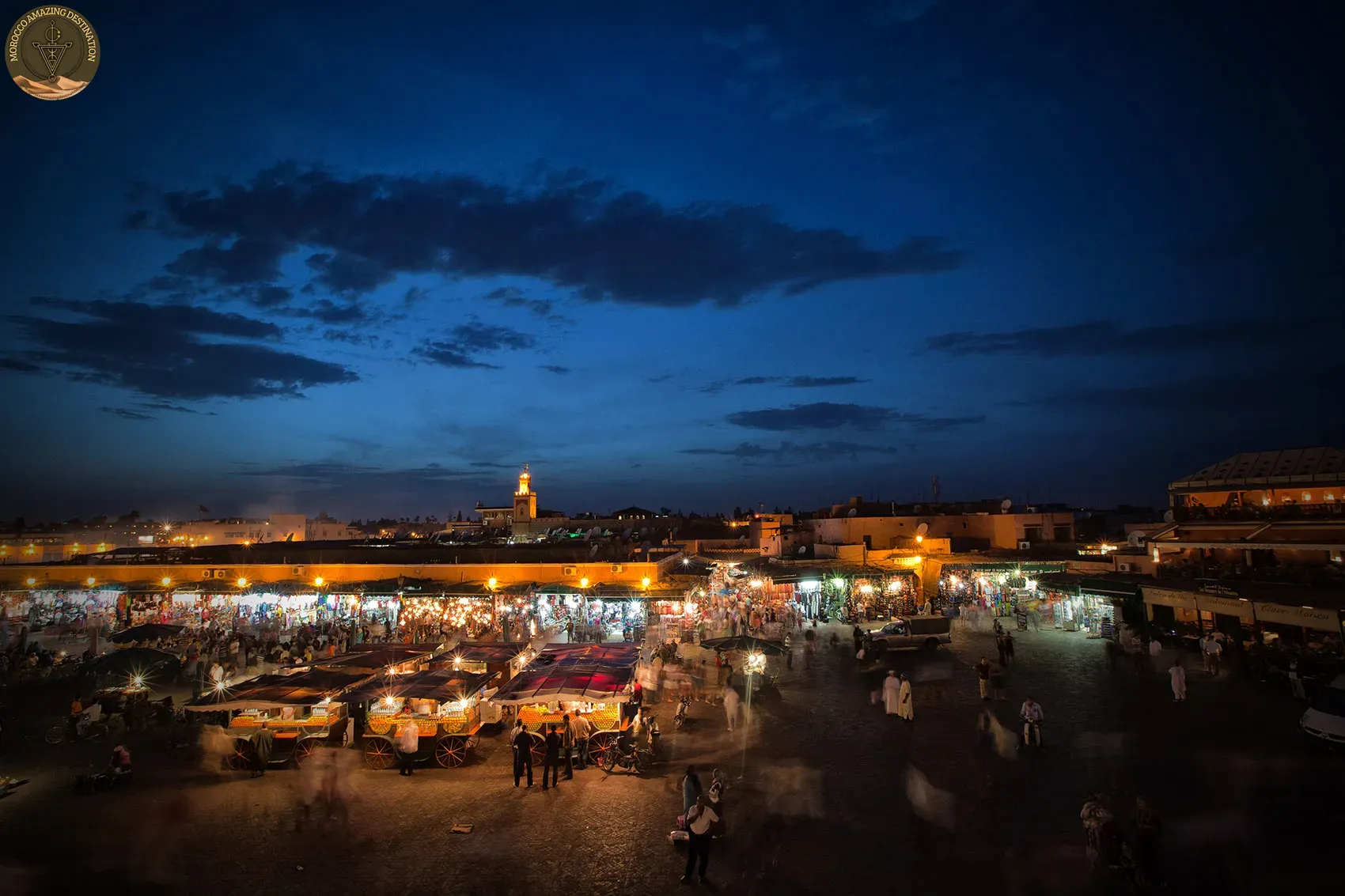
Walk the whole food area before you commit to anything. Two or three rows deeper, grilled fish, brochettes and babbouche get cheaper, calmer and usually better.
Square protocol:
- Compare rows: the stalls sit in numbered rows, so price two or three before sitting.
- Bread and olives: what lands unasked is chargeable, not a scam — agree the price first.
- Order small and varied: two or three shared plates beat one heavy main.
- Carry small notes: 20 and 50 MAD notes move fastest; no stall takes a card.
Mechoui Alley & the Medina Lanes: Lunch-Time Classics
Lunch belongs to the lane just off Jemaa el-Fnaa that everyone calls Mechoui Alley, beside the olive souk. Whole lambs come out of pit ovens, are carved by weight and handed over with cumin-salt and khobz. Expect roughly 200 to 260 MAD per kilo, and a portion with bread for two from about 150 MAD.
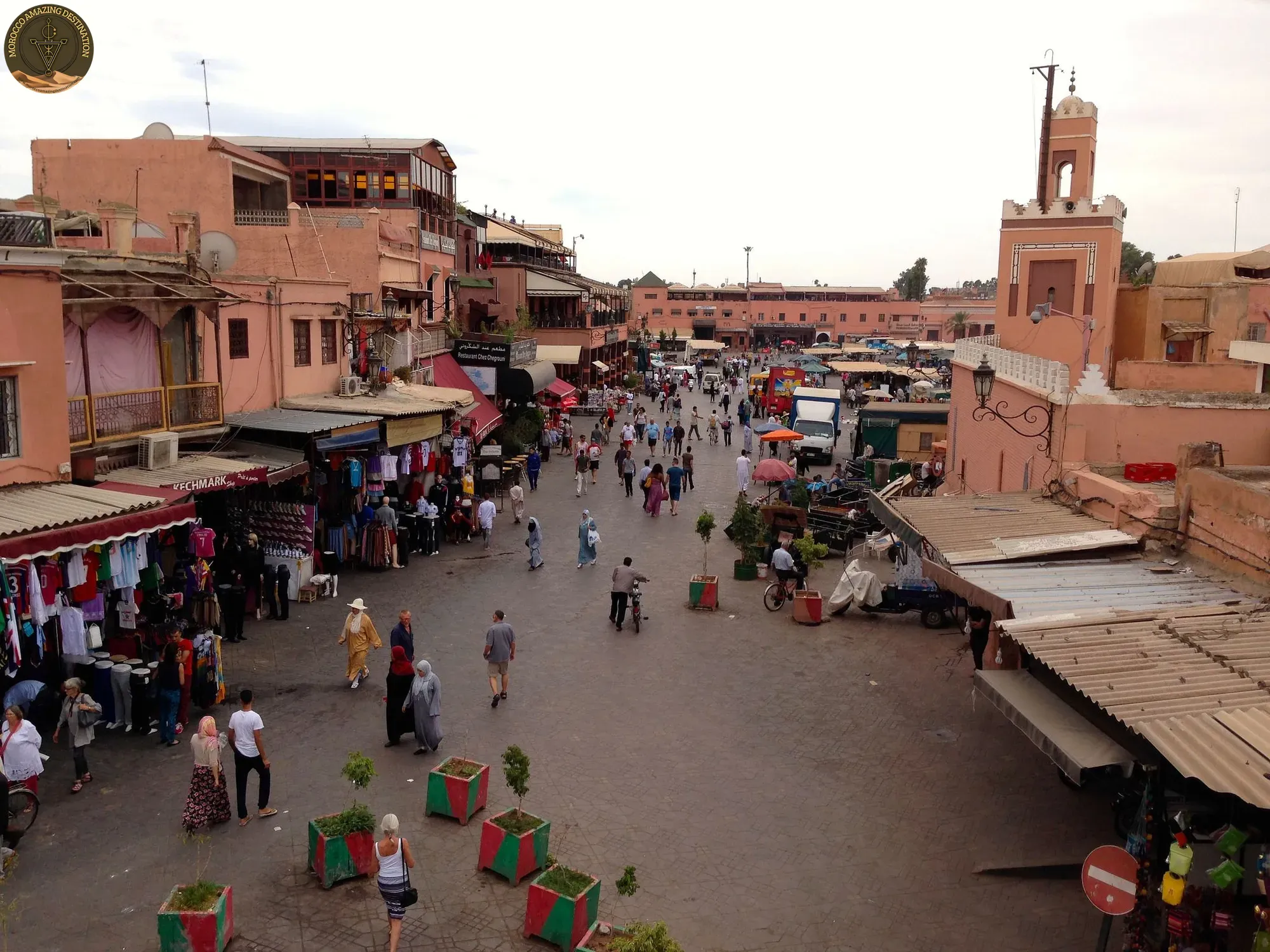
Tanjia comes from the urns beside the butcher counters in the same window and usually runs out mid-afternoon. This is a midday trade: arrive after 14:30 and shutters are coming down.
The rest of the medina rewards walking. Derb Dabachi and Riad Zitoun are the cheap-eats arteries between the square and the Bahia Palace, where a bowl of harira and a grill order cost less than a coffee on a terrace. Portions are small on purpose, so order two or three things per stop.
Where to Eat in Marrakech’s Market Quarters: Bab Doukkala, Mellah & Gueliz
Leave the square and prices halve. Rue Bab Doukkala, by the north-west gate, is the breakfast run: women-run tables work from about 08:00 to 10:00, with msemen and baghrir at 3 to 5 MAD, sfenj at 2 to 5 MAD and bissara at 5 to 15 MAD.
The Mellah is where you go for loubias, slow-cooked white beans, grilled sheep’s head and the city’s most serious spice market. Gueliz, twenty minutes on foot around Marché Central, eats lunch and grills until two or three in the morning.
Quarter by quarter:
- Bab Doukkala: breakfast griddles by day, evening grills after dark.
- Mellah: beans, sheep’s head and spice stalls in the same lanes.
- Rahba Kedima: the spice square, with terrace cafés for a mid-souk pause.
- Gueliz: juice bars, merguez sandwiches and fish grills near Marché Central.
A Street-Food Day in Marrakech: Timing, Prices and Local Etiquette
Street food here is scheduled. Griddles and sfenj fryers work the morning, mechoui and tanjia sell out by mid-afternoon, and the square fills from about 16:00, peaks between 19:00 and 22:00 and closes near midnight.
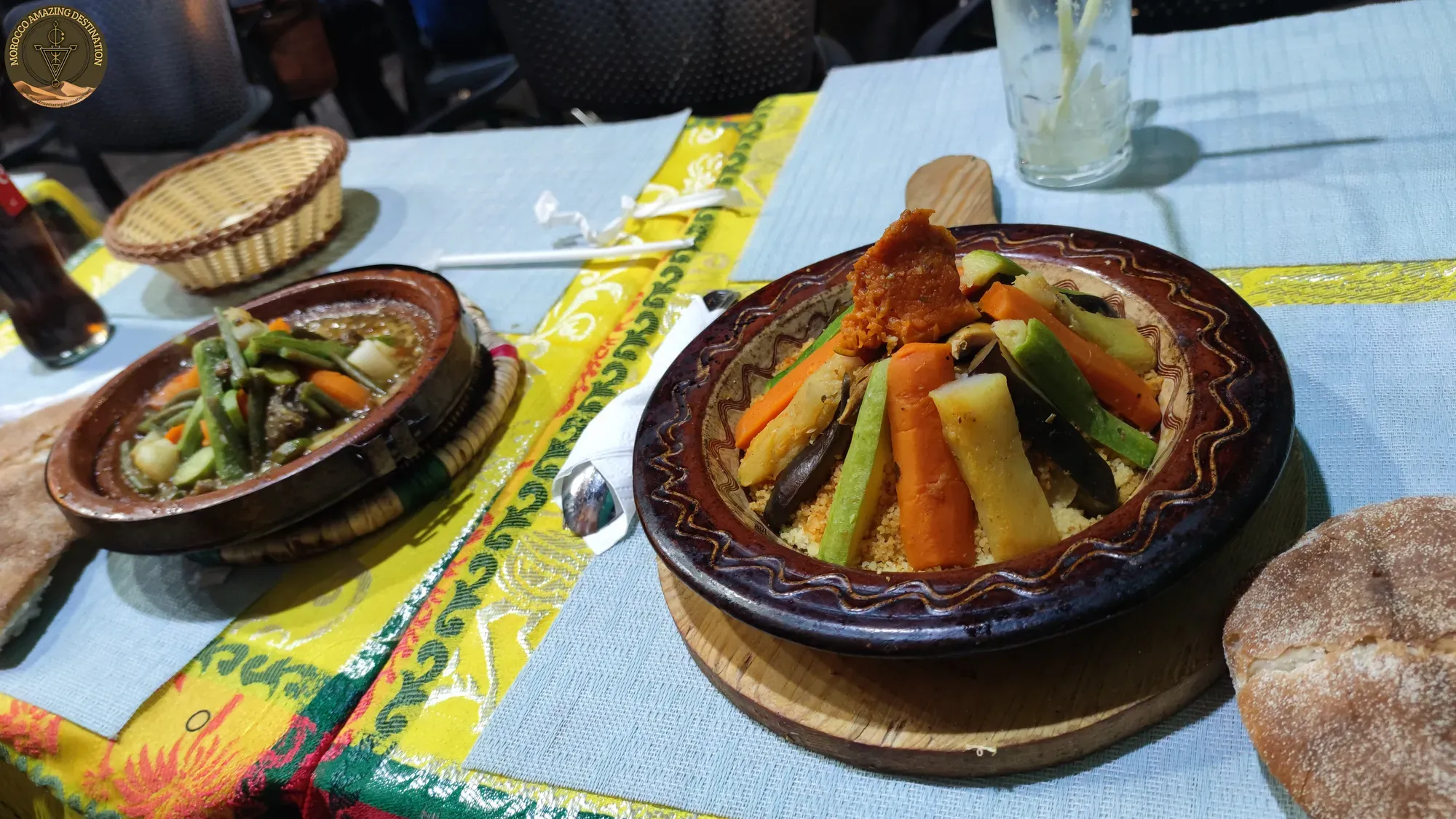
Budget in bands, never fixed prices: harira 5 to 20 MAD, bissara 5 to 15 MAD, snails 15 to 20 MAD, skewers and kefta 15 to 45 MAD, a full plate at a square stall 40 to 100 MAD, fresh orange juice 4 to 10 MAD. Carry small notes and agree the price before you sit — bread and olives are chargeable.
One reassurance: eat where there is a local queue and visible cooking and you are in good hands. Our guide to Moroccan street food and drinks safety covers the rest, and our pick of the best tagine in Marrakech covers the sit-down version.
A private driver-guide makes this timetable work. Our local team — Hassan, Hamid and Andrea — orders, translates and settles prices, so you sit down when the food is at its best — easy with kids or on a short trip.
Our 4-Day Morocco Desert Tour from Marrakech starts in the medina before crossing the High Atlas to Merzouga, and the 8-Day Morocco Tour: Marrakech, Sahara Desert & Essaouira adds the Atlantic coast.
We can customize a tour to match your needs — design your perfect itinerary
If you found this helpful, add us as your preferred source on Google.
Frequently Asked Questions
What street food is Marrakech known for?
Marrakech is known for mechoui lamb carved by weight, tanjia cooked in hammam embers, peppery babbouche snails, harira soup, and the griddled breads msemen, baghrir and sfenj. Brochettes, kefta, merguez, chebakia and orange juice pressed to order complete the shortlist.
Where can I eat street food in Marrakech?
Start at the Jemaa el-Fnaa food stalls after dusk, then eat lunch in the lane beside the olive souk known as Mechoui Alley. Away from the square, Rue Bab Doukkala handles breakfast, the Mellah does beans and spice, and Gueliz grills late around Marché Central.
How much does street food cost in Marrakech?
Budget in bands: sfenj and msemen cost 2 to 5 MAD, bissara 5 to 15 MAD, harira 5 to 20 MAD and snails 15 to 20 MAD. Skewers run 15 to 45 MAD, a full plate at a square stall 40 to 100 MAD, and mechoui roughly 200 to 260 MAD per kilo. Cash only.
What time do the Jemaa el-Fnaa food stalls open?
The food stalls wheel onto the square in the late afternoon, usually between 16:00 and 17:00, and the area peaks from 19:00 to 22:00. Most pack up near midnight. Mornings belong to the griddles elsewhere, and lunch belongs to Mechoui Alley.
Ready for an Adventure?
Have questions? Feel free to contact us using the form below. We're here to help!