
· Travel · 5 min read
Koutoubia Mosque History: The Tower That Shaped Marrakech
Koutoubia Mosque history in Marrakech: the Almohad rebuild, the 77 m minaret, the booksellers behind the name, and how to see it today.
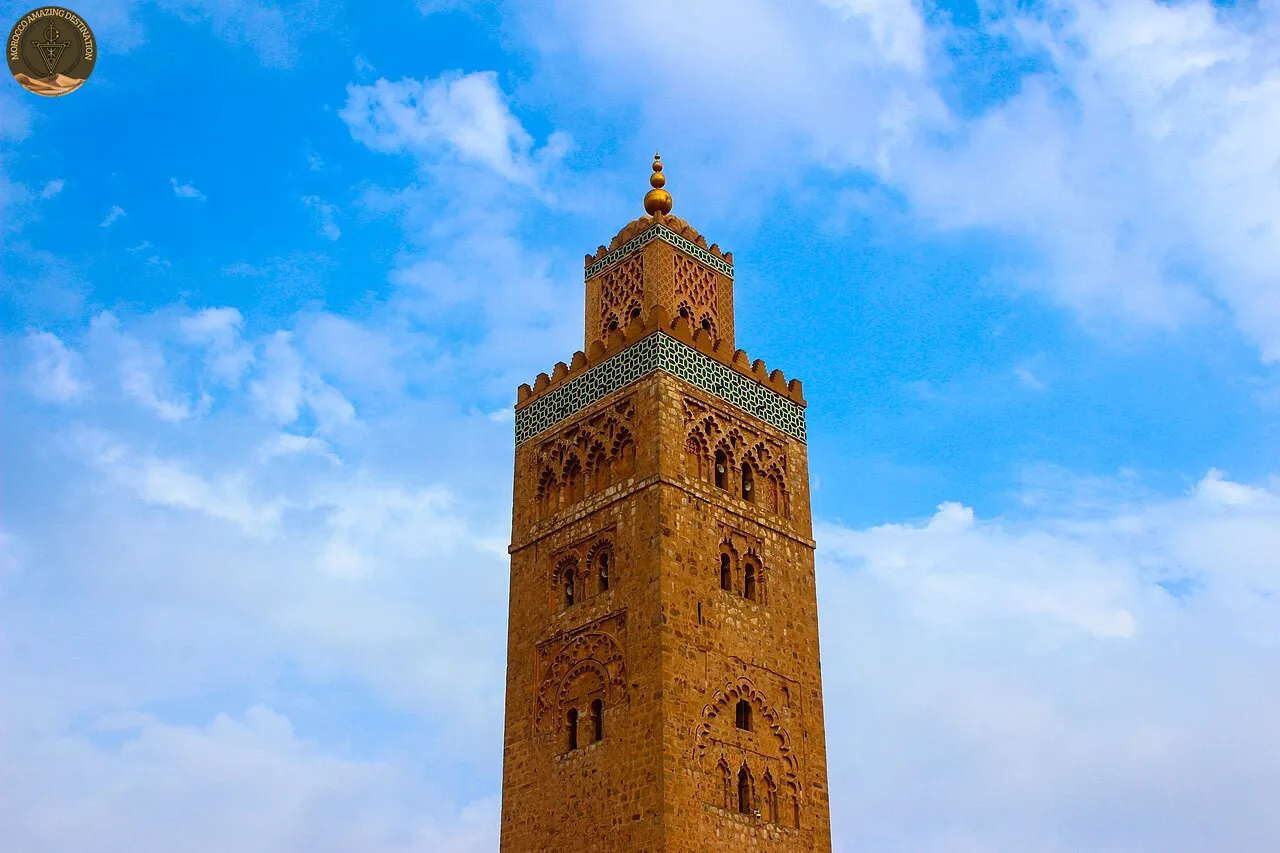
From almost any rooftop in Marrakech the skyline resolves into one square tower of pink sandstone. Koutoubia Mosque history starts in 1147, when the Almohad caliph Abd al-Mu’min began a congregational mosque on the ground of the Almoravid kasbah and palace. The minaret that rose above it, about 77 metres to the tip of its finial, became the model for towers in Seville and Rabat.
In this guide, we will break down the two buildings under one footprint, the tower and its copper orbs, the booksellers who named it, and how to see it properly from the outside.
A Mosque Built Twice: The Almohad Rebuilding of Marrakech
The Almohads entered Marrakech in 1147. Abd al-Mu’min chose the site of the Almoravid kasbah, Ksar al-Hajar, in use since around 1070, and of Ali ibn Yusuf’s palace, finished in 1126. Work on the congregational mosque started the same year, and prayers were being recorded there by around 1157.
A second mosque then went up against the first one’s qibla side. Remains of the earlier building are still visible on the north-west: foundations, the outline of a mihrab, a length of qibla wall. Its southern wall was taken over as the northern wall of the new mosque, which explains why the finished plan looks irregular rather than square.
The alignment adds a wrinkle. The first mosque was set at 154 degrees, the second at 159 to 161, while the true qibla sits near 91. The traditional account holds that the rebuild corrected the direction of prayer. Measured against Mecca, it moved further away.
Reading the Minaret: Almohad Architecture in Marrakech
At the base the numbers are easy to follow: about 77 metres to the finial tip on a square shaft of 12.81 metres a side, a tower that climbs roughly five times its own width before the lantern. This is the profile that Koutoubia mosque architecture carried across the western Mediterranean.
Inside, the Koutoubia minaret is hollow: six chambers stack up the shaft, joined by a ramp wide enough for a muezzin to ride a horse to the top. The windows sit where the ramp passes, so no two faces of the tower match. Work began under Abd al-Mu’min and was completed in the late 12th century, with the upper lantern often credited to Yaqub al-Mansur around 1195.
The summit carries copper spheres, the largest roughly two metres across, plated and riveted. The story that they were cast from a wife’s gold jewellery, offered in penance, survives in versions that contradict each other, and it was first told about the Kasbah Mosque. Sources also disagree on whether three or four hang there.
The Booksellers’ Souk of Marrakech: How the Koutoubia Got Its Name
Kutubiyyin means booksellers. The east side of the mosque faced the street of book and manuscript stalls, and at times around a hundred vendors are said to have traded along the base of the walls. You will also see the name written Kutubiyya.
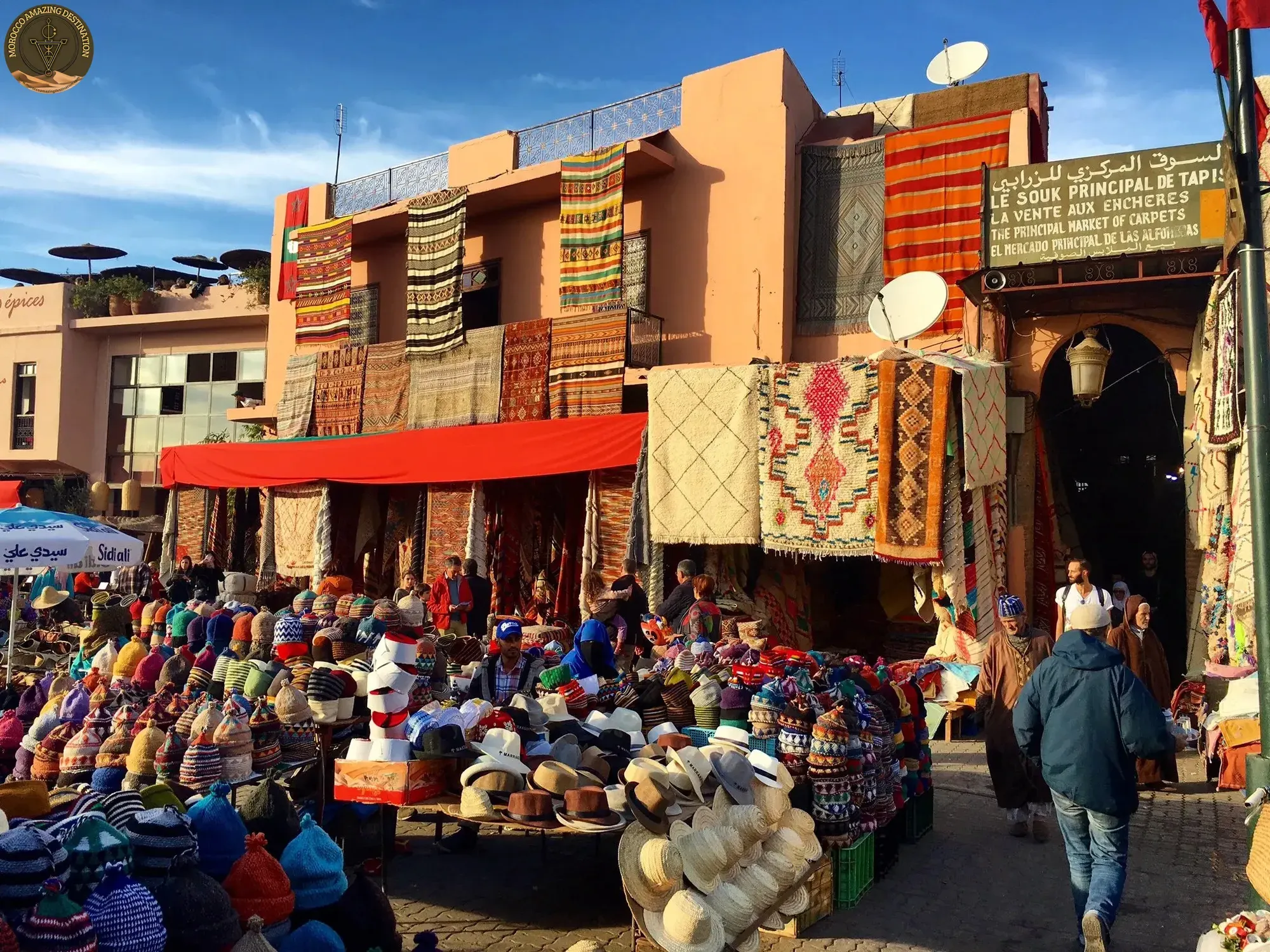
For its first centuries the building carried a plainer name: the Almohad Mosque, after the dynasty that raised it. The book trade did the renaming, slowly, in the way Marrakech still names a place after whatever happens in it.
The manuscript stalls are gone, but the lanes east of the square keep the trade in other stock: paper, leather, printed books, stationery. It is a short walk from the tower and easier before the afternoon heat.
From Marrakech to Seville and Rabat: A Tower Copied Twice
The form travelled because the Almohads ruled both shores of the strait. In Seville the Giralda went up from the 1180s and was finished in 1198, before becoming the bell tower of the cathedral. In Rabat the Hassan Tower was begun in 1191 and halted in 1199 at about 44 metres, its mosque left unfinished.
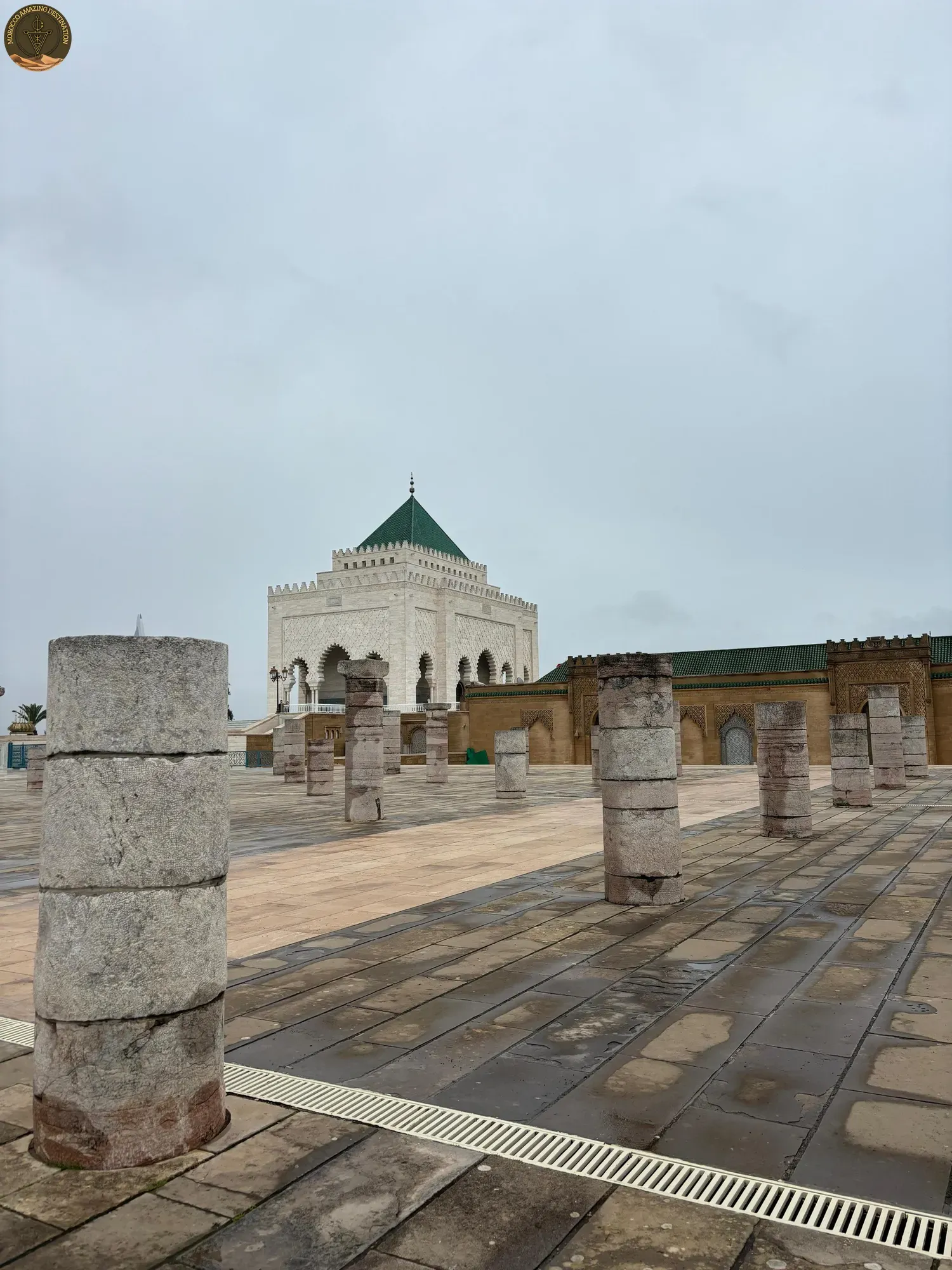
Both repeat the square shaft and the lantern at the top. Each Almohad capital had a tower of this design, and the masons carried it with them. The Marrakech tower came first, which is why the other two are usually described as copies.
Rabat shows the family resemblance most clearly, since the tower stands alone among a field of columns. If you are shaping an itinerary, our guide to the best Marrakech attractions sets the Koutoubia among the rest of the medina’s monuments.
Rooftops, Gardens and Night Light: Seeing the Koutoubia in Marrakech
Koutoubia Mosque Marrakech is first of all a working place of worship: non-Muslims cannot enter the prayer hall, guided groups included. The plaza, the gardens and the ruins of the first mosque are free, right at the edge of Jemaa el-Fnaa.
How to see it well:
- Late light first: the last hour before sunset turns the stone a deeper rose, and the square fills behind you.
- Climb for the view: café terraces and riad rooftops around Jemaa el-Fnaa look straight at the tower.
- Return after dark: floodlights pick out the shaft and the lantern against a black sky.
- Notice the skyline: a city rule keeps the buildings around it low, so nothing rises to block the view.
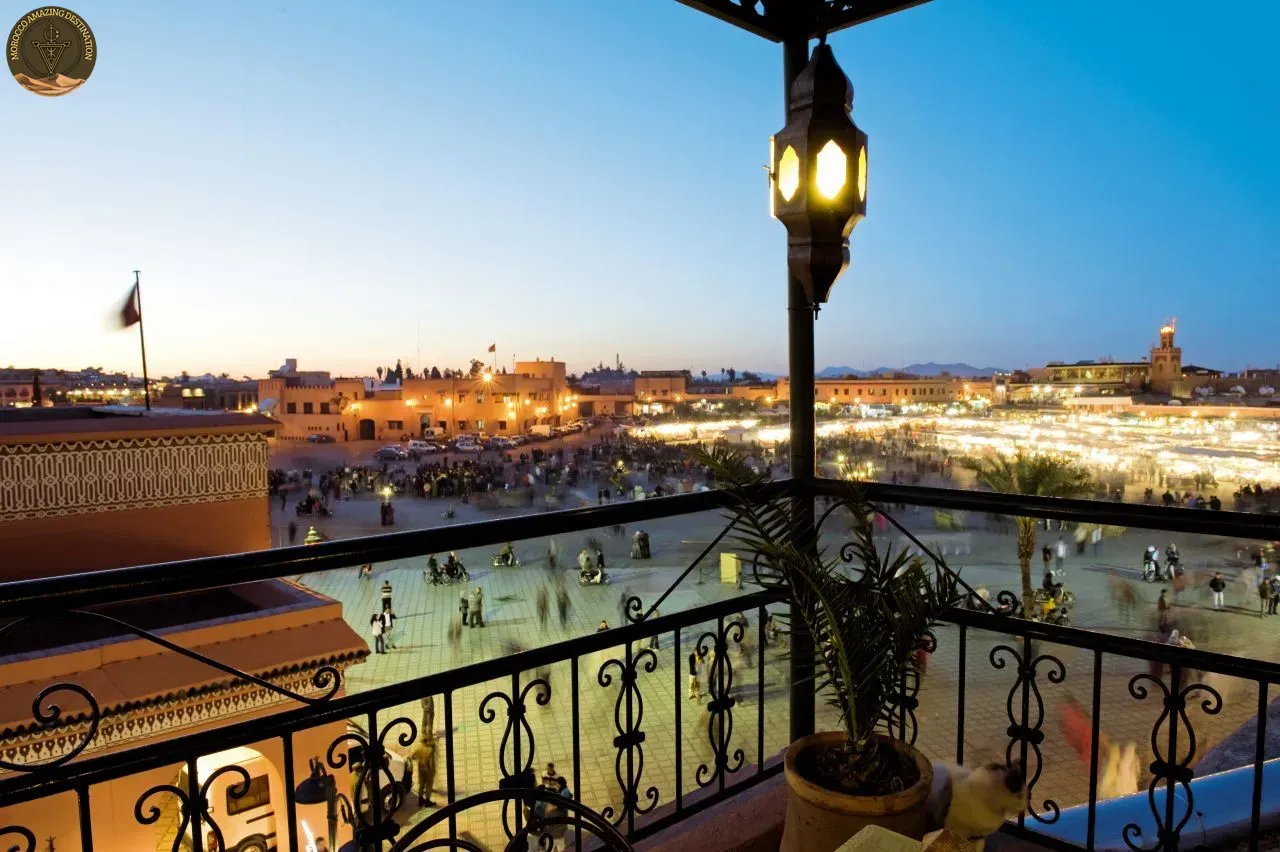
Raise your eyes from any terrace in the medina and the tower keeps reappearing between rooftops, which is why so many riads advertise a Koutoubia view. For what applies at the door of any mosque in the country, our guide to Islamic places to visit in Morocco covers dress, timing and where visitors are welcome.
A private driver makes the difference between seeing the tower from a taxi window and standing with it in the right light. Two of our trips begin in Marrakech and head over the Atlas: the 4-day Morocco desert tour from Marrakech, which crosses to Ait Benhaddou, the Dades Valley and Merzouga, and the shorter 3-day trip from Marrakech to Merzouga.
We can customize a tour to match your needs - design your perfect itinerary
If you found this helpful, add us as your preferred source on Google.
Frequently Asked Questions
Who built the Koutoubia Mosque, and when?
Abd al-Mu'min, the Almohad caliph, began the congregational mosque in 1147 on the site of the Almoravid kasbah and the palace of Ali ibn Yusuf in Marrakech. Prayers were being recorded there by around 1157, and the minaret was completed in the late 12th century.
Can non-Muslims go inside the Koutoubia Mosque?
No. The prayer hall is closed to non-Muslims, guided groups included. Visitors can walk the plaza, the gardens and the remains of the first mosque on the north-west side, and all of that is free.
Why is the Koutoubia called the Mosque of the Booksellers?
Kutubiyyin means booksellers. The east side of the mosque faced the street of book and manuscript stalls, where at times around a hundred vendors traded, and the nickname outlived the older name, the Almohad Mosque.
How tall is the Koutoubia minaret, and what are the golden balls on top?
It rises about 77 metres to the tip of the finial, on a square shaft of 12.81 metres a side. The spheres are copper, the largest about two metres across, and the gold-and-penitence legend attached to them is told in several contradictory versions.
Ready for an Adventure?
Have questions? Feel free to contact us using the form below. We're here to help!