
· Travel · 9 min read
Top 10 Marrakech Attractions: The Best Things to See in the Red City
Discover the top 10 Marrakech attractions: from Jemaa el-Fnaa to Majorelle Garden and the Saadian Tombs, plan your perfect visit to the Red City.
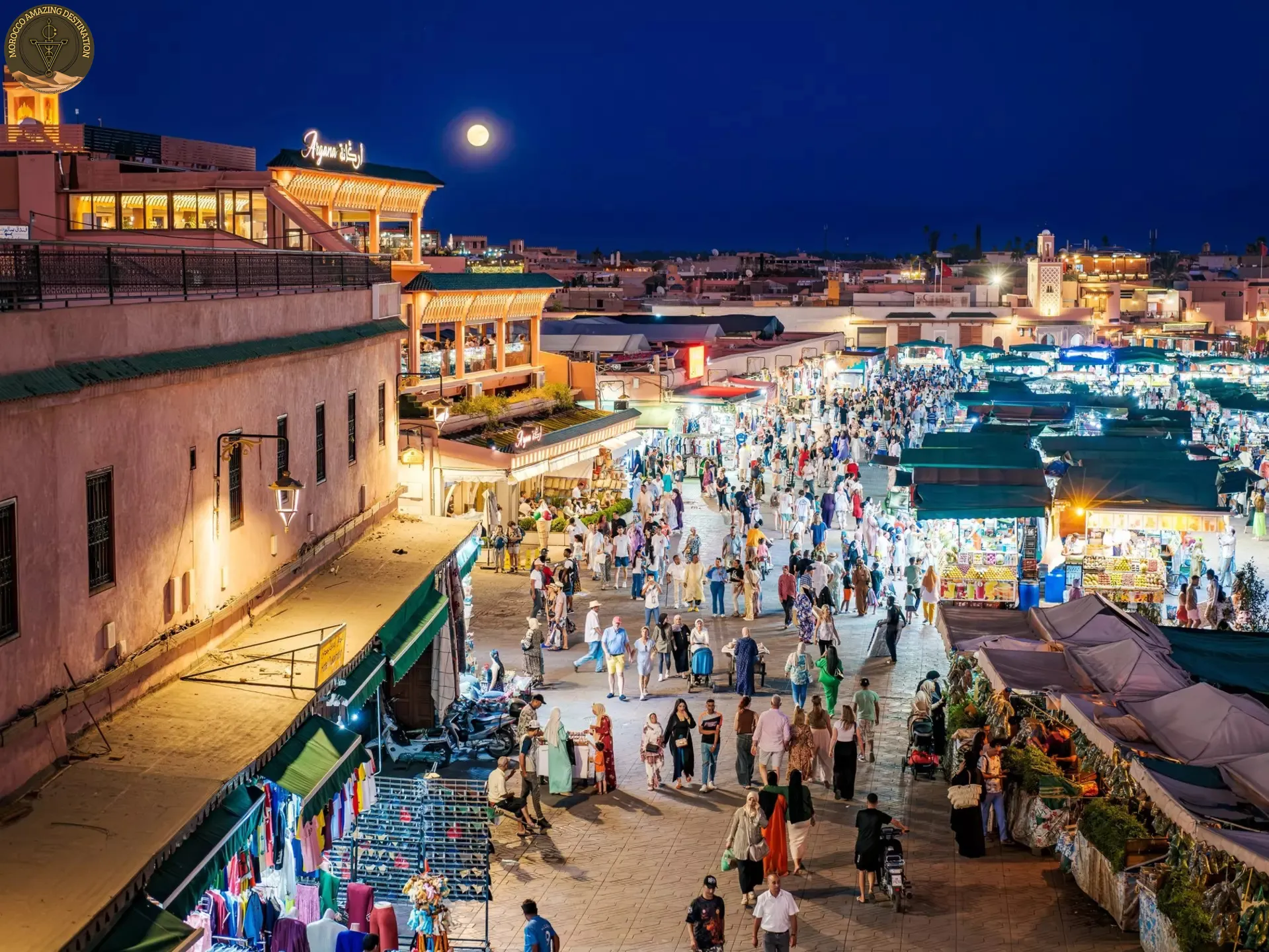
Marrakech is Morocco’s most-visited destination, and it’s easy to see why: the Red City layers a UNESCO-listed medina, monumental palaces, and lush gardens into one unforgettable urban adventure. In this guide, we count down the top 10 Marrakech attractions every first-time visitor should have on their list — with practical tips on tickets, timing, and how to beat the crowds.
From the smoke of the night-time food stalls to the serenity of hidden gardens, the city offers a remarkable range of marrakech tourist attractions. These are also the marrakech top attractions locals point you to first — and honestly, they rank among the best attractions in marrakech for culture, history, and sheer spectacle. Read on for our marrakech top 10 attractions, then use the bonus section to round out your trip with the best things to do in marrakech beyond the obvious.
Along the way, we’ll flag the essential marrakech landmarks, the true marrakech must-see sights, and our favourite routes for marrakech sightseeing on foot — so you can turn this list into a realistic day-by-day plan.
1. Jemaa el-Fnaa: The Beating Heart of the City
No trip to Marrakech feels complete without standing in the middle of Jemaa el-Fnaa, the legendary square at the heart of the medina and the city’s most electrifying open-air stage. Declared a UNESCO Masterpiece of the Oral and Intangible Heritage of Humanity, it shifts character throughout the day: in the morning, orange-juice stalls and snake charmers; by late afternoon, henna artists, storytellers, and water sellers in traditional costume; after dark, a vast open-air kitchen where dozens of food stalls grill skewers and steam tagines under strings of lights.
Entry is free, and the show runs from sunrise to well past midnight. For the classic experience, take a seat on a rooftop café terrace as the sun drops behind the Koutoubia minaret — the view is pure Marrakech.
2. Koutoubia Mosque: The City’s Landmark Minaret
Rising over the medina’s southwestern edge, Koutoubia Mosque is the largest mosque in Marrakech and the city’s ultimate orientation point. The Almohads founded it in the 12th century and rebuilt it shortly afterwards; its 77-metre minaret — visible for around 25 kilometres — later inspired Seville’s Giralda and Rabat’s Hassan Tower. The name comes from the booksellers, or kutubiyyin, who once traded in the surrounding streets.
Non-Muslim visitors can’t enter the prayer hall, but the palm-lined gardens around the mosque are open to everyone and offer the best photo angles of the minaret, especially in the late-afternoon light. Combine it with the nearby souks for a classic medina morning.
3. Bahia Palace: A Masterpiece of Moroccan Craft
A short walk south of the square, Bahia Palace is the masterpiece of late 19th-century Moroccan domestic architecture. Built for Grand Vizier Si Moussa and completed under his successor Ba Ahmed, its name means “brilliance” — and the name fits. Around 150 rooms spread over roughly 8,000 square metres of carved cedar, zellige tilework, painted plaster, and courtyards planted with orange trees and fountains.
Plan around 60–90 minutes, and arrive at opening time (roughly 9:00) to enjoy the halls before the tour groups. Entry is around 70–100 MAD, and hours generally run to 17:00–18:00 — shorter during Ramadan.
4. Saadian Tombs: A Hidden Royal Necropolis
Hidden behind the Kasbah Mosque near Bab Agnaou, the Saadian Tombs are the most beautiful necropolis in Morocco. Dating from the 16th century and rediscovered only in the early 20th century, they contain two mausoleums whose Italian marble columns, carved cedar, and gold-leaf stucco are breathtaking up close.
Entry is around 100 MAD and the site opens from 9:00 (closing around 17:00–18:00 depending on the season). Go early — the queues are real, and the chambers are small.
5. El Badi Palace: Grandeur in Ruins
Built by Sultan Ahmad al-Mansur in the late 16th century to celebrate a military victory, El Badi Palace is now a magnificent ruin — and all the more atmospheric for it. Its vast sunken courtyard, once filled with a pool and pavilions, is now ringed by ramparts where storks nest; climb the walls for a superb view over the medina with the Koutoubia minaret on the horizon.
Entry is around 100 MAD, open daily 9:00–17:00, and it’s about ten minutes on foot from Bahia Palace — pair them in the same morning.
6. Majorelle Garden: A Blue Botanical Oasis
The most colourful attraction in the city, Majorelle Garden is a botanical jewel created by French painter Jacques Majorelle in the 1920s, with its signature “Majorelle Blue” villa, around 300 plant species, and shaded paths that feel a world away from the medina. Rescued from decay by Yves Saint Laurent and Pierre Bergé, it now also hosts the Berber Museum and sits next to the Yves Saint Laurent Museum in the Guéliz district, about 15 minutes by taxi from the medina.
Ticket pricing varies widely — garden-only entry is roughly 70–170 MAD depending on the season, with combination tickets costing more — so check the official ticket site (tickets.jardinmajorelle.com) before you go. Arrive at opening (around 8:00–8:30) to beat the crowds; note that tripods and selfie sticks aren’t allowed, and photography is prohibited inside the museum halls.
7. Medersa Ben Youssef: A Jewel of Islamic Learning
Tucked into the medina’s northern quarter, Medersa Ben Youssef was once the largest Islamic college in North Africa. Founded by the Merinids in the 14th century and named after the Almoravid sultan Ali ibn Youssef, it was recently restored and reopened to visitors, revealing a courtyard of carved stucco, zellige, and a central marble basin, plus around 130 tiny student cells on two levels.
Entry is 50 MAD, open daily 9:00–19:00, and you’ll want 45–60 minutes. Photography is welcome — the light in the courtyard is superb.
8. Marrakech Souks: A Shopper’s Labyrinth
North of Jemaa el-Fnaa stretches the great trading labyrinth of the Marrakech souks, where lanes are grouped by craft: textiles, leather, lanterns, spices, carpets, ceramics, and babouches along the main artery of Souk Semmarine. It’s free to wander, and mornings are quieter than the afternoon rush.
Haggling is expected — start friendly, compare prices in a few stalls, and carry small notes. Be politely firm with self-appointed guides who offer to “show you the way”, and keep your valuables close in the crowds.
9. Menara Gardens: The Classic Postcard View
West of the medina, the Menara Gardens are a 12th-century Almohad royal garden of olive groves centred on a vast reflecting pool, fed by mountain water from the Atlas. The little Saadian-era pavilion by the water, with the Atlas Mountains rising behind it, is one of the most photographed scenes in Morocco — the classic postcard view of Marrakech.
The gardens themselves are free to enter and open daily from around 8:00 to 18:00 (the pavilion may charge a small fee). Come in the early morning or late afternoon, when the light is soft and the pool mirrors the mountains.
10. Dar el Bacha: A Palace of Coffee and Culture
In the Mouassine district, Dar el Bacha is an early 20th-century palace built for Pasha Thami El Glaoui, who once hosted guests including Winston Churchill and Charlie Chaplin. Restored as the Musée des Confluences, it pairs elegant rooms and exhibitions with the legendary Bacha Coffee — an experience worth queuing for.
Entry is around 60 MAD; the palace is open Tuesday to Sunday (closed Mondays), roughly 9:30–18:00.
Bonus: More Marrakech Attractions Worth Your Time
The Mellah: Marrakech’s Jewish Quarter
Created in the mid-16th century as the second-oldest mellah in Morocco, the Mellah Marrakech tells the story of the city’s Jewish community, which grew after the expulsion from Spain in the late 15th century. Wander its streets to the Lazama Synagogue and the Miâara cemetery — a small Jewish community still lives here. It’s free to explore and slots neatly into a morning with Bahia Palace and the Saadian Tombs.
Agdal Gardens: The Oldest Orchards in Town
South of the medina, the Agdal Gardens are the oldest gardens in Marrakech, laid out by the Almohads in the 12th century. Hundreds of hectares of walled orchards surround the vast Sahraj el-Hana reservoir. Entry is free, but access is restricted — the gardens often open on Fridays and Sundays and close when the royal family is in residence, so check before planning around them.
Day Trips: Agafay Desert, Ourika Valley and the Atlas Mountains
When the medina walls feel too close, the landscapes beyond the city are part of the Marrakech experience. The Agafay Desert — a dramatic stone desert around 45 minutes from the city — offers camel rides, quad biking, sunset dinners, and luxury camps under the stars. The Ourika Valley, less than an hour’s drive into the High Atlas, is a green escape of Berber villages and the Setti Fatma waterfalls. For hikers, the Atlas village of Imlil is the gateway to Toubkal, the 4,167-metre summit that draws trekkers from around the world.
Planning Your Marrakech Sightseeing
A few practical habits make every one of these attractions smoother:
- Start early — most monuments open around 9:00 and fill up fast.
- Dress modestly, especially around the mosque and in the medina.
- Carry cash in small notes; many ticket offices and stalls don’t take cards.
- Confirm opening hours and prices with official sources, as they shift seasonally and during Ramadan.
- Use the Koutoubia minaret as your compass — if you can see it, you’re never lost.
FAQ
What is the best time to visit Marrakech?
Spring and autumn offer the most comfortable temperatures for sightseeing, with warm days and cool evenings. Summers can be intensely hot — plan outdoor attractions for early morning or late afternoon — while winter days are pleasant but nights are chilly.
How many days do I need to see the main Marrakech attractions?
Plan at least three full days: one for the medina and souks, one for the palaces and tombs, and one for the gardens plus a possible day trip. With two days you can still cover the essentials with a well-organized route.
How much do the attractions cost to enter?
Jemaa el-Fnaa and the souks are free. Palaces and monuments generally cost between 50 and 100 MAD, while Majorelle Garden pricing varies widely depending on the ticket type — check the official site before visiting. Opening hours are usually around 9:00 to 17:00–18:00 and are shorter during Ramadan.
Is Marrakech safe for tourists?
Yes — Marrakech is a safe and welcoming destination with a visible tourism police presence, especially around the medina. As anywhere, keep valuables secure, agree taxi fares in advance, and politely decline unsolicited guides.
Ready to see it all? Our 10 Days in Morocco: The Ultimate Private Tour from Marrakech to the Sahara includes three nights in Marrakech with guided visits to the top attractions, then heads into the Sahara. Prefer the coast as well? The 9 Days Morocco Tour from Marrakesh - Sahara Desert, Essaouira & Cultural Highlights pairs the city with Essaouira and Morocco’s cultural highlights.
We can customize a tour to match your needs — design your perfect itinerary
If you found this helpful, add us as your preferred source on Google.
Frequently Asked Questions
What is the best time to visit Marrakech?
Spring and autumn offer the most comfortable temperatures for sightseeing, with warm days and cool evenings. Summers can be intensely hot — plan outdoor attractions for early morning or late afternoon — while winter days are pleasant but nights are chilly.
How many days do I need to see the main Marrakech attractions?
Plan at least three full days: one for the medina and souks, one for the palaces and tombs, and one for the gardens plus a possible day trip. With two days you can still cover the essentials with a well-organized route.
How much do the attractions cost to enter?
Jemaa el-Fnaa and the souks are free. Palaces and monuments generally cost between 50 and 100 MAD, while Majorelle Garden pricing varies widely depending on the ticket type — check the official site before visiting. Opening hours are usually around 9:00 to 17:00–18:00 and are shorter during Ramadan.
Is Marrakech safe for tourists?
Yes — Marrakech is a safe and welcoming destination with a visible tourism police presence, especially around the medina. As anywhere, keep valuables secure, agree taxi fares in advance, and politely decline unsolicited guides.
Ready for an Adventure?
Have questions? Feel free to contact us using the form below. We're here to help!