
· Travel · 6 min read
Ifrane Morocco: The Little Switzerland of the Middle Atlas
Ifrane Morocco, the little Switzerland of the Middle Atlas: what to see on foot, snow at Michlifen, cedar forest and the Fes day trip.
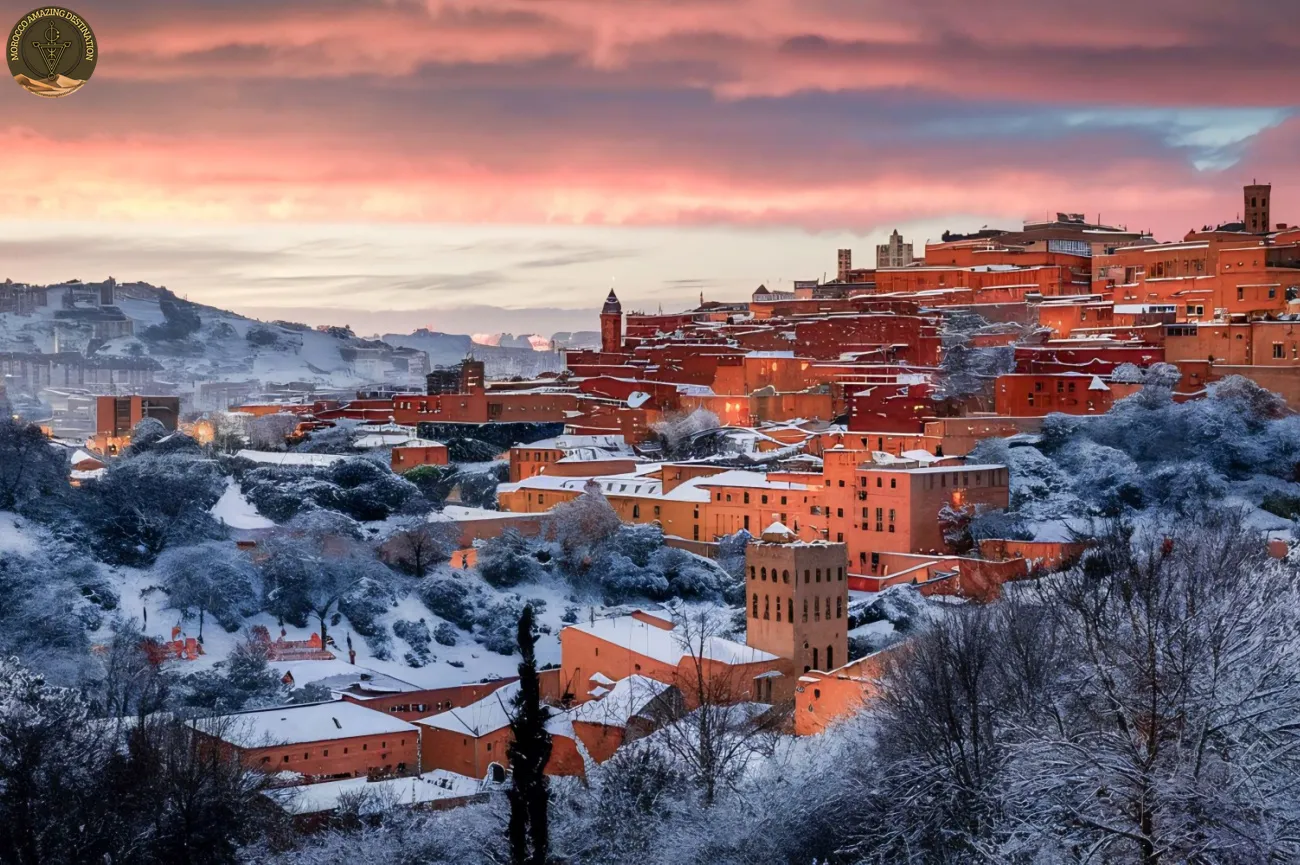
An hour south of the Fes medina the air turns cold and smells of cedar. Red-tiled roofs, clipped gardens, a stone lion on a traffic island, and in some winters, snow underfoot on a Moroccan town square. Ifrane Morocco is a French-built alpine town at about 1,665 m in the Middle Atlas, roughly 65 km and an hour from Fes. It is known for its chalets, cedar forest, monkeys and a short, unreliable snow season.
In this guide, we will break down what Ifrane is, a one-hour walking route through town, the snow bowl at Michlifen, the Azrou forest and its Barbary macaques, and how to build the whole loop from Fes in a day.
Ifrane at 1,665 Metres - A Swiss Town Morocco Built on Purpose
The French protectorate administration laid Ifrane out from 1929 as a hill station for officials escaping the heat of Fes and Meknes. The architecture answers the weather: steep pitched roofs in red tile to shed heavy snow, deep eaves, white walls, gardens clipped low. Locals call it the Ifrane little Switzerland, guidebooks the Switzerland of Morocco, and the nickname holds because those roofs do the job.
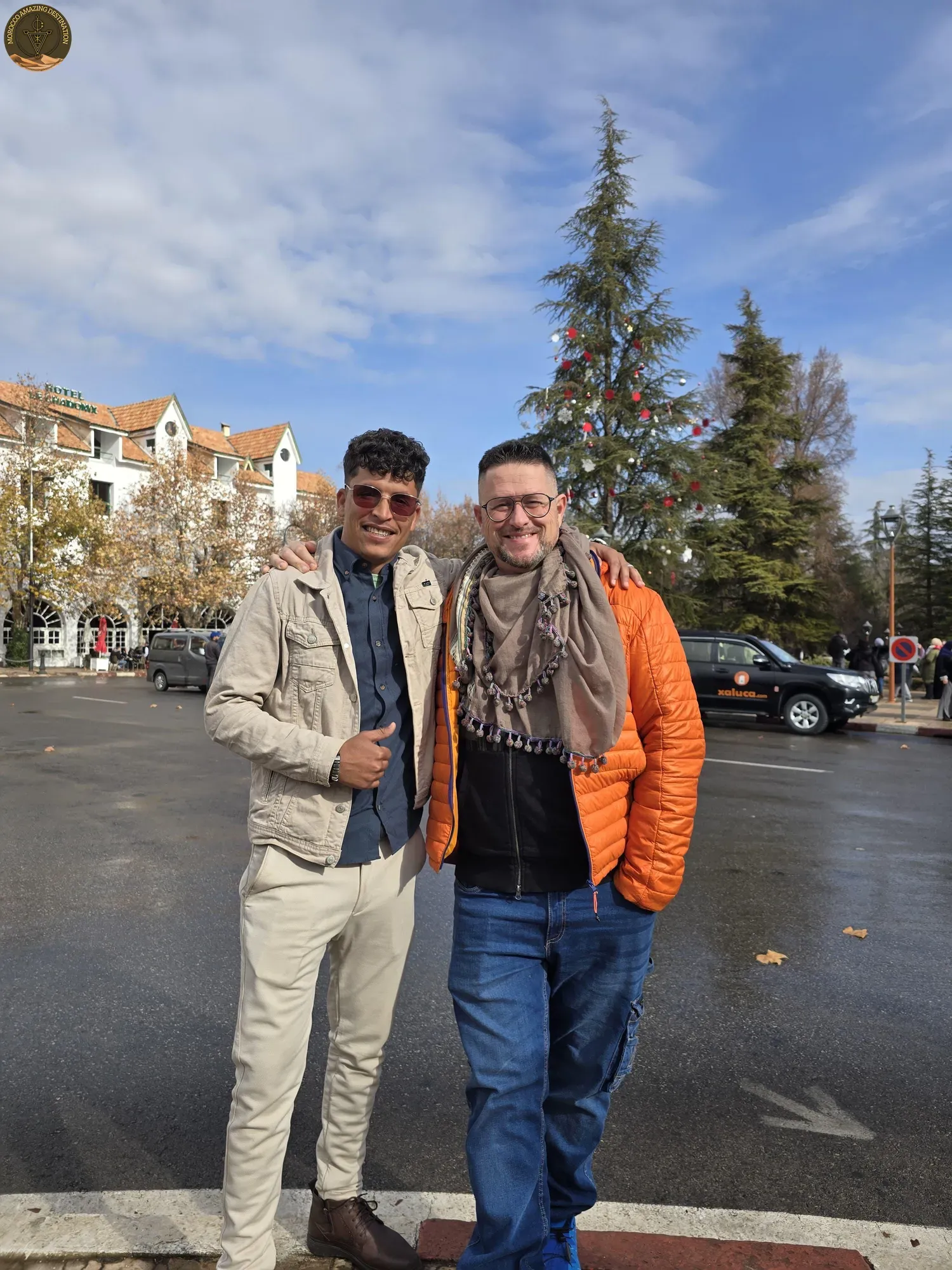
A stone lion carved in 1930 from a boulder about 7 m long sits at the centre. Ask who made it and you get two answers, the French sculptor Henri Moreau or a prisoner of war. Nobody has settled it, so treat both versions as local lore.
Al Akhawayn University opened in 1995 and gave the town a second life as a small college town. The cold is the other half of its identity: about -24 °C in the winter of 1935, still cited as the lowest ever measured in Africa. April to June brings meadows and wildflowers, July and August run about 10 °C cooler than Fes, and December to March belongs to snow and ice.
Walking Ifrane - The Stone Lion, the Campus and the Clean Streets
Ifrane is small enough to cross on foot, and an hour covers the parts worth seeing. Start at the stone lion, walk downhill through the gardens to the university gate, then loop back through the café streets to the main square. Parking near the square is easy outside summer weekends.
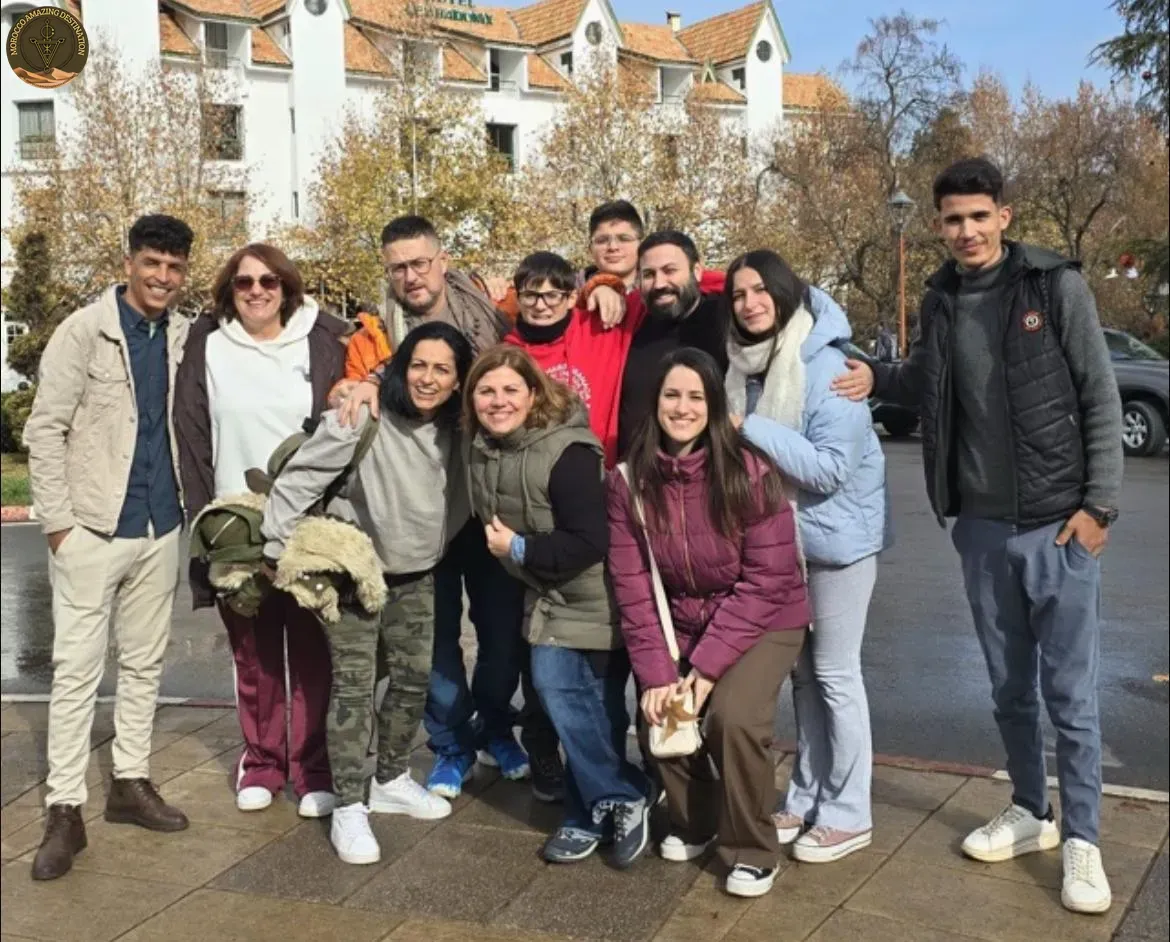
- Stone lion and square, 15 minutes: the 1930 carving, the flower beds, and the softest morning light.
- Al Akhawayn gate, 20 minutes: cedar-lined avenues and red roofs behind the fence; the perimeter paths are open to anyone.
- Café streets and market, 25 minutes: mint tea, msemen, and produce stalls where Fes families stock up before driving home.
Do the photo stop first and leave the wandering for last, because the cafés fill around mid-morning.
Michlifen - A Day in the Snow Above Ifrane
Michlifen sits about 15 km southeast of Ifrane at just over 2,000 m, inside an extinct volcanic crater ringed with cedar. Calling it a resort oversells it. Two ageing drag lifts cover roughly a kilometre of piste, and there is no ticket office, no rental shop and no patrol. The lifts are as often idle as running.
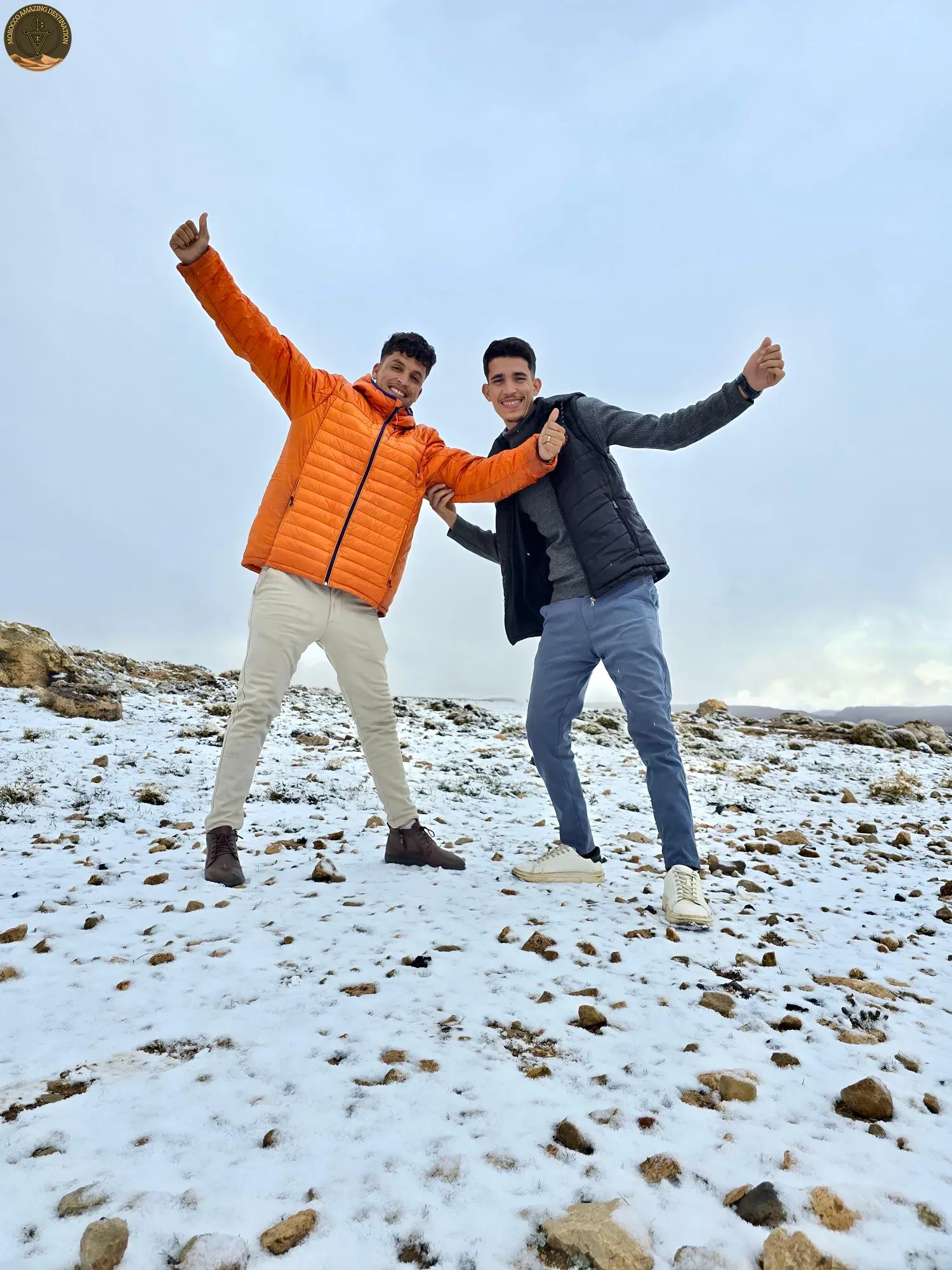
Skiing in Ifrane works when the snow comes. Informal operators hire skis, boots and sledges from vans at the roadside for about 100 to 200 MAD a day, sledges 30 to 60 MAD. The window runs roughly December to March, best odds mid-January into February, and some winters give weeks of cover while others give a few slushy days.
Treat it as a half-day: drive up mid-morning once the surface softens, play for two or three hours, eat grilled food at the seasonal stalls, and be back in town by mid-afternoon. The access road climbs through cedar and can be snowbound, so carry chains and check conditions before leaving.
Cedars and Macaques - The Azrou Forest Road
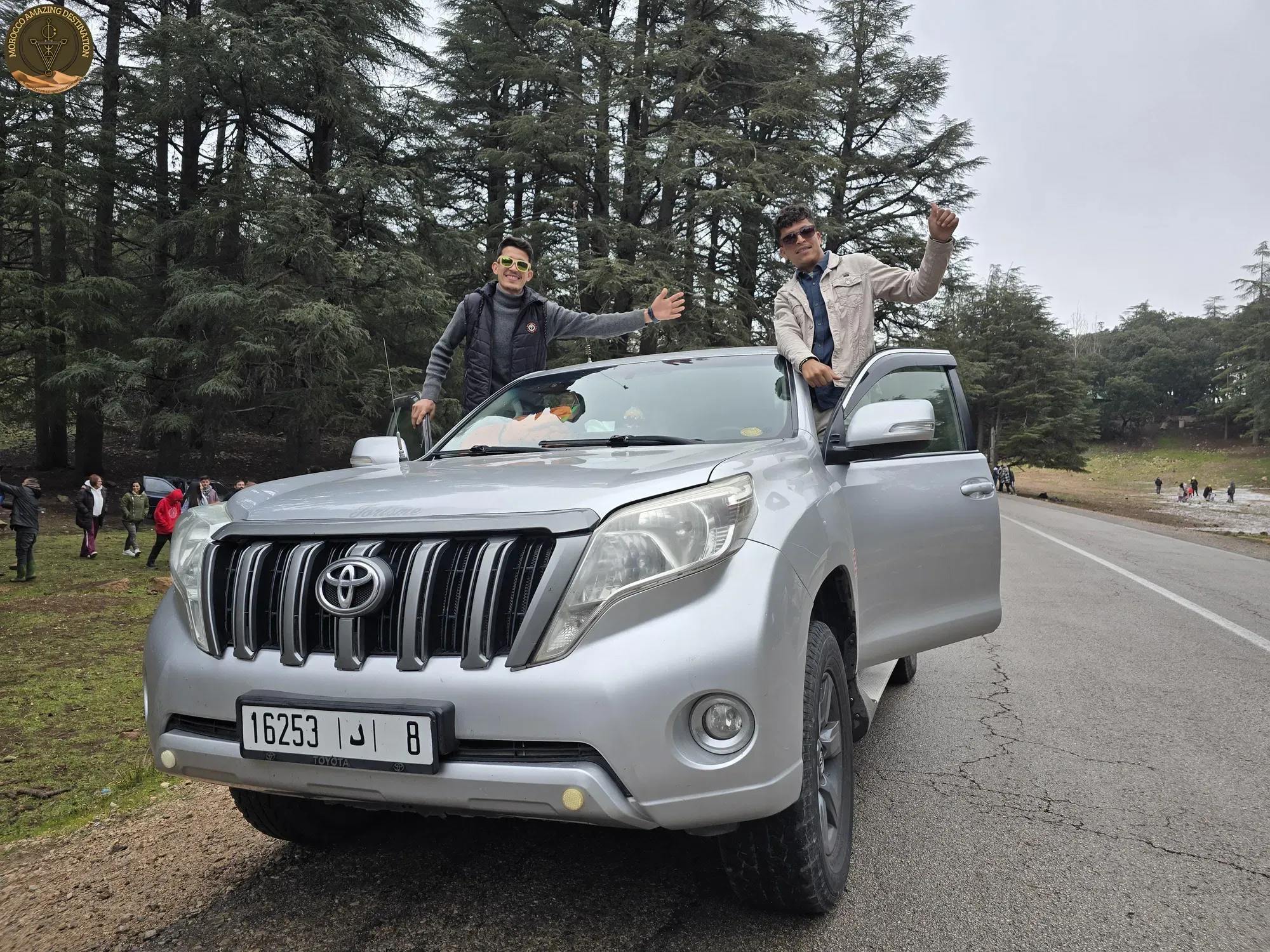
The cedar forest Azrou road is why many travellers come to this corner of the Middle Atlas. Ifrane National Park covers 125,000 hectares and holds about a tenth of the world’s Atlas cedar and roughly a quarter of the world’s Barbary macaques. The stands are old and open: tall trunks on limestone, light falling in columns, almost no undergrowth.
The emblem is the Cedre Gouraud, about 13 km from Azrou. It is roughly 800 years old, 42 m tall and more than 8 m around, and dead since 2003 while still standing.
The macaques are the only wild monkey north of the Sahara and they are endangered. Decades of handouts have left troops heavier, more stressed and bolder around cars, so feeding is prohibited.
- Do photograph from a distance and let a troop forage instead of pose.
- Don’t buy peanuts from roadside sellers or feed them yourself; the trade is the problem.
- Do go early, when animals move through the forest interior away from the car park.
Lakes, Roads and the Fes Day Trip - Building the Loop
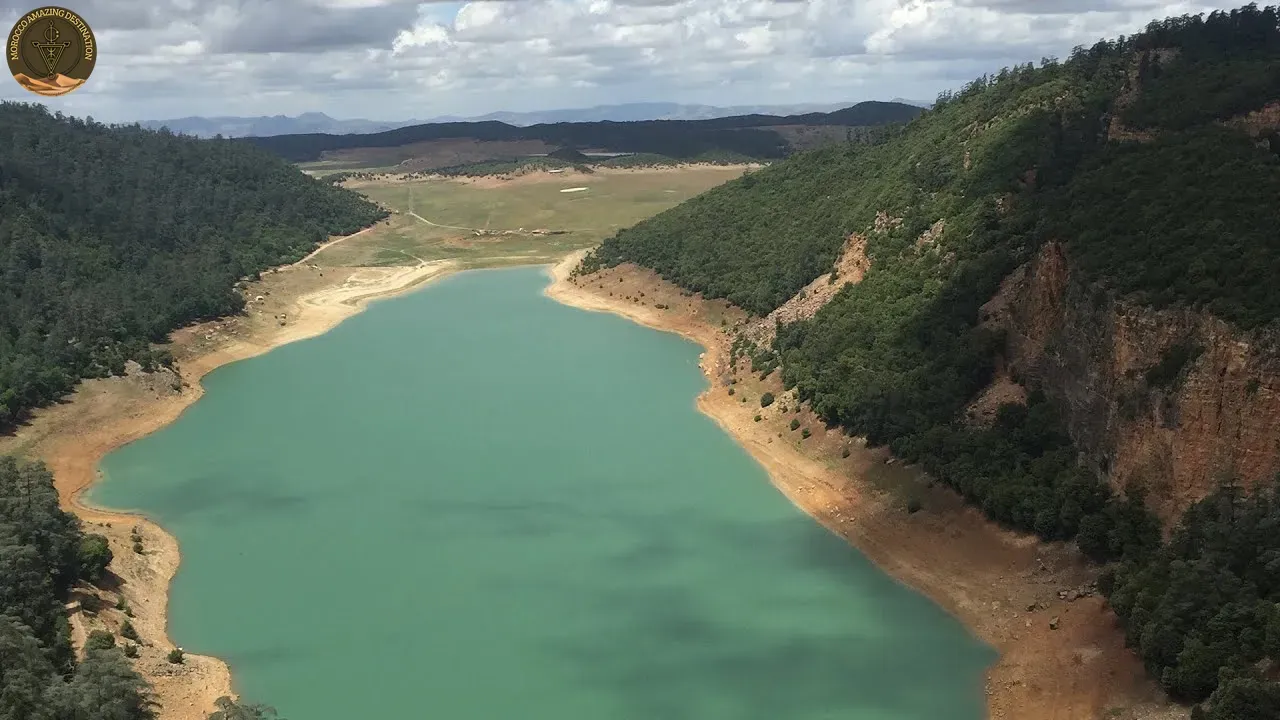
The lakes finish the loop, and their levels swing hard with rainfall. Dayet Aoua sits at about 1,468 m on the Imouzzer Kandar road, shallow, ringed by meadow and oak. Dayet Hachlaf is higher at about 1,668 m, with willows at the edge and trout in the water, and Dayet Ifrah lies about 40 km out at roughly 1,614 m. Aoua and Hachlaf have dried out completely in drought years, so treat all three as picnic and birdwatching stops rather than swimming spots.
A day trip from Fes to Ifrane happens on the road: no train reaches the town.
- Grand taxi: about 30 to 50 MAD a seat from Fes, roughly an hour once the car fills.
- Coach: about 35 to 55 MAD, comfortable, but only a few departures a day.
- Private car and driver: about 500 to 800 MAD for the day, and the only way to reach the forest.
Ifrane to Azrou is 17 km and 20 minutes, with no scheduled transport past the town. For lift-served skiing with a ticket window, our guide to skiing in Oukaimeden covers the High Atlas version. If you are still picking dates, when does it snow in Morocco maps the seasons across the ranges.
Day 3 of our 7-Day Morocco Tour from Fes runs Fes to Ifrane, through the Azrou forest and on towards the desert. The 4-Day Desert Tour from Fes to Marrakech stops in Ifrane and Azrou on its first morning.
We can customize a tour to match your needs - design your perfect itinerary
If you found this helpful, add us as your preferred source on Google.
Frequently Asked Questions
Is Ifrane worth visiting from Fes?
Yes, if you want a cool-weather day out. Ifrane sits about 65 km and an hour from Fes, and one day covers the town on foot, the Azrou cedar forest and, in winter, the snow bowl at Michlifen. Families often treat it as a break from the heat of the medina.
Does it snow in Ifrane, and can you ski at Michlifen?
Snow falls on Ifrane most winters, and Michlifen holds it longer at just over 2,000 m. Skiing there depends on the year: two ageing drag lifts run when the cover allows, with gear hired at the roadside. Expect a few hours of sliding and sledging rather than a full ski day.
How do I get from Fes to Ifrane without a car?
Shared grand taxis leave Fes for about 30 to 50 MAD a seat and take around an hour once the car fills. Coaches cost about 35 to 55 MAD but run only a few times a day. Neither reaches the Azrou forest, so arrange a driver for that leg.
Where can I see Barbary macaques near Azrou?
Along the Ifrane to Azrou road and inside the cedar forest beyond Azrou, especially early morning when troops forage away from the car parks. They are endangered wild animals, so keep your distance, keep food in the car and ignore the roadside peanut sellers.
Ready for an Adventure?
Have questions? Feel free to contact us using the form below. We're here to help!