
· Travel · 4 min read
Skiing in Oukaimeden, Morocco: Africa's Highest Ski Village
Skiing in Oukaimeden: a 2,600 m plateau 1.5 hours from Marrakech, one chairlift, ageing drag lifts, snow-dependent weeks and Bronze Age carvings.
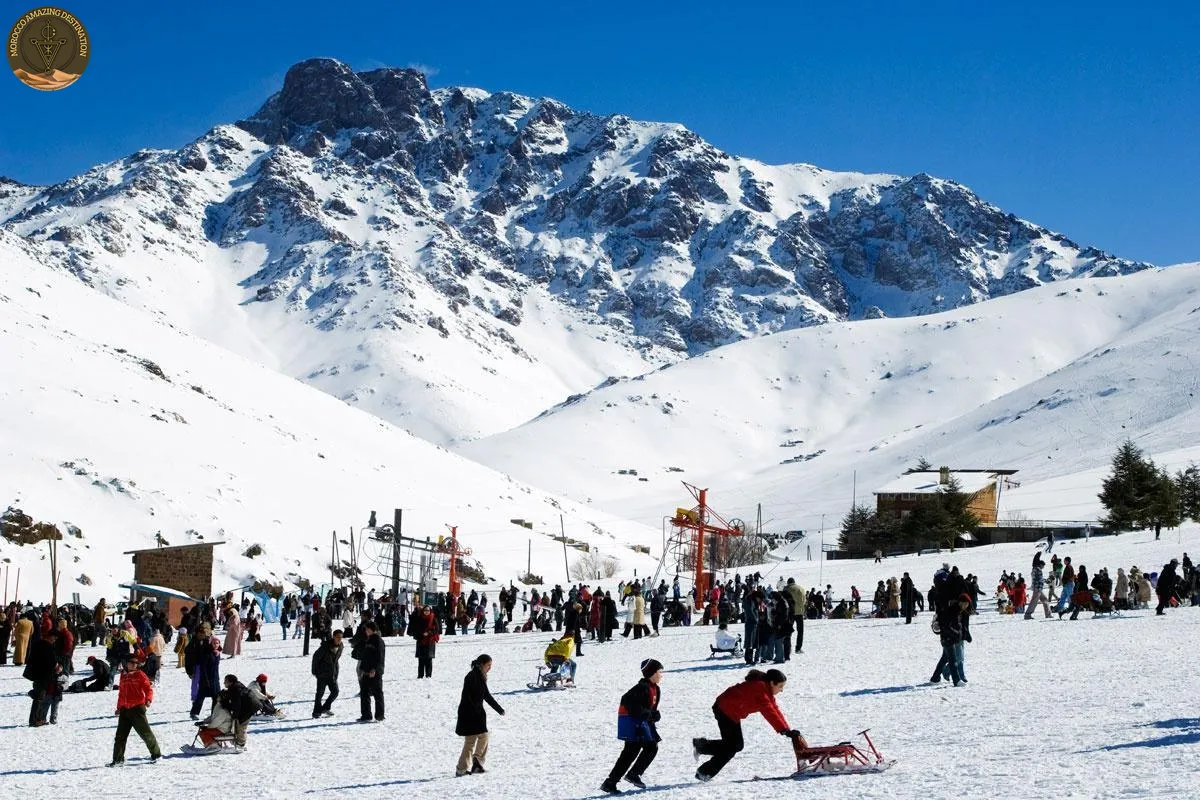
You can eat breakfast on a Marrakech rooftop and stand on snow before lunch. Skiing in Oukaimeden happens on a plateau 2,600 m up in the High Atlas, 75 km south of the city. A chairlift climbs toward 3,200 m, with the Toubkal massif filling the view behind you. It is the highest ski village in Africa, and it looks nothing like an Alpine resort.
In this guide, we will break down what the village actually is, how the drive works, what the snow and lifts deliver, and how to fill the hours when the slopes close.
A Ski Village at 2,600 Metres - What Oukaimeden Really Is
Oukaimeden sits at 2,600 m inside Toubkal National Park, with Jbel Oukaimeden rising to around 3,200 m above the houses. The name is commonly translated from Tamazight as “the meeting place of the four winds”.
People have skied here since the 1930s and 1940s, when the French Protectorate built the first refuges and lifts. The village still carries that era in its bones: low stone blocks with closed shutters, a police post, a few grill restaurants, huts selling honey and walnuts. Mules carry skis where you would expect a shuttle bus.
The Oukaimeden ski resort label is generous for a stone village with a chairlift.
The Atlas Road - Marrakech to the Snow Line
Skiing near Marrakech means 75 to 80 km of road, 1.5 to 2 hours from the city. You drive out toward Ait Ourir, turn south at Tahanout, and pick up the R203 as it starts to climb.
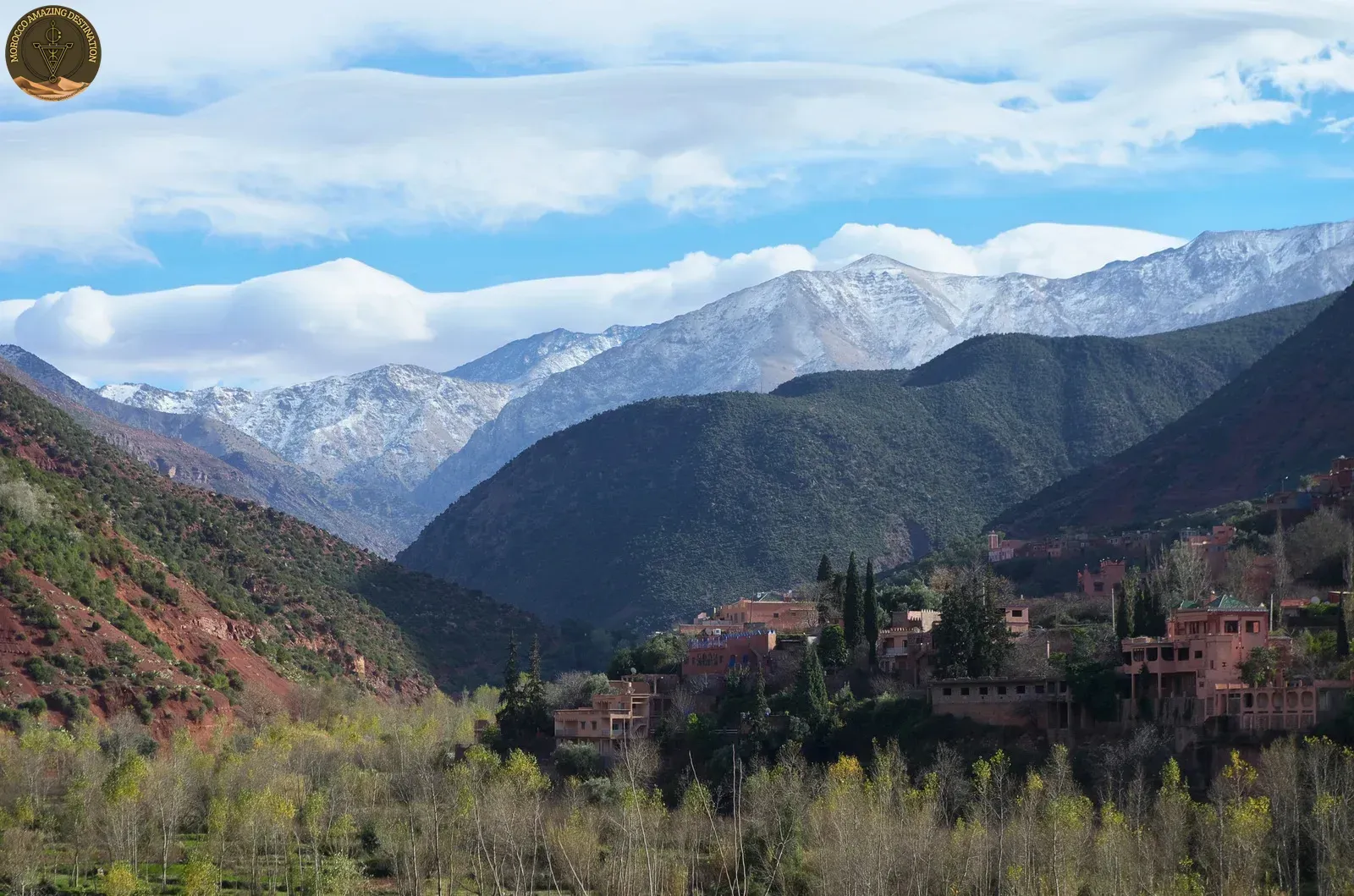
On the drive:
- Walnut groves and terraces: poplars, stone walls and irrigation channels below Tahanout.
- Amazigh villages: flat-roofed houses stacked on the slope, few cars, mules on the verge.
- The snow line: usually past 2,000 m, a white band above the last orchards.
- Winter road reality: chains help after a storm, and ice lingers in shaded switchbacks.
A rental car handles the tarmac in dry weather. On a snow day the final climb is where people turn around.
Snow, Ageing Lifts and Honest Expectations
The lift system is old: one chairlift alongside six or seven drag lifts on paper, with service intermittent in recent winters. Ask locally the week you travel.
There is no snowmaking, so the season lives on natural snow, usually late December to mid-March with January and February the safest bet. For the wider picture, read when the snow falls in Morocco.
What to expect on the snow:
- Vertical: around 650 m top to bottom, with the longest line near 3 km.
- Surface: light grooming, rocks and bare patches, morning ice turning to slush after lunch.
- Gear: huts at the foot of the nursery slopes, dated skis and boots, cash, a few hundred dirhams.
- Coaching: local guides teach beginners informally and will often carry your skis too.
A day trip to Oukaimeden works because the nursery slopes start at the edge of the village. A first-timer can spend two hours learning to snowplough, and January daytime highs hover near 5 °C at this altitude, so layers matter more than style.
Bronze Age Carvings and Berber Villages on the Plateau
The plateau holds one of the densest concentrations of rock art in Morocco: roughly 250 engraved panels and about 1,000 motifs, cut from the Bronze Age onward. Elephants and rhinoceroses appear among the animals, a record of the wetter climate these animals once lived in.
Nothing is fenced or labelled. Some panels sit a few steps from the road, others need a short walk across the slope, and a guide decides whether you walk past grey slabs or actually see the art.
Look for:
- Weapons and riders: daggers, axes and figures on horseback.
- Animals: elephants, rhinoceroses, cattle and ibex.
- Village produce: honey, walnuts and dried herbs sold from wooden huts.
- Stone refuges: tagine and mint tea indoors when the wind picks up.
Imlil, Mint Tea and the Drive Home
The day usually ends on the road to Imlil, at 1,740 m under Toubkal, after a morning of skiing in Oukaimeden. The route back through Tahanout and Asni reaches the village in about an hour from the plateau, and the tea houses pour mint tea with the mountain in the window.
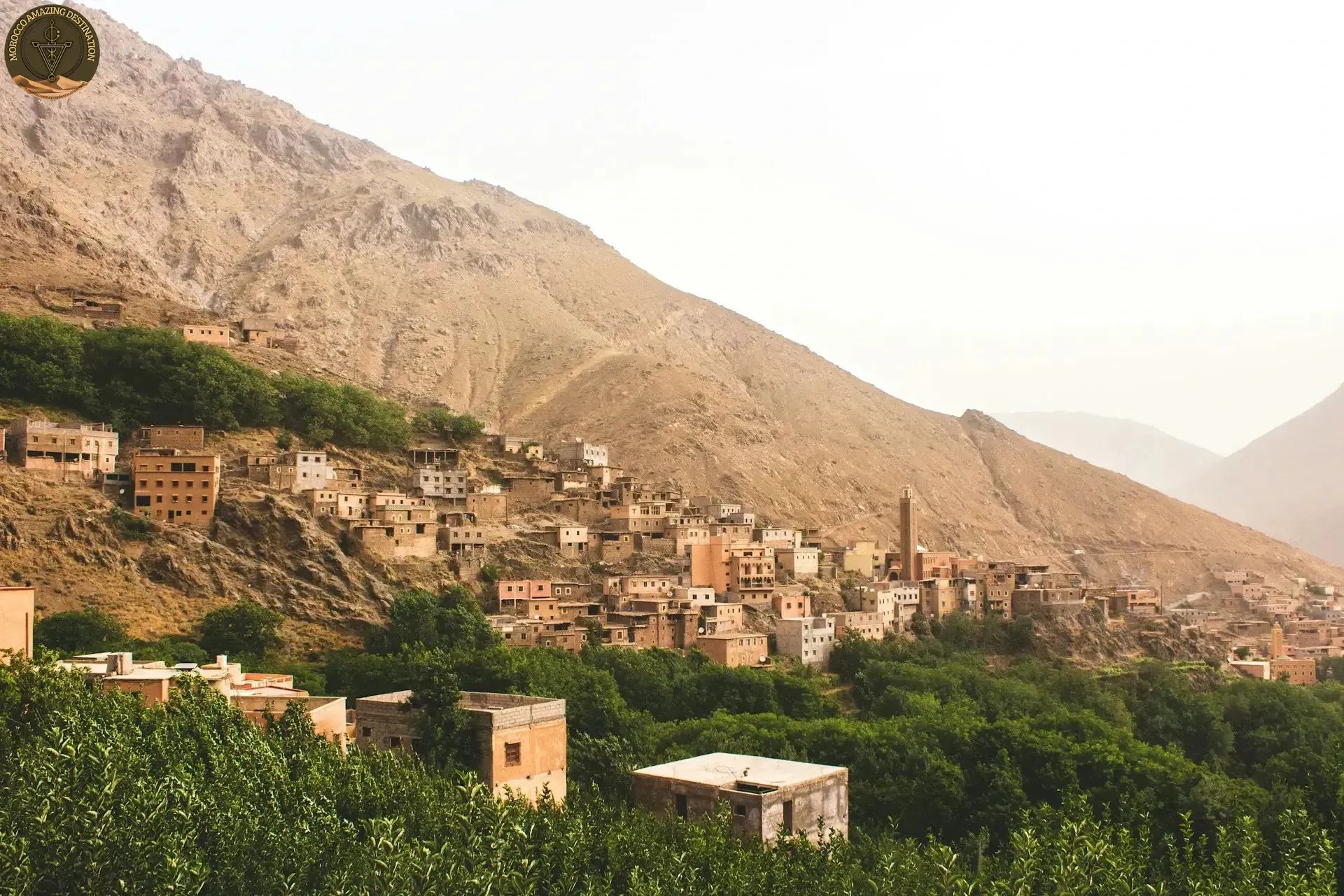
Summer brings wildflowers, shepherds and around a thousand bouldering problems to the same slopes, while the lifts stand idle and hiking takes over.
Pair the snow morning with the rest of the range on our Atlas Mountains Day Trip from Marrakech, which already includes a stop in the Oukaimeden valley. If you want winter to finish in the Sahara, our 4-Day Morocco Desert Tour from Marrakech crosses the High Atlas and drops to Merzouga.
We can customize a tour to match your needs - design your perfect itinerary
If you found this helpful, add us as your preferred source on Google.
Frequently Asked Questions
Can you ski in Oukaimeden?
Yes. Oukaimeden is a plateau at 2,600 m with the top of the lift line around 3,200 m. It has one chairlift and a handful of older drag lifts, no snowmaking, and a short season that depends entirely on natural snow.
How far is Oukaimeden from Marrakech?
It is 75 to 80 km from Marrakech, roughly 1.5 to 2 hours by road, through Ait Ourir and Tahanout on the R203. The last stretch climbs above 2,000 m and can hold ice after a storm.
When is the best time to ski in Oukaimeden?
January and February, inside a window that usually runs from late December to mid-March. Cover can vanish after a warm week, so check snow reports and ask locally before you commit to a day up there.
Can you rent equipment and get lessons at Oukaimeden?
Rental huts sit at the foot of the nursery slopes and hire dated but usable skis and boots for a few hundred dirhams in cash. Local guides coach beginners informally. If you ski seriously, bring your own boots.
Ready for an Adventure?
Have questions? Feel free to contact us using the form below. We're here to help!