
· Travel · 5 min read
Erfoud, Morocco: Fossil Capital and Sahara Gateway
Erfoud, Morocco is the fossil capital and Sahara gateway: plan a stop for trilobites, dates and the 55 km drive to Merzouga's dunes.
Erfoud, Morocco is the oasis town that most desert travellers cross on their way to the dunes, and it deserves more than a fuel stop. Erfoud is a fossil town of roughly 28,900 people in Errachidia Province, eastern Morocco. It sits about 807 m above sea level on the western edge of the Tafilalt oasis.
In this guide we cover things to do in Erfoud, the story behind Erfoud fossils, and how the drive from Erfoud to Merzouga fits into a private desert route.
Where Is Erfoud, Morocco?
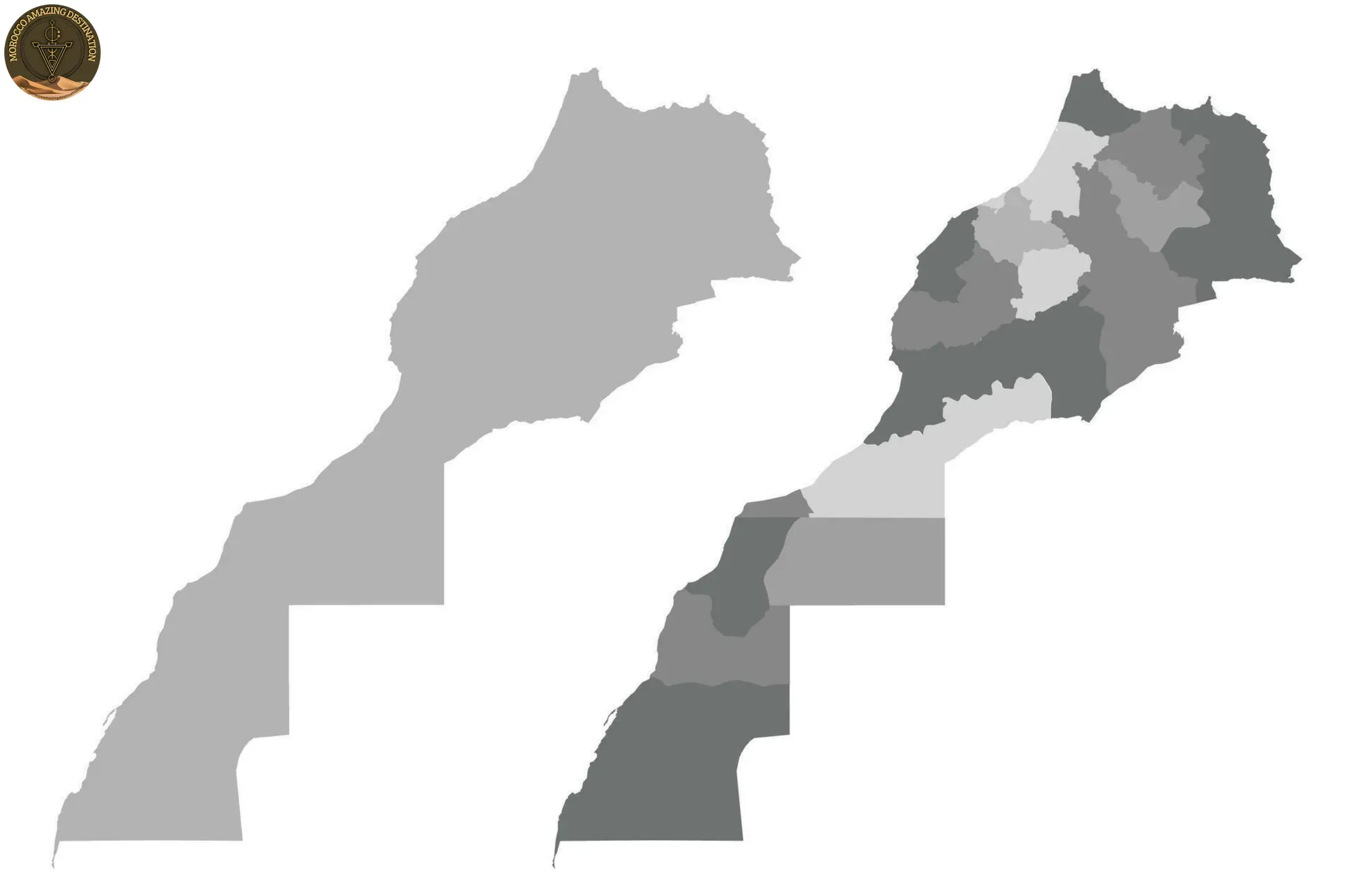
Erfoud sits in Errachidia Province, in the Drâa-Tafilalet region of eastern Morocco, on the western rim of the Tafilalt, the country’s largest oasis, irrigated by the Ziz River. It is a compact, walkable town. The latest census puts the population near 28,900, and the altitude is about 807 m.
Travellers have long called it the Gate of the Sahara, while local workshops prefer the Capital of Fossils. The name is pronounced roughly “air-FOOD”. The town grew during the French protectorate, then drew Amazigh families down from the surrounding mountains as desert tourism took hold. Today it is a low-key working town with hotels, cafés and a market. For most desert travellers it is the last stop with reliable fuel, cash machines and a choice of beds before the dunes.
Quick orientation:
- Where: Errachidia Province, Drâa-Tafilalet, eastern Morocco.
- How high: About 807 m, on the western edge of the Tafilalt oasis.
- Who lives there: Roughly 28,900 people, in a town you can cross on foot.
Erfoud, Morocco’s Fossil Capital
Long before the Sahara, this corner of Morocco lay under a shallow sea. Palaeozoic marine sediment hardened into the limestone and shale that carry the region’s Erfoud fossils. That makes the Tafilalt one of the classic collecting grounds in Morocco. The beds are Devonian, commonly described as roughly 350–400 million years old, so keep the age at hundreds of millions of years and treat any single exact figure with caution. Nearby Alnif is another classic site for collectors, and a trilobite species found in the Tafilalt even carries the region’s name.
Typical finds:
- Trilobites: The signature fossil here, and the reason collectors know the region.
- Ammonites: Coiled shells, often polished and sold as ornaments.
- Orthoceras: Straight-shelled marine creatures cut into fossil marble.
- Goniatites and crinoids: Smaller finds that appear when the limestone is split.
Fossil-rich limestone is cut and polished as fossil marble for tabletops, basins and ornaments. Family workshops along the road toward Merzouga still split and finish stones by hand. Genuine local fossils are common and modestly priced, but some pieces are assembled, cast or imported, and Morocco restricts export of scientifically important specimens. Ask before photographing craftsmen at work, and treat prices as negotiable but fair.
The Ziz Valley, Dates and the Tafilalet Oasis
Most routes into Erfoud come down the Ziz Valley, where the river threads through the gorge country before spreading into long ribbons of palm. The road from Midelt drops through the Ziz Gorges, and after the bare plateau the oasis appears suddenly below you. This is the Tafilalt, Morocco’s date country.
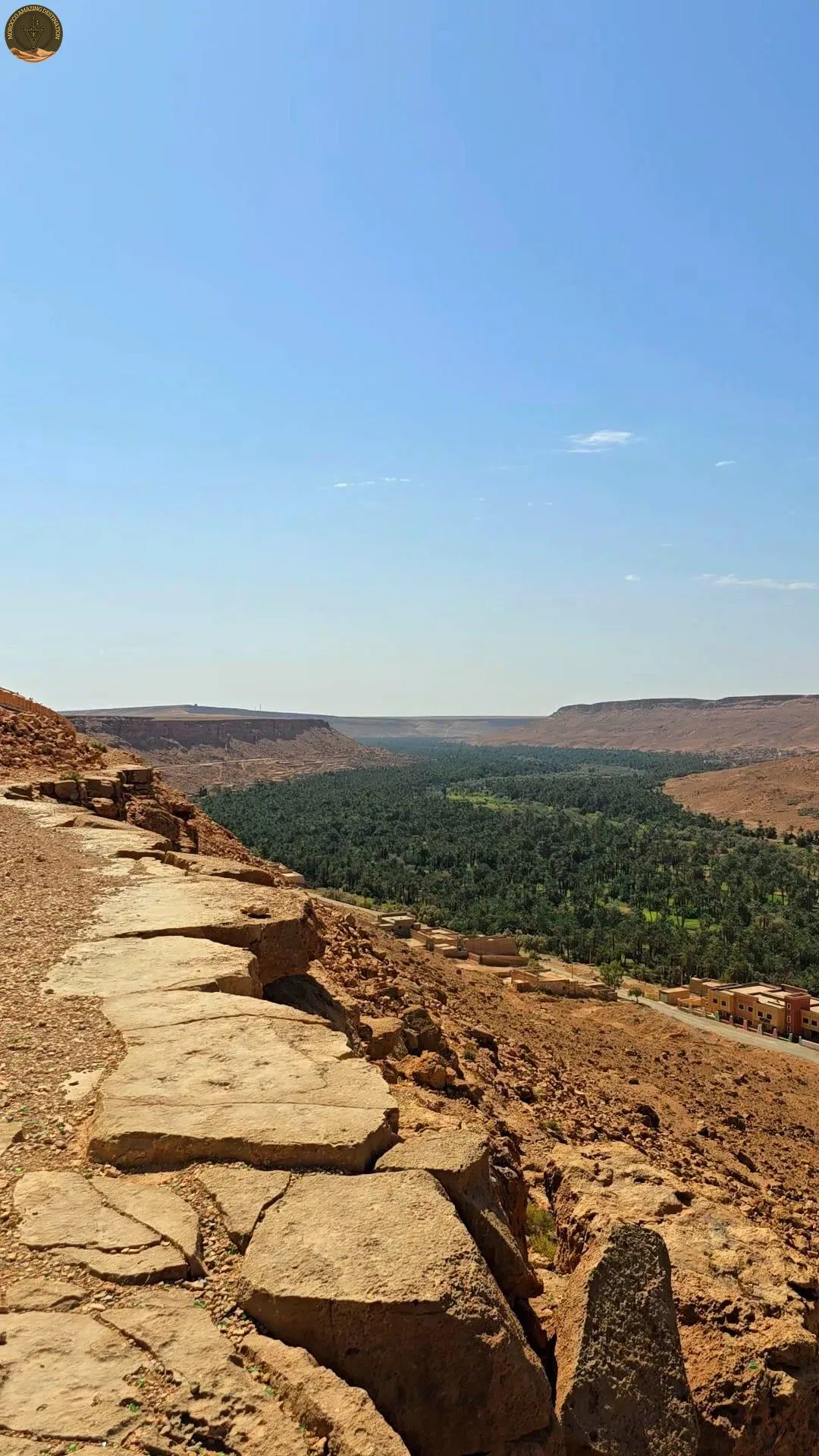
Medjool palms are the local pride, and Erfoud’s market sells dates by the crate alongside dried fruit and spices. An annual palm-date festival fills the town in autumn, though the exact week moves each year. Harvest time brings crates to the roadside and the smell of drying dates into the streets.
The oasis is working farmland. Stay on the paths, ask before photographing people, and buy tea or dates in town so the income stays in the valley.
From Erfoud to Merzouga: Reaching Erg Chebbi
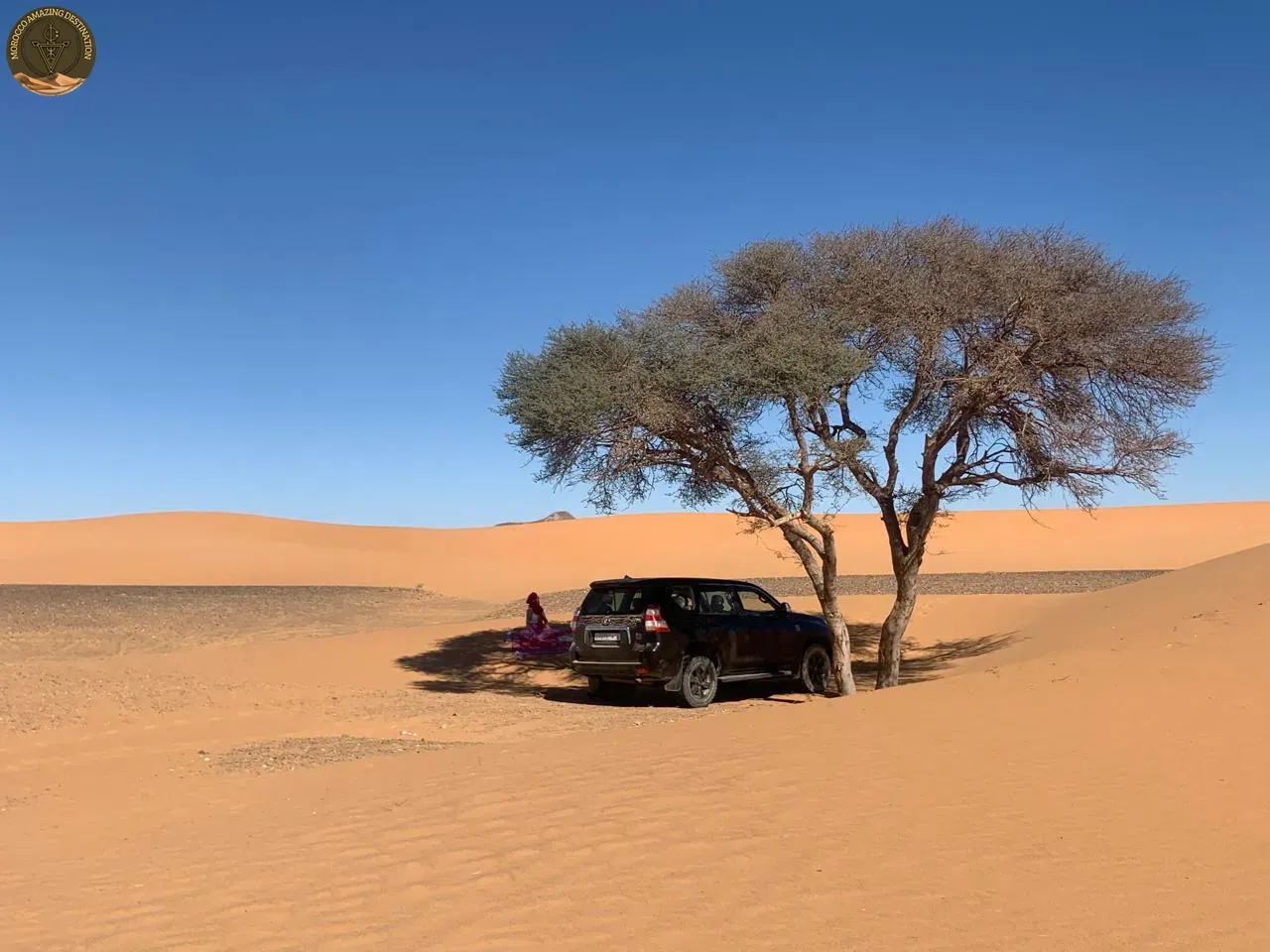
Erfoud is the last comfortable town before the sand. Merzouga and the Erg Chebbi dunes lie about 55 km south-east, under an hour by road on the N13 through Rissani. Rissani itself is only about 19 km away, with the region’s big souk and the ruins of Sijilmasa. Our guide to Rissani and Sijilmasa covers the caravan city.
Distances worth knowing:
- Erfoud to Merzouga: About 55 km, under an hour via Rissani.
- Erfoud to Rissani: Roughly 19 km, with the souk and Sijilmasa.
- Erfoud to Errachidia: About 80 km north, back up the Ziz Valley.
- Fes and Marrakech: About 440 km and 510 km respectively.
Coming from Fes or Marrakech, Erfoud usually falls on the second or third day of a desert itinerary. The road in follows the Ziz Valley up from Errachidia, so the first palms are your sign that you have arrived. A stop usually means an hour or two at the workshops and the market, or a night in town before an early start for the dunes.
Plan Your Erfoud to Merzouga Journey
Erfoud works best as a stage on a private desert route. Your driver-guide handles the N13, the Rissani souk days and the sunset timing, so you reach Erg Chebbi with time to climb the sand before dinner. Spring and autumn are the most comfortable seasons here; summer afternoons are hot and the winter nights are cold.
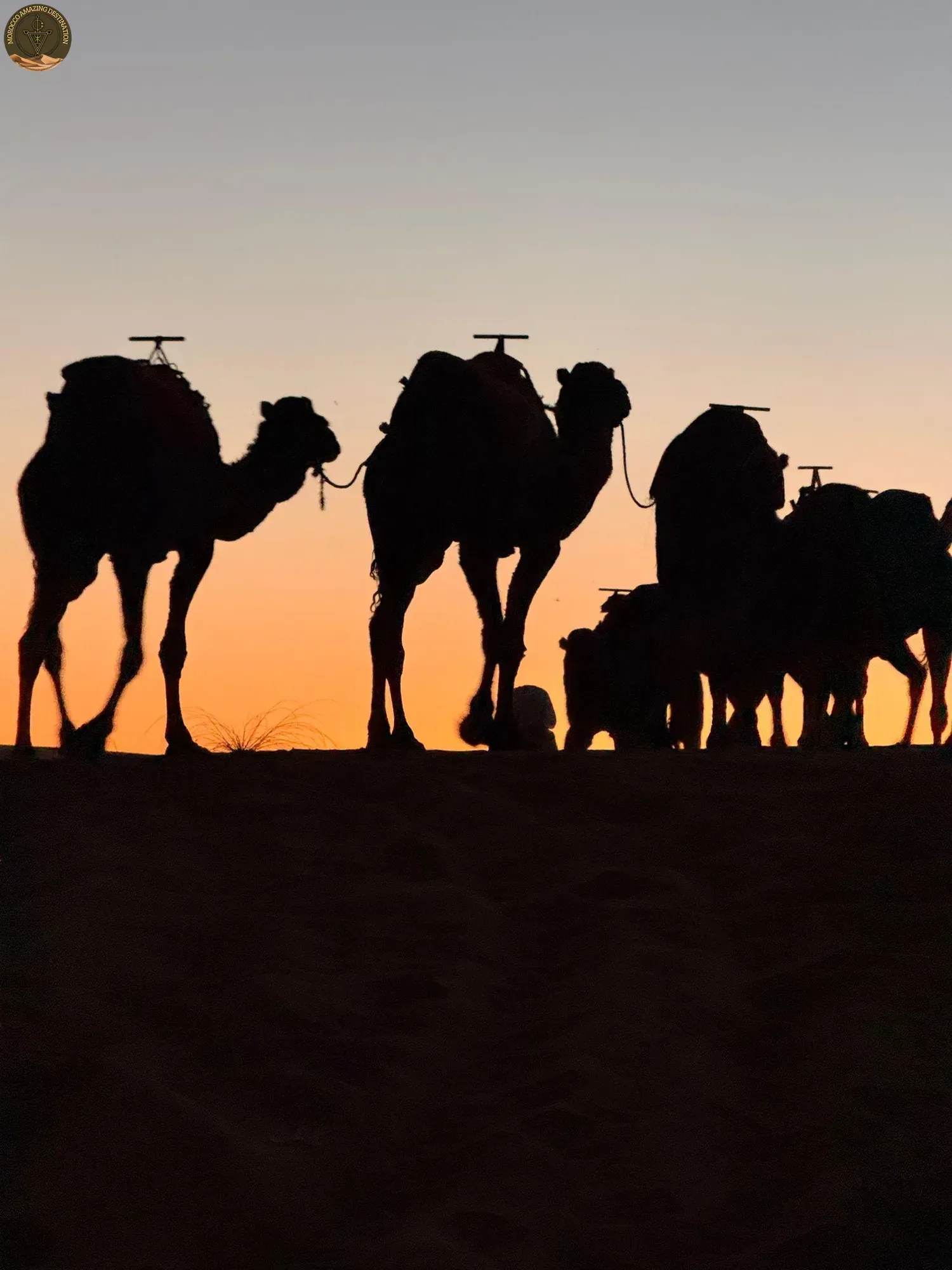
The 4-Day Morocco Desert Tour from Ouarzazate sleeps in Erfoud and visits a fossil workshop in the morning before heading for the dunes. Coming from the north, the 8-Day Tour from Tangier passes Erfoud’s workshops twice on its Ziz Valley legs.
We can customize a tour to match your needs — design your perfect itinerary
If you found this helpful, add us as your preferred source on Google.
Frequently Asked Questions
What is Erfoud, Morocco known for?
Erfoud is known for its fossil workshops and polished fossil marble, for dates from the Tafilalt oasis, and as the gateway to the Erg Chebbi dunes at Merzouga, roughly 55 km away.
Is Erfoud worth visiting?
Yes, if you are already on a desert route. A few hours covers the fossil workshops and the market; sleep over if you want an early start for the dunes.
How far is Erfoud from Merzouga?
About 55 km, under an hour by road, following the N13 through Rissani.
Can you buy fossils in Erfoud?
Yes. Workshops and shops sell trilobites, ammonites and polished fossil marble. Check that a piece is genuine rather than cast or imported, and respect Morocco's rules on exporting scientifically important specimens.
Ready for an Adventure?
Have questions? Feel free to contact us using the form below. We're here to help!