
· Travel · 5 min read
Chefchaouen Architecture: The Blue City's Andalusian Bones
Chefchaouen architecture explained: lime-plaster walls, Andalusian arches, a ten-tower kasbah and pitched Rif roofs. See it with a local guide.
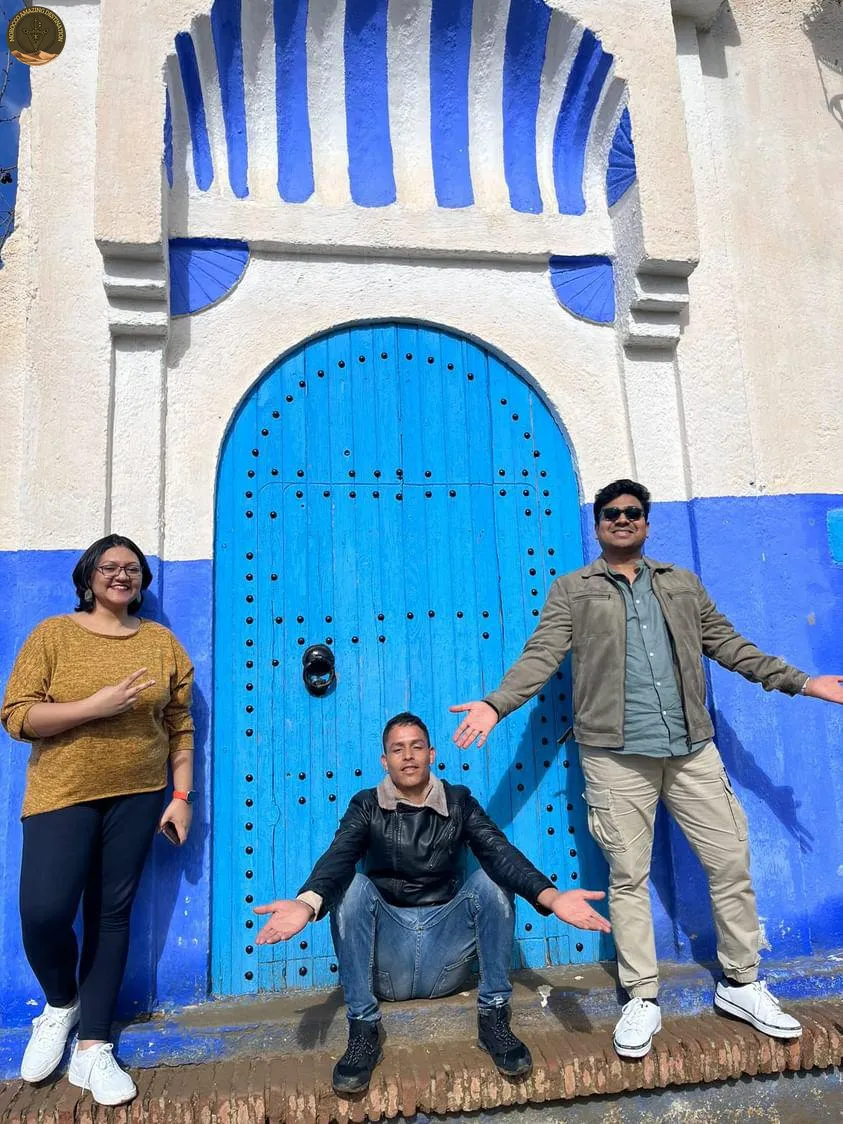
Chefchaouen looks like a paint colour from a distance. Up close, the paint sits on lime plaster, the plaster sits on stone and brick, and the shapes underneath came from Granada. Chefchaouen architecture is an Andalusian building tradition carried out in local Rif materials, with lime plaster as the surface that takes the blue. The town grew downhill from one fortress, and the lanes kept the logic of that first plan.
In this guide, we will break down what the walls are made of and why the kasbah reads as a defensive plan. Then we will show you which details to look for on foot.
What the Blue City Is Actually Built From
The blue is a finish, and the structure under it is a composite. Builders laid stone rubble and terracotta brick, bound the two with lime-and-earth mortar, then rendered the face in lime plaster and painted it. The stone is local, a mix of calcareous and siliceous rock quarried nearby.
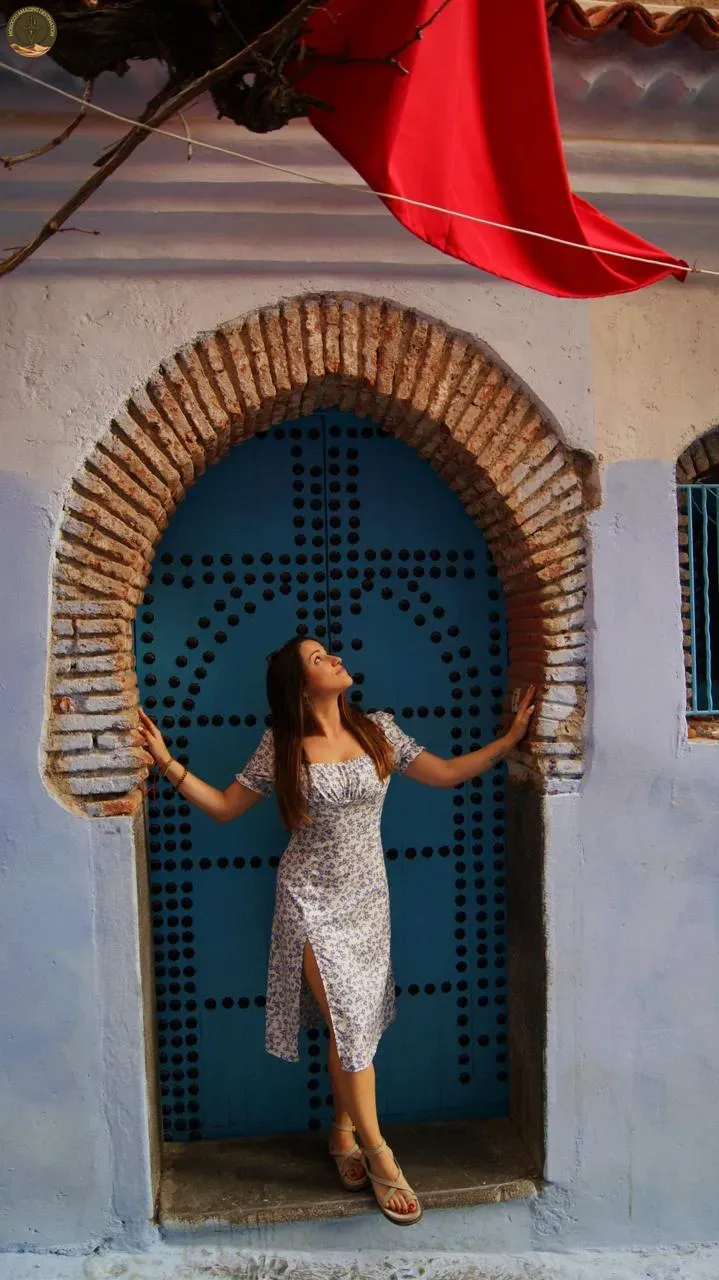
Lime plaster is vapour-permeable and slightly alkaline. Moisture moves through the wall and dries outward instead of sitting trapped behind a sealed coat. That is why the wash can be scrubbed back and brushed on again every year or two. The pigment story sits in our guide to why Chefchaouen is blue.
Cedar and other local timber carry the ceilings, lintels and doors, while terracotta tiles cap the roofs. Chefchaouen’s roofs are double-pitched with deep eaves, unusual in a Moroccan medina. The Rif can take a metre and a half of rain in a wet year.
Houses wrap a courtyard, so light and air come from the inside of the block. On steep ground the lanes lean on counter-arches and buttresses.
Andalusian Bones Under the Rif Skin
Refugees from Granada and other Andalusian towns settled here through the late 15th and 16th centuries. They built in the manner they knew. This is where andalusian architecture morocco turns into shapes you can point at.
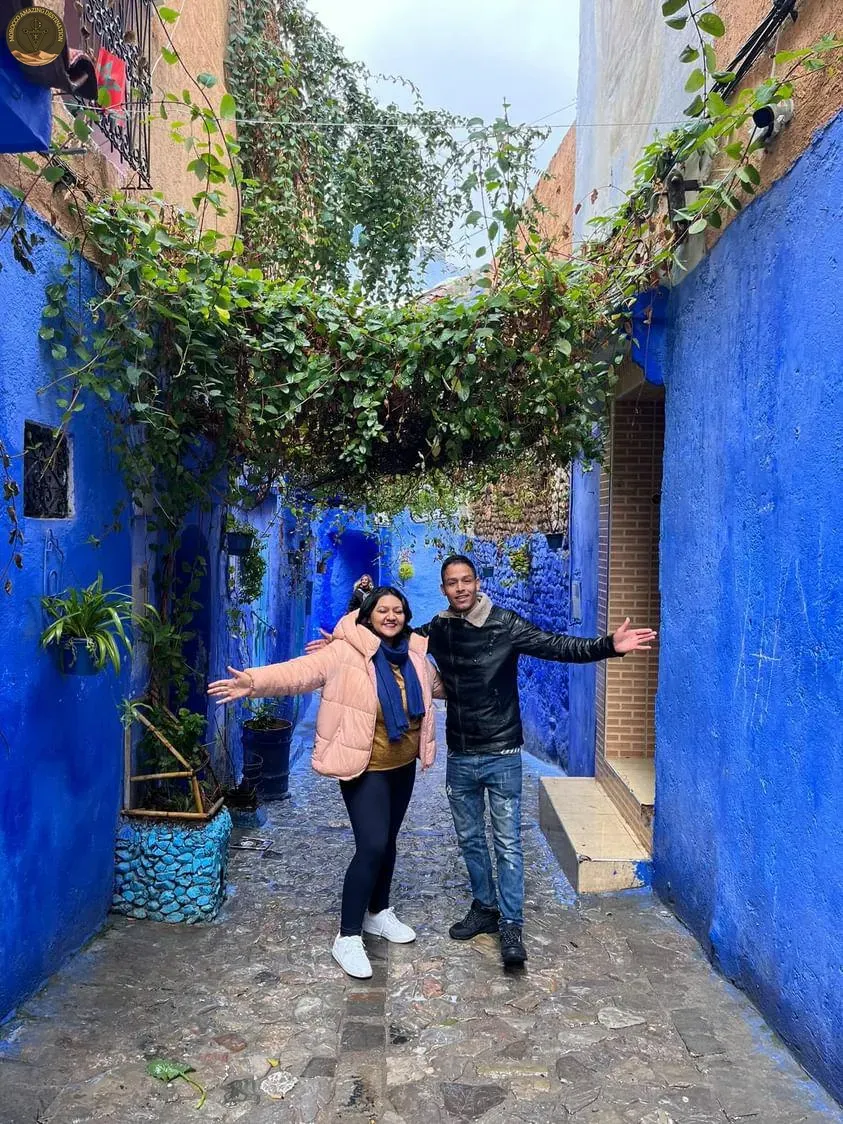
- Arches: horseshoe and curved brick arches over doorways and windows.
- Patios: a small courtyard with a citrus tree at the centre of the house.
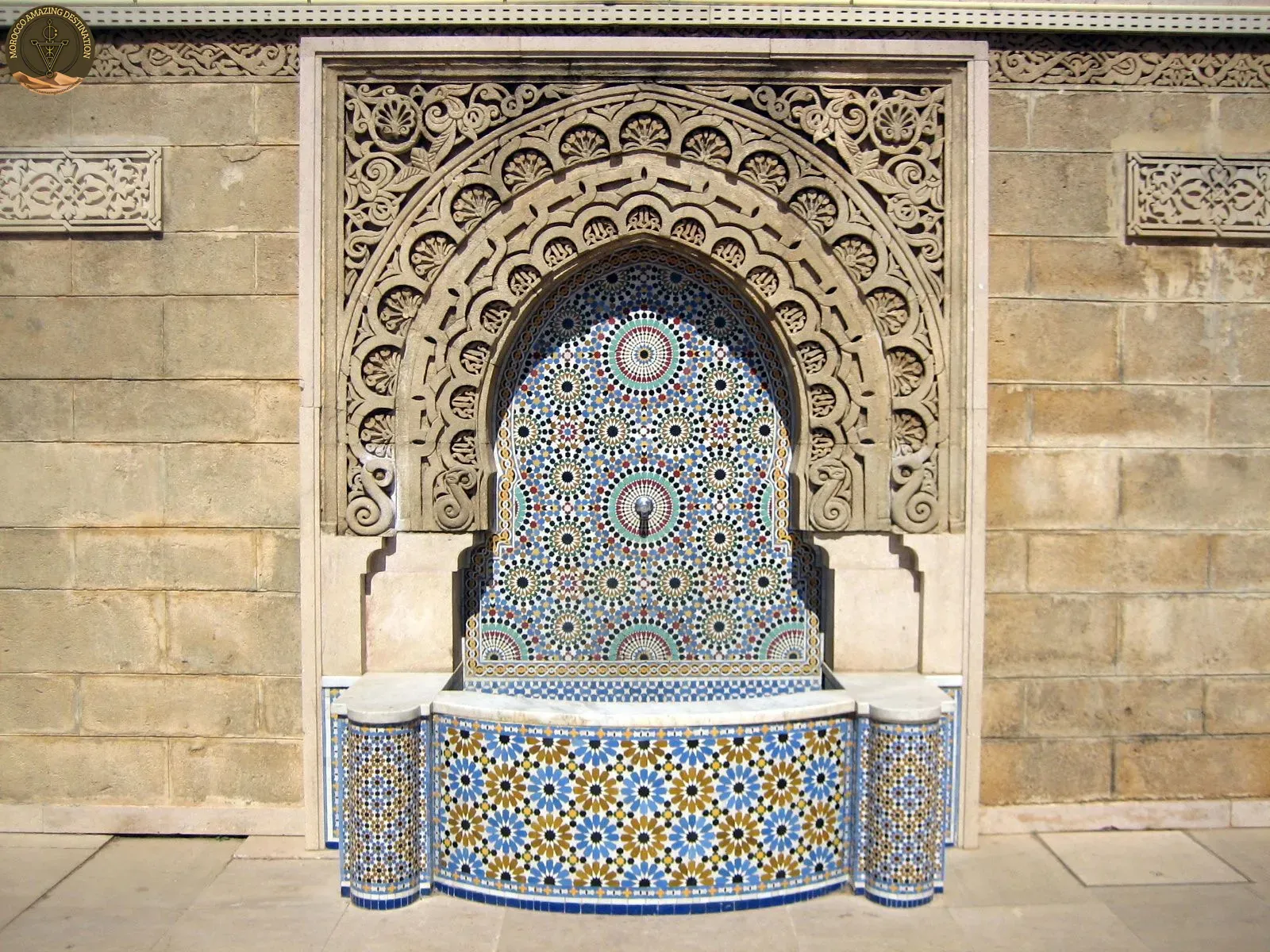
- Tilework: zellij panels and blind-arch niches around fountains.
- Doors: carved timber leaves set into studded thresholds.
The Great Mosque compresses that vocabulary into one facade. Its hall holds eight naves divided by rows of horseshoe arches under a red-tiled roof. Red tiles are the local habit; most Moroccan mosques wear green.
The octagonal minaret carries three tiers of blind arches and square zellij panels. Its shaft is usually dated later than the prayer hall. Non-Muslims cannot enter, so the view from Outa el-Hammam square is how you see it.
The Kasbah as a Defensive Plan
The fortress came first. Ali ibn Rashid al-Alami, a sharif descended from Abd al-Salam ibn Mashish, founded it in 1471 to counter Portuguese raids along the northern coast. The medina grew downhill from those walls. That is why the chefchaouen kasbah still reads as a plan when you stand on a tower.
The enclosure is a compact rammed-earth rectangle, roughly 70 by 50 metres, reinforced by ten earth towers. Ten towers on a rectangle that size put a defended point within sight of nearly every stretch of wall. An eleventh tower on the west side is taller and built in rubble masonry with cut-stone corners, probably early 16th century under Moulay Muhammad. Its rooms and brick domes echo the Nasrid tower-residences of Granada.
Inside, the courtyard is now a garden. A governor’s residence in one corner holds the ethnography collection.
Gates, Walls and Water
The circuit held about ten gates, and houses have grown against much of the wall since. Three gates still decide how you enter the medina.
- Bab el Ain: south-west, earth-toned stone beside the cemetery, named for the spring by it.
- Bab Souk: the market gate, facing the Monday market outside the walls.
- Bab el Ansar: north-east, on the route to Ras el Ma and the Spanish Mosque hill.
Ras el Ma, just east of the walls, was the town’s original water source, with an old mill and a 19th-century bridge nearby. The spring-fed network once supplied public fountains through the medina. Bab el Ain means gate of the spring, so gate and water were planned together.
The Spanish Mosque closes the walk: built in the 1920s under the protectorate and never used for regular prayer. It is now a restored viewpoint about 30 minutes uphill.
How to Read the Blue City on Foot
Start early, before the day groups arrive, and climb. Going uphill puts doorways, lintels and eaves in front light instead of shadow. Look up for tile courses and brick relieving arches, and down for stone drainage channels cut into the lane.
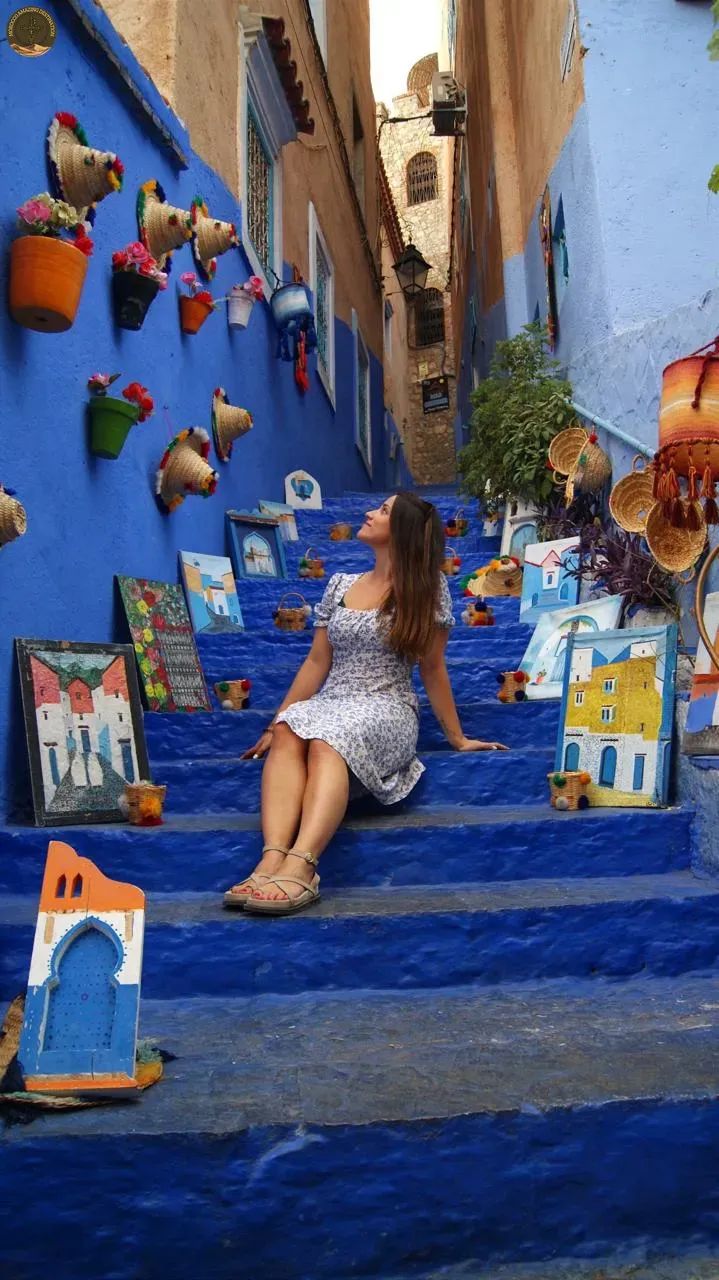
- Eaves and roof pitch: the double slope and overhang that shed Rif rain.
- The octagonal shaft: the minaret above Outa el-Hammam square.
- Carved lintels: at eye level, where most visitors look straight past.
- Brush marks: the hand-applied lime wash, visible in grazing light.
Then climb to the Spanish Mosque and see the roofline in profile: pitched roofs, terracotta ridges, one octagonal minaret breaking the skyline. A private guide earns the fee here. The good details sit above eye level and carry no labels. For opening hours and a simple route, see our Chefchaouen what to see guide.
Two hours on foot is enough to read the blue city morocco properly. Our 5-day Chefchaouen and imperial cities tour from Tangier includes a guided walk through the medina. The 9-day route from Fes to Tangier adds the Rif and the Sahara in one trip.
We can customize a tour to match your needs - design your perfect itinerary
If you found this helpful, add us as your preferred source on Google.
Frequently Asked Questions
What is Chefchaouen architecture?
It is an Andalusian building tradition adapted to the Rif mountains. Stone and brick walls are rendered in lime plaster, houses wrap a courtyard, roofs are double-pitched with deep eaves, and horseshoe arches and zellij tilework carry the Andalusian detail.
How many towers does the Chefchaouen Kasbah have?
The rammed-earth enclosure has ten towers, plus an eleventh taller tower on the west side built in rubble masonry with cut-stone corners. That tower was probably added in the early 16th century under Moulay Muhammad.
Can non-Muslims go inside the Great Mosque in Chefchaouen?
No. The prayer hall is closed to non-Muslims. You can still study the facade and the octagonal minaret from Outa el-Hammam square, which gives the clearest view of the three tiers of blind arches and zellij panels.
Is the Chefchaouen medina a UNESCO World Heritage site?
No. The medina is not inscribed on the UNESCO World Heritage list, and no part of the town holds that status. Local families keep repainting the walls themselves.
Ready for an Adventure?
Have questions? Feel free to contact us using the form below. We're here to help!