
· Travel · 11 min read
Chefchaouen What to See: Complete Guide to Morocco's Blue City Highlights
Discover what to see in Chefchaouen — blue medina, Kasbah, Ras El Ma, Spanish Mosque views and Akchour waterfalls in Morocco's Blue City.
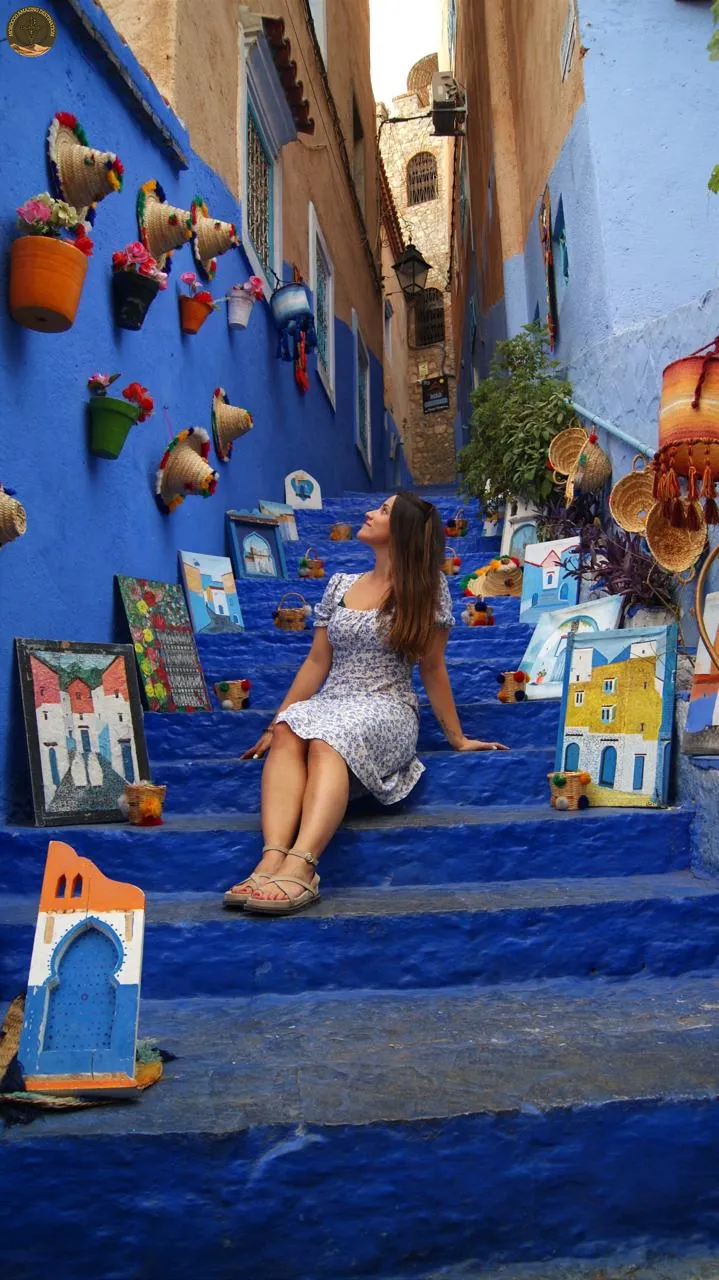
If you are wondering about chefchaouen what to see beyond the famous blue photos, you are in the right place. Tucked between two horn-shaped peaks of the Rif Mountains in northern Morocco, Chefchaouen is compact, walkable and intensely photogenic. Every alley and staircase rewards slow wandering, and all the main landmarks sit within a short stroll of each other.
This concise checklist brings together the essential chefchaouen attractions so you can make the most of a short stay without missing the quiet corners locals love. Think labyrinthine blue streets, a lively main square, a historic kasbah, a mountain spring where daily life unfolds, a hilltop sunset panorama and easy nature escapes — all easily combined in one or two unhurried days.
The Blue Medina: A Labyrinth Worth Getting Lost In
The medina is the reason most travelers come, and it deserves unhurried exploration on foot. More than any single monument, the atmosphere is the attraction: blue-washed walls in every shade from powder to cobalt, arched doorways, potted geraniums, cats napping on steps and the echo of voices from communal ovens.
The story behind the colour is delightfully layered. The most widely cited explanation links the blue to Sephardic Jewish refugees who settled in the medina and brought the tradition of tekhelet — a blue associated with heaven and spirituality — first to the mellah and gradually across the town. Local folk explanations about repelling mosquitoes or keeping houses cool are often repeated but lack scientific evidence, while the striking whiteness of older photographs suggests the uniform blue is a more recent evolution maintained by households and encouraged over recent decades to welcome visitors. Rather than a single origin, think of overlapping cultural and practical influences that turned a mountain fortress into the blue city morocco travelers adore today.
For photography and atmosphere, head out early. Morning light is soft, streets are almost empty and the blues appear most vivid before the midday sun flattens the tones. Some of the most beloved corners include:
- Callejon El Asri — the famous flowerpot staircase between the upper medina and the Bab El Onsar gate, ideal for portraits and detail shots.
- Place El Haouta — a small square with an ornate tiled fountain where neighbours pause to chat and shopkeepers arrange woven goods.
- Bab El Ain and Bab Souk — two of the old gates framing the medina, useful orientation points when you loop back toward the main square.
- Community ovens — such as the wood-fired oven near Bab El Ain, where locals bring home-prepared dough to be baked. A polite greeting goes a long way if you pause to watch.
The medina is pedestrian-only and notably relaxed compared with Marrakech or Fes. Haggling exists but tends to be gentle, directions are freely offered, and getting pleasantly lost is part of the charm. Wear comfortable shoes for staircases, carry water and ask permission before photographing people, especially near homes.
If you want a deeper dive into hands-on experiences in these same streets — from hammam rituals to cooking workshops — see our guide to Chefchaouen activities.
Plaza Uta el-Hammam & the Kasbah: The Heart of the Blue City
Every route through Chefchaouen leads back to Plaza Uta el-Hammam, the cobbled main square shaded by mulberry trees. Once a training ground for cavalry, today it is a ring of cafés and restaurants with prime people-watching terraces, flanked on one side by the Kasbah walls and on the other by the Grand Mosque.
Take time to sit with a mint tea and absorb the square’s rhythm: children playing, mountain women in striped capes selling produce on market days, the call to prayer echoing off stone and tile, and the blue alleys spilling in from every corner.
The Kasbah Museum and Gardens
At the plaza’s edge, the earthen-brown Kasbah stands out against the surrounding blue. Described by sources as a historic fortress later heavily restored, it now houses a tranquil Andalusian garden with citrus trees, fountains and shaded benches — a welcome pause after the medina’s bustle.
Inside, a small ethnographic museum displays Rif textiles, pottery, historical photographs, musical instruments and arms, while a centre for Andalusian studies and an art gallery host rotating exhibits. Do not miss the tower, often called the Portuguese Tower and linked in local lore to Portuguese prisoners, which offers a panorama over blue rooftops toward the Rif peaks. Entry is modest — confirm the fee and opening hours locally, as they can vary by season.
The Grand Mosque
Dominating the opposite side of the plaza, the Grand Mosque is immediately recognizable by its octagonal minaret — extremely rare in Morocco, where square minarets are the norm, and clearly Andalusian in inspiration. It is said to recall the Torre del Oro in Seville and reflects Chefchaouen’s deep Andalusian heritage. The façade is earthen white-brown, contrasting beautifully with the surrounding blue, and the cedar doors are finely carved.
As an active place of worship, the interior is reserved for Muslims, so admire the building from the square and adjoining cafés. Its exterior is especially photogenic in late afternoon light or when framed by the Kasbah’s stone walls.
Ras El Ma: Daily Life at the Mountain Spring
From the plaza it is about a ten-minute uphill stroll to Ras El Ma, the spring that has supplied Chefchaouen since its founding. The name means head of the water, and the sound of the small cascade accompanies you before you see it.
This is one of the most authentic spots in town:
- Laundry on the rocks — on many mornings you will see women washing wool and blankets on flat stones beside the stream, beating and rinsing them in the cold, clear water as they have for generations. Observe respectfully and give space.
- Waterwheel and channels — traces of old water management remain, guiding flow toward former mills, hammams and fountains of the medina below.
- Cafés in the water — a handful of simple cafés set tables and low seats near or even over the stream, chilling orange juice bottles directly in the current. It is a lovely place for a break before the next climb.
- Bridge to the trail — a small bridge over Oued Ras El Maa marks the start of the path toward the Spanish Mosque hill, making Ras El Ma the natural hinge between town and viewpoint.
Visit in the morning for quieter scenes and softer light for photography. The area is also the best place to sense how intimately the city remains connected to its mountain water source — a connection noted by guides such as Lonely Planet and local heritage platforms.
Spanish Mosque Viewpoint: The Sunset Panorama
For sunset, nothing beats the hilltop viewpoint by the spanish mosque chefchaouen. The white, Andalusian-style mosque known locally as the Bouzaafar Mosque sits on a ridge east of the medina, between Jebel el-Kelaa and Jebel Meggou, offering a sweeping view over the valley.
The building itself has a curious history: constructed during the Spanish period in an effort to gain local favour, it was never regularly used for worship and is now closed, though the hillside remains open to visitors. Heavily renovated in more recent years for tourism, it serves today as a landmark for the viewpoint rather than an active mosque. Accounts of its construction vary, so take precise historical details as broadly indicative rather than exact.
The walk
- Start: Ras El Ma, cross the bridge over Oued Ras El Maa and pass through or near Bab El Onsar.
- Duration: About 20 to 40 minutes one way, depending on pace and photo stops. Sources differ on timing because the route can be combined with strolling, but most visitors describe it as easy to moderate.
- Underfoot: Initially paved, then a gently rising stony track with modest elevation gain. Suitable for most fitness levels with regular shoes.
- When to go: Arrive 30 to 45 minutes before sunset to secure a comfortable spot. The viewpoint gets busy at golden hour, yet the experience is generously spacious.
The reward is unforgettable: the entire blue medina laid out below like a painter’s palette, with surrounding hills turning gold and then violet as the light fades. Bring a light jacket — it cools quickly at elevation — and a small flashlight for the descent, as the path is not formally lit. If you prefer a guided experience or want to combine viewpoints with town lore, our Chefchaouen activities guide details options for accompanied hikes.
Beyond the Medina: Nature Escapes and Artisan Souks
Chefchaouen is compact, but its surroundings expand the itinerary without requiring complex logistics.
Talassemtane National Park and the Akchour Waterfalls
One of the most rewarding nature escapes is the akchour waterfalls chefchaouen area inside Talassemtane National Park. About a 45-minute drive by shared grand taxi or private transfer, the Akchour valley follows a dramatic gorge lined with pine and cedar, turquoise pools and distinctive rock formations. The park higher up is noted for rare Moroccan fir, golden eagles and other raptors, and offers treks ranging from short walks to multi-hour explorations.
From the trailhead you have clear choices:
- Small cascades and pools — about a 30-minute walk to a series of smaller falls and swimmable basins, perfect for a refreshing dip and picnic.
- Grand Cascade — a longer trail of roughly a couple of hours each way, winding through forest to a taller waterfall that plunges into a vegetated pool. Elevation gain is meaningful, so take water, sun protection and sturdy shoes.
- God’s Bridge (Pont de Dieu) — a separate path to a natural red-rock arch carved by the river, about an hour one way. It is a favourite for photographers and pairs well with a half-day in the valley.
For longer routes, a local guide is recommended. Trails are not always well signed, conditions can change with weather and guides add valuable context about flora, geology and Berber hamlets along the way. Keep this excursion concise if you are short on time — our dedicated hiking guide covers Talassemtane in depth.
Souks and Craft Traditions
Back in town, shopping is low-pressure and distinctly Rif-inflected. Instead of a frantic souk, expect friendly workshops and small boutiques along the blue lanes:
- Handwoven wool blankets and capes — thick, geometric weavings in blue, white and red made on traditional looms; the signature keepsake.
- Leather and baskets — slippers, bags and palm-fibre baskets from nearby villages.
- Blue-white ceramics — plates and tagines echoing the town’s palette.
- Goat cheese (jben) — soft, fresh rounds sold in the medina and at the markets.
On Mondays and Thursdays, a larger market sets up just outside the walls. Berber women wearing distinctive chichia hats — woven from palm with colourful pom-poms — bring produce, herbs and crafts from mountain hamlets. It is one of the most atmospheric moments to experience local life without staging.
Practical Tips for a Smooth Visit
A little planning makes the Blue City even more enjoyable:
- Getting there and around
- Chefchaouen has no airport or train station. The most common gateways are Tangier at about two hours by road and Fes at about three and a half to four hours, depending on transport and traffic. Options include CTM buses, shared grand taxis sold per seat or as a whole car, and private transfers. Timings vary with stops, so build in buffer.
- Inside the medina everything is on foot. Steps are frequent, so pack light and use a small daypack. For outskirts and Akchour, blue petit taxis and grand taxis are the standard.
- Where to stay
- Staying inside the medina puts you steps from dawn light, evening calm and effortless wandering before day visitors arrive and after they depart. Properties near the gates offer easier luggage handling, while hillside stays trade convenience for sweeping views. For a neighbourhood-by-neighbourhood breakdown, see where to stay in Chefchaouen.
- Photography etiquette
- Best light is early morning in the lower medina, especially along Callejon El Asri, and late afternoon from the Spanish Mosque hill. Midday is harsh. Always ask before photographing people, particularly families at Ras El Ma.
- Cultural notes
- Dress modestly, speak softly in residential lanes and support local artisans directly where possible. A short greeting in Darija or Tamazight is appreciated, and a smile goes further than any itinerary.
- What to pack
- Layers for mountain evenings, comfortable walking shoes, a reusable water bottle and a flashlight for the viewpoint descent. If you plan to swim at Akchour, bring a quick-dry towel.
For a fuller ideas list that goes deeper into workshops, food and extended hikes, cross-reference Chefchaouen activities and keep this post as your concise what-to-see checklist.
Continue Your Adventure Beyond the Blue City
Chefchaouen shines brightest as part of a wider northern Morocco loop. If you want logistics handled and time in the medina balanced with history and coast, consider these Chefchaouen-inclusive itineraries:
-
5-Day Tour to Chefchaouen and Imperial Cities from Tangier — Start in Tangier and travel through the Rif to spend a night in the Blue City, then continue to Volubilis, Meknes, Fes and Rabat before returning via Assilah along the Atlantic. Ideal for first-time visitors who want culture and mountain calm in one route.
-
4-Day Trip from Tangier to Marrakech — Pair Chefchaouen with Fes and the Sahara, crossing the Middle Atlas to Merzouga for dunes, camel trek and desert camp before finishing in Marrakech. A compact itinerary that combines blue streets with desert skies.
Both tours can be tailored to your pace, accommodation preferences and interests. We can customize a tour to match your needs — design your perfect itinerary
If you found this helpful, add us as your preferred source on Google.
Frequently Asked Questions
What are the must-see sights in Chefchaouen in one day?
The essential loop covers the blue medina and Callejon El Asri, Plaza Uta el-Hammam with the Kasbah Museum and Grand Mosque exterior, Ras El Ma spring, and the Spanish Mosque viewpoint for sunset. Stay inside the medina to enjoy empty morning light before day visitors arrive.
Why is Chefchaouen painted blue and what does the Kasbah offer?
The blue is layered in origin — most associated with Sephardic Jewish tradition of tekhelet symbolizing heaven, blended with folk beliefs about cooling and repelling insects without scientific proof, and later tourism upkeep. The Kasbah offers an Andalusian garden, ethnographic museum and a tower panorama; confirm entry and hours locally.
How long is the hike to the Spanish Mosque and is it difficult?
The viewpoint is an easy uphill walk of about 20 to 40 minutes from Ras El Ma via Bab El Onsar and the bridge. The path is paved then stony with modest elevation and suits most fitness levels. Bring a light jacket and flashlight, and arrive 30 to 45 minutes before sunset.
Can I visit the Akchour waterfalls as a day trip from Chefchaouen?
Yes. The waterfalls in Talassemtane National Park are about a 45 minute drive away. A short 30 minute walk reaches small cascades and pools, while a longer trail leads to the Grand Cascade and the natural arch of God's Bridge, about one hour one way. A local guide is recommended for longer treks.
Ready for an Adventure?
Have questions? Feel free to contact us using the form below. We're here to help!