
· Travel · 5 min read
Best Places to Buy Souvenirs in Fez: A Workshop Trail
Where the best places to buy souvenirs in Fez actually are: tanners' lanes, pottery kilns, spice souks and a fixed-price fallback.
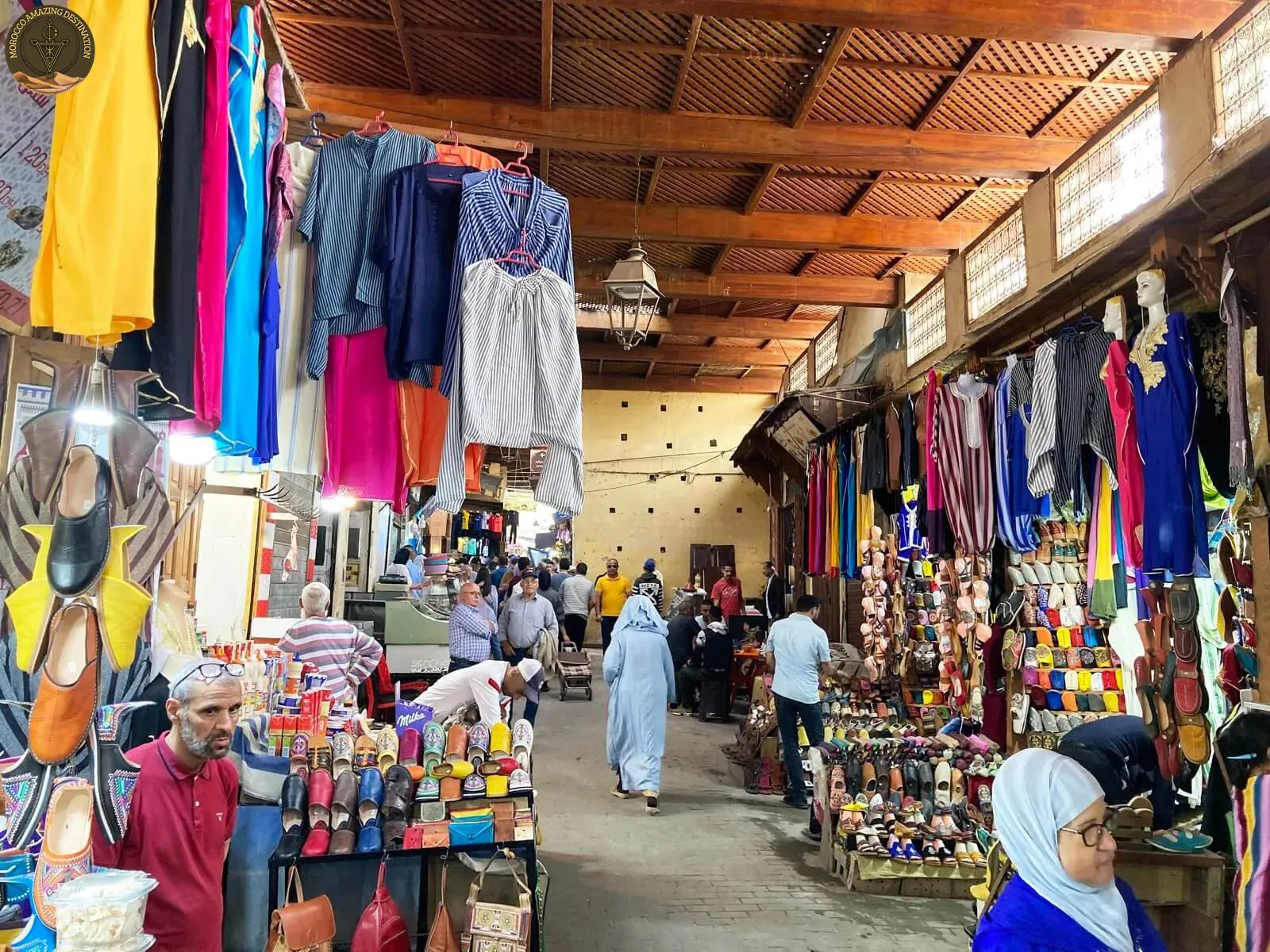
The shops closest to Bab Bou Jeloud get most of the attention, and they are rarely where the work happens. In Fes the workshop and the counter are often the same address, so the trade decides the street. The best places to buy souvenirs in Fez sit in those production lanes. A piece there costs 30 to 60 percent less than in a medina shop.
In this guide, we will break down the five craft stops that make a Fez souvenir run work. We will cover what each one costs and how to spot a workshop piece from a repackaged one.
Fes Sells What Fes Makes
Fes el-Bali is a UNESCO World Heritage medina, and its market works like a workshop town. Trades clustered by street and took its name: the Attarine sold spice, the Nejjarine worked cedar, the Seffarine hammered copper. Thousands of lanes run between them, and the names still hold.
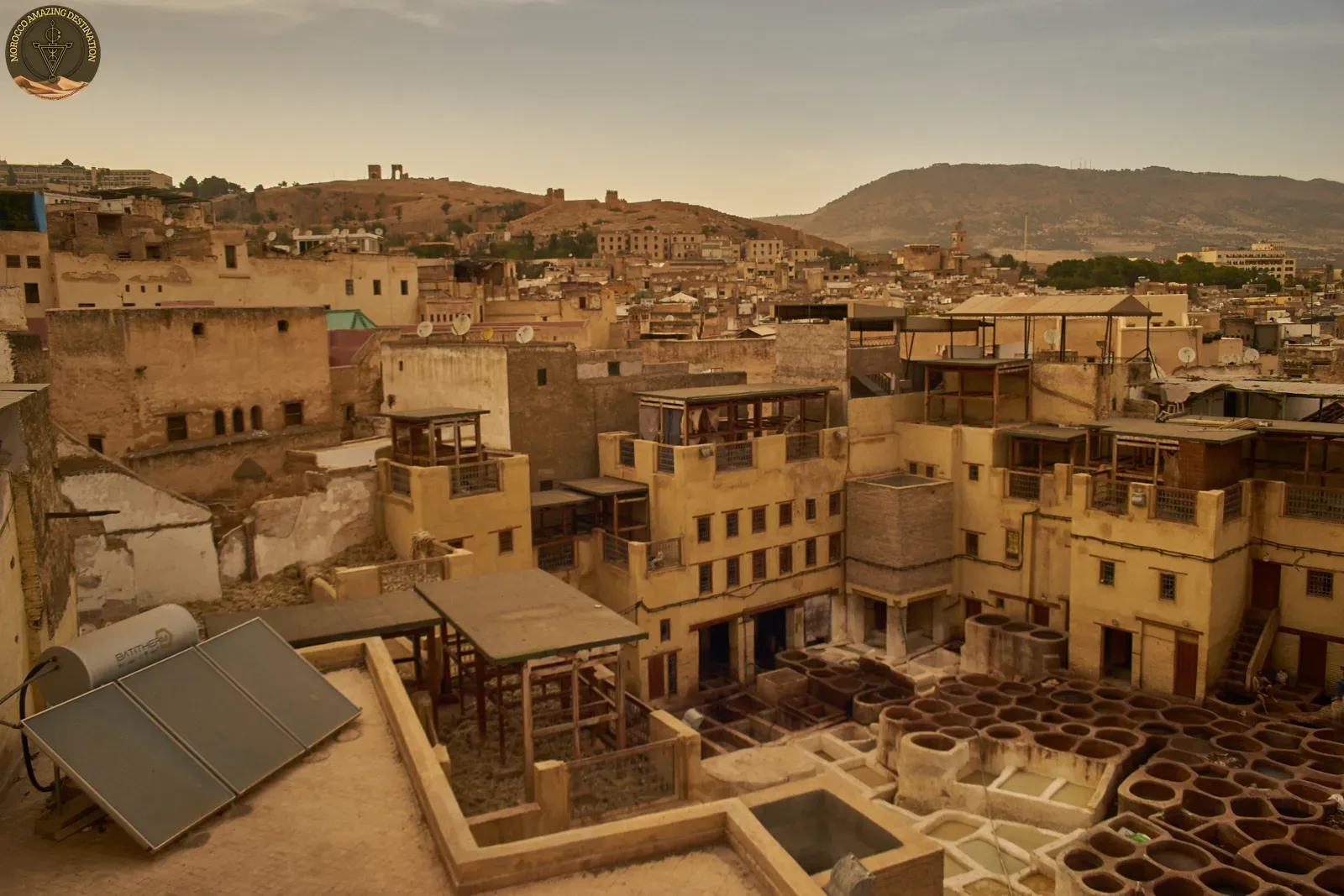
Pick where to buy souvenirs in Fez by trade and a shuttered door costs you a detour, not the afternoon. The Fez medina shops worth your time have a bench and a half-finished piece behind the counter; the rest are resellers. If Casablanca is also on your route, the souvenir route there works neighbourhood by neighbourhood and ends in a mall.
Leather From the Vats: Chouara and the Tanners’ Lanes
Chouara sits in Derb Chouara, off Talaa Kebira, about twenty minutes on foot from Bab Bou Jeloud. The vats have worked for centuries. Hides soak in salt and lime, soften in pigeon dung, then take colour from saffron, indigo and henna before drying on the terraces.
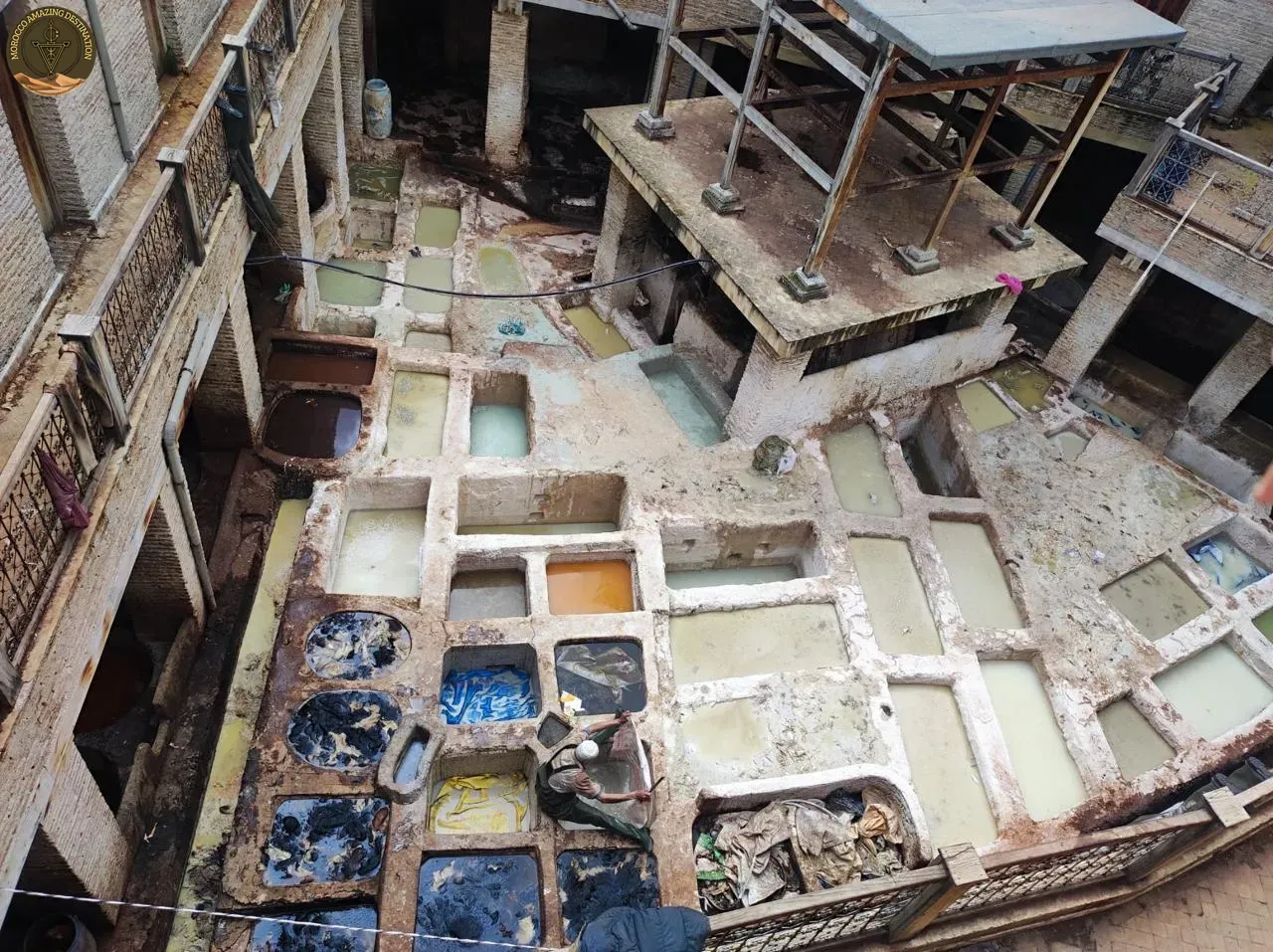
You look down from the leather shops’ terraces, since the vats are private working property. Access is free, and walking away without buying is normal. Weekday mid-mornings are busiest for dyeing; Friday afternoons go quiet.
Opening quotes run high, and a fair settlement is usually nearer half. Guide prices in the lanes:
- Babouches: 120 to 350 MAD, stitched leather, yellow or softer indoor pairs.
- Shoulder bags: 400 to 800 MAD.
- Satchels: 600 to 1,200 MAD, hand-stitched handles.
- Jackets: 800 to 1,800 MAD. Anything under 500 is suspect.
Press the leather and watch whether it springs back. Check the stitching at the handles and smell for hide, not chemicals. Shops sometimes show a good piece and wrap a lesser one, so handle the exact item you pay for.
Ain Nokbi, Nejjarine and Seffarine: Three Workshops Worth the Walk
Ain Nokbi is the potters’ quarter, on the medina’s south edge near Bab el-Jedid. Family workshops run the whole sequence there: throwing, drying, first firing, cobalt painting, glazing, second firing. Much of the city’s blue pottery comes out of these yards.
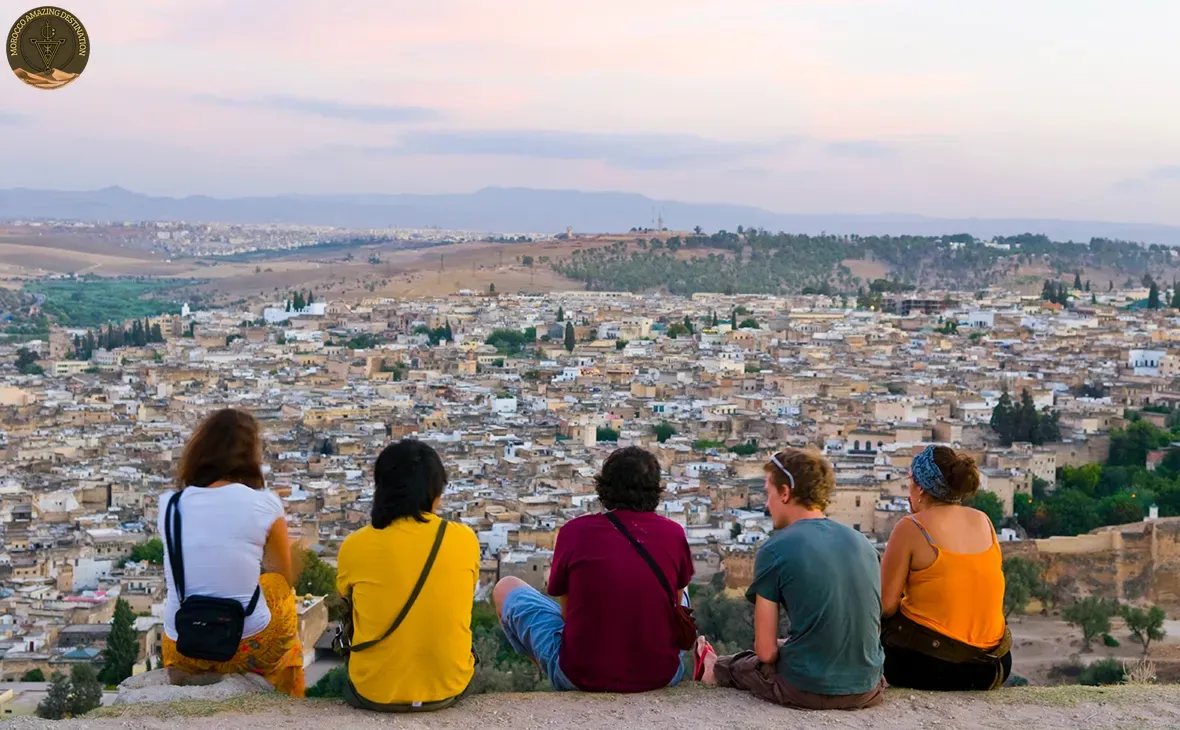
Buying at the kiln cuts the medina markup. Rough workshop prices:
- Small bowls: 60 to 120 MAD.
- Medium plates: 150 to 280 MAD.
- Large plates: 300 to 600 MAD.
- Loose zellij tiles: 10 to 35 MAD each.
Painted pottery fakes well, so look at the brushwork. Uneven line width means a hand, not a transfer.
Nejjarine is the carpenters’ quarter, with a carved cedar fountain and a woodworking museum. Small cedar boxes run 50 to 150 MAD and keep their scent for years.
Place Seffarine is the copper square. You hear the hammering before you see it, and trays run 150 to 400 MAD by size and engraving. Metal engraving in gold, silver and copper is recognised by UNESCO as intangible cultural heritage.
Attarine, Kissaria and Henna: The Small, Carryable Buys
Souk el-Attarine, beside the Al-Attarine Madrasa, is the spice and perfume market. Ras el hanout runs 40 to 70 MAD per 100 g and saffron 15 to 25 MAD per gram. Ask for the jar to be opened: good ras el hanout has many notes, and cheap saffron is usually safflower.
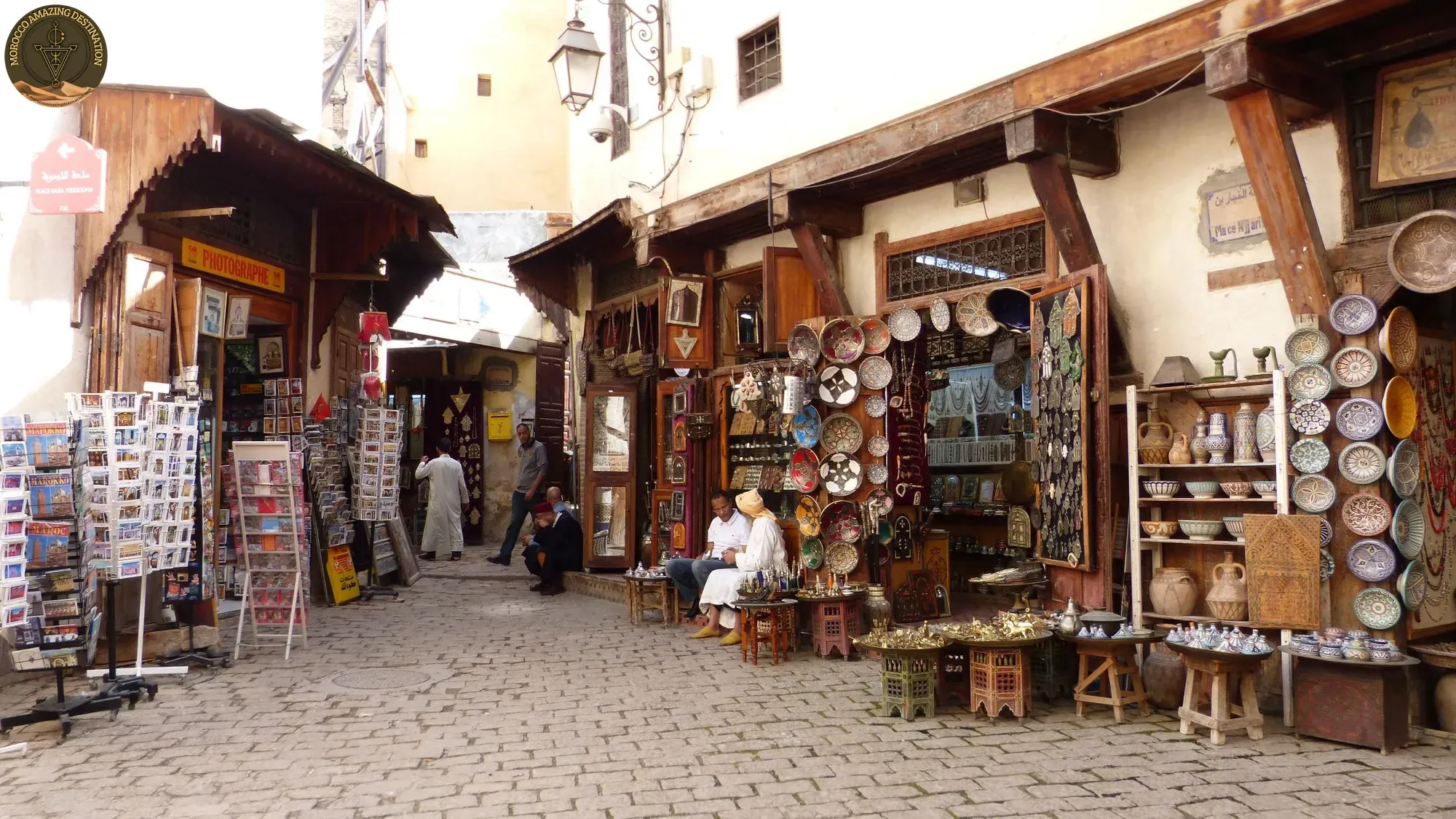
Kissariat al-Kifah, a covered market near the Moulay Idris II mausoleum, is the textile stop. It holds kaftans, fabric by the metre, babouches and jewellery behind lockable gates. It is one of the medina’s oldest covered markets and calmer than the open lanes. Start here if Fez souvenir shopping is your whole afternoon.
Souk el-Henna is a shaded square with an old tree. Henna powder runs 30 to 60 MAD a packet, and baskets cost less than in the main lanes. Agree the price before a painting; 50 to 100 MAD is fair for a simple design.
Where Not to Buy in Fes (and the Fixed-Price Fallback)
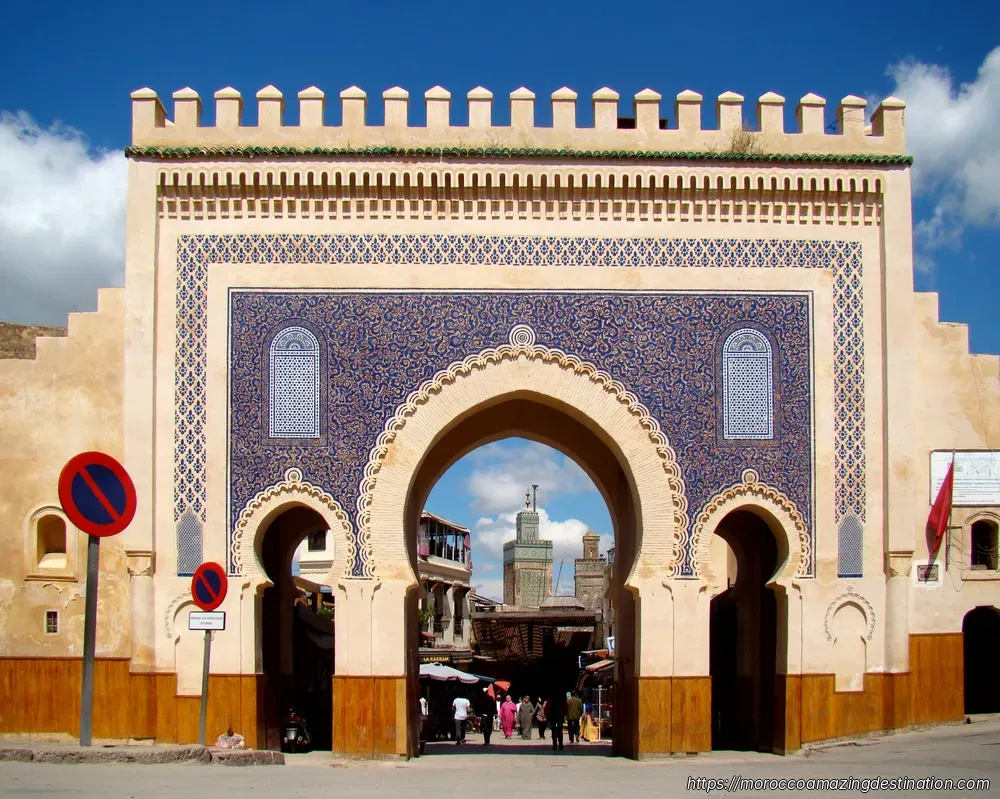
The weakest buys sit in the first 200 metres inside Bab Bou Jeloud. Rug pitches and “antiques” dealers work the Talaa Kebira approach hardest. A man offering to walk you to a carpet workshop is often on commission.
Leave these:
- Undocumented antiques: anything called medieval without export paperwork.
- Unlabelled argan oil: no origin or cooperative name.
- Rug pitches at the gate: you can find a fair price, but the pressure does not let up.
- Shops you were steered into: the price includes the commission.
For a no-haggle baseline, the Artisanal Centre in the Ville Nouvelle is a state-backed craft complex with fixed prices. It is not cheap, but it shows what things should cost, and medina cooperatives trade on similar terms.
Cash rules in the lanes, and the ATMs sit outside Bab Bou Jeloud. Stalls open around 9am, close near 7pm, and Friday afternoon is partly closed. If you want these lanes with someone who knows which doors are workshops, our Fes medina tour does exactly that.
Both Fes departures start in the city, so a craft morning fits at either end. The 7-Day Morocco Tour from Fes opens with the medina and its workshops before the Sahara, Meknes and Chefchaouen. The 3-Day Desert Tour from Fes to Merzouga suits anyone whose only city time is the shopping afternoon.
We can customize a tour to match your needs - design your perfect itinerary
If you found this helpful, add us as your preferred source on Google.
Frequently Asked Questions
What is the best place to buy souvenirs in Fez?
The production lanes are the best value: Derb Chouara for leather, Ain Nokbi for painted pottery, Nejjarine for cedar, Place Seffarine for copper and Souk el-Attarine for spices. The same piece often costs 30 to 60 percent more in a shop near Bab Bou Jeloud.
How much should leather and ceramics cost in Fez?
Guide benchmarks, approximate and worth confirming in the shop: babouches 120 to 350 MAD, shoulder bags 400 to 800 MAD, jackets 800 to 1,800 MAD. At Ain Nokbi, small bowls run 60 to 120 MAD, medium plates 150 to 280 MAD and large plates 300 to 600 MAD.
Is leather cheaper at the Chouara tannery or in the medina shops?
Usually cheaper in the lanes around Chouara, where the workshops sit. Terrace access is free and you are not obliged to buy, but opening quotes run high, so a fair settlement is nearer half the first number. Expect the same object to cost more on the Talaa Kebira approach.
Do you haggle in Fes, or are prices fixed?
Haggling is expected in the souks and workshops, less theatrical than with carpet sellers. Fixed prices do exist at the state-backed Artisanal Centre in the Ville Nouvelle and at several cooperatives, which makes them a useful baseline for what a fair price looks like.
Ready for an Adventure?
Have questions? Feel free to contact us using the form below. We're here to help!