· Travel · 6 min read
Souvenir Shopping in Casablanca: The Half-Day Craft Route
Souvenir shopping in Casablanca, mapped by neighbourhood: Habous crafts, Marché Central food gifts, Derb Omar fabric and a mall finish.
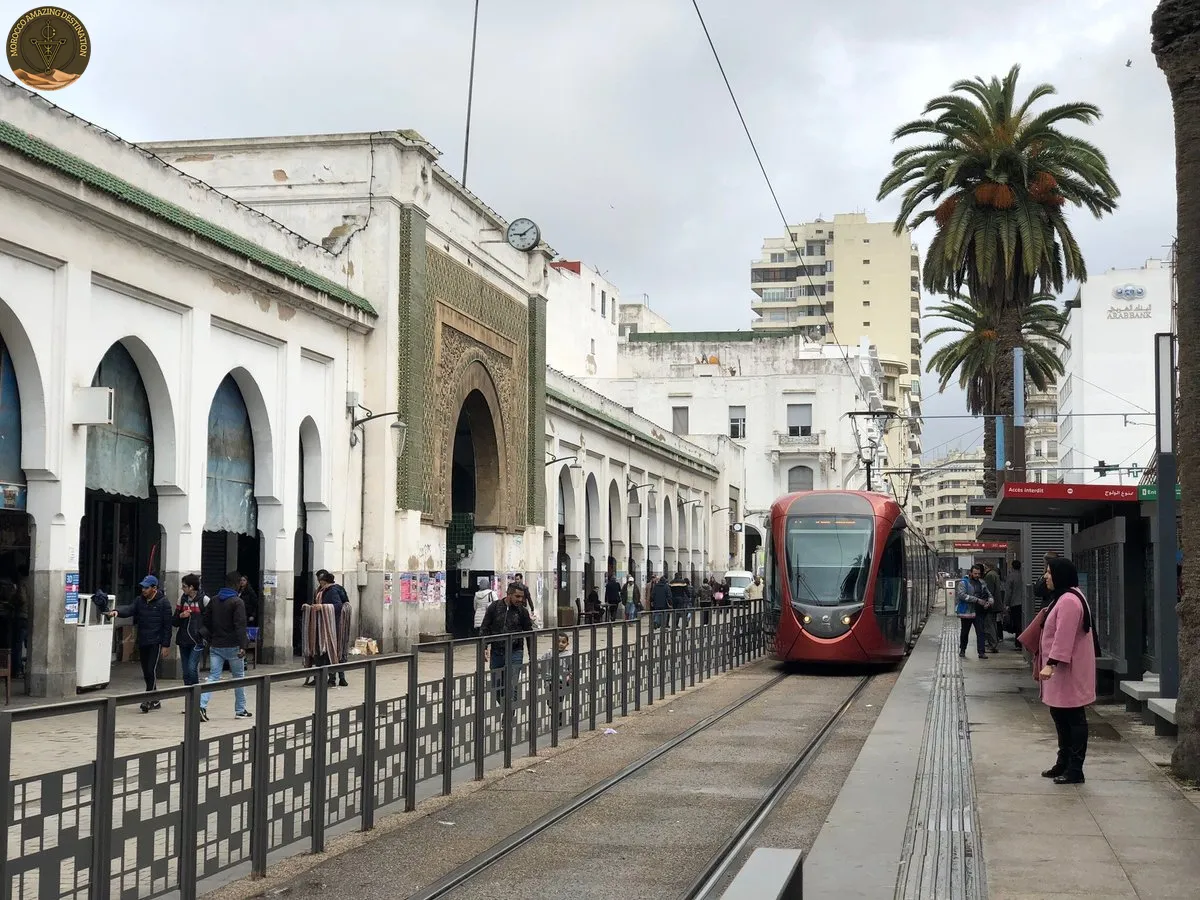
Casablanca rarely makes the list when travellers plan craft shopping, and that leaves the city to the people who live in it. It has a planned medina from the protectorate years, a covered market hall on the main boulevard, a wholesale fabric quarter and a mall with an aquarium inside. Souvenir shopping in Casablanca fits into half a day because the stops sit in one line, from Habous along Boulevard Mohammed V to the Corniche. Moving around here is easier than in the craft towns of the south.
In this guide, we will break down the five stops on that route, what each one is actually good for, and how to walk them with a car waiting between stages.
The Route: How Half a Day of Souvenir Shopping in Casablanca Fits Together
Where to buy souvenirs in Casablanca comes down to five stops, and the order matters more than the shopping itself. Start in Habous in the morning, while the arcades still give shade. The old medina is a short drive west, and Marché Central sits just south of it on Boulevard Mohammed V.
That boulevard runs about 2 km from Place des Nations Unies to Casa-Voyageurs, so you can walk it and meet the car at the far end. Derb Omar works by car, and Morocco Mall closes the day.
How the half day runs:
- Morning: Habous arcades first, before the lanes fill and the heat builds.
- Late morning: the medina gates, then Marché Central for spices and edible gifts.
- Midday: Boulevard Mohammed V on foot, Derb Omar by car with the boot open.
- Afternoon: Morocco Mall, fixed prices and cool air, then back to the hotel.
If you are still choosing which city to shop in, our guide to shopping across Moroccan cities covers the alternatives.
Quartier Habous: The Planned New Medina Where Craft Shopping Starts
Habous is the natural first stop. The quarter was laid out from 1916 under the French protectorate as a planned nouvelle ville indigène, inside Henri Prost’s wider plan for the city. The land came as a gift to the sultan from the financier Haïm Bendahan and stayed under habous endowment. That is why the Ministry of Habous and Islamic Affairs still has its offices here.
Two buildings anchor the walk: the Mosque of Sultan Muhammad Bin Yusuf, completed in 1936, and the Mahkamat al-Pacha, built in the early 1940s. Between them run arcades of booksellers and craft shops.
Quartier Habous shopping leans towards craft and books, with little of the food you find further north.
What to buy at Habous:
- Ceramics: plates, bowls and small zellige panels that survive a suitcase.
- Babouches: stitched leather slippers in the classic yellow, plus softer indoor pairs.
- Lanterns and brass: pierced metal that packs flat when you ask the shop to wrap it.
- Books: the arcades still hold booksellers, useful for maps and local history.
Old Medina and Marché Central: Spices, Edible Gifts and Everyday Goods
The old medina covers roughly 60 hectares and feels like a working neighbourhood rather than a shopping district. Come in through Bab el-Mersa on the port side, or Bab es-Souk, the gate facing the Grand Socco and its clock tower. Bab Marrakesh sits on the southern edge, and the Mellah, the old Jewish quarter, is inside the walls.
Casablanca souks and markets sell to residents first, so what you find is everyday stock. Marché Central is the food stop. Pierre Bousquet designed the hall, built between 1917 and 1920 on Boulevard Mohammed V, and it holds a national heritage classification. Olives, preserved lemons, ras el hanout, saffron and argan oil are what people carry home, and many sellers will box a purchase for the flight.
Boulevard Mohammed V and Derb Omar: Art Deco Arcades and Fabric by the Metre
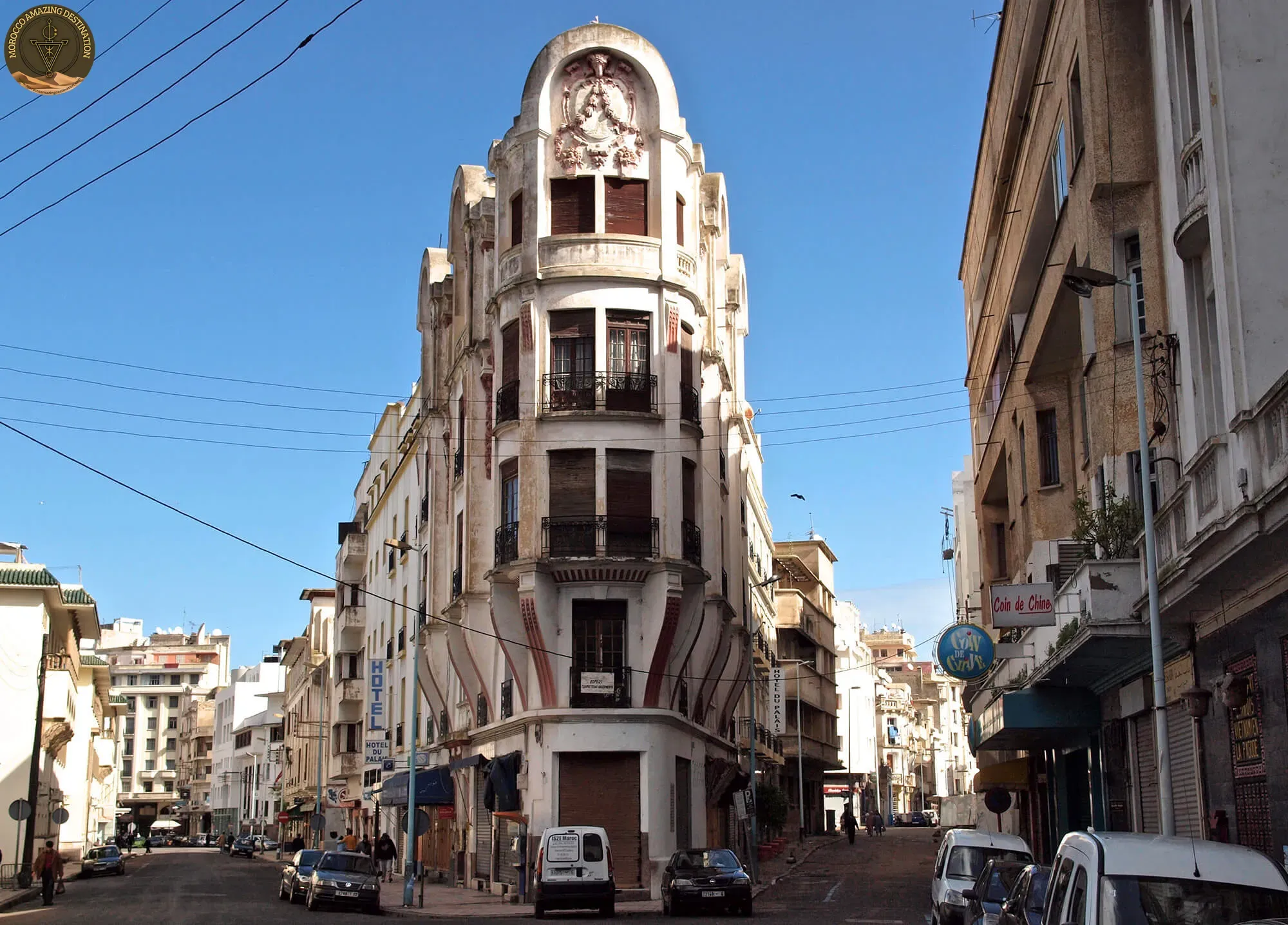
The boulevard runs about 2 km from Place des Nations Unies to Casa-Voyageurs, and the 1930s blocks along it mix Art Deco with Moorish detail. Shopfronts sit at street level; the balconies and cornices above are the reason to slow down. Walk it once with the car trailing behind, then load the parcels at the far end.
Derb Omar is the wholesale district, and it moves fast. The streets are narrow, loading never stops and nobody is set up for browsing, so it works best when you already know what you came for. A private driver earns his keep here. He can pull up near the fabric traders, leave the engine running and keep your bags in the boot instead of in your hands.
What Derb Omar is good for:
- Fabric by the metre: cotton, djellaba cloth and upholstery rolls.
- Leather and bags: plain totes, belts and satchels sold in quantity.
- Household goods: tea glasses, trays and kitchenware for a home.
- Trimmings: braid, buttons and ribbon for anyone who sews.
Morocco Mall: The Air-Conditioned Finish
Morocco Mall sits out on the Corniche and gives the route a clean ending. Prices are marked, the air conditioning works and the car park takes a loaded boot without fuss. It opened on 1 December 2011 and is the largest shopping mall in Africa, with more than 350 stores across international labels and Moroccan brands.
The Aquadream aquarium rises through the middle of the building: a 1,000,000-litre cylinder holding more than 40 fish species. That is the part children remember after a morning of markets. Buy the last gifts here, the ones you want a receipt for, and walk out to a car that is already waiting.
A half day shows how differently Casablanca sells things. Along the way you pass an endowed quarter from the protectorate, a market hall from the same decades, wholesale streets and a mall on the water. With less time, keep Habous and Marché Central and skip the rest. For the coast, the mosque and the Corniche, our Casablanca travel guide picks up where this route ends.
Both of our Casablanca departures begin in the city, so a shopping morning fits at either end. The 8-Day Imperial Cities and Desert Tour from Casablanca heads inland through the imperial cities and the Sahara. The 10-Day Tour from Casablanca to the Sahara via Fes adds the Fes workshops where much of this craft is made.
We can customize a tour to match your needs - design your perfect itinerary
If you found this helpful, add us as your preferred source on Google.
Frequently Asked Questions
Is Casablanca good for souvenir shopping?
Yes. The city has a planned medina at Habous, a national-heritage market hall at Marché Central, a wholesale fabric district at Derb Omar and a large mall on the Corniche. The main stops fit into half a day because they sit in a line from the south of the centre to the coast.
Which stop should I pick if I only have an hour?
Habous. The arcaded quarter holds craft shops, booksellers and two landmark buildings within a few minutes of each other, and the lanes keep their shade through most of the morning.
Do I have to bargain, or are there fixed prices?
It depends on the stop. Shops with labelled prices hold them, the medina and Marché Central often start from a higher figure, and Morocco Mall is fixed price throughout. If you want no negotiation at all, begin at Habous and finish at the mall.
Can souvenir shopping in Casablanca be done in half a day?
Yes, with a car. Habous, the old medina and Marché Central fill a morning, Boulevard Mohammed V and Derb Omar take about an hour, and Morocco Mall works as an afternoon finish. A private driver removes the transfers between them.
Ready for an Adventure?
Have questions? Feel free to contact us using the form below. We're here to help!