· Travel · 5 min read
Tetouan Artisan Workshops: Dar Senaa Visitor Guide
Visit Tetouan artisan workshops and Dar Senaa: zellige, zouaq, embroidery and a half-day craft loop to plan your trip.
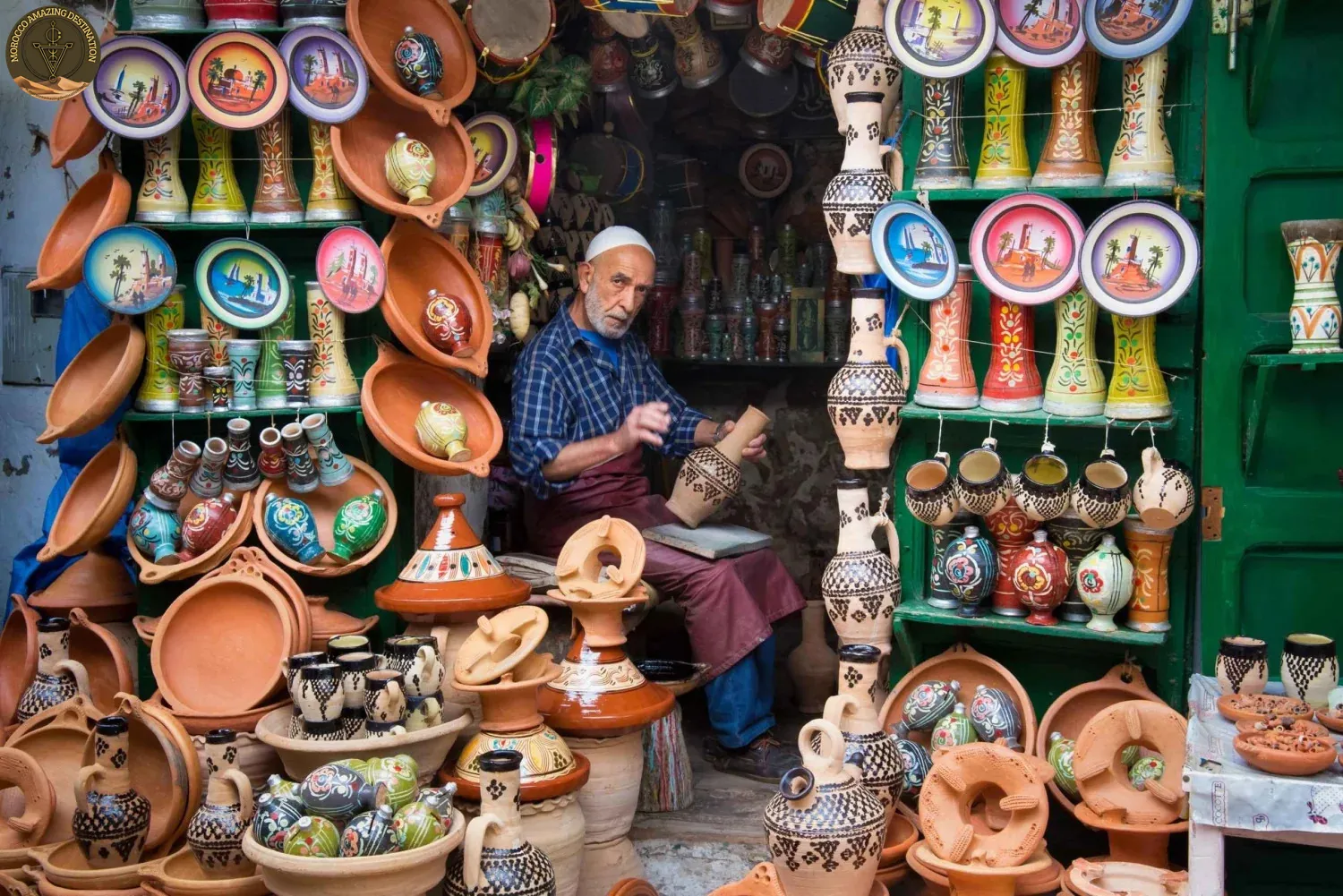
Tetouan looks and feels different from Fez or Marrakech from the first lane you enter. The tilework runs paler, much of the woodwork is painted rather than stained, and the embroidery follows geometric stars with Andalusian roots. The clearest way to read all of it is a morning among the Tetouan artisan workshops, anchored by the Royal Artisan School. Dar Senaa Tetouan (also written Dar Sanaa) opens its doors to visitors when classes are in session, which makes it the natural starting point for a craft-minded stop in the north.
In this guide, we will break down why Tetouan crafts look Andalusian, how Dar Senaa works, how to read its zellige, zouaq and carved wood, where to find embroidery in the medina, and how you can visit them in a respectful half-day loop.
Why Tetouan Crafts Look Andalusian
Tetouan was rebuilt by Andalusian refugees, and that origin still shapes what you see in the lanes. Its medina is a UNESCO World Heritage site, often described as the most complete of Morocco’s small medinas, with Andalusian influence clear in the architecture. Craft quarters were organised by trade near the gates, and that logic survives: tile, painted and inlaid wood, plaster, leather and embroidery cluster around the medina edge. Once you know this history, the Tetouan crafts read like something you can walk through.
Walk slowly and three markers keep repeating. Lozenge-pattern tilework in light colours frames doorways and fountains. Patio houses turn inward around central courtyards, many with a fountain at the middle. The embroidery sold along the lanes repeats eight-pointed geometric stars. The National Institute of Fine Arts stands close to Dar Senaa, a sign of how seriously this city takes visual training.
Fez leans toward deep blues and dense carving, while Marrakech favours warm plaster and cedar. Tetouan stays lighter, finer and more geometric. That restraint is exactly what to look for as you compare the three cities.
Inside Dar Senaa and How a Visit Works
The school stands opposite Bab el-Oqla, in a Spanish-era building set around Andalusian patios. Founded under the Spanish Protectorate era, it has used its current building since 1928. It counts among the few schools teaching the full Andalusian repertoire in one place, through multi-year apprenticeships in tile, plaster, wood, paint, leather, metal, weaving and embroidery.
A visit follows a simple shape. You cross gallery patios, pause at workshop edges, and finish in the exhibition room of student pieces. Come on a term-time weekday morning, allow 45 to 60 minutes, and carry small cash for the modest ticketed entry.
What you will see:
- Tile and plaster: zellige cutters trimming pieces with knives, and carvers cutting gebs reliefs.
- Wood and paint: carpenters and zouaq painters working on panels, ceilings and screens.
- Thread and leather: weavers, embroiderers and leatherworkers stitching and shaping at their benches.
Every student starts with geometry, drafting patterns with only compass and straightedge. That discipline connects every room, from tile to textile.
Reading Three Crafts: Zellige, Zouaq and Carved Wood
Three techniques cover most of what you see in Tetouan, and telling them apart changes how you look at every doorway. Zellige is mosaic tilework cut piece by piece and set into plaster. Zouaq is paint applied to wood. Carving is relief cut out of the surface, sometimes combined with inlay.
How to tell them apart:
- Tetouan zellige: knife-cut from partially dried slabs, with soft rounded edges and light lozenge patterns.
- Zouaq painting: stencil lines over a plaster-dust ground, filled with hand-mixed colour on wood.
- Carved wood and inlay: arabesque relief carving, sometimes set with bone or wood inlay called taracea.
Watch for the handoffs between trades. Carved pieces often pass to painters for ceilings and screens, and plaster carvers use the same geometry masters as the tile cutters. Wooden templates guide repeated motifs, which is why patterns stay consistent across a whole room.
Embroidery and Medina Workshops
Tetouan embroidery, known as tarz Tetouani or Taajira, is geometric silk stitched onto linen. Garnet, cobalt, emerald and saffron thread form eight- and sixteen-pointed stars on cream cloth, in a style passed from mother to daughter. The school teaches it alongside the Rabat and Fez styles, so you can compare regional differences in one visit.
In the medina, look for the quiet silk souk lane and the cooperatives near Bab el-Oqla. Ask to compare handmade silk with machine-made pieces, and expect honest pricing to reflect weeks of labour. A small piece bought directly from the maker carries more meaning than a larger piece of uncertain origin.
Take your time over the needlework and handle pieces only when invited. Sellers generally welcome careful questions about stitches and motifs, and a short conversation often teaches more than any label.
A Respectful Half-Day Craft Loop from Tangier
Pair Dar Senaa with the Ethnographic Museum and an entry through Bab el-Oqla, and the morning forms a natural loop. The school shows living technique, the museum adds context, and the medina lanes show finished pieces in daily use. From Tangier the drive is short, and Chefchaouen continues the same northern thread for travellers heading south.
Good habits for workshop visits:
- Timing: come on term-time weekday mornings, when apprentices are at their benches.
- Voices and movement: keep voices low and stay at the edges of each room.
- Photography: ask before photographing anyone, and accept a refusal gracefully.
- Guidance: accept a local guide at the door and tip modestly for the help.
Check locally that workshops are active before setting out, since term schedules and renovations can close rooms without notice.
Tetouan rewards travellers who look closely, and it pairs naturally with a wider northern route. For the broader picture, see our things to do in northern Morocco and traditional crafts and livelihoods. To fold the city into a longer journey, consider our 11-Day North Tour from Tangier, which links Tetouan with Chefchaouen, Fez and the coast, or the 15-Day Grand Cultural Tour from Tangier for a deeper craft and culture route.
We can customize a tour to match your needs - design your perfect itinerary
If you found this helpful, add us as your preferred source on Google.
Frequently Asked Questions
Can visitors enter Dar Senaa in Tetouan?
Yes, when classes are in session, usually on weekday mornings. Entry is modestly ticketed, and visits last 45 to 60 minutes. Check locally that workshops are active before you go, keep voices low, and ask before photographing apprentices at work.
How is Tetouan zellige different from Fez zellige?
Tetouan zellige is knife-cut from partially dried slabs, which gives each piece soft, rounded edges and lighter, lozenge-patterned panels. Fez zellige is chisel-cut from glazed squares, with sharper edges and denser, darker compositions.
What is zouaq in Moroccan craft?
Zouaq is painted decoration on wood. Artisans transfer a stencil, prepare a plaster-dust ground, and apply hand-mixed colour, often on ceilings, doors and screens. It differs from carving, which is relief cut into the surface, and from inlay, which sets other materials into the wood.
Can I combine Tetouan with Tangier and Chefchaouen?
Yes. Tetouan sits between the two, so it fits neatly into a northern loop. A private driver makes the connections simple, and a half day covers Dar Senaa, the Ethnographic Museum and a medina walk.
Ready for an Adventure?
Have questions? Feel free to contact us using the form below. We're here to help!