· Travel · 9 min read
How Moroccans Make a Living: Traditional Professions and Artisanal Trades in Morocco
Discover traditional Moroccan professions and artisanal trades. From tannery workers to Berber carpet weavers, explore how Moroccans make a living through centuries-old crafts.
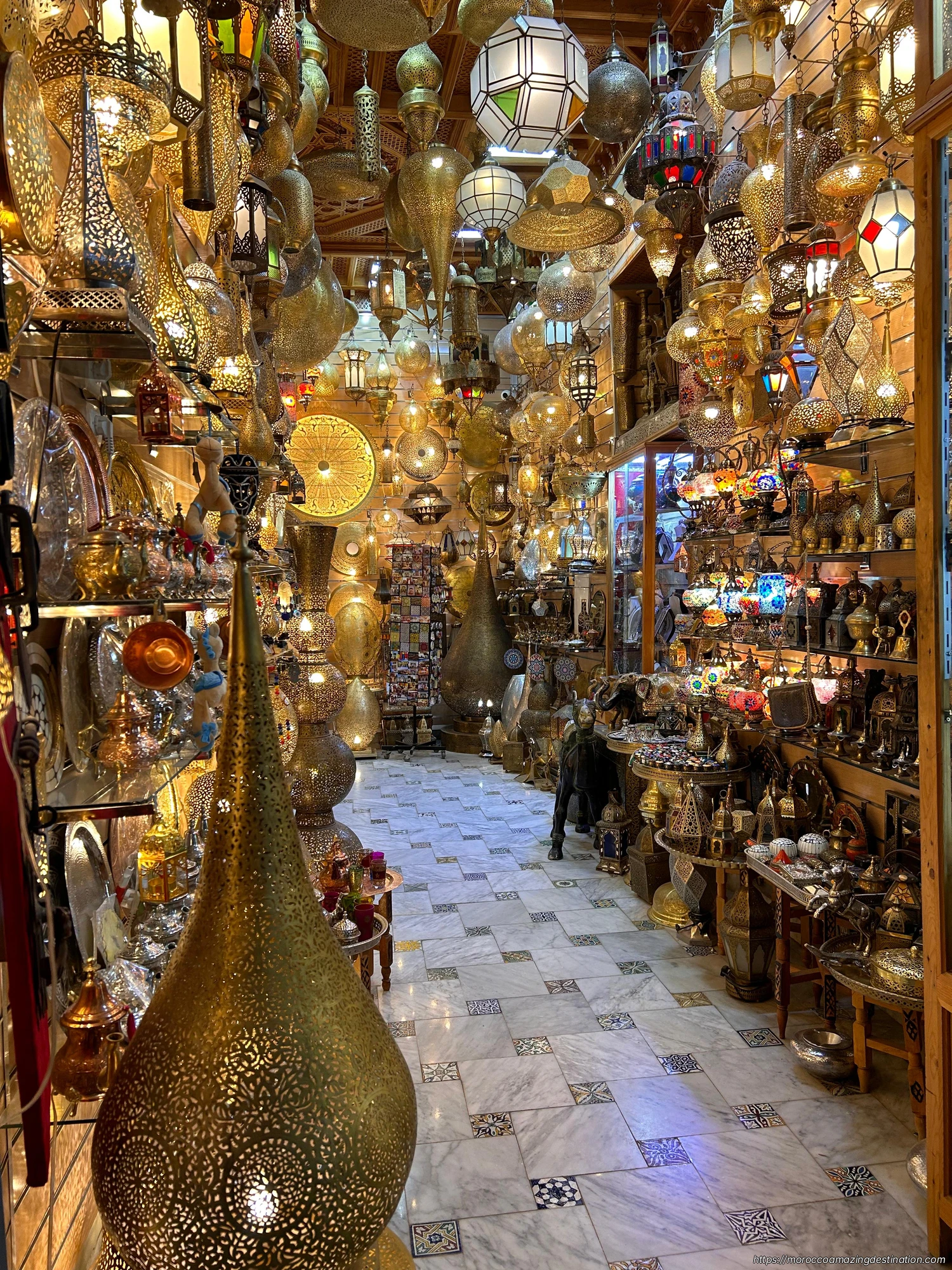
Walk through the medina of Fes or Marrakech and you will hear it everywhere: the rhythmic tap of a hammer on brass, the whir of a potter’s wheel, the soft click of a loom. These are the sounds of Moroccan traditional professions — livelihoods that have shaped the country’s culture and economy for centuries. While the macroeconomic story of Morocco often focuses on phosphates, automotive manufacturing, and tourism revenues, the reality on the ground is far more human. Millions of Moroccans still earn their living through traditional Moroccan trades that have been passed down from father to son, mother to daughter.
In this guide we take you into the workshops, souks, cooperatives, and fishing ports where everyday Moroccans practice their craft. Whether you are a curious traveler wanting to know what lies behind the goods in the souks or simply asking how Moroccans make a living, this is the story of a country sustained by its Moroccan artisans and crafts.
The Artisans of the Medina
The medina — the walled old city — is the beating heart of Morocco’s artisanal economy. Each neighborhood is often dedicated to a single craft, a tradition dating back to the guild systems of medieval Islamic cities. When you wander through the narrow alleyways, you are walking through a living museum of Moroccan artisans.
Leather Workers and the Tanneries
Perhaps no image of Morocco is more iconic than the leather tanneries of Fes. At the Chouara Tannery, which has operated since the 11th century, workers stand waist-deep in stone vats filled with natural dyes — indigo for blue, poppy for red, saffron for yellow, and mint for green. The process of turning raw animal hides into supple, richly colored leather has barely changed in a thousand years.
Leather workers transform the treated hides into bags, poufs, slippers (babouches), belts, and jackets. These goods fill the souks of every Moroccan city and are exported worldwide. For many families in Fes, how Moroccans make a living starts right here, in the acrid-smelling vats of the tannery.
Metalworkers and Coppersmiths
On Seffarine Square in Fes, the clang of hammers never stops. Coppersmiths and metalworkers shape trays, teapots, lanterns, and ornate door knockers from sheets of brass, copper, and silver. The techniques — engraving, chasing, repoussé — require years of apprenticeship to master. A single large brass tray can take weeks of painstaking handwork, with geometric and floral patterns etched entirely by eye.
In Marrakech, metalworkers cluster along Rue des Ferronniers, where you can watch blacksmiths forge intricate wrought-iron lamps and window grilles. These trades are not merely decorative — they supply the vast demand for home furnishings across Morocco and the growing global market for Moroccan artisanal economy products.
Woodcarvers and Zellige Makers
Moroccan woodcarving, or moucharabieh, is a centuries-old craft used to create intricately patterned screens, furniture, and ceiling panels from cedar and walnut. In Meknes and Essaouira, workshops produce fine thuya wood objects — boxes, chess sets, and decorative items — from the aromatic root of the thuya tree, found only in the Atlas Mountains.
Zellige tile making is another uniquely Moroccan art form. Artisans chisel small, brightly colored ceramic pieces into precise geometric shapes — stars, crosses, diamonds — and assemble them into complex mosaics that adorn fountains, walls, and floors. The craft requires extraordinary mathematical precision, and master zellige artisans, or maâlems, train for decades. Every riad, mosque, and palace you visit in Morocco is a showcase of their work.
Weavers and Textile Traditions
Carpet weaving is one of the oldest Moroccan traditional professions and remains a crucial source of income for rural Berber women, especially in the Middle Atlas, High Atlas, and Anti-Atlas regions.
Berber Carpets
Each Berber tribe has its own distinct weaving style, patterns, and symbols. The Beni Ourain carpets — with their minimalist cream background and black or brown diamond patterns — have become international design icons, gracing the pages of interior design magazines worldwide. But behind every carpet is a woman who spent weeks or months knotting wool at a vertical loom, often while managing her household.
Other notable styles include the colorful, shaggy Boucherouite rugs made from recycled fabric scraps, the flat-woven Kilims of the south, and the richly textured Azilal rugs from the High Atlas. Buying directly from weaving cooperatives in villages like Anzal, Taznakht, and Ait Bouguemez ensures that the money goes directly to the Moroccan artisans who made them.
Textile and Embroidery Workshops
Beyond carpets, Moroccan textile traditions include haïk weaving — the traditional white wool garment once worn by women — and intricate embroidery styles specific to each city. Fassi embroidery from Fes is known for its monochromatic geometric patterns, while Tetouani and Rabati embroidery favor colorful floral motifs. Tailors and seamstresses across the country produce the ubiquitous djellabas, kaftans, and takchitas worn for daily life and celebrations.
Farmers and the Land
Agriculture may contribute a declining share of Morocco’s GDP, but it remains the single largest source of employment. In rural areas especially, how Moroccans make a living still means working the land.
Olive farming is perhaps the most widespread agricultural activity. Morocco is one of the world’s top olive producers, and the terraced groves of the foothills between Marrakech and Meknes produce both table olives and olive oil. Date palms flourish in the oasis valleys of the south — Erfoud, Rissani, and the Draa Valley — where the annual date harvest festival draws traders from across the country.
Argan oil production deserves special mention. The argan tree grows almost exclusively in southwestern Morocco, and the oil — extracted by women’s cooperatives using labor-intensive hand methods — has become a global phenomenon in cosmetics and cuisine. Visiting an argan cooperative in the Essaouira or Agadir regions is one of the most direct ways travelers can support traditional livelihoods.
In the Souss Valley, citrus fruits, tomatoes, and vegetables destined for European supermarkets provide income for thousands of small farmers, though the sector is increasingly dominated by large agribusiness operations.
Fishermen of the Atlantic Coast
Morocco’s Atlantic coastline stretches for nearly 3,000 kilometers, and fishing has sustained coastal communities for millennia. The port of Essaouira is perhaps the most picturesque — blue wooden boats line the harbor, and the fish auction takes place each afternoon as gulls wheel overhead, a scene that has barely changed since the city was a Portuguese trading post.
Agadir operates one of Africa’s largest fishing ports, processing sardines and other pelagic fish for domestic consumption and export. Smaller ports in El Jadida, Safi, Larache, and Dakhla sustain tens of thousands of families. In coastal towns, fresh fish is grilled on the spot at open-air stalls, and the day’s catch — sea bass, sole, squid, shrimp — is sold directly to restaurants and markets.
The fishing industry also supports a network of boat builders, net makers, and fish processors, creating a broader Morocco artisanal economy that stretches far beyond the docks.
The Souk Economy
No discussion of Moroccan traditional professions would be complete without the souk. Morocco’s marketplaces are not just tourist attractions — they are the primary economic engine of the medina, where hundreds of independent traders make their living.
Spice merchants preside over mountains of cumin, turmeric, ras el hanout, and dried rose petals. Herbalists stock traditional remedies — dried lavender, nigella seeds, argan leaves — alongside modern cosmetics. Butchers, bakers, and produce vendors supply the daily needs of medina residents. Secondhand clothing sellers, electronics repairmen, and bookstalls round out the informal economy.
Haggling, which tourists often see as a game, is for many Moroccans a genuine economic negotiation — the difference between a good day and a hard one. The souk is where how Moroccans make a living plays out in its most visible, vibrant form.
Modern Shifts and the Future of Traditional Trades
Like everywhere in the world, Morocco’s traditional livelihoods face pressure from modernization. Cheap factory-made imports from China compete with handcrafted goods. Young people increasingly prefer service-sector jobs in cities like Casablanca and Rabat to the grueling apprenticeship of a craft. Some trades, such as traditional sword-making and hand-dyeing with natural pigments, are practiced by only a handful of remaining masters.
But there is also reason for optimism. The Moroccan government, through initiatives like the Vision 2020 and Generation Green agricultural plans, has invested in preserving and modernizing artisanal trades. Design schools in Marrakech and Casablanca are teaching young designers to blend traditional techniques with contemporary aesthetics, creating products that appeal to international markets. Cooperatives, particularly women’s cooperatives, have given artisans access to fair-trade certification and export channels.
Tourism, when done thoughtfully, can be a powerful force for preservation. Every traveler who buys a carpet directly from a weaving cooperative, hires a local guide for a medina tour, or spends a night in a Berber desert camp contributes to the economic viability of skills that might otherwise disappear.
Conclusion
Morocco is not a country defined by a single industry. It is sustained by the hands of millions of people — the tanner, the weaver, the farmer, the fisherman, the merchant — practicing trades that have shaped the culture for centuries. Understanding Moroccan traditional professions is understanding the country itself: resilient, creative, and deeply rooted in community.
On your next trip to Morocco, look beyond the finished product. Find the workshop behind the souk stall. Visit the cooperative behind the argan oil bottle. Ask the carpet seller about the woman who wove it. The answer to how Moroccans make a living is written in every stitch, every chisel mark, and every row of olive trees stretching toward the Atlas Mountains.
Morocco Tours That Connect You with Traditional Crafts
To experience Morocco’s artisanal traditions firsthand, consider a guided tour that takes you into the heart of the country’s craft culture. The 8-Day Imperial Cities and Sahara Desert Tour from Casablanca visits Fes — where you can watch leather tanners and coppersmiths at work — as well as Marrakech’s bustling souks and the artisan quarters of Meknes and Rabat. For a shorter but equally immersive journey, the 5-Day Tour to Chefchaouen and Imperial Cities from Tangier explores the blue city’s textile and weaving traditions alongside the ancient tanneries and craft workshops of Fes.
If you found this helpful, add us as your preferred source on Google.
Frequently Asked Questions
What are the most common traditional Moroccan professions?
The most common traditional professions in Morocco include carpet weaving, leather tanning and crafting, pottery and ceramics making, metalworking, woodcarving, zellige tile making, argan oil production, fishing, farming, and baking traditional bread in communal ovens. Many of these trades have been passed down through generations and remain central to Moroccan cultural identity.
Where can visitors see Moroccan artisans at work?
Visitors can see Moroccan artisans at work in the ancient medinas of Fes, Marrakech, and Meknes, where entire streets are dedicated to specific crafts. The Chouara Tannery in Fes is one of the most famous sites where you can watch leather being dyed in stone vats using natural pigments. In the Ourika Valley and around Essaouira, women's cooperatives produce argan oil using traditional hand-grinding methods. Pottery workshops in Safi and carpet-weaving cooperatives in the High Atlas mountains also welcome visitors.
Are traditional Moroccan trades still practiced today?
Absolutely. While modernization and industrialization have affected some traditional trades, many are thriving thanks to growing tourism, government support for artisanal cooperatives, and international demand for authentic Moroccan handicrafts. Young Moroccans are increasingly learning these trades through apprenticeship programs and design schools that blend traditional techniques with contemporary aesthetics.
How does tourism support traditional Moroccan livelihoods?
Tourism creates direct demand for handicrafts — carpets, ceramics, leather goods, and metalwork — which tourists purchase in souks and medinas across the country. Beyond retail, many travelers seek immersive cultural experiences such as carpet-weaving workshops, cooking classes, pottery demonstrations, and visits to artisan cooperatives. Booking a private tour with a local company also ensures that guides, drivers, and desert camp staff — many of whom come from families that have practiced these trades for generations — directly benefit from tourism revenue.
Ready for an Adventure?
Have questions? Feel free to contact us using the form below. We're here to help!