
· Travel · 5 min read
Tamegroute Green Pottery: Draa Valley Craft Guide
Tamegroute green pottery brings a deep desert glaze to the Draa Valley. See how it is made, what to buy, and how to visit from Zagora.
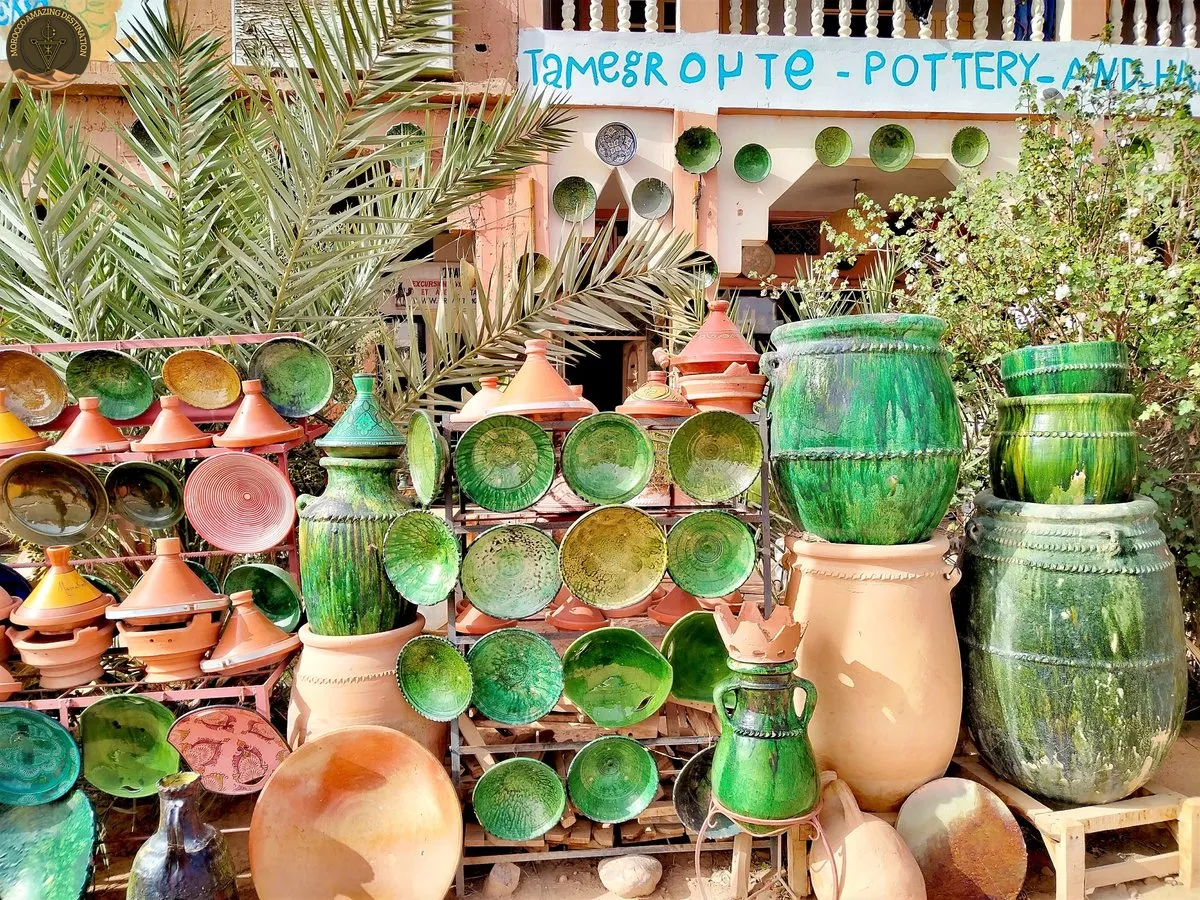
At the edge of the Draa palm groves, a small village fires clay in a green found nowhere else in Morocco. Tamegroute green pottery comes out of wood kilns in deep emerald tones, with no two pieces quite alike. Travellers who love handmade objects often call it the most surprising craft stop in the south.
In this guide, we will break down what gives the glaze its color, what a workshop visit looks like, and how you can reach Tamegroute from Zagora.
Tamegroute Green Pottery in the Draa Valley
Tamegroute sits a short drive south of Zagora, where the Draa Valley narrows toward the pre-Saharan plains. The village is known for its old Nasiriyya zawiya and its historic manuscript library, and the pottery quarter lies close to that religious heart. Everything about the craft reflects the setting, from the clay underfoot to the fuel for the kilns.
The signature is the color. A deep green glaze covers red desert clay, and wood firing shifts the tone from piece to piece, from olive to near black. If you know the cobalt blue of the north, read our Fez pottery guide for the contrast: Fez paints crisp patterns on white, while Tamegroute lets one green glaze speak. Collectors of Morocco green pottery often enjoy both, since the two styles sit well together on a shelf.
The setting explains the craft. Red clay comes from ground near the oasis, dry palm wood feeds every firing, and the kilns suit desert conditions. Few places in Morocco tie material, fuel, and finished color together so tightly.
How the Desert Glaze and Wood Firing Work
The glaze gets its green from mineral colorants, and artisans describe a copper-driven mix that turns green inside the kiln. The exact recipe stays workshop knowledge, passed down rather than written out, so treat any single formula you hear as one family version. What stays certain is the result: the same dip gives different greens depending on heat and position in the kiln.
A piece of Draa Valley pottery passes through the same hands from start to finish. The potter kneads local clay, throws it on a manual wheel, and sets it to dry under the sun. After a glaze dip, the piece enters a wood kiln fed with palm branches, where flames and ash decide the final shade.
What to watch in the kiln yard:
- Drying rows: Fresh pots harden in the sun before glazing.
- Glaze dipping: Each piece takes a fast bath in the green mix.
- Kiln loading: Potters stack chambers by size so heat spreads.
- Firing day: Palm branches burn hot and fast, and the color sets.
Inside a Family Pottery Workshop
The Tamegroute pottery workshops are small family operations run from the courtyard. A visit usually takes about half an hour, costs nothing, and runs best in the morning when wheels turn and kilns get loaded. You walk from the throwing room to the drying yard to the kiln in a few steps, often guided by a family member.
Ask before taking photos, since people are at work, and keep small cash ready for the pieces you will want. Looking is welcome even if you buy nothing, and there is no pressure to spend. A private driver who knows the families smooths the arrival and the language gap.
What you will see:
- Throwing room: Manual wheels shape bowls and cups in minutes.
- Drying yard: Rows of red clay pieces wait for the glaze.
- Kiln chambers: Blackened brick vaults still warm from the last firing.
Buying in the Souk and Carrying Pieces Home
Buying here means choosing each piece with your hands from the workshop shelves. Bowls, plates, cups, small decorative tagines, and tiles line the workshop shelves, and the glaze differs from shelf to shelf. Pick the exact item you want, since the next one will not match.
Ask the seller about food use piece by piece, and never assume a glaze suits hot or acidic food. For the trip home, sellers wrap purchases well, and small pieces ride safely in hand luggage. Larger tiles and platters travel best in a padded bag you pack yourself.
Buying rules that work:
- Inspect in daylight: Carry the piece outside to check the true green.
- Check the base: Look for chips and wobble before you pay.
- Ask about food use: Confirm with the seller for each item.
- Let them wrap: Workshop wrapping beats newspaper in a suitcase.
Fitting Tamegroute Into a Private Draa Loop
Tamegroute works as a half-day add-on from Zagora, paired with the zawiya exterior and a walk through the Draa palm groves. Our Zagora guide covers the town base, and the pottery village slots into the same day without rushing. Most visitors combine clay, manuscripts, and palms in one easy loop.
With a private driver, the stop takes no planning on your part. Timing around kiln hours, parking by the workshops, and the onward road south all sit with your local team. The village also fits inside longer Marrakech desert loops, where the Draa Valley leads toward the dunes.
To fold the kilns into a desert journey, consider our 3-Day Trip from Marrakech to Merzouga, which crosses the Draa palm groves on the way to the dunes. For a slower journey with time for craft stops, our 10-Day Morocco Tour from Marrakech builds in the south and its artisan villages.
We can customize a tour to match your needs - design your perfect itinerary
If you found this helpful, add us as your preferred source on Google.
Frequently Asked Questions
What makes Tamegroute green pottery different from Fez pottery?
Tamegroute fires a deep green glaze over red desert clay in wood kilns, so every piece varies. Fez pottery paints cobalt blue motifs on a white glaze over fine grey clay. Green single-glaze ware marks the south, blue on white marks Fez.
How is Tamegroute pottery made?
Potters dig and knead local clay, throw pieces on manual wheels, sun dry them, dip them in a copper-driven green glaze, and fire them in multi-chamber wood kilns fed with palm branches. Uneven heat explains why no two pieces share the exact shade.
Can I visit a Tamegroute pottery workshop?
Yes. The small family workshops welcome visitors, usually free, for about half an hour. Mornings are liveliest, when potters throw and load kilns. Ask before taking photos and keep small cash for purchases.
Is Tamegroute pottery food safe and how do I carry it home?
Ask the seller about food use piece by piece instead of assuming any glaze suits hot or acidic food. Sellers wrap purchases well, small bowls and cups fit hand luggage, and larger platters need a padded bag.
Ready for an Adventure?
Have questions? Feel free to contact us using the form below. We're here to help!