· Travel · 5 min read
Sefrou Artisans: Inside Morocco's Working Craft Medina
Meet the Sefrou artisans of a working medina near Fes, famous for silk buttons, and plan a private half-day trip.
Fes can feel like a performance. Its souks are loud, crowded, and tuned for visitors. The Sefrou artisans, working 30 kilometres away in a small Middle Atlas town, still make things for their neighbours: buttons for djellabas, plough parts for farmers, teapots soldered back to life. Sefrou’s medina is compact, calm, and honest. It shows what a Moroccan craft town looks like when nobody is watching.
In this guide, we will walk the route from Bab M’Kam to Huddadine Square, meet the silk button makers, and show how to visit Sefrou on a private half-day from Fes.
Why Sefrou feels different from Fes
Fes rewards shoppers. Sefrou rewards watchers. The medina here is small enough to cross on foot in minutes, and most workshops answer to local demand rather than tour groups. You hear hammers before you see them. Nobody pulls you inside, and prices are written for residents.
Local tradition holds that Sefrou is older than Fes. The town once hosted one of Morocco’s notable historic Jewish communities, nicknamed Little Jerusalem, and Jewish artisans passed button knotting to their Muslim neighbours. That skill still feeds families today.
Come without a shopping list. Bring curiosity and a guide who knows the makers by name and story. Doors open, tea appears, and the town shows a side of Morocco that Fes rarely offers first-time visitors.
Walking the working medina: Bab M’Kam to Huddadine Square
Start at Bab M’Kam, the old gate where the craft quarter begins. The walk to Huddadine Square takes about ten minutes on foot. Iron workshops cluster near the square, looms clatter in side rooms, and restored artisan complexes now house weavers and tailors side by side.
Thursday feels different. The weekly market fills the lanes with farmers, cherry sellers in season, and second-hand stalls. Go on that day if you can, and let your guide set the pace. The medina is easy to read but hard to decode without someone local.
Stops to notice along the walk:
- Bab M’Kam gate: the entry point where the craft quarter starts and guides usually begin.
- Huddadine Square: the iron and weaving heart of the medina, ringed by forges.
- Restored complexes: renovated workshops where tailors and weavers now share light courtyards.
- Thursday market: the weekly souk that draws farmers and families from nearby villages.
The silk buttons: Sefrou’s signature craft to watch
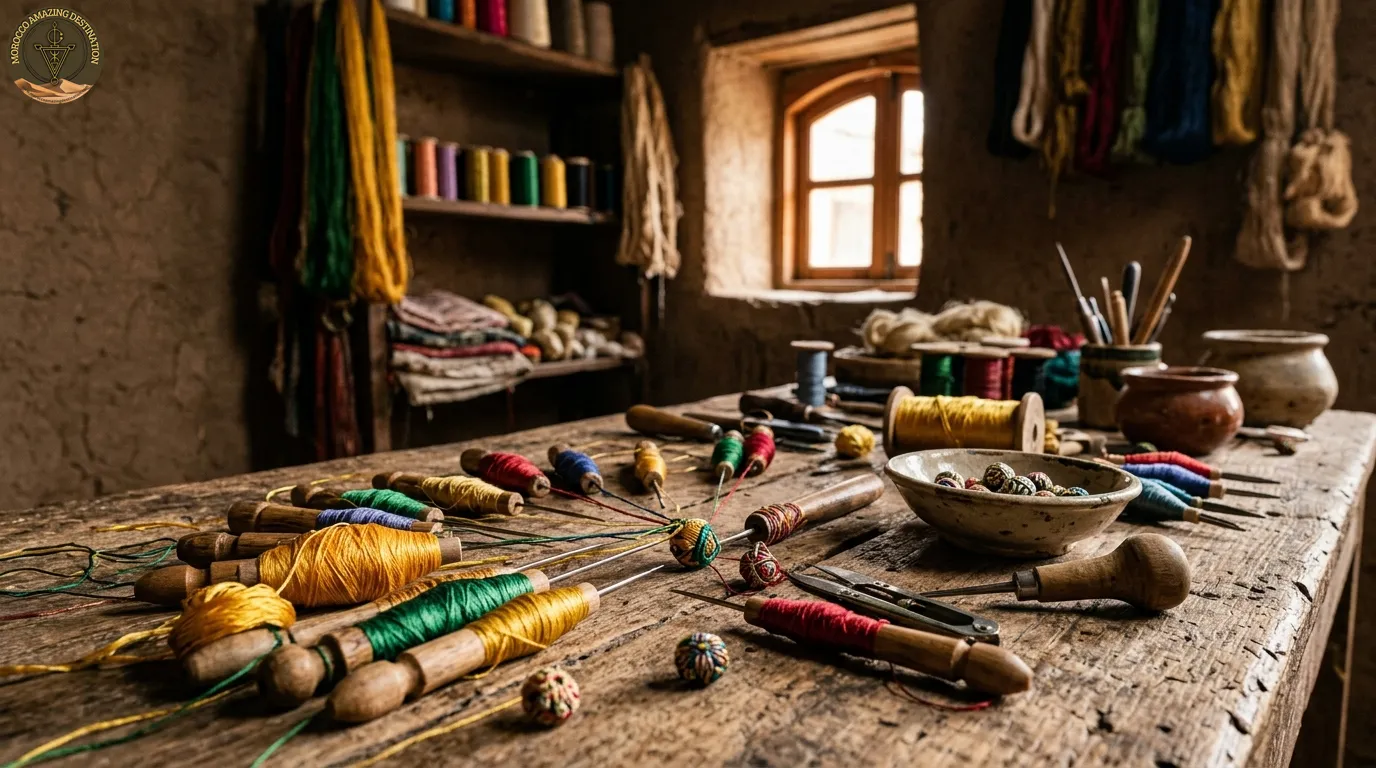
Every djellaba needs its buttons, and Sefrou makes the finest in Morocco. The Sefrou silk buttons, called aakad, are tiny knots of silk thread wound by hand around a small core. One kaftan can carry dozens, each no bigger than a lentil, each perfectly even.
Watch a maker at work and the speed stuns you. Fingers twist, loop, and tighten without looking. The Cherry Buttons cooperative, founded as one of the town’s first women’s cooperatives, now gathers dozens of members plus a village network. Buying there puts money straight into makers’ hands.
What to look for at the button workshops:
- Knotting in motion: rows of tiny silk knots taking shape under fast fingers.
- Djellaba sets: matched buttons and loops made for traditional robes.
- Button jewellery: the same knots rewoven into necklaces and earrings.
- Fair purchase: cooperative shops where the maker sets the price.
The craft carries a shared history. Read more about the town’s Jewish heritage in our guide to ancient Jewish sites in Morocco.
Iron, tin and repair culture: crafts that serve residents
Sefrou’s forges shoe mules, mend ploughs, and weld broken farm tools while the farmer waits. This is the heart of Sefrou medina crafts: work done for neighbours, not display shelves.
Two doors down, the tinsmiths keep a different tradition alive. They re-solder teapots, patch trays, and straighten lamps instead of replacing them. Next door, weavers knot blankets and handira wedding capes on wooden looms, and tailors cut djellabas to order. Most orders come from town families, not tourists.
Nothing here is staged for photos, so ask before raising your camera. A small purchase or a tip for a demonstration keeps the exchange fair. For a contrast in clay rather than metal, see our Fez pottery guide.
How to visit Sefrou on a private half-day from Fes
A Sefrou day trip from Fes is simple. The town sits 25 to 30 kilometres southeast of Fes in a fertile garden region, about 45 minutes by car. A private driver collects you after breakfast, you walk the medina with a local guide, and you are back in Fes for lunch.
Ask your guide to arrange the cooperative visit in advance, since drop-in access varies. Thursday market mornings are liveliest, and the three-day Cherry Festival each June, inscribed on the Representative List of the Intangible Cultural Heritage, turns the whole town festive. For more Fes-based ideas, browse our best day trips from Fes.
A simple half-day plan:
- Morning pickup: private car from your Fes riad, 45-minute drive southeast.
- Guided walk: Bab M’Kam to Huddadine Square with forge and loom stops.
- Cooperative visit: button makers and a chance to buy directly.
- Back by lunch: return to Fes with the afternoon free for the medina.
Pair Sefrou with a longer journey through the country. Our 7-Day Morocco Tour from Fes can fold in a Sefrou half-day, and the 4-Day Private Tour from Fes to Rabat via Merzouga Desert starts from the same base with a private driver throughout.
We can customize a tour to match your needs - design your perfect itinerary
If you found this helpful, add us as your preferred source on Google.
Frequently Asked Questions
What crafts is Sefrou known for?
Sefrou is known for knotted silk djellaba buttons, weaving, blacksmith work, and tinsmith repair. Button making is the signature craft, done mainly by women in cooperatives, while the forge and tin shops serve local farmers and families.
How far is Sefrou from Fes and how long does a visit take?
Sefrou sits about 25 to 30 kilometres southeast of Fes, roughly a 45-minute drive. A private half-day is enough to walk the medina from Bab M'Kam to Huddadine Square, watch the button makers, and return to Fes for lunch.
What are Sefrou silk buttons made of?
They are tiny knots of silk thread, called aakad, wound by hand around a core to close djellabas and kaftans. Makers also weave the same knots into necklaces and earrings sold through the women's cooperatives.
Is Sefrou worth visiting?
Yes, if you want a working craft town rather than a shopping souk. The medina is small and calm, the workshops serve residents, and a local guide can introduce you to the makers. Time it with the Thursday market for the liveliest visit.
Ready for an Adventure?
Have questions? Feel free to contact us using the form below. We're here to help!