
· Culture · 5 min read
Moroccan Kaftan: History, Craft and How to Spot One
What makes a Moroccan kaftan, how it differs from the takchita, the artisans who build one, and where to see the craft made in Fes and Marrakech.
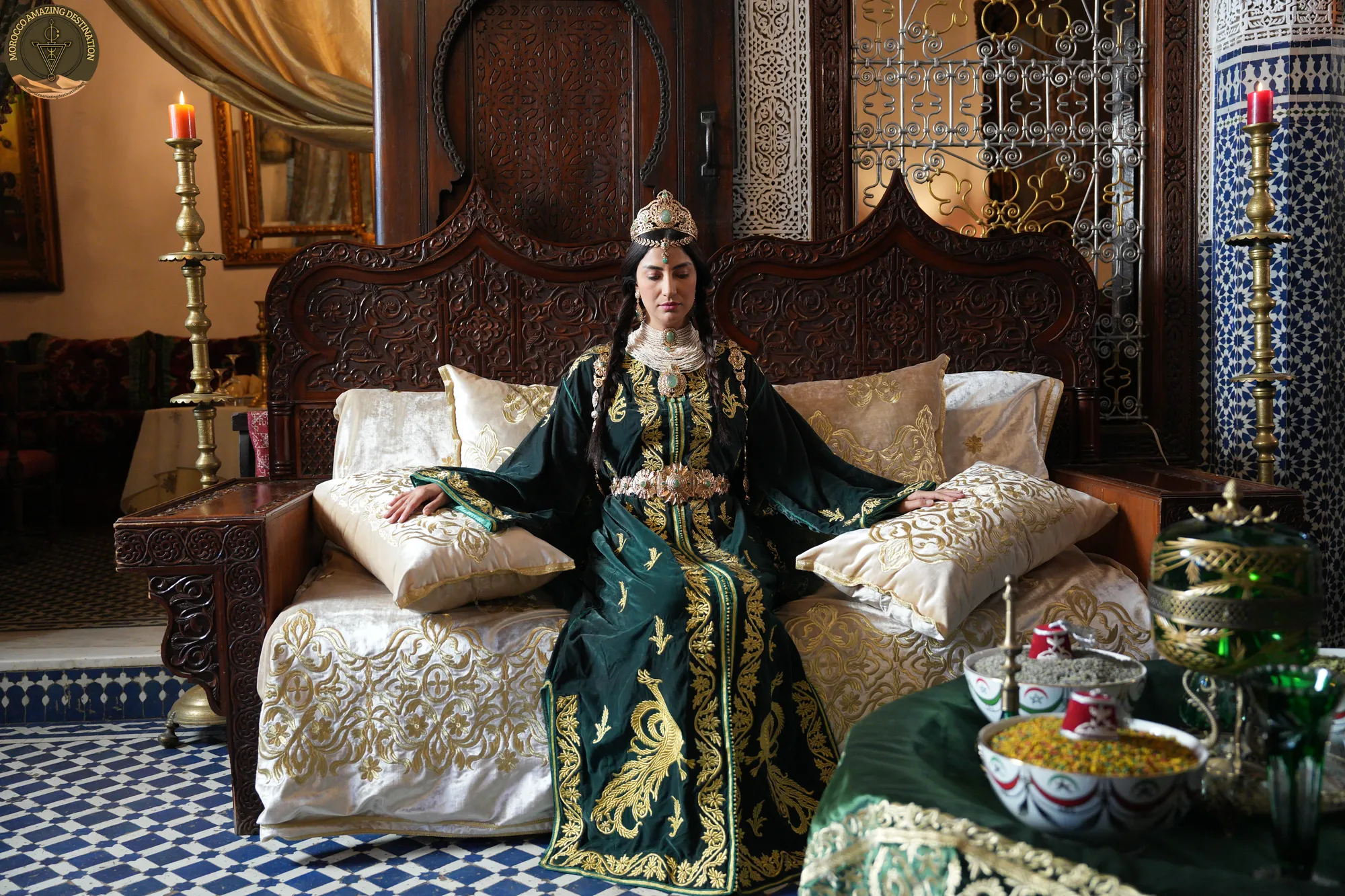
In a Marrakech wedding hall the lights drop, the drums shift, and a bride walks in wearing a robe that took months to build. That garment is the moroccan kaftan: a long tunic with a central opening, buttons down the front, and braided trim on every seam. A kaftan is cut as one piece. The takchita worn beside it is two layers, which is where most shoppers get lost.
In this guide, we will break down what makes a kaftan Moroccan, how it differs from the takchita, and where you can watch the craft being done.
What Makes a Moroccan Kaftan Moroccan
Plenty of countries have a version of this robe. Look up moroccan traditional dress anywhere and nearly every example is a kaftan or a takchita, because the garment became the country’s formal wear. Shop signs and listings spell it moroccan caftan about as often as they spell it with a k.
The craft now sits on the UNESCO Representative List of the Intangible Cultural Heritage of Humanity. The inscription describes a tunic worn by people of all genders and ages, in different fabrics, with or without a decorative belt.
The garment travelled from West Asia, where Arabic, Persian and Turkish each have a word for it. The record gets specific at the Saadi court in the 16th century, though some accounts place the arrival earlier. Today women wear the decorated versions and men wear plainer kaftan robes to weddings and formal evenings.
Kaftan, Takchita and Djellaba - Telling Them Apart
In a shop the pieces hang close together and the labels are unreliable. Three shapes explain most of what you will see.
- Kaftan: one long robe, belted or left loose, closed down the front with aqad buttons.
- Takchita: a fitted inner dress, the tahtia, under an open over-robe, the fouqia or dfina.
- Djellaba: the hooded everyday robe worn across the country by men and women.
The mdamma is what holds a takchita together: a wide belt of silk, gold or silver worn over the layers and treated like jewellery. A takchita carries the heaviest handwork and suits a ceremony, while a kaftan moves between a wedding and a dinner.
For the broader picture, our guide to the djellaba and the embroidered takchita in Moroccan traditions covers how both sit inside everyday life.
The Handcrafts Behind One Kaftan
One finished kaftan passes through several pairs of hands before it reaches a hanger. Fez has the largest cluster of these trades. That is why its medina lets you watch braid being made and fabric being chosen in the same afternoon.
- Weaver: brocade, velvet or silk, with the pattern woven into the cloth rather than printed on.
- Maalem tailor: cuts and shapes the robe to the wearer, then rebuilds it between fittings.
- Sfifa braider: makes the braided trim that runs along every opening and seam.
- Aqad maker: braids silk or gold cord into the buttons and loops that close the front.
- Embroiderer: works dfez or randa stitching by hand, stitch by stitch, over weeks.
Each city has its own hand. Fez is the reference for braid and embroidery, Tetouan carries taajira work with Andalusian roots, and Rabat and Sale keep their own versions. Made to measure means measurements, a fabric choice, one or two fittings, and then the handwork.
Weddings, Eid and the Mdamma Belt
A Moroccan wedding runs across several days and opens with a henna night, where green or gold is traditional. The bride changes outfits through the evening, and each change brings out a different piece, from a heavy takchita to something lighter.
The mdamma belt is where families put their money. It reads as jewellery from across a room, and many are inherited, so a single wedding can show three generations of belts in one night.
Eid, naming ceremonies and coming-of-age rituals also bring the kaftan out, often in plainer fabrics for daytime. Because the garment signals status and belonging, families commission it instead of buying from a rail.
Souks, Ateliers and Shopping - Meeting the Kaftan in Morocco
The quickest place to meet the trade is Marrakech’s Souk Semmarine, where fabric sellers and finished pieces sit in the same lane. In the Fes medina you can buy braid, buttons and tailoring within a few streets of each other.
The Amazigh costume and jewellery collection at the Majorelle Garden in Marrakech shows what came before the modern cut. Half an hour in a working atelier will show you braid, lining and stitching up close.
- Sfifa weight: handmade braid has body and keeps its curve; cheap tape lies flat.
- Aqad loops: hand-braided cord with a firm, even knot, not a glued bead.
- Inside finish: a clean lined seam means the maker expected the piece to last.
- Embroidery depth: machine work sits flat and identical, hand stitching varies.
Commissioning is realistic on a trip of a week or more, as long as you accept the order of things: measurements, fabric, fittings, then embroidery. Price follows cloth and hours of handwork, so no atelier quotes a fixed figure before it sees the fabric. If you mainly want small textiles, our guide to what to buy in Morocco has more on where to find them.
A private route with a guide who knows the workshops turns a browse into a commission. On our 8-Day Tour from Casablanca to the Imperial Cities you get the Fes medina souks and the Marrakech lanes with someone who can introduce the makers. The 12-Day Morocco Grand Tour adds Essaouira and more time in Fes if you want fittings built into the schedule.
We can customize a tour to match your needs - design your perfect itinerary
If you found this helpful, add us as your preferred source on Google.
Frequently Asked Questions
What is the difference between a kaftan and a takchita?
A kaftan is one long robe, worn loose or belted and closed with aqad buttons and loops. A takchita is two pieces: a fitted inner dress called the tahtia under an open, heavily decorated over-robe called the fouqia or dfina, held at the waist by a wide mdamma belt. Shops often label both as kaftans, which is where the confusion starts.
Is the Moroccan kaftan recognised by UNESCO?
Yes. Moroccan Caftan: art, traditions and skills is inscribed on the UNESCO Representative List of the Intangible Cultural Heritage of Humanity, which recognises the craft and the skills behind it as living heritage. The listing describes a tunic worn by people of all genders and ages.
Do men wear kaftans in Morocco?
Yes. The kaftan served as court and ceremonial dress for men as well as women, and men still wear kaftan-style robes at weddings and formal occasions. The UNESCO description covers a tunic worn by people of all genders and ages, in different fabrics and styles.
How can I tell a handmade kaftan from a cheap copy?
Check the weight and finish of the sfifa braid, the hand-braided aqad loops, the lining and inner seams, and the embroidery. Machine work sits flat and even, while hand stitching varies slightly. Handmade braid has body and holds its shape; thin machine tape does not.
Ready for an Adventure?
Have questions? Feel free to contact us using the form below. We're here to help!