
· Culture · 5 min read
Moroccan Traditions: Living Customs You Can Experience
Discover Moroccan traditions you can witness — djellaba tailoring, Gnawa music, Friday couscous and henna nights — with local guides.
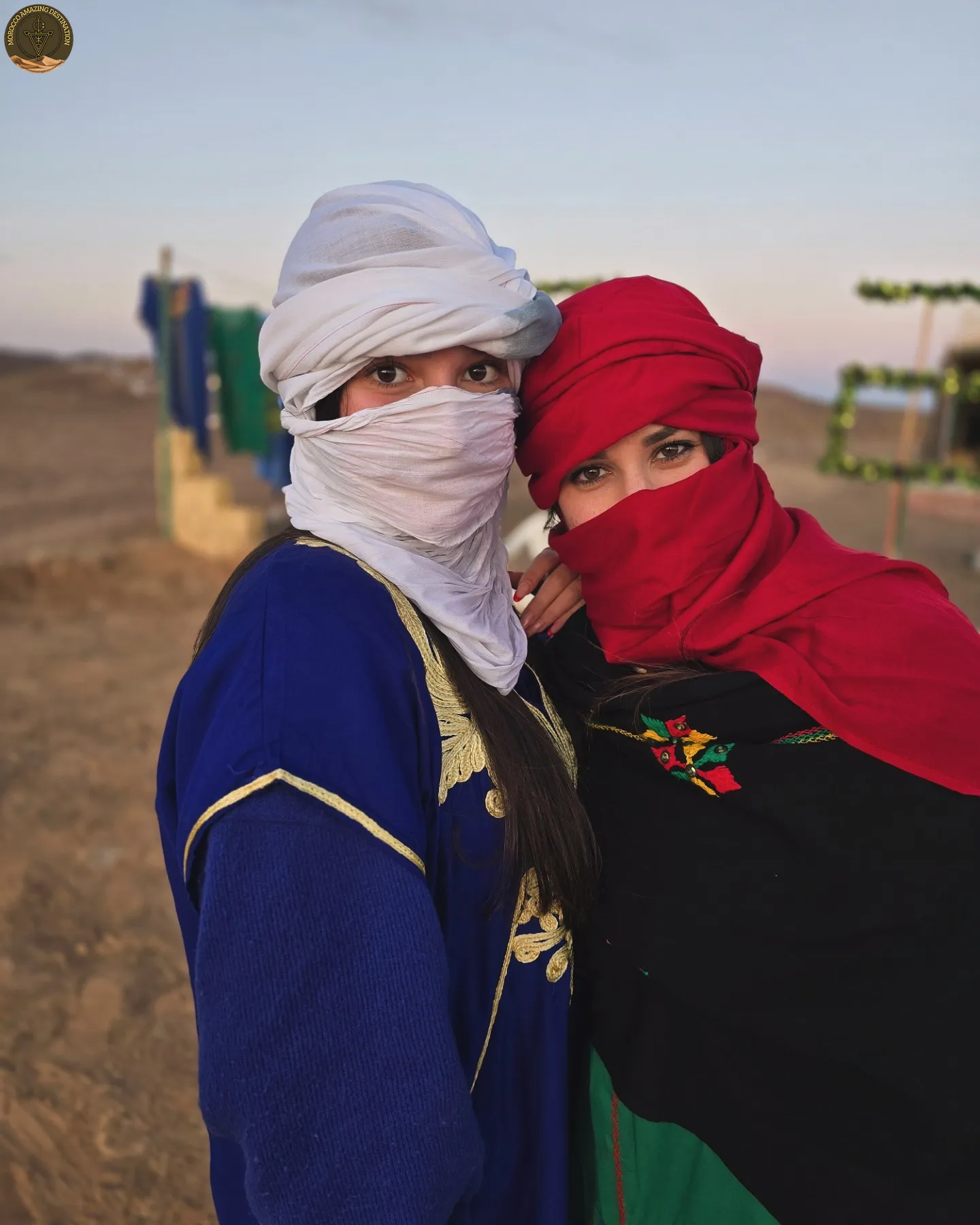
Morocco’s most distinctive Moroccan traditions are not relics behind glass. They are weekly meals, nightly music and household rituals that carry on whether or not anyone is watching. Tea is poured from a height, couscous lands on the table every Friday, and tiles are still chipped by hand in Fes workshops. Ask what makes traditions unique to Morocco so memorable, and the answer is simple: you can stand inside them.
In this guide, we will explore the dress, music, craft, food and celebrations behind Moroccan traditions and celebrations — and how you can experience them on a private journey.
Djellaba, Takchita and Everyday Moroccan Clothes
Walk through any medina and the national garment is everywhere. The djellaba is a loose hooded robe worn by men and women alike, with long sleeves and a pointed hood. Its roots reach back to Amazigh dress, and it handles mountain cold and desert heat equally well.
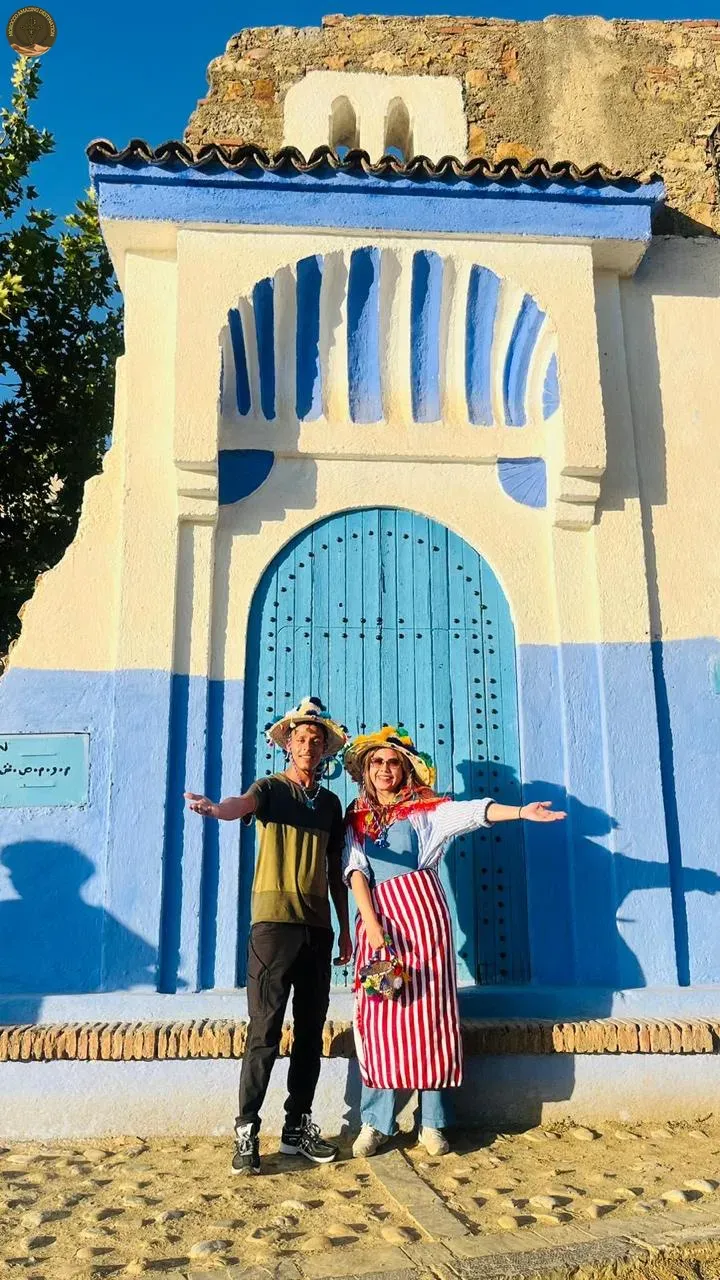
One regional version stands out. The djellaba bziwiya comes from Bzou in Azilal Province, a few hours from Marrakech toward Beni Mellal. Village workshops hand-finish each one in small batches, and the fine hand-knotted buttons that close a good djellaba are a Sefrou speciality.
At celebrations, women change into the takchita, a two-piece gown built from a plain fitted base under a richly embroidered overdress. Expect gold or silver thread, beads, sequins and a belt. Tailors in Fes and Marrakech still measure and sew to order.
Key garments to recognise:
- Djellaba: the hooded everyday robe, worn by men and women.
- Djellaba bziwiya: the lighter Bzou weave, finished by village workshops.
- Takchita: a two-piece celebratory gown, embroidered over a plain base.
Malhun, Gnawa and Zellige: Living Music and Craft
Some traditions are meant to be heard. Malhun is Morocco’s sung poetry in dialectal Arabic, set to Andalusian-rooted modes with oud, violin, rebab and small drums. It grew from the artisan guilds of Fes, Meknes and Marrakech, and UNESCO lists it as intangible cultural heritage.
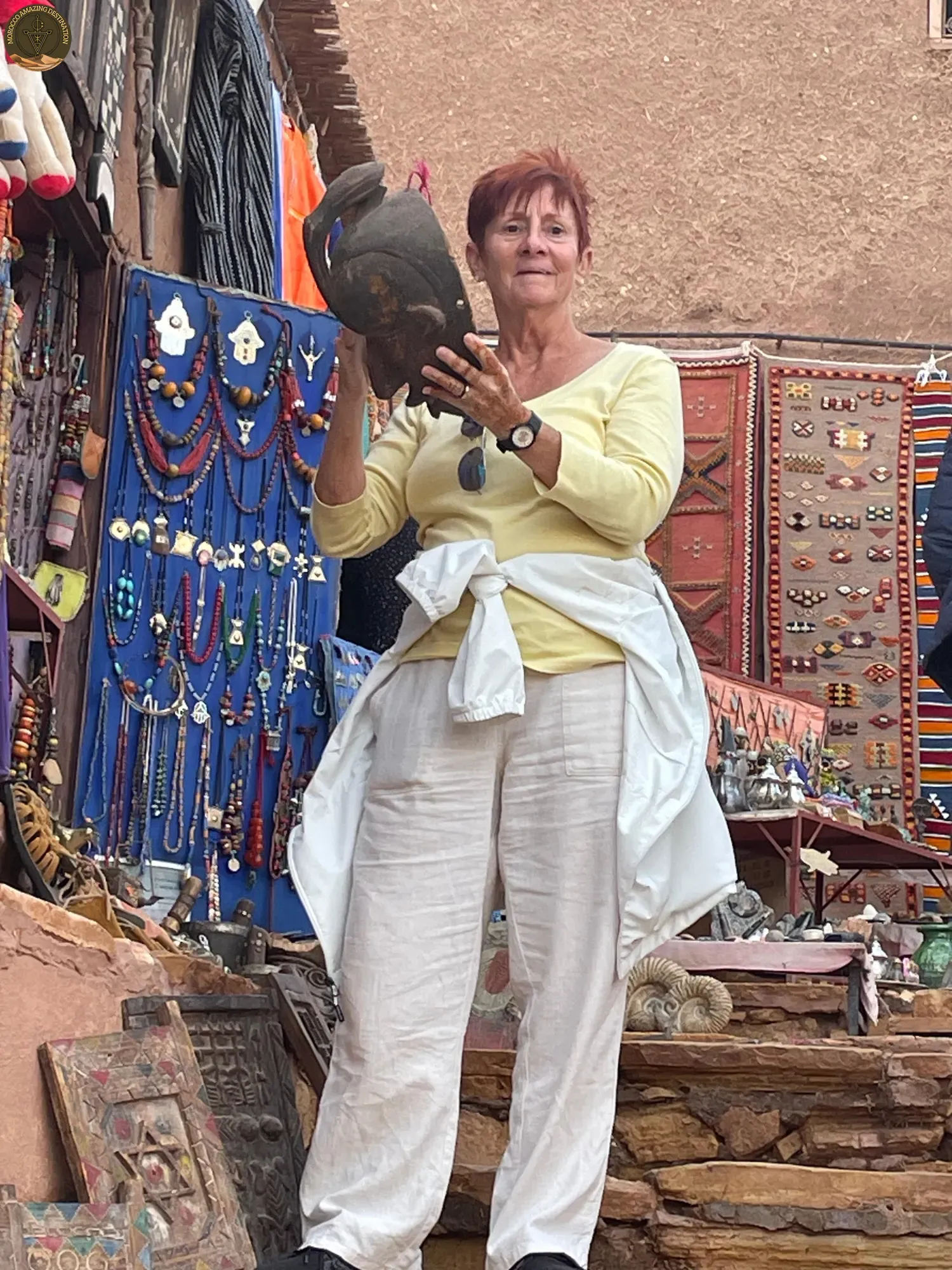
Gnawa brings Sub-Saharan roots into a Sufi-brotherhood repertoire, driven by the three-stringed guembri and metal qraqeb castanets. UNESCO recognises it too. The easiest place to hear it is Khamlia, about seven kilometres south of Merzouga, where families play 30 to 45 minute sets.
Then there is zellige, the hand-chipped tile mosaic. Artisans glaze square tiles, chip them with a small hammer, then set them face-down into plaster. The craft is roughly a millennium old and still centres on Fes, whose medina is a UNESCO World Heritage site.
Where to hear and see it:
- Fes and Meknes: malhun evenings and celebration halls, plus zellige workshops.
- Khamlia, near Merzouga: short Gnawa sets most evenings.
- Essaouira: the country’s best-known Gnawa festival, in early summer.
- Fes medina: watch tiles chipped, then read them on the Bou Inania madrasa.
Mint Tea, Tanjia and Friday Couscous
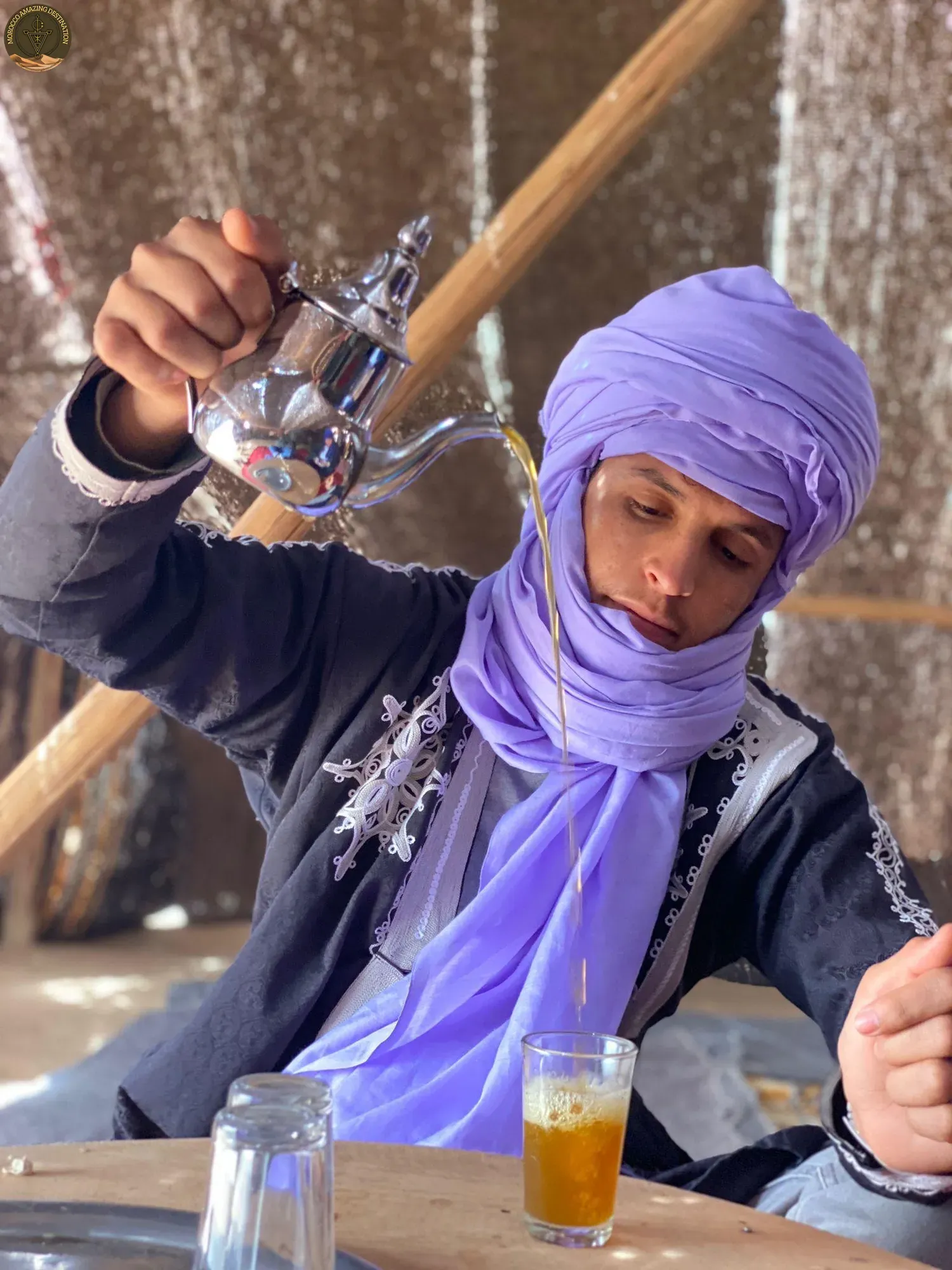
Hospitality in Morocco usually begins with a glass. Mint tea is green tea with fresh mint and sugar, poured from a height into small glasses to aerate it and raise a foam. Tradition serves up to three glasses, and a Moroccan saying gives them character, sweetening as they go.
Tanjia is Marrakesh’s slow cook: lamb or beef with cumin, garlic, saffron, preserved lemon and olive oil, sealed into a tall clay urn and left overnight in embers. It began as a men’s dish, made a day ahead and shared among friends. Today the honest place to taste it is a traditional kitchen in the Marrakesh medina.
Friday couscous is the weekly ritual after midday prayer. Couscous is steamed over a stew, classically with seven vegetables, then served from one communal platter and eaten by hand with bread. Seven carries the sense of abundance, and many riads serve it on Fridays.
Traditions tied to the calendar:
- Mint tea: offered daily, anywhere you sit long enough to be noticed.
- Tanjia: a slow-cooked lunch, easiest to find in the Marrakesh medina.
- Friday couscous: the post-prayer meal, shared in many riads and homes.
Henna, Weddings and Moussem Celebrations
Moroccan weddings stretch over several days and open with a henna night, when the bride’s hands are decorated with fine patterns. The ritual carries meanings of joy, fertility and protection as much as ornament. For designs, prices and where to go, our guide to henna in Fes covers the details.
The amariya is the showpiece: the bride and groom carried through the celebration on a large chair, usually by four men. It is a genuine wedding ritual, but weddings are invitation-only, so treat it as something to be invited into rather than bought.
Moussem season runs across the year: local festivals and pilgrimages that mix markets, music and devotion. Fes holds the largest, honouring Moulay Idriss II, the city’s founder, with guild processions to his zawiya. Dates follow the Islamic calendar, so they move each year.
Experience Moroccan Traditions with Local Eyes
Knowing a tradition exists is not the same as finding it. Malhun surfaces in private celebration halls, tanjia sells out by lunchtime, and Khamlia’s musicians perform in a village most travellers drive straight past.
That gap is where a local team earns its keep. Our private, tailor-made routes are built by guides who live in these cities, so the stops line up with what is actually happening. One word helps too: say b’saha when someone eats or bathes and watch faces change.
Our 7-Day Morocco Tour from Fes pairs the Fes medina’s craft quarters with Meknes, Chefchaouen and a Sahara camp near Merzouga. The 9 Days Morocco Tour from Marrakesh adds Marrakesh’s souks, the Dades Valley, the Sahara and Essaouira’s Gnawa heritage.
We can customize a tour to match your needs — design your perfect itinerary
If you found this helpful, add us as your preferred source on Google.
Frequently Asked Questions
What are the most unique traditions in Morocco?
The most distinctive ones are everyday: the djellaba and the embroidered takchita, malhun sung poetry, Gnawa music, hand-chipped zellige, mint tea poured from a height, tanjia cooked in embers and Friday couscous. Most of them are open to visitors, because the souks, workshops, riads and desert camps are where they actually happen.
Why do Moroccans eat couscous on Fridays?
Friday couscous follows midday prayer and is the week's communal meal. The couscous is steamed over a stew, classically with seven vegetables, then served on one shared platter and eaten by hand with bread. Many riads and restaurants serve it on Fridays, though landing in a family home is a different experience.
Where can I hear Gnawa music or see zellige being made?
Gnawa is easiest to hear in Khamlia, about seven kilometres south of Merzouga, where families perform sets of 30 to 45 minutes; Essaouira also has deep Gnawa heritage. Zellige is hand-chipped in workshops in the Fes medina, and you can then read the finished work on the Bou Inania madrasa and the city's fountains.
What is a moussem in Morocco?
A moussem is a local festival and pilgrimage season that mixes markets, music and devotion. Fes holds the largest one, honouring Moulay Idriss II, the city's founder, with guild processions to his zawiya. Dates follow the Islamic calendar, so they move each year.
Ready for an Adventure?
Have questions? Feel free to contact us using the form below. We're here to help!