
· Travel · 5 min read
Medersa Bou Inania Fez: Visitor Guide to the Courtyard
Visit Medersa Bou Inania Fez: marble courtyard, green-tiled minaret and Bab Bou Jeloud walk in 45 minutes. Plan your stop here.
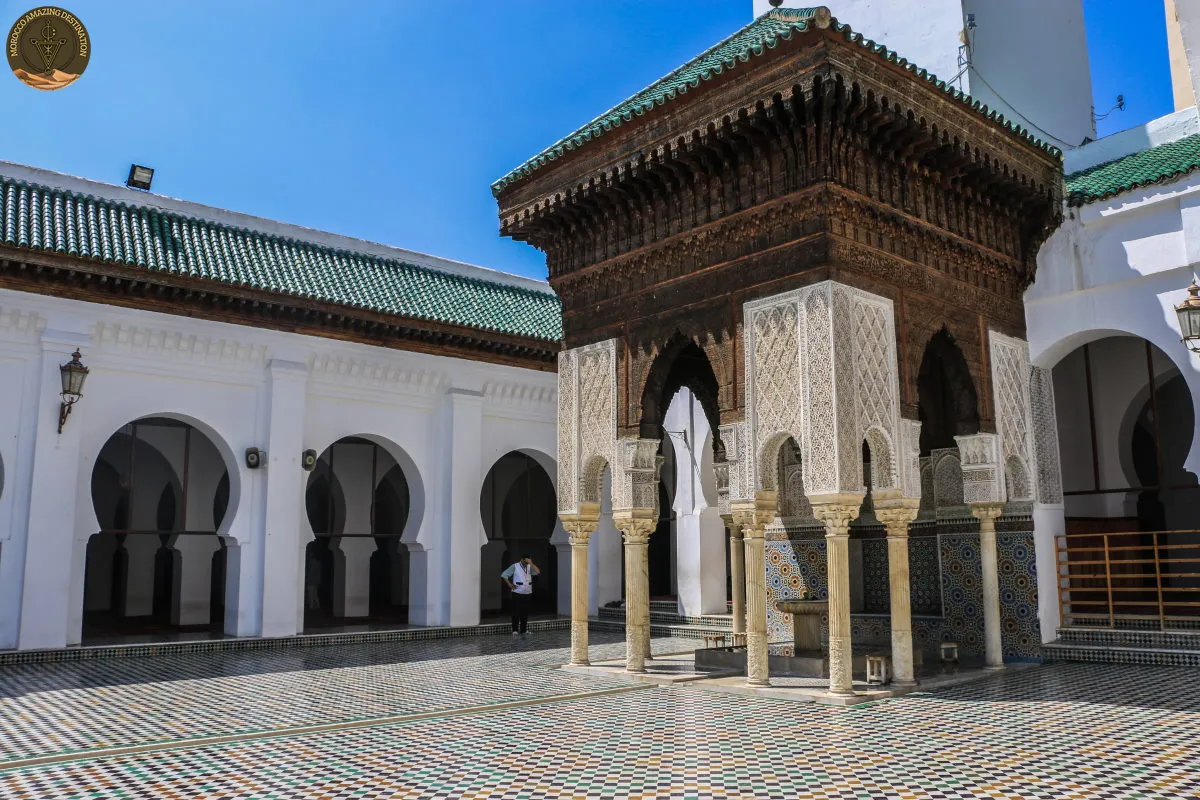
A few steps down Talaa Kebira, a bronze door opens onto one of the calmest rooms in Fes. The medersa bou inania fez pairs a marble courtyard with an active mosque. A short stop shows craft and daily worship in one place. Give it 30 to 45 minutes and the medina starts to make more sense. Its green-tiled minaret is visible long before you reach the door.
In this guide, we will break down what to see inside, how to visit with respect, and how to pair it with a medina walk. Short answer: arrive outside prayer times, stay in the courtyard galleries, and keep voices low.
Why Bou Inania Stands Apart in Fes
Most colleges in Fes taught students and did little else. Bou Inania was founded in the Marinid era under Sultan Abu Inan as both a college and a congregational mosque. Its own minbar serves the Friday sermon. That dual role sits at the center of the bou inania madrasa history.
In practice the setup means two things. The courtyard galleries welcome visitors through most of the day, while the prayer hall stays reserved for worship. On Fridays the tour circuit closes for the midday prayer, so plan around it. Pay a small entry fee at the door.
Set aside a moment at the entrance to study the carved wood over the door. It sets the tone for everything inside, where carved script meets cut tile.
Readers comparing colleges can browse our madrasas across Morocco roundup for the wider set. This guide stays on one building and how to visit it well.
Inside the Marble Courtyard
Push through the bronze doors and the lane noise drops away. A compact marble court opens up, with a central basin fountain at its middle and carved galleries on all four sides. Stay at courtyard level first, then take one stair run for the classic view from above.
Details to look for:
- Onyx columns: pale stone pillars frame the court and catch the morning light through the arcade.
- Cedar screens: dark carved wood filters daylight over the upper gallery and cools the air.
- Zellij bands: green and white tilework runs along the lower walls in crisp geometric stars.
- Stucco and script: carved plaster and calligraphy crown the arches and beams overhead.
- Bronze doors: the heavy entrance leaves reward a close look on your way out.
The small rooms beyond the upper gallery were student cells and stay closed to visitors. That keeps the visit simple: court, gallery, stairs, done. Photos from the upper gallery show the full symmetry of the court, so take your time there.
Minaret, Green Tiles and the Street Outside
Step back into the lane and look up. The tiled minaret rises over the rooftops and works as a landmark when the lanes start to feel alike. Its green tiles mark the spot from several streets away, which helps when you walk without a map. If you lose your bearings later, ask any shopkeeper to point you back toward the green tiles.
Directly across the lane stands the wooden facade of Dar al-Magana, the old hydraulic clock. Its beams have been silent for generations, yet the frontage shows how this street once organized daily time around prayer and study.
Give the outside two minutes. Frame the doorway, the minaret, and the clock facade in one sequence of photos. Then head back downhill toward the spice lanes. The lane stays narrow, so step aside for porters and residents as you take photos.
A Working Mosque, Visiting With Respect
Bou Inania still calls people to prayer, and that shapes every visit. Non-Muslim guests are welcome in the courtyard, while the prayer hall remains a place of worship first. This welcome is rare among Moroccan mosques, so it deserves care.
How to visit well:
- Timing: come outside the five daily prayers and skip Friday midday, when the doors close to guests.
- Dress: cover shoulders and knees, and women may add a headscarf for extra comfort.
- Voices and phones: speak softly and silence your phone before stepping through the door.
- Photos: photograph the courtyard craft and arches, never worshippers or prayer.
If a doorway to the prayer hall stands open, a quiet peer-in from the threshold is enough. Your guide will tell you when to step back. Plan your stop around that rhythm.
Pair It With a Bab Bou Jeloud Walk
The madrasa sits a short downhill walk inside Bab Bou Jeloud, which makes it a natural first stop. Start at the blue gate, follow Talaa Kebira as it slopes down, and let the minaret pull you forward through the stalls.
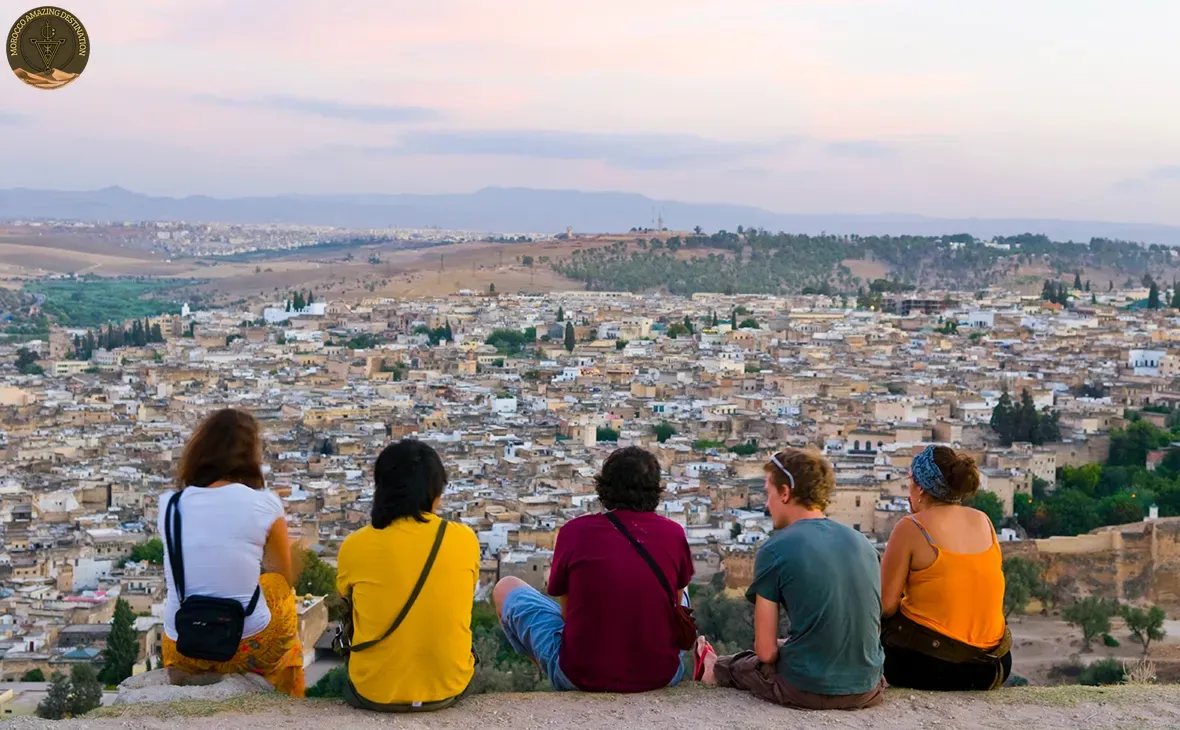
A simple route:
- Bab Bou Jeloud: pass under the blue-tiled gate and into the lanes of the old city.
- Talaa Kebira: browse the food and craft stalls on the slope toward the madrasa door.
- Attarine and spice lanes: continue downhill after your visit for color and scent among small workshops.
- Qarawiyyin glimpses: catch courtyard views from nearby lanes, doorways, and rooftop terraces.
This loop covers the best of the fes el bali monuments without rushing. Our Fes el Bali city guide stretches it into a full-day route. These fes medina visit tips hold across the whole walk: go in the morning, keep a small fee ready, and walk with a local guide. Wear shoes with grip, since the slope turns slick after rain.
Most visitors pair the madrasa with a guided medina day, since prayer closures and lane routes run smoother with a local. Our 7-Day Morocco Tour from Fes starts in the city and continues to the Sahara, Meknes and Chefchaouen. The 8-Day Imperial Cities Tour from Casablanca folds Fes into a wider circuit. Private drivers wait outside the walls while your guide leads on foot.
We can customize a tour to match your needs - design your perfect itinerary
If you found this helpful, add us as your preferred source on Google.
Frequently Asked Questions
Can non-Muslim visitors enter Medersa Bou Inania in Fez?
Yes. The marble courtyard and its galleries are open to non-Muslim visitors for a small entry fee. The prayer hall stays reserved for worship, especially at prayer times, and the tour circuit closes on Friday midday.
How long does a visit to Bou Inania take?
Plan 30 to 45 minutes. That covers the courtyard craft, the upper gallery view, and a pause outside for the minaret and the clock facade across the lane.
What is the wooden facade across the lane from Bou Inania?
It is the frontage of Dar al-Magana, the old hydraulic clock of Fes. Its wooden beams once marked the hours for the city, and it has been silent for generations.
When should I avoid visiting Bou Inania?
Avoid the five daily prayer times and Friday midday, when worship takes priority. Mornings outside prayer hours are calmest, with soft light in the courtyard.
Ready for an Adventure?
Have questions? Feel free to contact us using the form below. We're here to help!