
· Travel · 5 min read
Medersa Ben Youssef Marrakech: Calm Courtyard Visit Guide
Medersa Ben Youssef Marrakech guide: courtyard, history and craft in a calm one-hour visit. Plan your medina day.
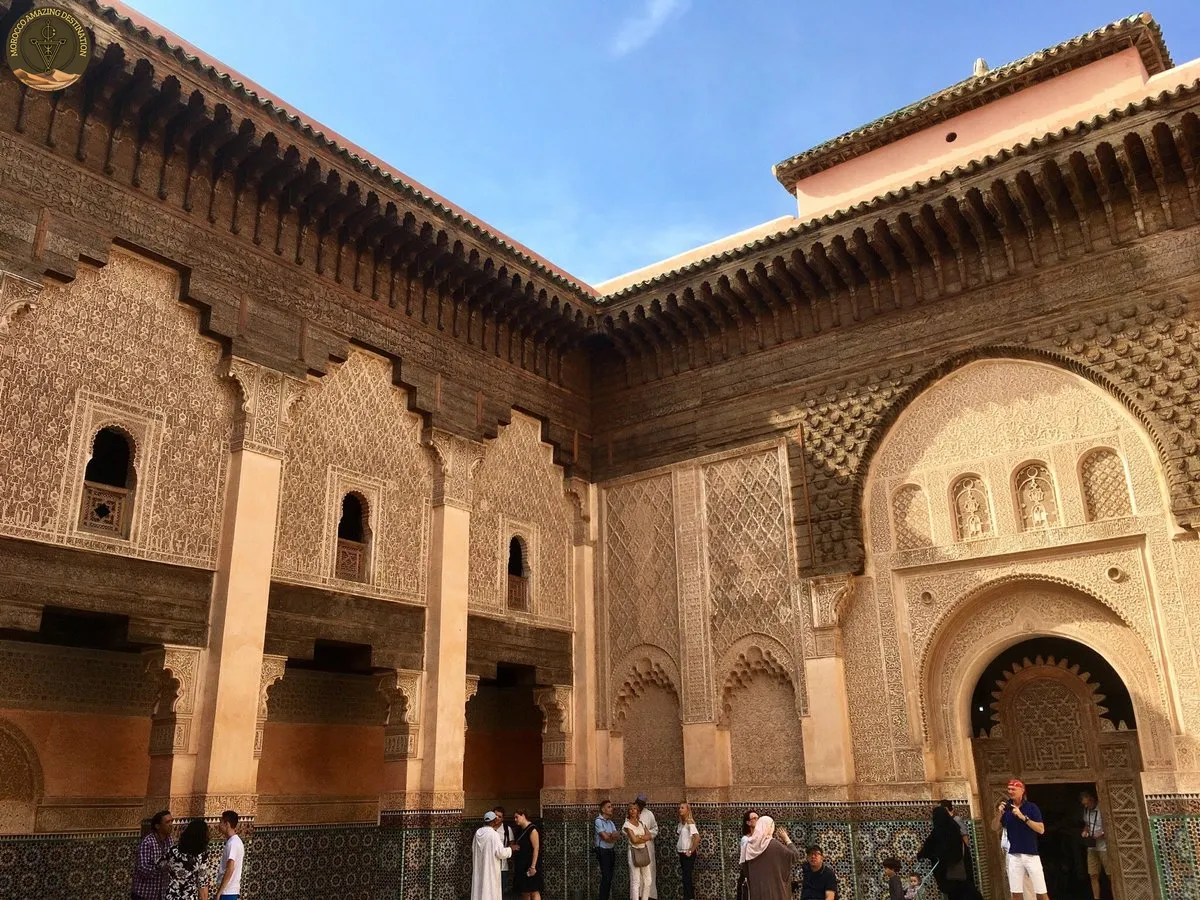
Push open a plain wooden door off a busy lane in the northern medina and the noise drops away. That is the first surprise of the medersa ben youssef marrakech, a former Quranic college that hides one of the city’s grandest courtyards behind blank walls. Marble, tilework and carved cedar open up around a still pool, and most visitors stop talking without being asked.
In this guide, we break down the courtyard reveal, the short Saadian history, the craft details, and how you can visit them in one calm loop. A medersa ben youssef visit takes about an hour, suits an early start, and pairs well with the souks and the Almoravid Koubba nearby.
Entering the Ben Youssef Courtyard in Marrakech
The street outside gives nothing away. The walls stay high and plain, and the wooden door looks like the entrance to any large medina house. You step through, cross a short passage, and the ben youssef madrasa courtyard opens in front of you all at once.
The court is close to square, with a long shallow pool running down the middle. Marble columns ring the space, and two floors of galleries look down on the water. Light moves across the facades as the morning goes on, so the same corner can look different twice in one visit.
Details to catch on your first walk around:
- Still pool: the shallow basin mirrors the arches and doubles the court in photos.
- Gallery arches: the lower arcade frames the upper floor and sets the rhythm of the space.
- Marble columns: pale stone pillars carry the galleries with slim proportions.
Take one slow lap before you study anything closely. The scale lands first, and the decoration makes more sense once you have felt the whole room.
Saadian Marrakech: A Short History of the College
The ben youssef madrasa history starts with a small annex attached to the mosque quarter. The building you walk through today comes mainly from the Saadian rebuilding ordered by Sultan Abdallah al-Ghalib. He raised it in an Andalusian style and made it a full residential college. For a long stretch it stood among the largest schools in North Africa.
Students lived here for years and studied the Quran alongside law, grammar and the sciences. Lessons happened aloud in the galleries, which explains why the court feels built for voices. The plain cells upstairs and the decorated court below show the two sides of that life: simple lodging, shared splendour.
The school later closed and the building reopened as a monument, restored for visitors to walk through freely. If this college leaves you curious, our guide to the historic madrasas of Morocco sets Ben Youssef beside four sister schools in Fes, Meknes and Sale.
Craft Details in Zellij, Stucco and Cedar
Look at the walls from bottom to top and the builders show their method. Five-colour zellij covers the lower band, carved stucco fills the middle, and carved cedar lines the eaves and doors. Marble frames the pool and the columns, while calligraphy bands run across the facades with verses and blessings.
What to look at closely:
- Zellij dado: small glazed tiles in five colours form stars and bands at eye level.
- Carved stucco: plaster above the tiles carries floral and script patterns cut by hand.
- Cedar wood: dark carved lintels and doors keep a faint scent of cedar in warm air.
- Marble and script: pale stone edges the pool, and the entrance inscription wishes high hopes on all who enter.
Every surface was cut, carved or laid by hand, which is why the court rewards slow looking. Stand in one gallery corner and read a single wall from bottom to top.
Student Cells and the Prayer Hall Upstairs
Climb the narrow stairs and the mood changes. The student cells are small and plain, with bare walls and simple window openings onto the court or the inner passages. More than a hundred of these rooms once housed several hundred students, two or three to a room in busy years.
The prayer hall sits apart from the lodging floors with a calmer, more formal air. Its mihrab marks the direction of prayer, and the dome above keeps voices low on its own. Step inside quietly, skip photos if worshippers are present, and let the room set the pace.
Students slept simply and studied richly, and walking both floors in sequence makes that daily rhythm easy to picture.
Planning a Calm Medina Loop With the Souks
A medersa ben youssef visit fits neatly into a northern medina morning of about an hour. Arrive early, while the lanes are still waking and the court holds few visitors. Tickets are sold at the door, dress covers shoulders and knees, and low voices suit a place built for study.
A simple walking loop:
- Almoravid Koubba: a small domed pavilion a short walk away, older than the college itself.
- Museum quarter: lanes toward the Dar El Bacha area hold museums and calm courtyards for tea.
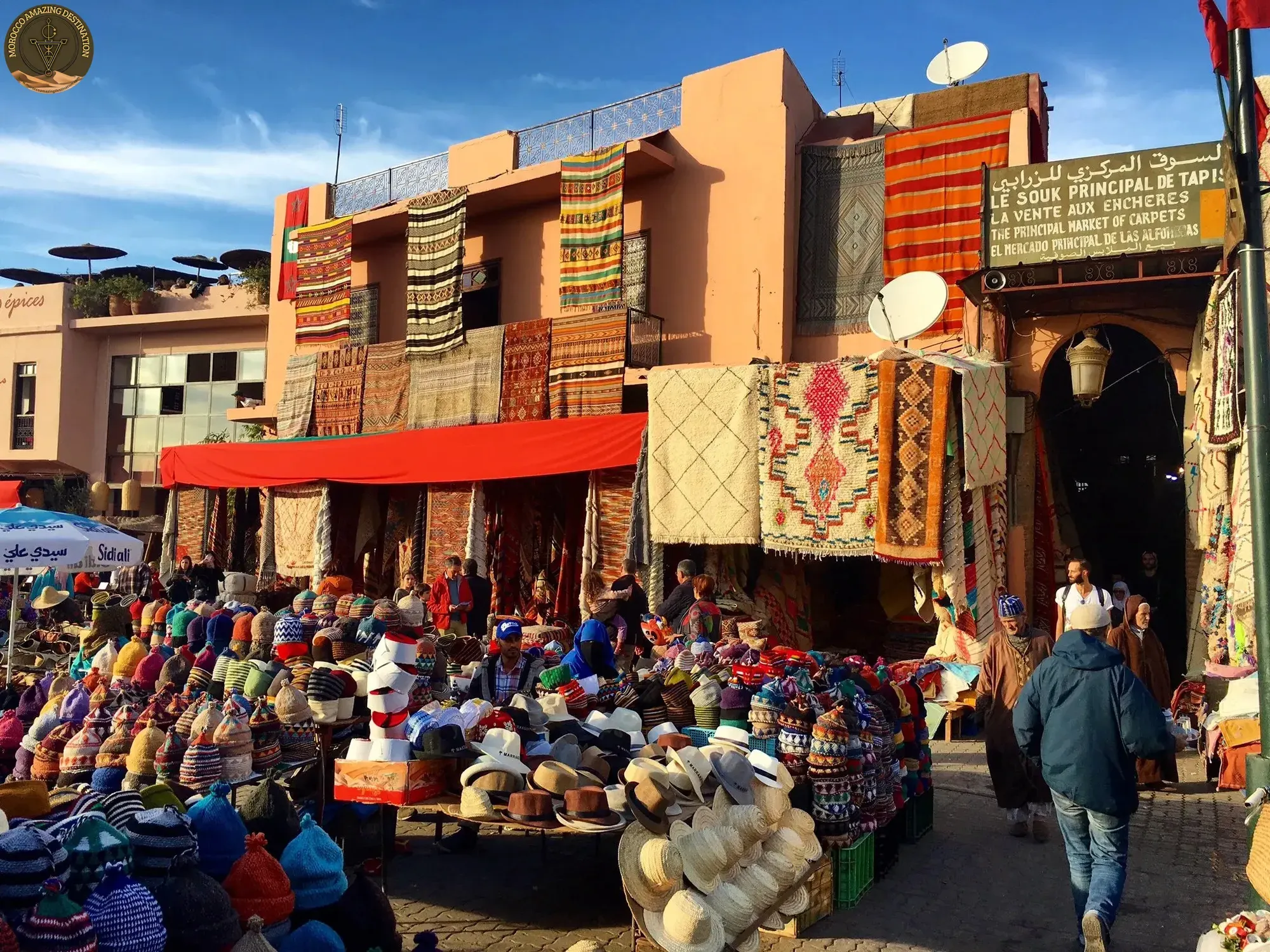
- Souk edges: finish through the northern souk lanes, where craft stalls ease you back into the noise.
A local guide helps here, since the lanes twist and the craft details repay explanation. For wider context, the souks of Marrakech deserve their own unhurried walk after the quiet of the college.
Done slowly, the medersa gives you the real Morocco in miniature: faith, study, craft and daily life inside one set of walls. It pairs well with a private medina day, where a driver and local guide carry the planning and you keep the slow pace. Travellers who want this stop inside a longer route often pick the 8-Day Imperial Cities Tour from Casablanca or the Morocco 7-Day Imperial Cities and Desert Tour, both of which spend full time in the Marrakech medina with a local guide.
We can customize a tour to match your needs - design your perfect itinerary
If you found this helpful, add us as your preferred source on Google.
Frequently Asked Questions
What is the Medersa Ben Youssef in Marrakech?
It is a former Quranic boarding college in the northern medina, now a ticketed monument. Behind a plain doorway it hides a large marble courtyard with a shallow pool, galleries, carved stucco and cedar, and more than a hundred tiny student cells.
How long does a Medersa Ben Youssef visit take?
Allow about an hour. That covers one slow lap of the courtyard, a close look at the tilework and woodwork, the upstairs cells and the prayer hall, without rushing.
When is the best time to visit the Ben Youssef Madrasa?
Early morning, soon after opening. The court is quietest then, the light suits photos, and you can continue into the souks before the midday crowds.
What can you combine with the medersa in one walk?
The Almoravid Koubba, the museum quarter around the Dar El Bacha area, and the northern souk lanes all sit close by. Together they make an easy half-day loop on foot with a local guide.
Ready for an Adventure?
Have questions? Feel free to contact us using the form below. We're here to help!