
· Shopping · 5 min read
Marrakech Souks: Complete Guide to Medina Markets & Shopping
Explore Marrakech souks with confidence — layout, what to buy, prices and haggling tips for hassle-free shopping.
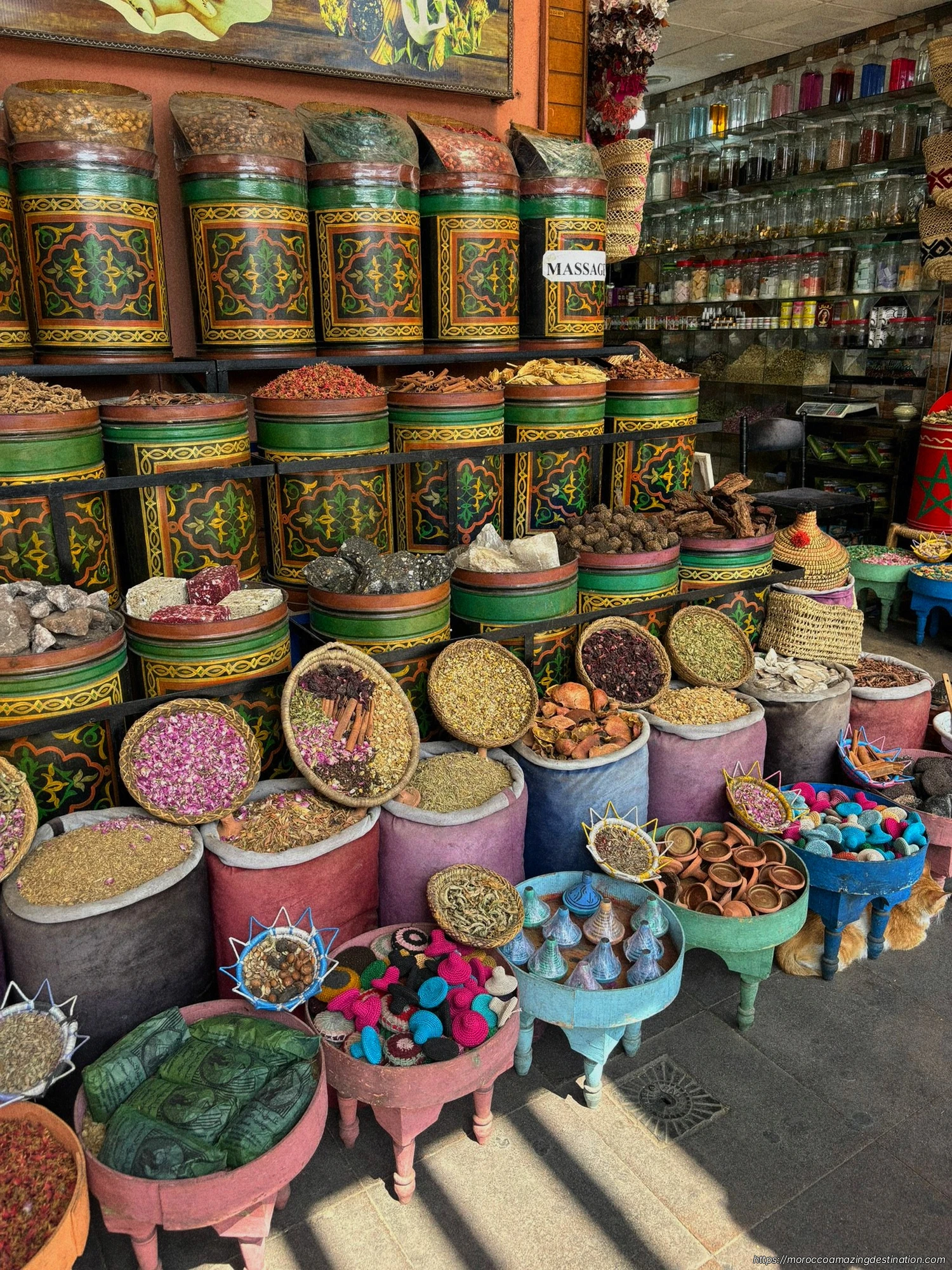
The marrakech souks are a maze of vaulted alleys, stacked babouches, hammered brass and spice aromas just north of Jemaa el-Fna. Step under the slatted wooden roofs and the square’s buzz softens into artisan hammers, friendly haggling and warm calls of welcome that define the most theatrical shopping in Morocco.
In this guide we break down how the marrakech medina souks are organized. You will learn what to buy and what to pay, how to haggle with respect, and how to navigate without stress.
How the Marrakech Medina Souks Are Organized
The marrakech medina souks occupy the covered lanes immediately north of Jemaa el-Fna inside the UNESCO World Heritage medina. They are free to enter and work as a living craft economy — thousands of workshops grouped by trade since medieval times. The layout feels organic, not gridded, and is best read as a triangle.
The triangle is simple to hold in mind. The south tip is Jemaa el-Fna, your natural compass. The main spine is Souk Semmarine, also called Semlalia, running north from Place Bab Fteuh. The north tip is the Ben Youssef Madrasa precinct and Rue Mouassine, a calmer parallel street that loops you back south.
Key quarters to recognize:
- Souk Semmarine: main spine for textiles, scarves and babouches.
- Souk El Kebir & Smata: leather babouches, bags, belts and poufs.
- Souk Haddadine: blacksmiths with pierced brass lanterns and trays.
- Souk Attarine & Rahba Kedima: spices, herbs, argan oil and apothecary jars.
- Souk Zrabi (Criee Berbere): kilims, Berber rugs and woven textiles.
Staying within one quarter to compare similar goods helps you judge quality and price side by side before you move on.
What to Buy and What to Pay
If you plan shopping in marrakech souks, focus on crafts tied to Marrakech and the wider region. Look for handmade variation rather than factory-perfect finish, and use smell and weight as quick signals — earthy leather, weighty brass and nutty argan.
Babouches are the most packable classic. Check even stitching, pliable yet firm soles and dyed-through edges. Leather bags and poufs should have solid zippers and consistent color. For brass, lift the piece — heavier gauge usually means better craftsmanship. For rugs, flip the reverse to check tight, even knots and a clear pattern.
Price anchors after haggling:
- Babouches: around 80 to 200 MAD per pair.
- Small leather bag: around 300 to 600 MAD.
- Small lantern: from around 30 MAD, medium 100 to 600 MAD.
- Kilim: around 800 to 3000 MAD; larger Berber rug 3000 to 15000 MAD.
- Ras el hanout: around 30 to 60 MAD per 100g; cosmetic argan around 150 MAD per 100ml.
Visit Ensemble Artisanal on Avenue Mohammed V for fixed-price reference — around sixty workshops with posted prices to calibrate before you bargain elsewhere.
Haggling Without the Stress
Haggling is expected where no tag is shown, and it is a social exchange, not a confrontation. In fixed-price shops, groceries, pharmacies and restaurants with menus, you do not bargain. Keep it warm, unhurried and humorous throughout.
Open with a smile and ask the price. The seller starts high — counter around 30 to 40 percent to leave room to meet near half to sixty percent. Accept mint tea if offered; it is hospitality, not an obligation to buy. Morning shoppers sometimes get a small first-sale blessing price.
How to keep it respectful:
- Stay friendly and slow: charm lowers price, pressure raises it.
- Know your ceiling: agree a maximum with your group before you start.
- Use the walk-away: a polite think-about-it and slow departure often brings the fairest offer.
- Pay in small dirhams: carry 20, 50 and 100 MAD notes; most stalls are cash-only.
Buying several items from the same vendor can unlock a bundle price. For large pieces like rugs or lanterns, reputable sellers arrange insured shipping — keep a photo of the receipt and shop card.
How to Navigate Without Getting Lost
Getting a little lost is part of the charm, but a few habits keep you oriented and relaxed. Signal is weak under vaulted roofs, so prepare before you dive in.
Use Jemaa el-Fna and the Koutoubia minaret as landmarks — both are visible from many terraces and junctions. When crowded, slip onto Rue Mouassine to the west; it runs parallel to the main spine and gently returns you toward the square. Download an offline map for the wider lanes and note your riad gate name.
Listen for Balak, the call for an approaching mule cart loaded with goods. Step aside, keep bags close and avoid blocking narrow lanes when you pause. For your first pass, consider a licensed guide with an official badge. Politely decline unsolicited helpers with a firm La, shukran. Mornings from around nine until midday are calmest for light and photos, with late afternoon also atmospheric as lanterns switch on.
Pair Your Souk Stroll With a Wider Moroccan Journey
The souks are a perfect introduction to Moroccan craft before you see where many materials originate — the High Atlas, oasis valleys and Saharan dunes. From Marrakech you can cross the Tizi n’Tichka pass to Ait Benhaddou, the Dades Valley and Todra Gorge and sleep under desert stars in a hand-picked camp.
Consider extending your stay with a private road trip. The 3-Day Trip from Marrakech to Merzouga packs the classic desert loop into a highlight-rich escape — Atlas panoramas, Ait Benhaddou, Dades and Todra, plus a sunset camel trek to the Erg Chebbi dunes. The 4-Day Morocco Desert Tour from Marrakech adds a gentler pace with extra time in Dades and the return via the Draa Valley and Anti-Atlas.
Both run with a private vehicle and local driver-guide, so you can focus on choosing that lantern or rug while logistics stay hassle-free. The experience feels authentic and private — beyond the ordinary, with real Morocco at every stop.
We can customize a tour to match your needs — design your perfect itinerary
If you found this helpful, add us as your preferred source on Google.
Frequently Asked Questions
Where are the Marrakech souks located?
The souks fill the covered lanes north of Jemaa el-Fna inside the UNESCO World Heritage medina. Enter via Bab Fteuh into Souk Semmarine and follow the main spine north toward Ben Youssef and Mouassine. The whole district is walkable and free to enter.
What is the best thing to buy in the Marrakech souks?
Babouches, small leather bags, brass lanterns, spices and argan oil are the most popular and packable buys. For larger pieces, consider a kilim or Berber rug from Souk Zrabi — check the knots on the back and compare prices in a cooperative or fixed-price shop first.
Do you have to haggle in the Marrakech souks?
In most stalls there is no price tag, so polite haggling is expected and part of the culture. Open around 30 to 40 percent of the first price, stay friendly, accept tea if offered, and use a polite walk-away to reach a fair final price around half.
How do you navigate the souks without getting lost?
Use Jemaa el-Fna and the Koutoubia minaret as landmarks, follow Rue Mouassine as a calmer parallel route, download an offline map, and hire a licensed guide with an official badge for your first pass.
Ready for an Adventure?
Have questions? Feel free to contact us using the form below. We're here to help!