
· Travel · 6 min read
Marrakech Like a Local: A Resident's Day in the Red City
What locals love about Marrakech: the 7am medina, the neighbourhood oven, Gueliz errands and Friday couscous - the city's real rhythm.
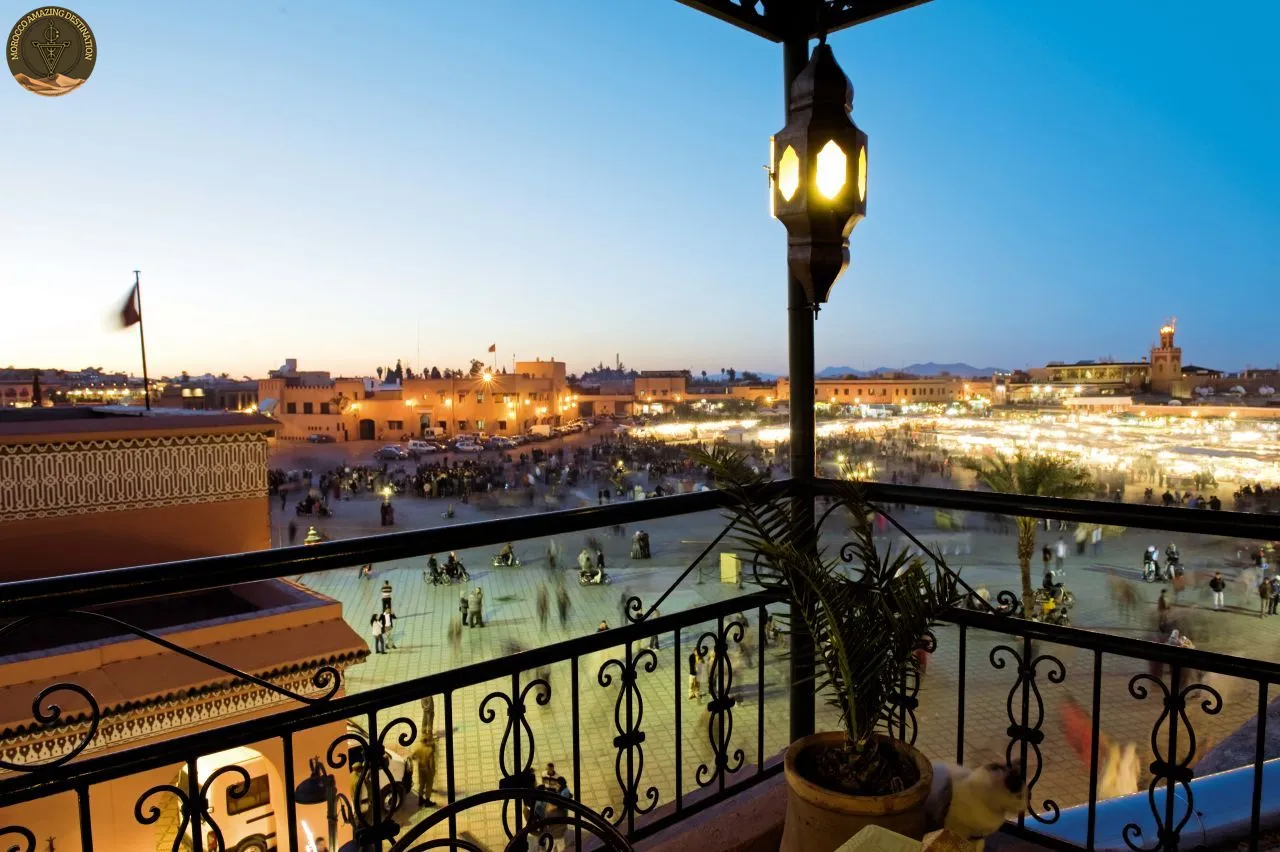
Marrakech like a local is mostly a question of timing: the medina at seven, bread from the neighbourhood oven, errands in Gueliz, couscous on Friday, and a stony desert about 45 minutes out of town. Most visitors meet the city between ten and six, when the square is loudest and the lanes are fullest. Residents meet it earlier, when the same lanes are quiet enough to hear a broom on stone.
In this guide we will break down the hours that shape a resident’s day, the food that runs through the week, the neighbourhoods where people spend their own money, and the short drives out of town. Everything sits within a morning’s walk or an hour’s drive, which is how the routine survives ordinary days.
The 7am Medina: Derbs, Deliveries and Empty Squares
Residents who are asked what locals love about Marrakech tend to describe hours before places. Seven in the morning, for example, when the lanes off Bab Doukkala carry hand carts, gas bottles and trays of dough, and the shutters stay down for another hour. Deliveries come through the gates before the shops do, and by eight most of the carts have gone.
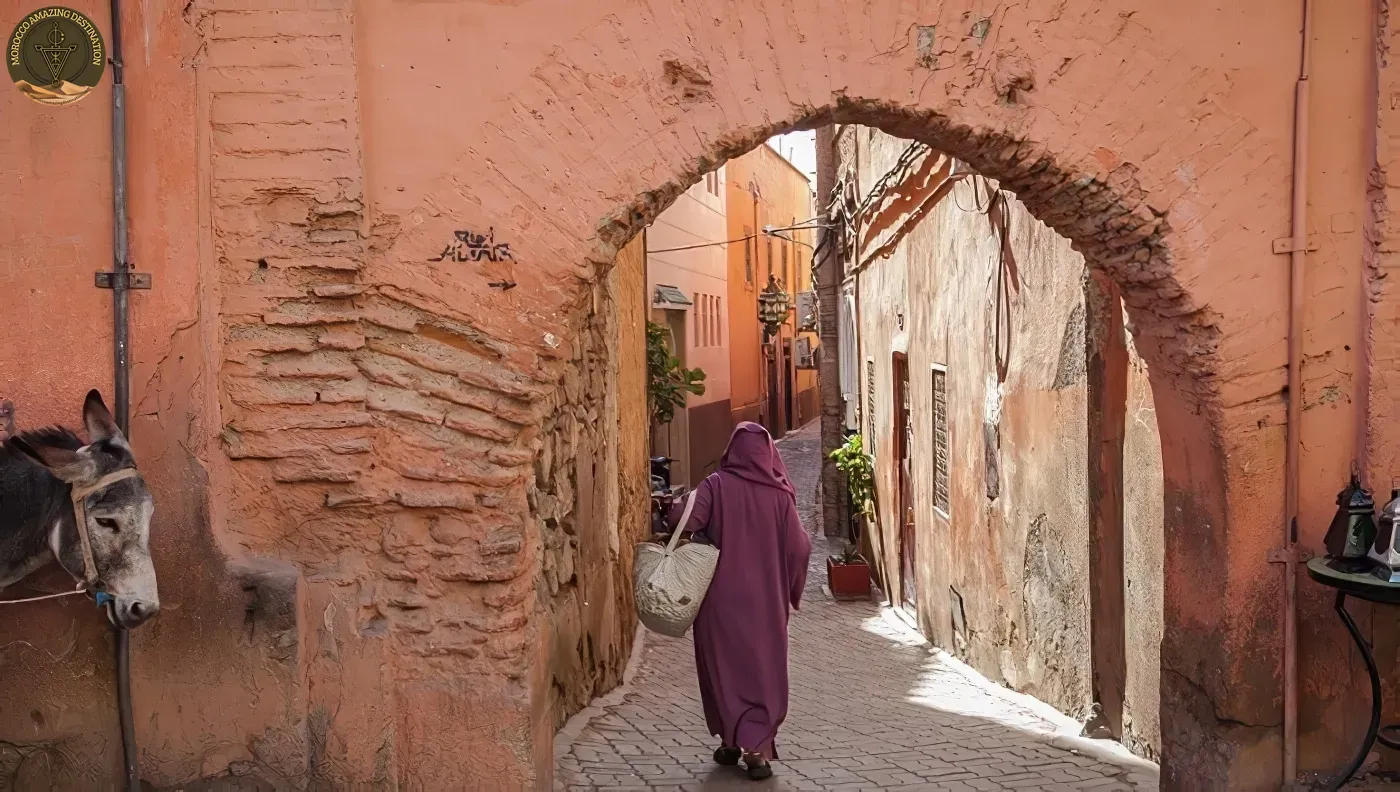
A derb is a dead-end lane, often no wider than two people walking side by side. In that first hour it belongs to residents: a woman sweeping a doorstep, a scooter under a sheet, a cat asleep on the top step.
Nothing is for sale yet. Go out without a plan, keep the camera down, and you get the version of the medina most visitors only see from a rooftop. The rhythm comes back later: in summer the streets empty after lunch and refill around five, when errands restart and the fryers go back on.
Local Food in Marrakech Begins at the Neighbourhood Oven
Much of the Local food in Marrakech is cooked outside the kitchen. Many families make dough at home in the morning and send it to the ferran, the communal oven at the end of the street, where it bakes beside the neighbours’ trays. Everything comes back marked, so each household collects its own loaf.
What the oven handles in a normal week:
- Bread and msemen: the everyday loaf plus layered flatbread, eaten with honey or amlou.
- Tangia: Marrakech’s own dish, lamb with garlic, cumin, saffron and preserved lemon, sealed in an urn and left in embers.
- Couscous: once a week, after the midday prayer on Friday, when the streets empty for lunch.
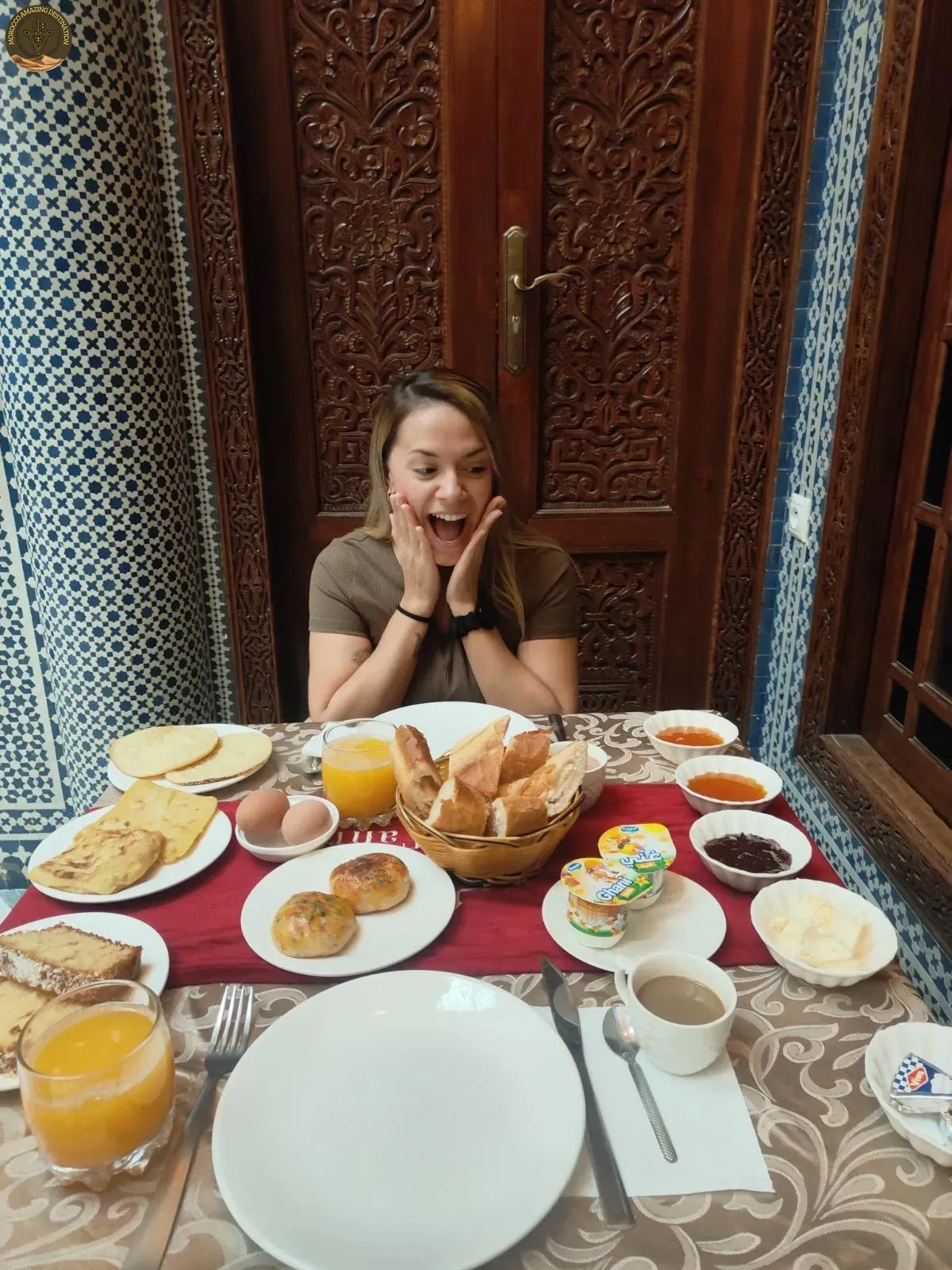
The pot is the point with tangia. Sealed and unstirred, it loses nothing to evaporation and the meat gives way by lunchtime. Sfenj comes later, fried again in the late afternoon and eaten standing up with mint tea. Breakfast is quick and bread-led, msemen with amlou or bissara on a cold morning, and our Marrakech breakfast guide covers the rest.
Gueliz, Sidi Ghanem and the Souks Residents Actually Use
Gueliz is where the city does its paperwork, drinks its coffee and goes to the gym. Built during the protectorate as the new town, it still runs on offices, banks and pavement cafés rather than riads. You will find residents here on a Tuesday morning, not on a tour.
Hivernage is the hotel end of that same new town. The Mellah keeps the spice and gold trade of the old Jewish quarter, and Sidi Ghanem is workshops, furniture makers and design showrooms rather than a sight to tick off. Tenants there change often, so go for the workshops and not for a fixed list. Agdal and Amerchich are where a good part of the city simply sleeps.
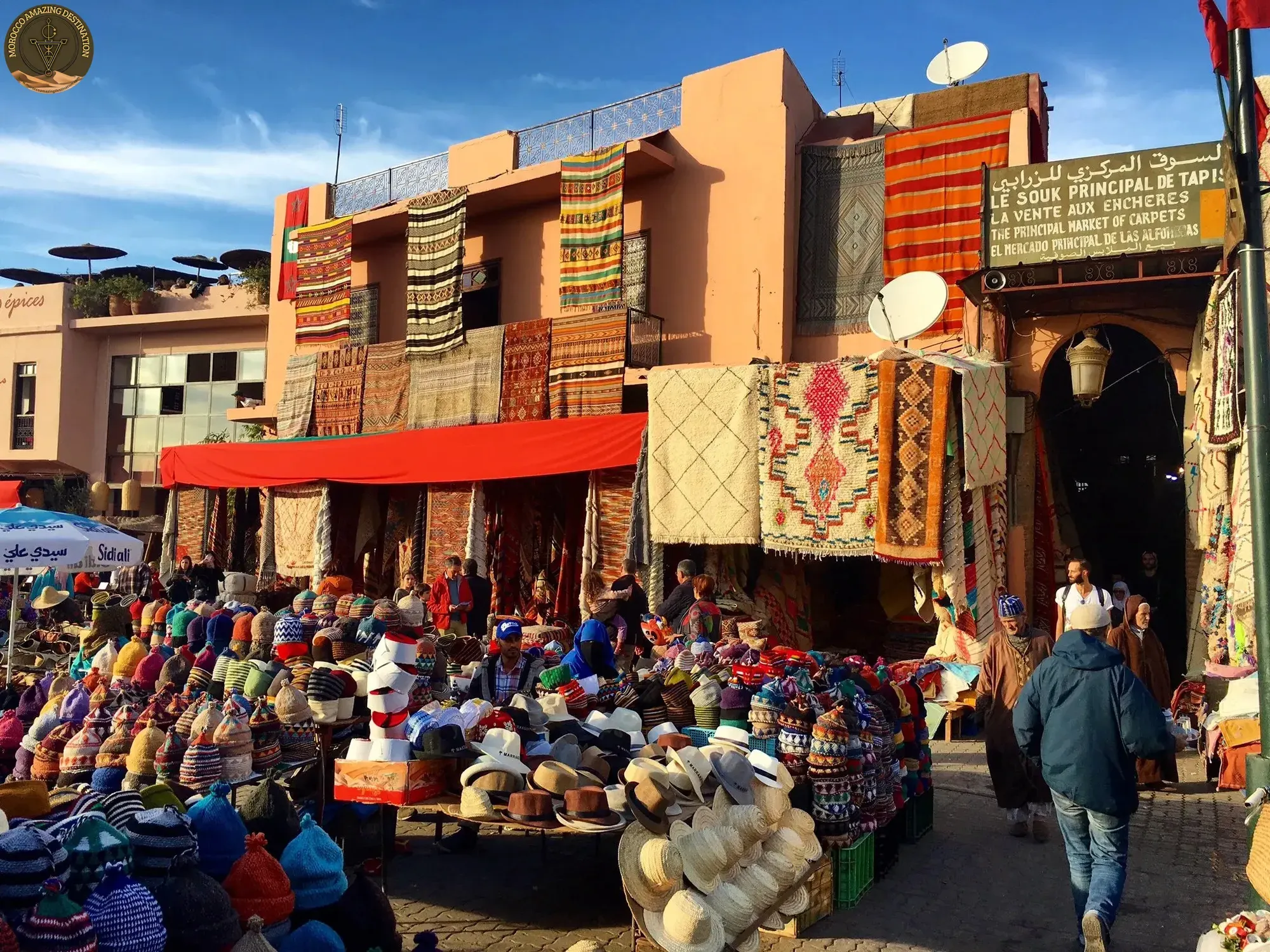
Nobody local ranks the souks. They use the market street nearest the house, and the errand is practical: a printer, a phone repair, a bank queue, then coffee.
Friday Couscous, Agafay and the Weekend Escape
Friday lunch runs long, so the weekend starts late and points out of town. The mountains sit closer than most visitors expect, and a resident’s Saturday rarely involves a plane.
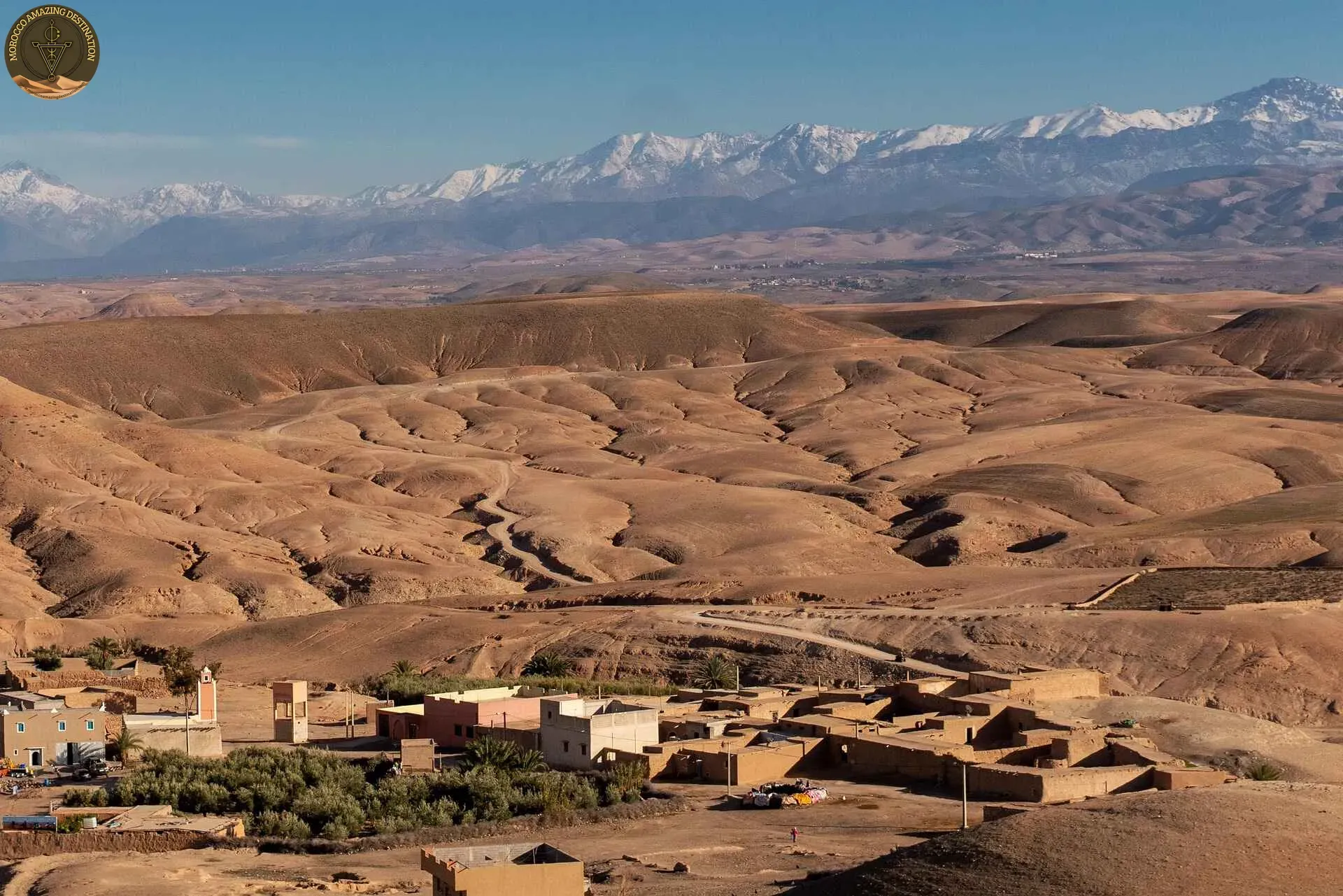
How far the usual escapes are:
- Agafay: about 30 km out, roughly 45 minutes, stone and dust rather than dunes, best in the last hour of light.
- Lalla Takerkoust: the reservoir at the edge of Agafay, where families picnic by the water.
- Ourika Valley: about 30 km and an hour up the valley road, the river-lunch run in summer.
- Imlil: about 90 minutes, the village under Toubkal where the hiking starts.
Most of these are half-day drives, out in the morning and home for dinner, and nothing on the list needs booking weeks ahead. Inside the city, the Menara gardens do the same job. They are 12th-century Almohad, public, and part of the same UNESCO World Heritage listing as the medina, and residents walk them early, before the heat.
Our 3-day trip from Marrakech to Merzouga takes that instinct further, crossing the High Atlas to Aït Benhaddou and the dunes.
A Marrakech Local Guide’s Advice for Visitors
A Marrakech local guide will tell you that timing does most of the work. The same street at eight in the morning and at two in the afternoon are different places, and one of them is worth setting an alarm for.
Habits worth copying:
- Start early: before nine the medina is quiet and the light is better.
- Match the pace: nobody hurries in a derb, and nobody expects you to.
- Ask before photographing: people at work are not part of the scenery.
- Choose a hammam day: many households keep a fixed weekly day, so ask what suits the neighbourhood you are staying in.
Late afternoon is the second good window, when the heat drops and the fryers open again. Seeing Marrakech like a local takes an earlier alarm and patience with a slower pace. Our 8-Day Morocco Tour: Marrakech, Sahara Desert & Essaouira, designed by our own local team, builds a week around the city and then adds the desert and the coast.
We can customize a tour to match your needs - design your perfect itinerary
If you found this helpful, add us as your preferred source on Google.
Frequently Asked Questions
What do locals love most about Marrakech?
Quiet hours and ordinary routines. Residents tend to name the medina at seven in the morning, bread from the neighbourhood oven, errands in Gueliz and Friday couscous before they name any monument, square or restaurant.
What local food should I try in Marrakech?
Start with tangia, since the dish belongs to this city: lamb with garlic, cumin, saffron and preserved lemon, sealed in a clay urn and cooked in embers. Then msemen with amlou in the morning, and couscous if you are in town on a Friday.
What time of day is the medina quietest?
Shortly after seven in the morning. Shutters are still down, the lanes carry deliveries rather than shoppers, and almost nothing is for sale. Early afternoon in summer also empties the streets, though that is heat rather than calm.
How far is the Agafay desert from Marrakech?
About 30 km south-west of the city, roughly 45 minutes by road. It is a stony reg rather than a sand desert, and residents usually drive out for the last hour of light, sometimes stopping at Lalla Takerkoust on the way back.
Ready for an Adventure?
Have questions? Feel free to contact us using the form below. We're here to help!