· Travel · 5 min read
Marrakech for Film Fans: A One-Day Cinema Itinerary
Marrakech for film fans: festival squares, working cinemas, Hitchcock's hotel, and the honest truth about an Ouarzazate day trip.
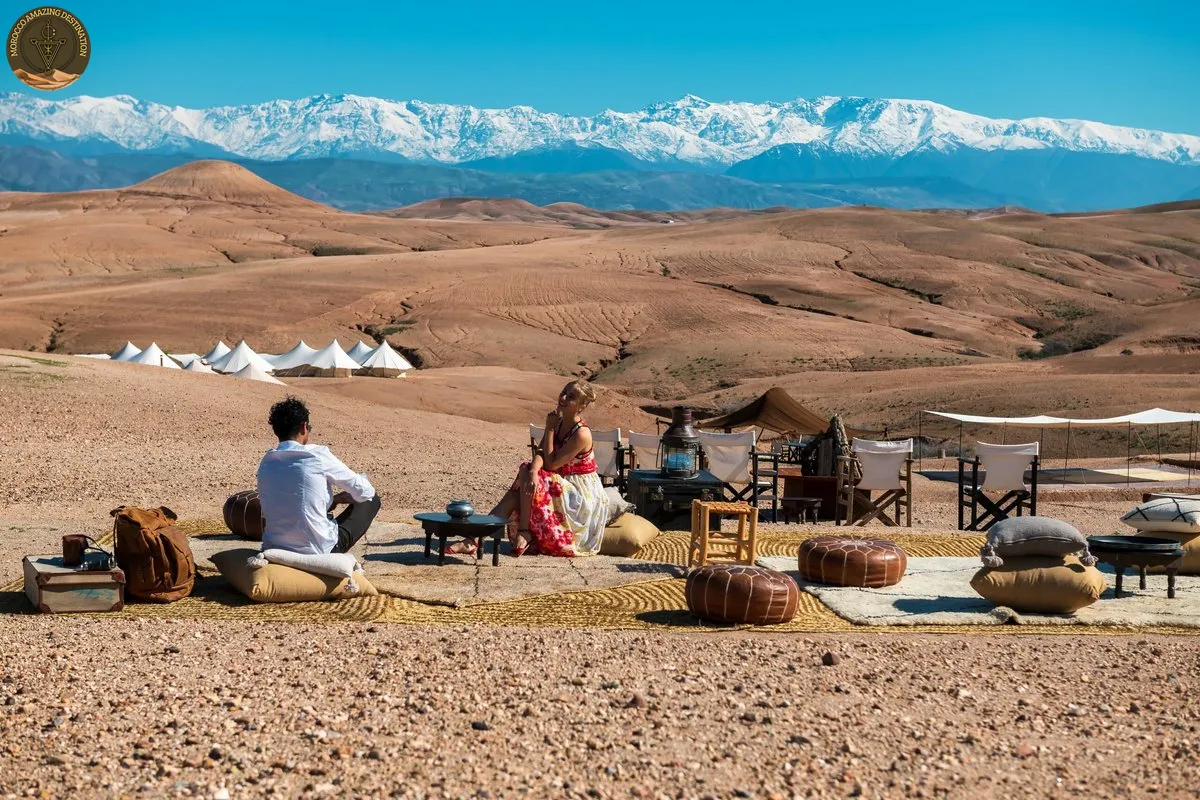
Alfred Hitchcock shot The Man Who Knew Too Much on Jemaa el-Fnaa in 1955. He used the square as he found it: food smoke, drummers, a crowd that never noticed the camera. It still works as a set, and the city around it has kept a film culture running all year. Marrakech for film fans rewards a little planning, because the good material sits inside one walkable day.
You can build a film day here entirely on foot, with Jemaa el-Fnaa in the morning, a working screen after dark, and Ouarzazate saved for an overnight. In this guide, we will break down how to spend one cinema-minded day in the Red City. We will cover which addresses you can actually enter, and why the studio trip south deserves a hard look at the clock.
A Film Fan’s Morning in the Marrakech Medina
Start near Bab Doukkala or Bab Laksour around eight, before the shops open and the lanes belong to delivery carts. The medina holds most of the films shot in Marrakech worth walking to. Clock order beats working through a list of things to do in Marrakech for film fans, and none of it needs a ticket.
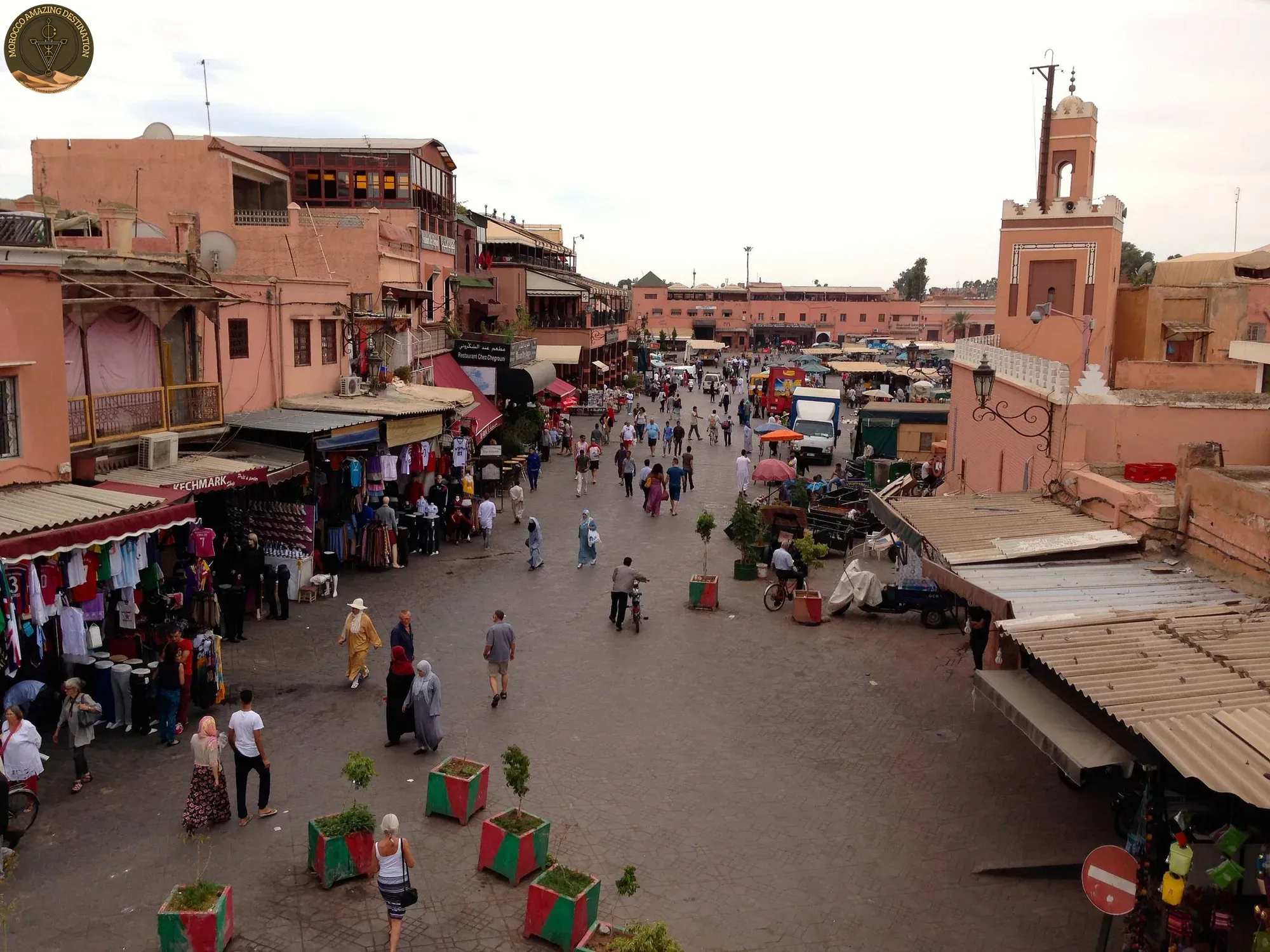
The square has screen history you can stand in. Hitchcock worked the stalls and the rooflines above them. The Old Guard filmed in the medina and on Jemaa el-Fnaa much later, to the same effect. Our piece on The Old Guard filming locations walks that shoot street by street.
What to watch for on the walk:
- Cafe terraces above the square: the angle behind most photographs of Jemaa el-Fnaa.
- Spice and dye lanes: high-walled and narrow, lit from above by mid-morning.
- Bab Agnaou and the kasbah gate: heavier stone, better for a period frame than the main souks.
- Souk Semmarine at opening: shutters up, crowds down, easy to photograph.
Jemaa el-Fnaa by Night - Festival Week and the City’s Screens
The Marrakech International Film Festival was created in 2001 at the initiative of King Mohammed VI. Its foundation is presided over by Prince Moulay Rachid, it runs nine days in late November, and the top prize is the Golden Star.
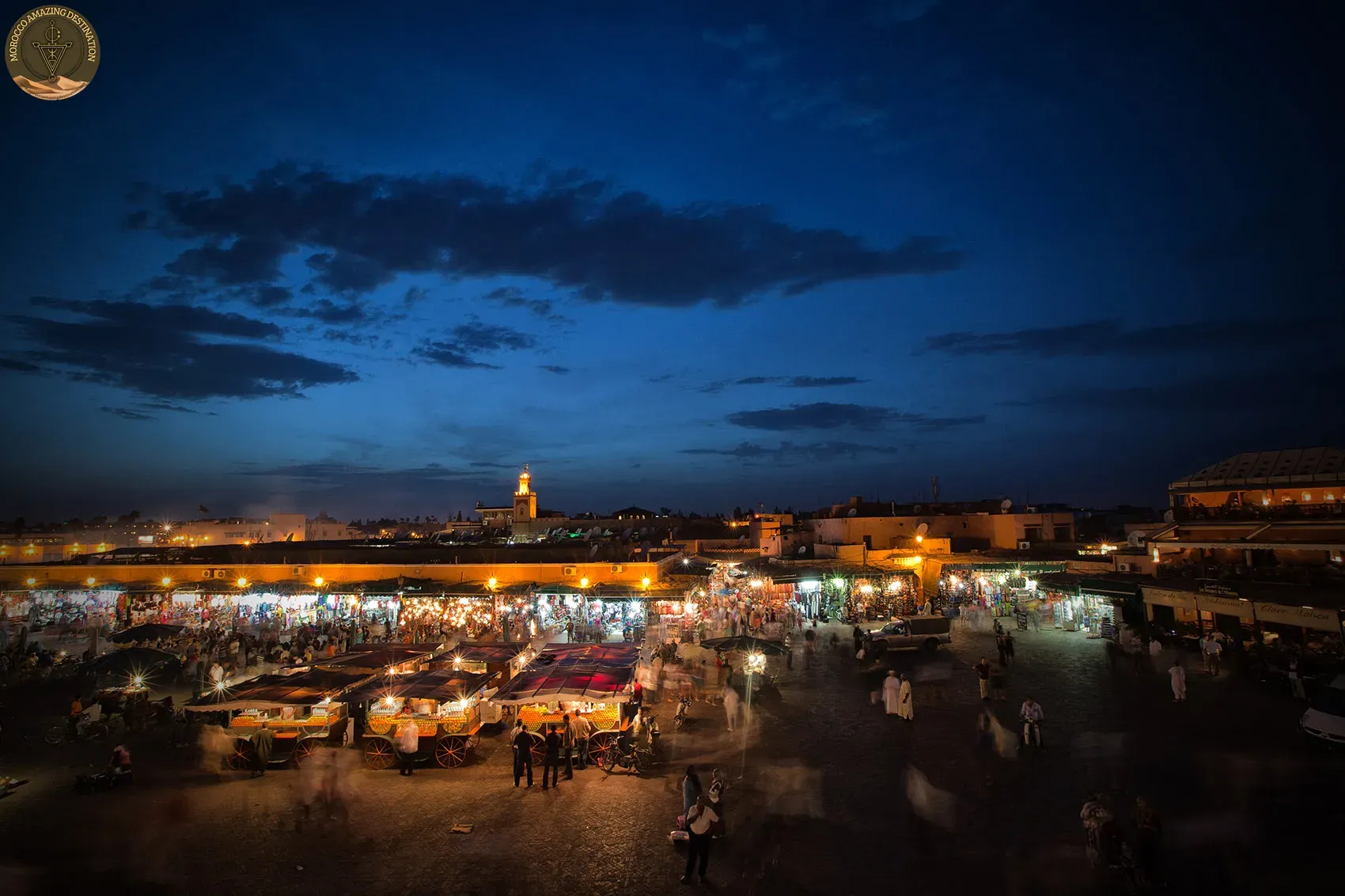
The part a visitor can join sits outside. Open-air screenings run on Jemaa el-Fnaa during the festival, free and open to all, per the festival’s public programme. Take a jacket; the square loses its heat fast once the sun drops.
For the other fifty-one weeks, cinema in Marrakech runs on three quite different screens:
- Megarama, Agdal: nine screens, mainstream releases, usually French or English with subtitles.
- Cinema Leila Alaoui, Institut Français: arthouse and Moroccan films, a seasonal programme, some screenings free.
- Cine-Theatre Palace: a 1926 Art Deco house, dark since 1984, revived by a volunteer preservation group for events and occasional screenings. Check locally; there is no daily schedule.
Film-History Addresses You Can Walk Into
La Mamounia opened in 1923 on Avenue Bab Jdid, and Hitchcock filmed scenes there for that same 1955 picture. Churchill wintered in the hotel and the bar carries his name. A small private cinema sits inside, though it is not a public venue.
Access is the practical question. Non-guests enter by booking a restaurant table, a bar seat or a spa treatment; the gardens are not open to a casual stroll. If you want the Hitchcock connection without the spend, the gates on Bab Jdid are visible from the street.
One correction worth carrying: the hotel scenes in Sex and the City 2 were shot at a Palmeraie resort, not here. The claim gets repeated online anyway. Gueliz holds the older cinema quarter, where the city’s picture houses clustered before the multiplex arrived; most of those facades now hold shops or offices. For how the country built the trade, read our guide to the Morocco film industry.
The Ouarzazate Question - Atlas Studios in One Day
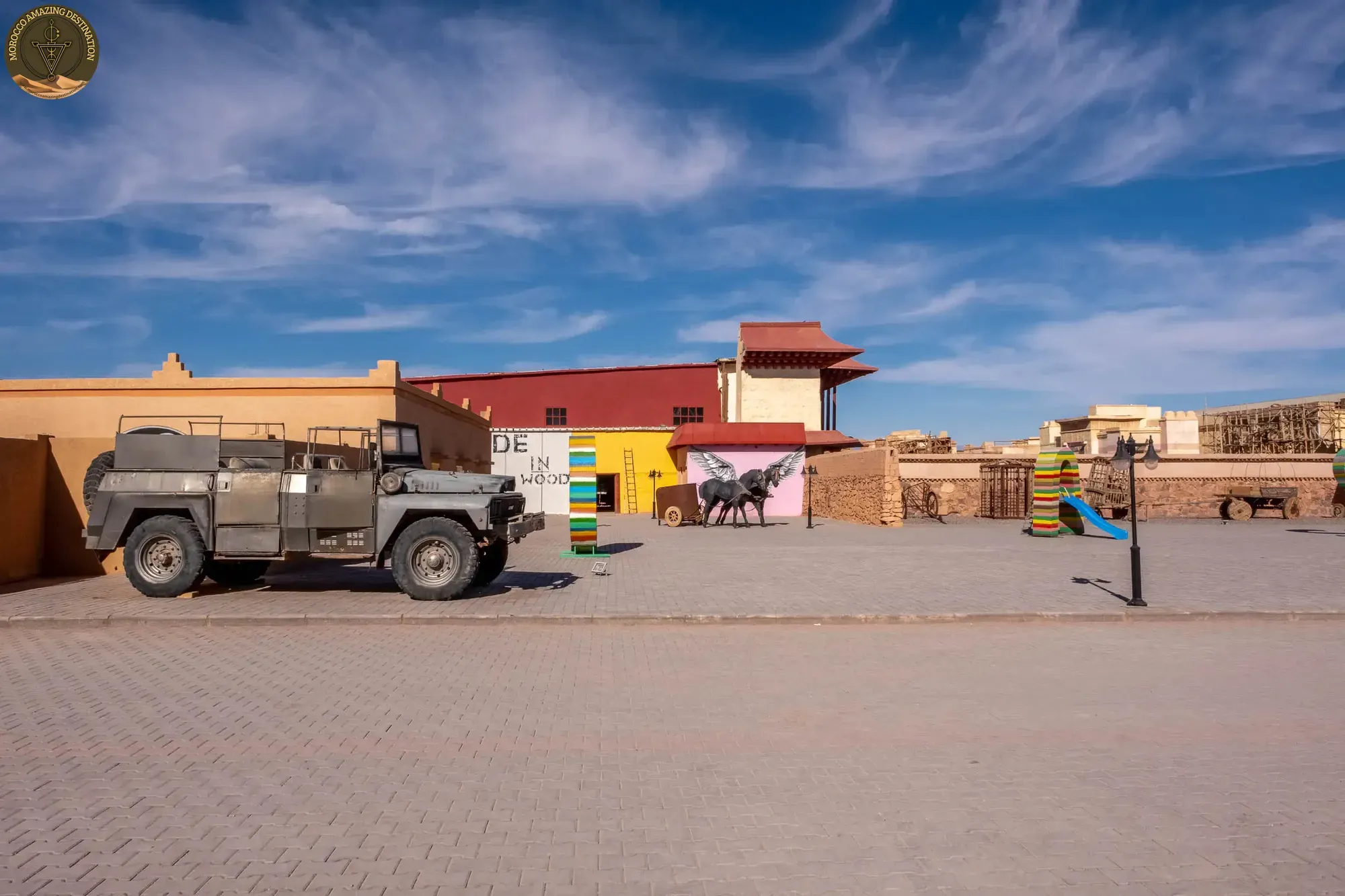
Film fans eventually ask about the studios south of the mountains, and the numbers decide that question more than the appeal does. Ouarzazate sits about 190 km from Marrakech, and the road crosses the Tizi n’Tichka at about 2,260 m.
What that means in practice:
- Distance: about 190 km each way.
- Drive: 3.5 to 4 hours per direction over the pass.
- Day: 11 to 12 hours door to door.
- On site: 1.5 to 2 hours at the ksar.
Ait Benhaddou has been a UNESCO World Heritage site since 1987, and Atlas Studios sits about 5 km from Ouarzazate with guided backlot tours. Both deserve a proper stop. Overnight in Ouarzazate, or route a desert trip through it, rather than squeezing the round trip into one day.
Timing Your Film Trip - Season, Heat and the Tichka Road
Marrakech summer highs reach 37-40C, which turns a midday medina walk into a chore and pushes good light to early morning and late afternoon. Winter days sit around 18-20C with genuinely cold nights.
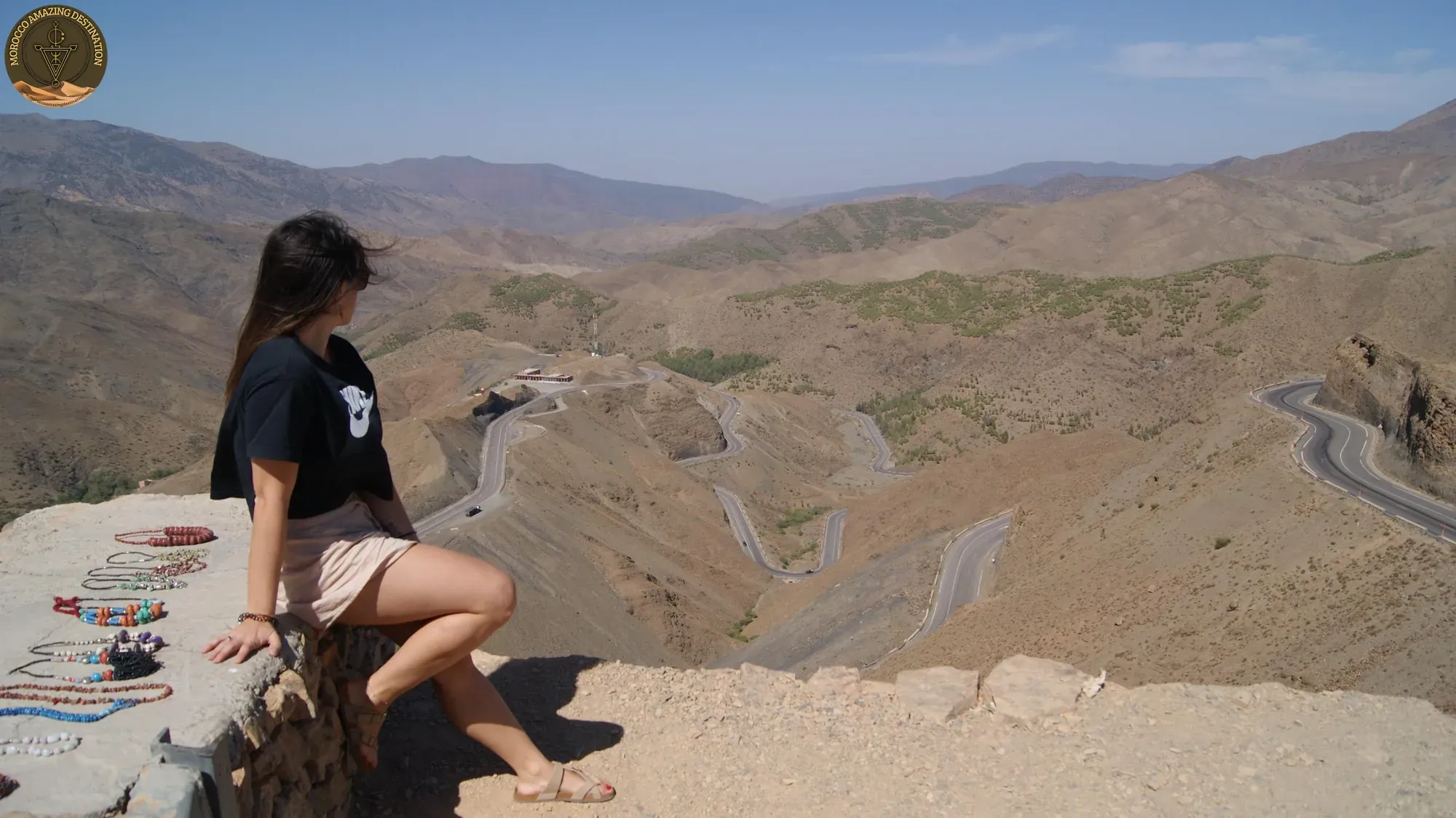
Most rain arrives between November and March. Snow or ice on the Tichka is possible in midwinter and can slow the drive south or close it for a morning. Festival evenings need a layer, and past the Tichka the desert night drops far harder.
Time the trip to your tolerance for heat. For the southern leg, our 4-Day Morocco Desert Tour from Marrakech crosses the Tichka on day one and stops at Ait Benhaddou. That is the sane way to reach the sets. Our 8-Day Morocco Tour: Marrakech, Sahara Desert & Essaouira adds Ouarzazate, the dunes and the coast without the same-day squeeze.
We can customize a tour to match your needs - design your perfect itinerary
If you found this helpful, add us as your preferred source on Google.
Frequently Asked Questions
Can you visit Atlas Studios and Ait Benhaddou as a day trip from Marrakech?
It is possible, but it makes for a punishing day. Ouarzazate is about 190 km from Marrakech and 3.5 to 4 hours each way over the Tizi n'Tichka, so expect 11 to 12 hours on the road for roughly 1.5 to 2 hours at Ait Benhaddou. Overnighting in Ouarzazate, or passing through on a desert route, leaves time for the guided backlot tour at Atlas Studios as well.
When is the Marrakech International Film Festival, and are the open-air screenings free?
The festival runs nine days in late November, with the Golden Star as its top prize and open-air screenings on Jemaa el-Fnaa. Those screenings are free and open to all, per the festival's public programme. Exact dates shift each year, so check the programme before you book flights.
Is there an English-language or arthouse cinema in Marrakech?
Yes. Cinema Leila Alaoui at the Institut Français shows arthouse and Moroccan films on a seasonal programme, and some of those screenings are free. Megarama in Agdal has nine screens showing mainstream releases, usually in French or English with subtitles.
Can non-guests visit La Mamounia?
You can go in by booking a restaurant table, a bar seat or a spa treatment. The hotel does not open its gardens to casual walk-ins. If you only want the Hitchcock connection, the exterior and the gates on Avenue Bab Jdid are visible from the street.
Ready for an Adventure?
Have questions? Feel free to contact us using the form below. We're here to help!