
· Travel · 5 min read
How to Haggle in Marrakech: Souk Bargaining Playbook
Learn how to haggle in Marrakech: the real opening offer, walk-away script, Darija lines and fair souk prices for a hassle-free medina.
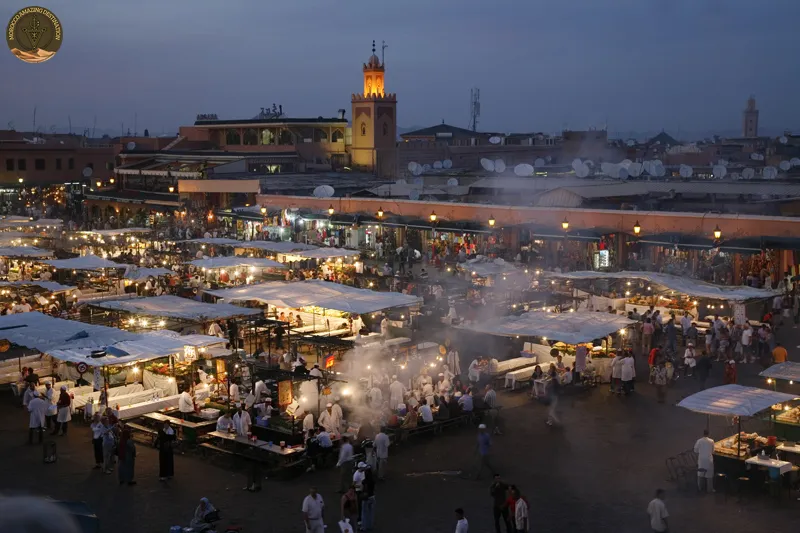
Marrakech rewards travellers who learn the rhythm before they step into the medina. If you want to know how to haggle in Marrakech, the honest answer is short: let the seller quote first, open at around 40%, and expect to settle between half and two-thirds of the first ask. The rest is choreography, warmth and patience.
In this guide, we will break down the Marrakech bargaining dance, the pressure tactics to sidestep around Jemaa el-Fna, and the price anchors that keep you fair and confident. It is a short playbook, not a country-wide catalogue, so you can use it the same afternoon you land.
How Haggling Works in the Marrakech Souk
Marrakech souk haggling follows a social script, not a price war. Greet the seller with Salam alaykum, handle the item you genuinely like, and compare two or three similar stalls before you commit. Let the seller name the first number, and never answer “how much will you pay?” with a figure. Tourist-facing prices start high, so treat that opening number as an invitation to talk.
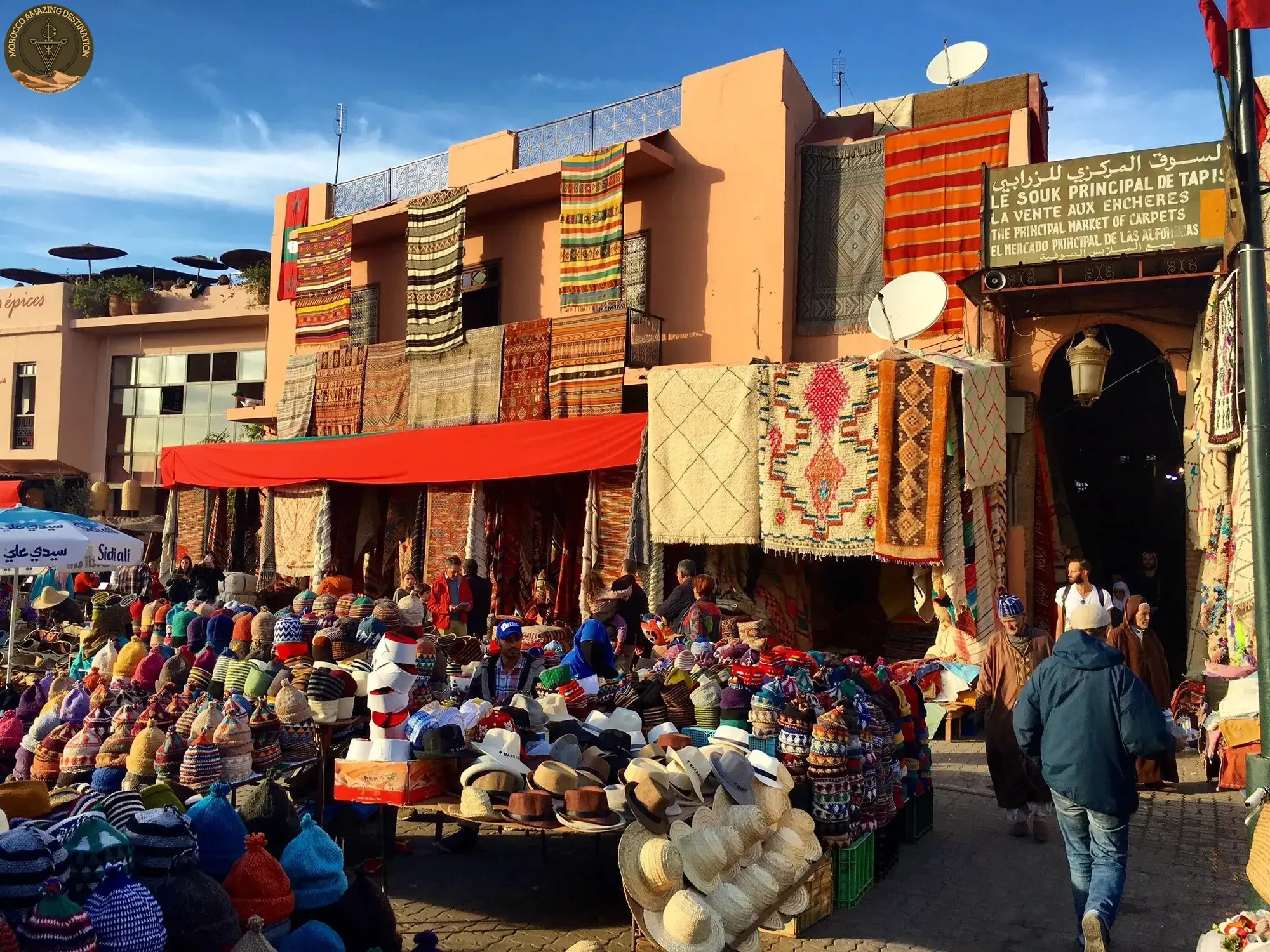
Then open around 40% of that first ask, using a 30–50% range as your guide. Climb in small steps rather than leaps, and stay relaxed so your attachment does not raise the price. In Marrakech, sellers often drop hard once to test you with a laugh, then narrow the gap.
Key moves in the Marrakech dance:
- Let them quote first: naming a number yourself anchors you high.
- Open around 40%: the customary range runs from 30–50%.
- Climb in small steps: big jumps signal that you will pay more.
- Shop the morning: 09:00–12:00 is calmest, and the first sale of the day carries baraka.
- Bundle your buys: two or three items from one stall earn a better price.
Mint Tea, Darija and the Walk-Away Script in Marrakech
A shared glass of mint tea is hospitality, not an obligation. Accept it only if you are genuinely interested, and remember that “special price for you, my friend” is a ceiling rather than a real number. Bargaining in Marrakech goes best with a few Darija lines, French or English, and a warm smile.
Six phrases carry most negotiations in the medina, and they show respect while softening the opening number.
- Bshhal hada? — How much is this?
- Ghali bzzaf — Too expensive.
- Nqess shwiya — A little lower, please.
- Akher taman? — What is your last price?
- Wakha — Agreed.
- Bslama — Goodbye.
When a price stalls, use the walk-away. Smile, say La, shukran, add Nfakkar (I will think) or Rah nraje3 (I will come back), then step away slowly. Sellers often call you back. Once you shake hands the deal is binding, so pay and do not reopen the price. Bring small dirham notes, because most stalls are cash-only. For the country-wide method, read our Morocco haggling tips guide.
Scams and Henna Pressure to Sidestep in Marrakech
Most hassle in Marrakech is unsolicited and clusters around Jemaa el-Fna and the medina gates. The patterns repeat, so you can spot them early. Keep your hands in your pockets near the square, and agree a price before any service starts.
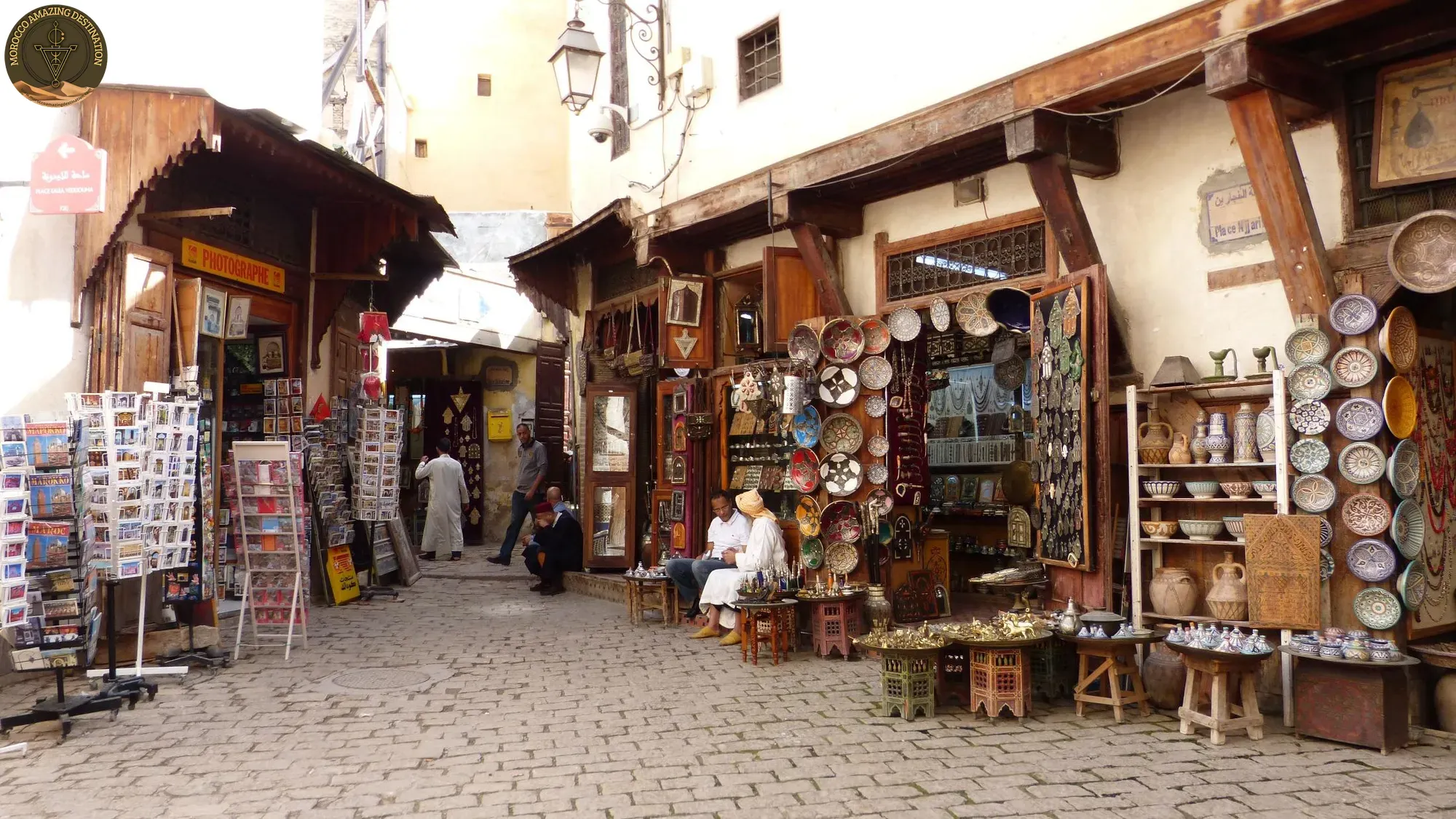
- “Free” henna: a design is applied, then 200–500 MAD is demanded. Some black henna burns the skin.
- Snake and monkey photos: expect 100–300 MAD per person; a photo you actually want is nearer 10–30 MAD.
- Unofficial guides: someone walks you to a friend’s shop and asks 200–500 MAD. Licensed guides wear an official badge and are booked in advance.
- “That souk is closed”: a redirect towards a commission shop. Real closures show barricades, police and signage.
The defence is a smiling “La, shukran” and your offline map. Never let an animal or a henna cone touch you before a price is agreed. Before any of this, calibrate your sense of value at Ensemble Artisanal on Avenue Mohammed V, the government-run complex where around 60 workshops display fixed posted prices.
Marrakech Price Anchors: What Things Cost
Marrakech souk prices are customary rather than fixed, and the city runs a little pricier than Fes or smaller towns. Treat every figure below as a post-negotiation range that shifts with quality, location and season.
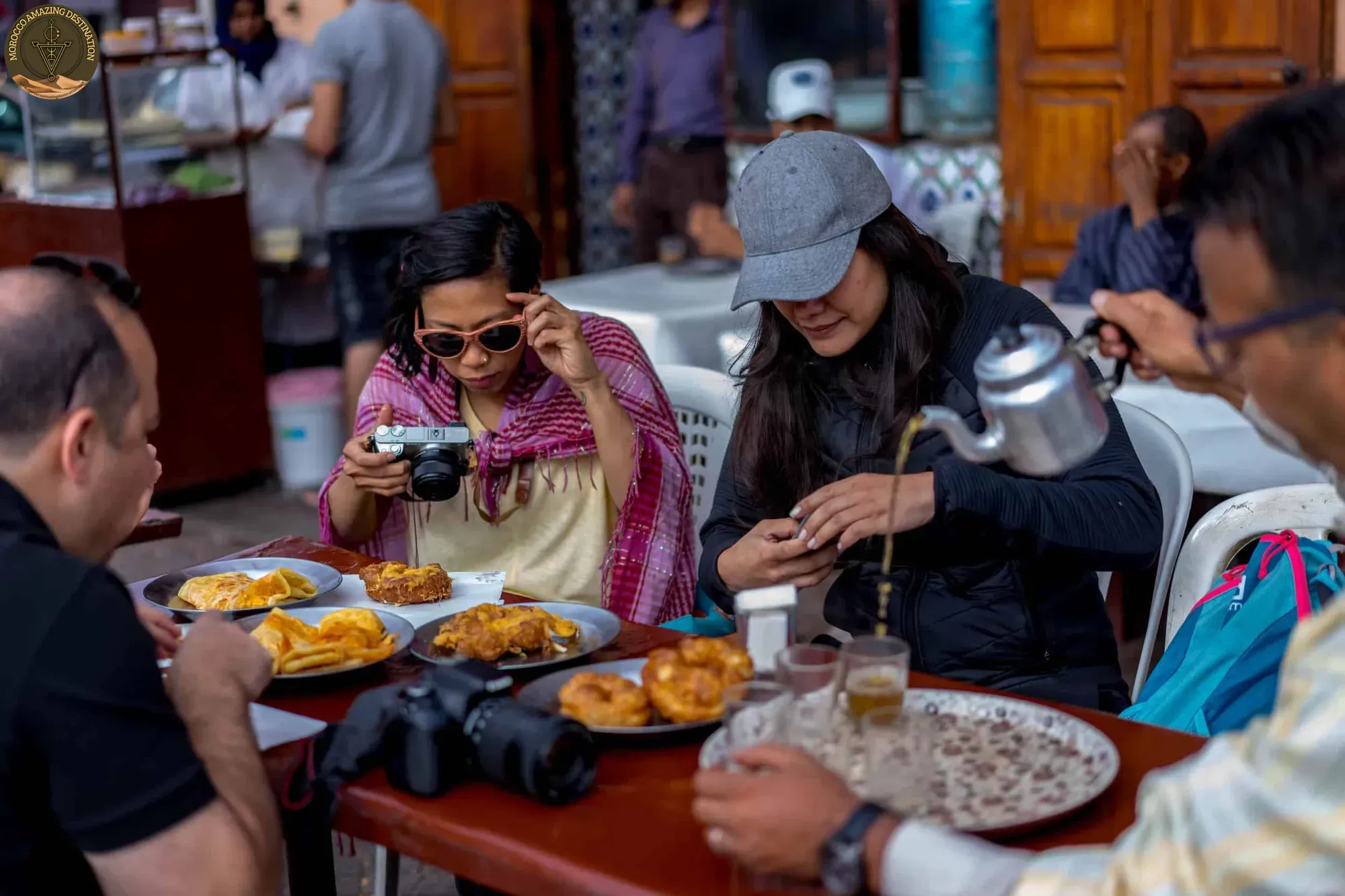
- Babouches: around 80–150 MAD; better hand-stitched pairs 150–300.
- Leather bags and poufs: small bags 200–500 MAD; unstuffed poufs 250–500.
- Lanterns: small pierced ones 30–100 MAD; medium 150–600.
- Spices and argan: ras el hanout 30–60 MAD per 100 g; real saffron 30–50 per gram; 100 ml cosmetic argan oil 80–150.
- Kilims and rugs: small kilims 300–800 MAD; medium Berber rugs 1,500–5,000; a large rug can take 30–60 minutes to settle.
Ceramic tagines run 80–250 MAD for display pieces and 40–80 for cooking ones, while a set of six tea glasses lands around 50–120. Spices are lighter on the wallet at the spice square than on the main tourist lanes.
Turn Souk Savvy into a Private Marrakech Journey
Confident bargaining is one part of a hassle-free Marrakech trip. A private guide walks you through the medina, handles the language, and takes you to workshops that treat you like family. You keep the real Morocco and skip the pressure, and every stop can be shaped around what you want to buy and see.
Our 8-Day Morocco Tour: Marrakech, Sahara Desert & Essaouira pairs medina time with the dunes and the coast. If you are heading east, the 5-Day Marrakech to Fes Tour adds the Sahara and the imperial cities.
We can customize a tour to match your needs — design your perfect itinerary
If you found this helpful, add us as your preferred source on Google.
Frequently Asked Questions
How much should I offer first when haggling in the Marrakech souks?
Open at around 40% of the seller's first price, inside a 30–50% range. In Marrakech, most tourist-facing items settle between half and two-thirds of that first ask, while rugs and antiques go lower and take longer.
Where can I check fair prices before bargaining in Marrakech?
Ensemble Artisanal on Avenue Mohammed V is the calmest calibration point. The government-run complex has around 60 workshops with fixed posted prices, usually 10–40% above a hard-won souk price, so use it as an anchor rather than a place to haggle.
What should I do if a seller pressures me in the medina?
Stay polite and keep walking. A smiling "La, shukran" plus your offline map defuses most pressure around Jemaa el-Fna. Never let henna or an animal touch you before a price is agreed, and never follow a guide who approaches you in the street.
Is it better to haggle in the morning in Marrakech?
Yes, generally. Between 09:00 and 12:00 the souks are calmer, and the first sale of the day carries baraka, so sellers often open softer. Fridays are quieter too, since some stalls close for prayer.
Ready for an Adventure?
Have questions? Feel free to contact us using the form below. We're here to help!