
· Travel · 4 min read
How Is Argan Oil Made? Morocco's Liquid Gold, Step by Step
Discover how is argan oil made in Morocco: hand-cracked kernels, roasted vs cold-pressed oil, and women's cooperatives. Plan your visit.
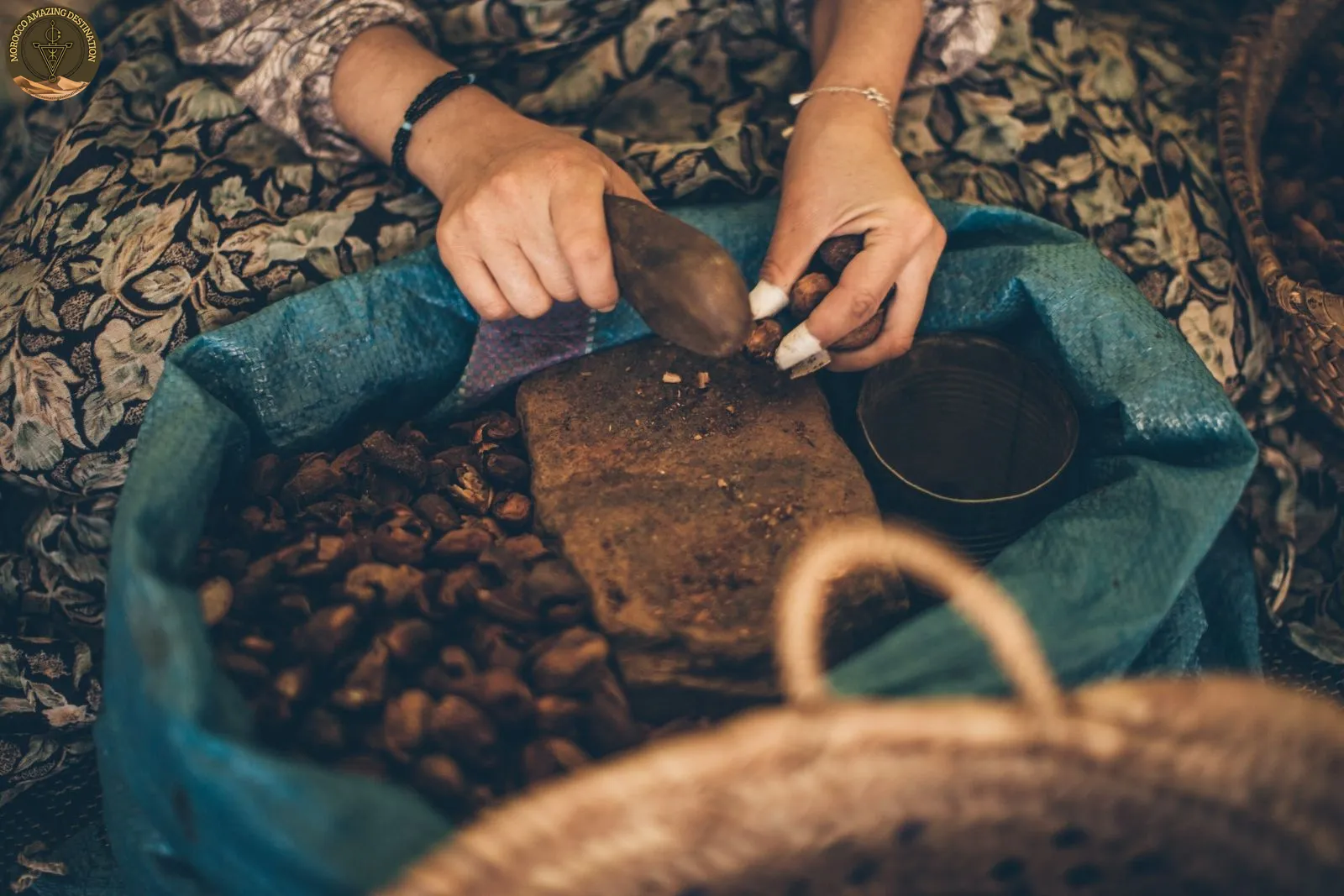
Argan oil starts with a small fruit that falls to the ground in southwestern Morocco — and ends as one of the world’s most prized oils. So how is argan oil made? In short, women’s cooperatives gather fallen fruit, dry and crack it by hand, then grind and press the kernels into oil. Almost every step still depends on human hands.
In this guide, we break down how argan oil is made step by step, explain the difference between the culinary and cosmetic oils, and show where you can watch the process in Morocco.
What Argan Oil Is Made From (and Where It Grows)
Argan oil comes from the fruit of the argan tree (Argania spinosa), which grows almost nowhere else on Earth. Its native range is southwestern Morocco, in the Souss-Massa region between Essaouira, Agadir and Taroudant. This whole zone forms the UNESCO Arganeraie Biosphere Reserve, and argan know-how is recognised as UNESCO-listed intangible heritage.
The fruit ripens and drops naturally in the dry season, roughly from June to August. Local families and cooperatives then hand-collect the fallen fruit from the ground.
- The pulp: A leathery layer around the nut, later removed and often fed to animals.
- The hard nut: A tough shell that protects the valuable kernels inside.
- The kernels: One to three oil-rich seeds — the only part that becomes argan oil.
Step-by-Step: How Argan Oil Is Made
Every litre of the argan oil production process follows the same rhythm of drying, cracking and pressing. Most of the work still happens by hand, which is why the method has barely changed for centuries.
- Collect: Fallen fruit is gathered by hand at harvest time.
- Dry: The fruit is sun-dried for days or weeks so the pulp loosens.
- Depulp and crack: Each hard nut is cracked, often between two stones, to free one to three kernels.
- Sort and roast (or not): Kernels are cleaned, then lightly roasted for culinary oil or left raw for cosmetic oil.
- Grind and press: Kernels are ground into a thick paste, then kneaded with warm water or pressed to release the oil.
- Filter and bottle: The oil is decanted, filtered and poured into dark glass bottles.
The leftover press cake is not wasted — it goes to livestock feed or fertiliser.
Roasted vs Cold-Pressed: Two Oils from One Kernel
The biggest fork in the process is whether the kernels are roasted. That single choice decides whether the final product is cold-pressed argan oil for your skin or a nutty oil for your kitchen.
- Culinary oil: Made from roasted kernels, with a warm, hazelnut-like flavour used in Moroccan dishes and dressings.
- Cosmetic oil: Made from unroasted kernels, lighter in colour and scent, used on skin, hair and nails.
- Cold-pressed promise: In both cases the oil is extracted without added heat, which protects its natural compounds.
- Freshness: Real argan oil is unrefined, so it is sold in dark glass and keeps better away from light and heat.
Why Argan Oil Costs So Much — and the Women’s Cooperatives Behind It
Argan oil is often called “liquid gold,” and the price reflects real labour rather than marketing. Extraction is slow, yields are tiny and much of the work is still manual.
- Tiny yield: Roughly 30–40 kg of dried fruit and many hours of handwork go into a single litre.
- Hand-cracking: Freeing the kernels is the slowest step and is still mostly done by hand.
- Protected origin: The trees grow in one small region, so supply is naturally limited.
Argan oil cooperatives Morocco are central to this story. Around Agadir, Essaouira and Taroudant, women’s cooperatives manage much of the harvest, cracking and pressing — and share the income. They keep an Amazigh tradition alive while giving local women steady work.
To go deeper into the tree itself, see our guide to the Moroccan argan tree and its liquid gold.
See Argan Oil Made in Morocco (Essaouira & Agadir)
Reading about the process is one thing; watching a woman crack argan nuts by hand is another. Along Morocco’s argan coast, several cooperatives welcome visitors for a short tour and a tasting.
From Essaouira’s windy ramparts to Agadir’s souks, you can buy oil directly from the people who make it. Buying here supports the cooperatives and gives you a fresher, more authentic bottle.
A private tour makes it hassle-free. Our 3 Days Tour From Agadir To Tafraoute, Sidi Ifni And Tiznit travels through the argan heartland and its mountain villages. If you would rather combine the coast with the desert, our 8-Day Morocco Tour: Marrakech, Sahara Desert & Essaouira includes Essaouira and the argan region.
We can customize a tour to match your needs — design your perfect itinerary
If you found this helpful, add us as your preferred source on Google.
Frequently Asked Questions
How is argan oil made?
Argan oil is made by hand in southwestern Morocco. Women's cooperatives gather fallen fruit, dry and depulp it, crack each hard nut to free the kernels, then roast them for culinary oil or leave them raw for cosmetic oil before grinding, pressing and filtering.
How much argan fruit does it take to make one litre of oil?
Roughly 30–40 kg of dried fruit and many hours of handwork go into a single litre. Most of the fruit's weight is the hard shell and pulp, so the actual yield is tiny.
What is the difference between culinary and cosmetic argan oil?
Culinary argan oil comes from roasted kernels and has a warm, hazelnut-like flavour for food. Cosmetic argan oil is made from unroasted kernels and is used on skin and hair. Both are extracted without added heat.
What role do women's cooperatives play in argan oil production?
Women's cooperatives handle most of Morocco's argan oil production. They organise the harvest, do the hand-cracking and pressing, and share the income, keeping an Amazigh craft alive.
Ready for an Adventure?
Have questions? Feel free to contact us using the form below. We're here to help!