
· Travel · 4 min read
Atlas Mountains Wildlife: Morocco's Mountain Animals
Discover Atlas Mountains wildlife in Morocco — Barbary macaques, Barbary sheep and birds of prey, plus where and how to watch them responsibly.
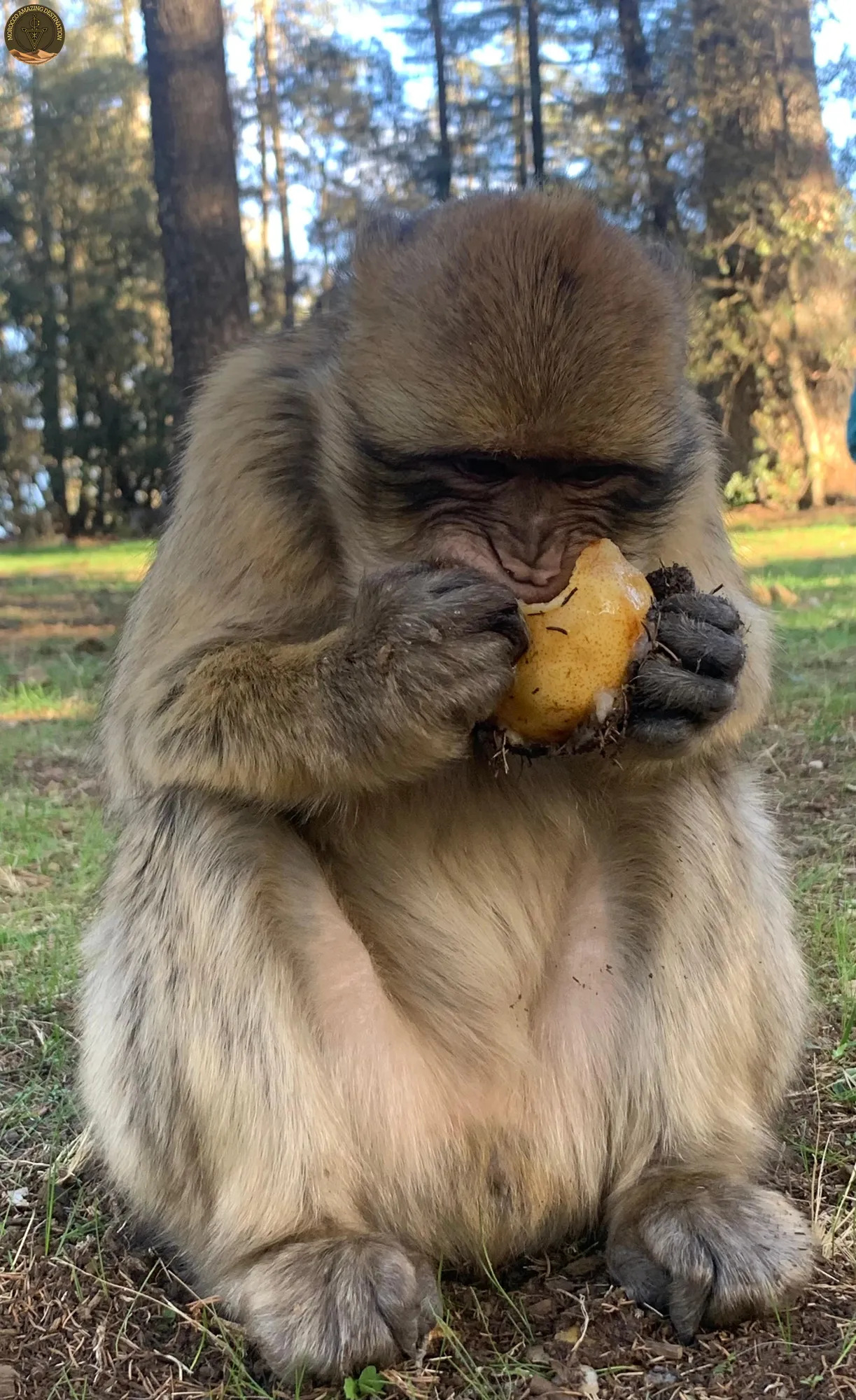
Morocco’s mountains hide far more life than most travelers expect. Long before the snow melts on Jebel Toubkal, Atlas Mountains wildlife is already on the move — macaques foraging in old cedar forest, Barbary sheep balancing on cliff edges, and vultures riding the morning thermals. And no, there are no Atlas lions left here: the Barbary lion is extinct in the wild.
What remains is rarer, wilder, and closer to the trail than you think — if you know where to look. In this guide, we will break down the key species of the Atlas Mountains, where to watch them, and how to do it responsibly.
Monkeys of the Middle Atlas Cedar Forest
The Barbary macaques of Morocco are the only wild monkeys in North Africa. In the Middle Atlas, troops live among ancient Atlas cedar and holm oak forests around Azrou, Ifrane, and the Cèdre Gouraud. This forest forms part of a UNESCO Biosphere Reserve, and it holds the largest wild macaque population on Earth. The Middle Atlas is cooler and greener than most visitors imagine.
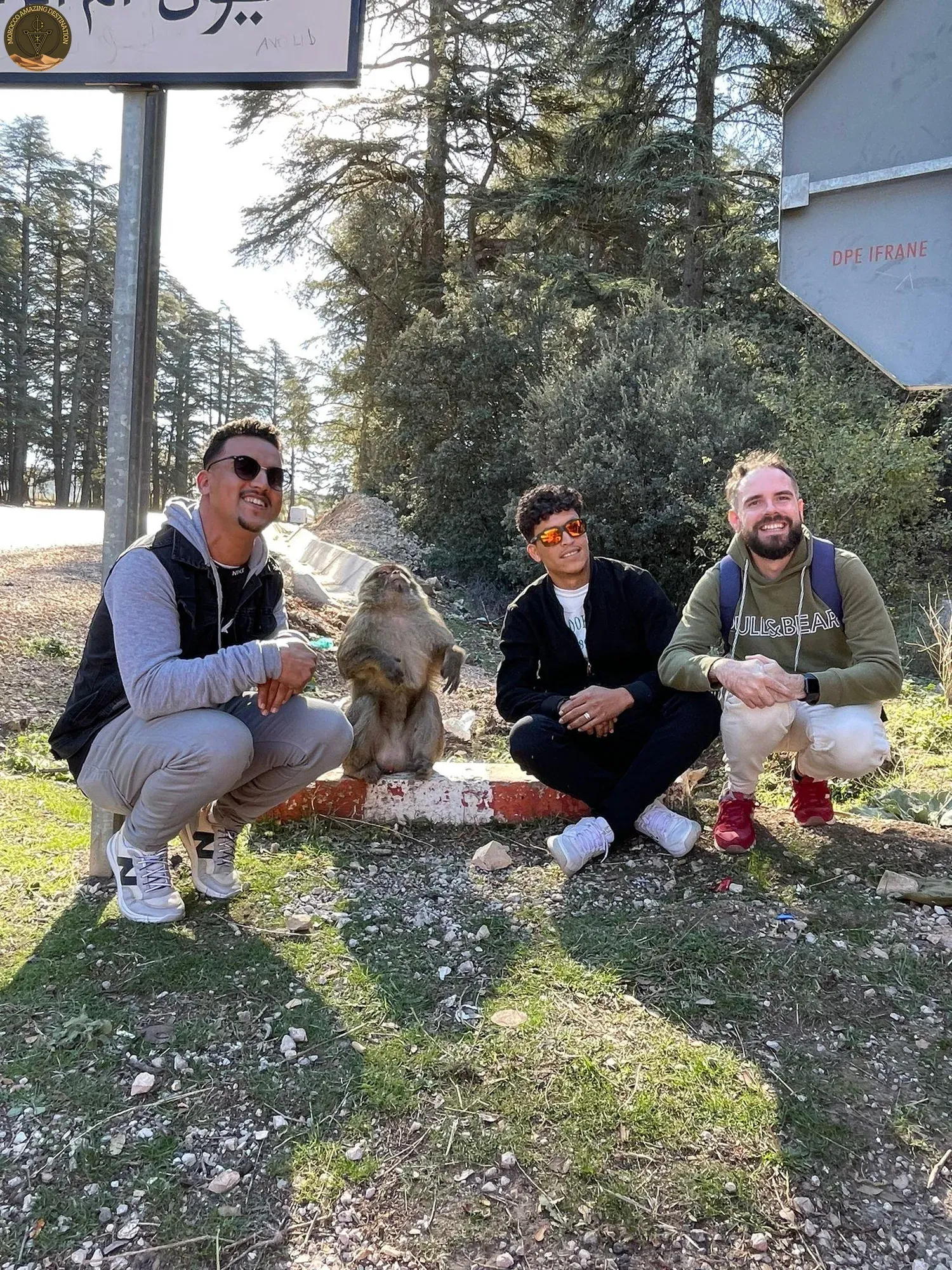
Macaque numbers are declining across the Middle Atlas, so a sighting is a privilege rather than a guarantee. Early morning, when the forest is cool and quiet, is the best time to find them.
Key species to spot:
- Barbary macaque: tailless, sociable, and unmistakable with its amber eyes.
- Levaillant’s woodpecker: a green-backed Atlas forest specialty.
- Barbary partridge: common on forest edges at dawn.
Barbary Sheep and Birds of Prey in the High Atlas
Higher and drier, the High Atlas animals are built for rock and altitude. The Barbary sheep, or arrui, is the only wild caprine in North Africa — a stocky, sand-coloured climber found on crags up to 3,000 m. It is endangered in Morocco, and the fenced Amassine reserve in the Western High Atlas is among the best places to look for one.
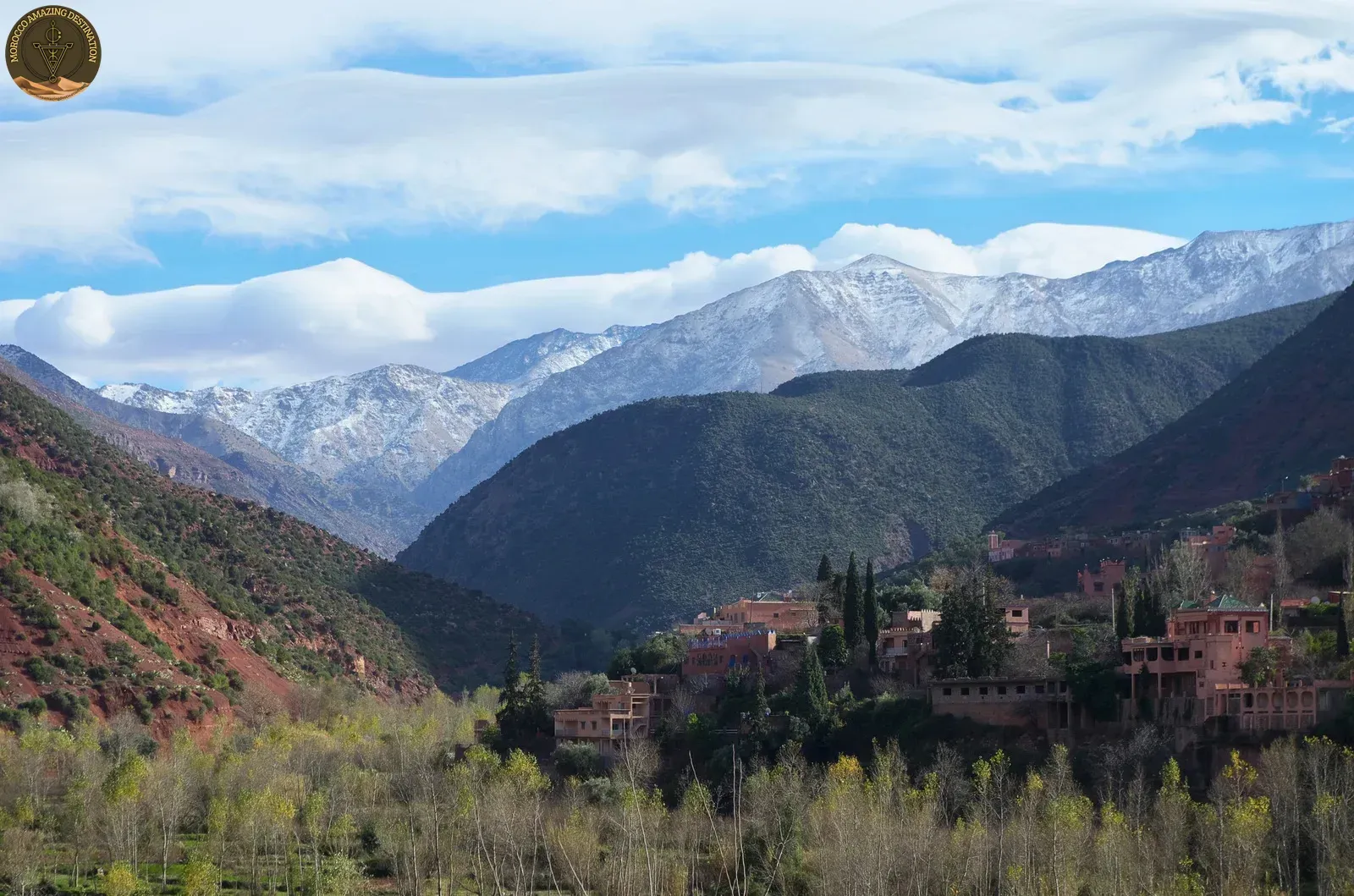
The High Atlas is also Morocco’s stronghold for birds of prey. Bearded vultures are Critically Endangered here, with only a handful of breeding pairs left, so any sighting is a genuine event. Golden eagles are resident all year, while Bonelli’s eagles hunt the lower slopes.
Look for raptors at dawn, when they leave the cliffs to ride the first warm air.
Where to Watch Wildlife Around Toubkal and Ourika
Toubkal National Park, around 1.5–2 hours from Marrakech, protects Jebel Toubkal at 4,167 m. It shelters 24 plant species found nowhere else on Earth and is the heart of morocco wildlife in the High Atlas.
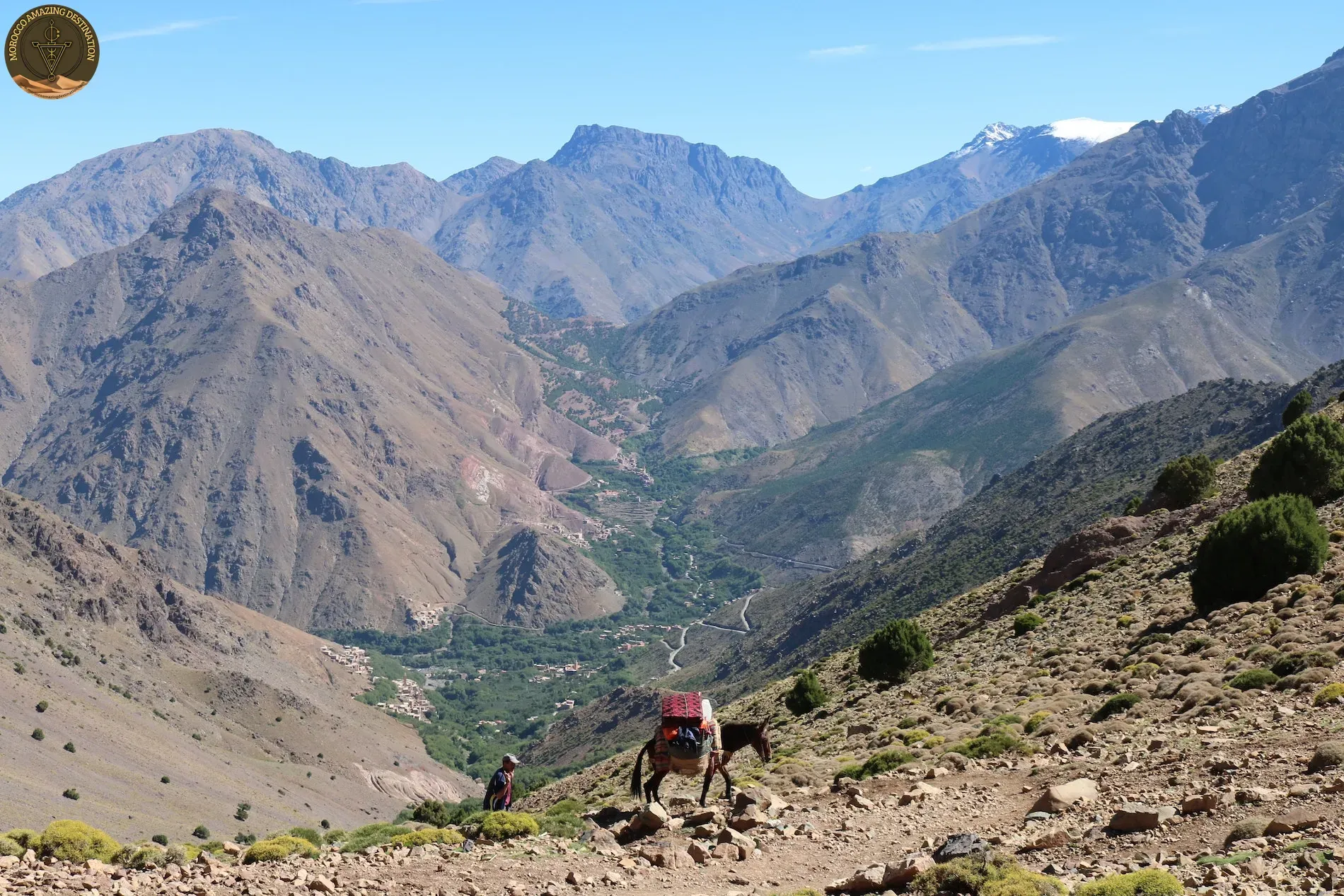
The park is also home to a small reintroduced population of Cuvier’s gazelle, kept in an enclosure for protection. Around Imlil and Oukaimeden, alpine birds and Barbary sheep reward patient walkers.
Where to look:
- Azrou cedar forest (Middle Atlas): the reliable macaque encounter, 1.5–2h from Fes.
- Ourika Valley: Barbary sheep on the slopes and raptors overhead.
- Amassine reserve (Toubkal NP): fenced Barbary sheep, built for watchers.
- Oukaimeden: high passes and cold-loving alpine birds.
How to Watch Atlas Wildlife Responsibly
Some macaques near roads and cafés are habituated, so it is tempting to get close. Please do not. Feeding wild animals changes their behaviour and spreads disease between them and us. The “hold a baby monkey” photos some touts offer are exactly what you should refuse.
Responsible-viewing rules:
- Never feed or touch: human food harms macaques and Barbary sheep.
- Keep your distance: stay several metres back and let them approach you.
- Skip wildlife selfies: refuse any “hold an animal” photo opportunity.
- Use a licensed guide: local knowledge finds animals with less disturbance.
- Best time to go: spring (Mar–May) and autumn (Sep–Nov), at dawn or dusk.
Respect also means staying on marked trails in the national park, where wildlife and fragile alpine plants recover slowly.
Plan Your Atlas Wildlife Trip
A wildlife-first Atlas trip slips easily into a longer Morocco itinerary. On our 14-Day Morocco Tour from Casablanca - Explore Cities, Desert & Culture, the cedar-forest crossing at Azrou is often a highlight — macaques, cool shade, and a welcome break from the road. For a shorter route, our 10 Day Morocco Tour from Rabat to Marrakech: Imperial Cities & Sahara Desert also threads the High Atlas passes.
See our guides to the Atlas Mountains and animals in Morocco.
We can time the drive so you cross the cedar forest at the quietest hour, when the macaques are most active.
We can customize a tour to match your needs — design your perfect itinerary.
If you found this helpful, add us as your preferred source on Google.
Frequently Asked Questions
What animals live in the Atlas Mountains of Morocco?
The Atlas Mountains host Barbary macaques, Barbary sheep, bearded and golden eagles, Bonelli's eagles, woodpeckers, partridges and reintroduced Cuvier's gazelles in Toubkal National Park.
Where can I see Barbary macaques in the Atlas Mountains?
The most reliable place is the Middle Atlas cedar forest around Azrou, Ifrane and the Cèdre Gouraud, roughly 1.5–2 hours from Fes, best seen at dawn.
What is the best time to see wildlife in the Atlas Mountains?
Spring (March to May) and autumn (September to November) are best, when temperatures are mild and animals are active. Dawn and dusk give the strongest chance of sightings.
Is it safe to watch wildlife in the Atlas Mountains?
Yes, with common sense. Keep several metres away, never feed or touch the animals, refuse any 'hold a baby monkey' photo, and explore with a licensed local guide.
Ready for an Adventure?
Have questions? Feel free to contact us using the form below. We're here to help!