· Travel · 6 min read
Atlas Mountains: The Three Ranges and Why They're Called Atlas
Discover the Atlas Mountains — the three ranges, their peaks and Berber name, and why they're called Atlas. Plan your visit now.
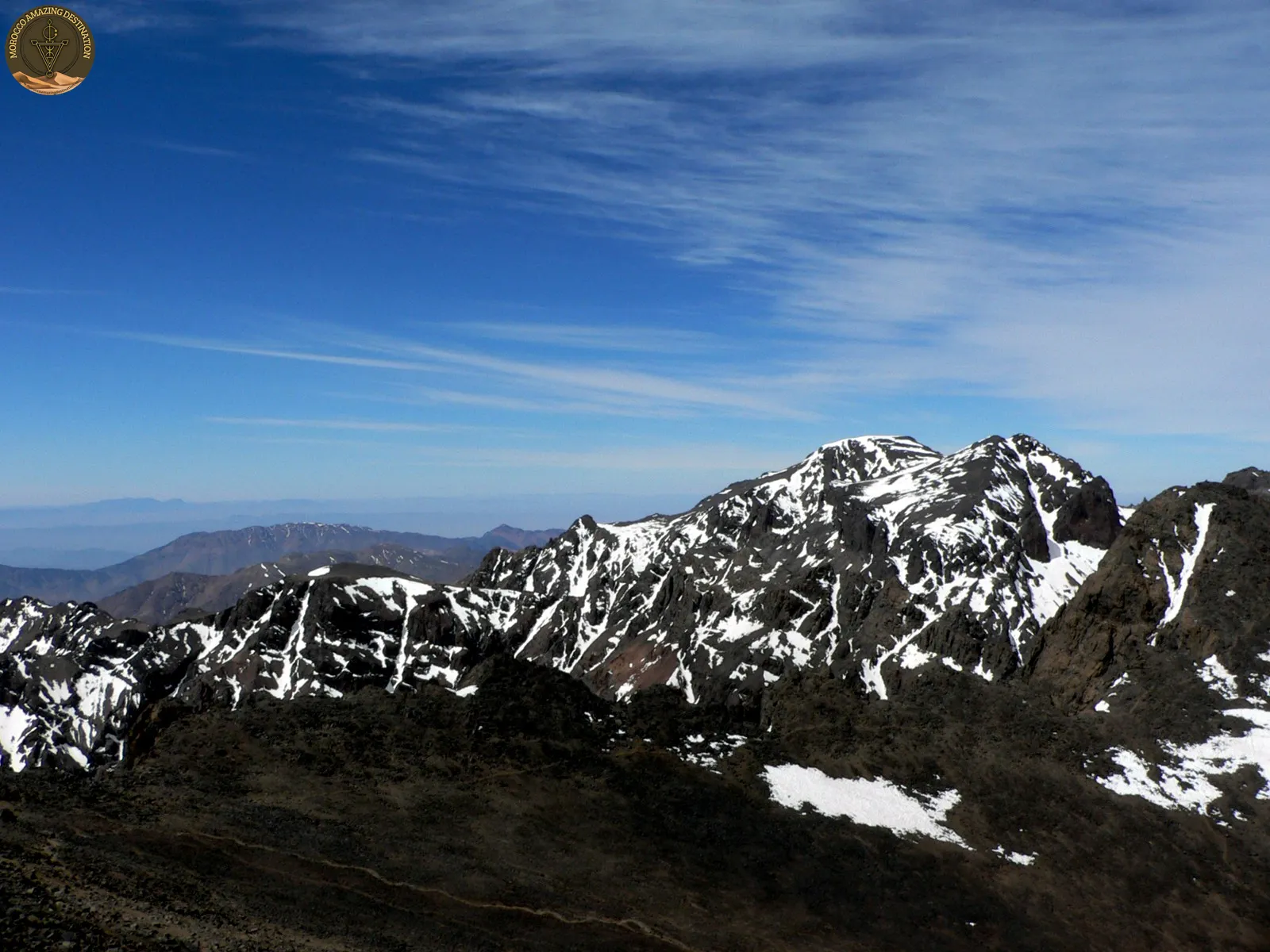
The snow-capped wall that rises behind Marrakech is part of the atlas mountains, a chain that shapes weather, culture and every road to the Sahara. Stretching from the Atlantic coast near Agadir across Morocco, Algeria and Tunisia, it divides green northern plains from the desert south. In Morocco you meet its most varied and accessible heart.
In this guide, we will break down the three Atlas ranges, the story behind the Atlas name, and how you can visit them on a private desert journey.
What Are the Atlas Mountains?
The atlas mountains form one of Africa’s great natural barriers, running about 2,500 kilometers from the Atlantic to Tunisia. In Morocco the system creates distinct climates on either side. North and west you find fertile plains and Mediterranean hills. South and east the landscape turns steppe and then true Sahara.
This barrier makes travel feel dramatic. A short drive from Marrakech lifts you from palm groves to alpine passes in a single morning. You cross watersheds, language zones and architecture styles with each ridge. The mountains also trap moisture, feeding rivers that sustain oases like the Draa and Ziz valleys.
For visitors, the Atlas is not a distant backdrop. It is the road itself between cities and desert, lined with terraced fields, fortified villages and mountain cafes where you can stretch your legs and sip mint tea. Private tours use this corridor to link Marrakech, Ouarzazate and the desert in a single scenic line.
The Three Atlas Ranges: High, Middle and Anti-Atlas
Moroccans talk about three atlas mountains — the High Atlas Middle Atlas Anti-Atlas — and each has a clear personality. Together they form the Moroccan section of the wider Atlas system. Algeria and Tunisia host other sections like the Tell and Saharan Atlas, but the three Moroccan ranges are the focus for most travellers.
- High Atlas: The central spine and roof of North Africa. About 750 kilometers long, averaging above 3,000 meters, with Jbel Toubkal at 4,167 meters and Ighil M’Goun at 4,071 meters. Alpine crests, snow into spring, deep Berber valleys like Ourika and Ait Mizane around Imlil, and Toubkal National Park.
- Middle Atlas: The greenest and northernmost range, lying entirely in Morocco between the Rif and the High Atlas. About 350 kilometers long, with Jbel Bou Naceur around 3,340 to 3,356 meters. Cedar forests, volcanic lakes and plateaus, home to most Barbary macaques, and the hill towns of Ifrane and Azrou.
- Anti-Atlas: The oldest and driest, stretching about 500 kilometers from the Atlantic to the Tafilalt region near the Sahara. Jbel Siroua at 3,304 meters and Jbel Saghro at 2,712 meters mark its high points, with arid plateaus, granite domes around Tafraoute and the Ameln Valley, and palm-filled oases.
Recognizing which range you are in helps you choose activities. High Atlas for trekking and high passes, Middle Atlas for forests and lakes, Anti-Atlas for granite scenery and quiet Amazigh villages. This simple frame helps you read landscapes quickly and pick the right season for each area.
Why Are They Called the Atlas Mountains?
The atlas mountains name origin blends Greek myth with local language. The European name comes from the Titan Atlas, son of Iapetus, whom Zeus condemned to hold the heavens at the far western edge of the known world. Poets like Hesiod and Ovid, and geographers like Herodotus, described this figure as a pillar of the sky.
Greek travelers attached the Titan’s name to the huge mountains they saw at Africa’s western edge. Herodotus called the massif Atlas, pillar of heaven, while other ancient authors noted that local peoples called it Dyris or Dyren. Over time the mythic name stuck on maps and was later extended to the Atlantic Ocean and to the collection of maps we still call an atlas.
Local names tell a parallel story:
- Adrar: The Amazigh word for mountain, plural idurar, used across Morocco.
- Adrar n Dern: The High Atlas is still known as Adrar n Dern, often translated as Mountain of Mountains, a title attested from classical Dyrin through medieval Arab geographers to modern usage.
- Jibal al-Atlas: The Arabic form that mirrors the Greek-derived name widely used today.
Scholars widely believe Atlas may be a folk reshaping of adrar, but this link remains a hypothesis rather than proven fact. Both traditions — Titan and Adrar — now coexist and signal respect for Amazigh culture when you hear Adrar n Dern on the trail. Hearing both names on signs and with guides connects myth, geography and living Amazigh heritage in one place.
Visiting the Atlas on the Way to the Desert
You cannot reach the Sahara from Marrakech without crossing the High Atlas, and the crossing is a highlight in itself. The main corridor climbs to the Tizi n’Tichka pass at 2,260 meters, winding past Berber hamlets, walnut groves and viewpoints where you can watch weather roll over the peaks.
Key experiences along the route:
- Tizi n’Tichka drive: Switchbacks, roadside stalls with local honey and argan products, and easy photo stops above the clouds.
- UNESCO World Heritage site of Ait Benhaddou: The fortified ksar just beyond the pass, perched above a seasonal river and framed by High Atlas foothills.
- Dades and Rose Valleys: Fertile corridors between the High and Anti-Atlas, famous for kasbahs, rose fields and the dramatic Todra Gorge approach.
- Imlil and Toubkal: The gateway village at about 1,740 meters, 65 kilometers south of Marrakech, where mule tracks lead toward Toubkal’s refuge and summit trail.
- Tafraoute and Anti-Atlas loops: Granite domes, painted rocks and palm oases that feel far quieter than the busy pass route.
A private driver makes the journey smooth and flexible. You can pause for short walks, visit a family home for lunch, and time the pass for the best light without worrying about buses or fixed schedules. This flexibility turns a transfer into a real sightseeing day, not just a drive.
Plan Your Atlas Mountain Adventure
The Atlas rewards slow travel. Choose a route that matches your interests: trekking, kasbahs, forests or remote granite villages. Spring and autumn bring clear skies and comfortable walking weather, while winter adds snow to High Atlas crests without closing the main pass for long. Your guide can adjust timing for markets, short hikes or photography stops along the way.
For a concise Sahara crossing with Atlas highlights, our 3-Day Trip from Marrakech to Merzouga climbs the High Atlas, visits the UNESCO World Heritage site of Ait Benhaddou and crosses between the High and Anti-Atlas toward the dunes.
If you want more time for valleys and dunes, the 4-Day Morocco Desert Tour from Marrakech adds the Rose Valley, Dades Gorge and extra desert exploration, all with a private driver and authentic hospitality.
We can customize a tour to match your needs — design your perfect itinerary
If you found this helpful, add us as your preferred source on Google.
Frequently Asked Questions
What are the three Atlas Mountains?
The three Atlas ranges in Morocco are the High Atlas, the Middle Atlas and the Anti-Atlas. The High Atlas is the highest and most dramatic, the Middle Atlas is forested and green, and the Anti-Atlas is arid and ancient in the south.
Why are they called the Atlas Mountains?
The name comes from the Greek Titan Atlas, condemned to hold the sky at the western edge of the world. Greek geographers gave his name to the high mountains of northwest Africa, and the same Titan gave names to the Atlantic Ocean and to map atlases.
What is the Berber name for the Atlas?
In Amazigh the word for mountain is adrar. The High Atlas is still called Adrar n Dern, meaning Mountain of Mountains. Some scholars see Atlas as a folk reshaping of this native name.
Which Atlas range should travelers visit?
Most desert itineraries cross the High Atlas via the Tizi n'Tichka pass. Choose the Middle Atlas near Ifrane for cedar forests and lakes, and the Anti-Atlas around Tafraoute for quiet granite landscapes and oases.
Ready for an Adventure?
Have questions? Feel free to contact us using the form below. We're here to help!