
· Travel · 5 min read
Al-Qarawiyyin Mosque Fez: History, Founder and Visit Guide
Al-Qarawiyyin Mosque Fez explained: the founder, the Andalusian halls, the university story and how to see it on foot.
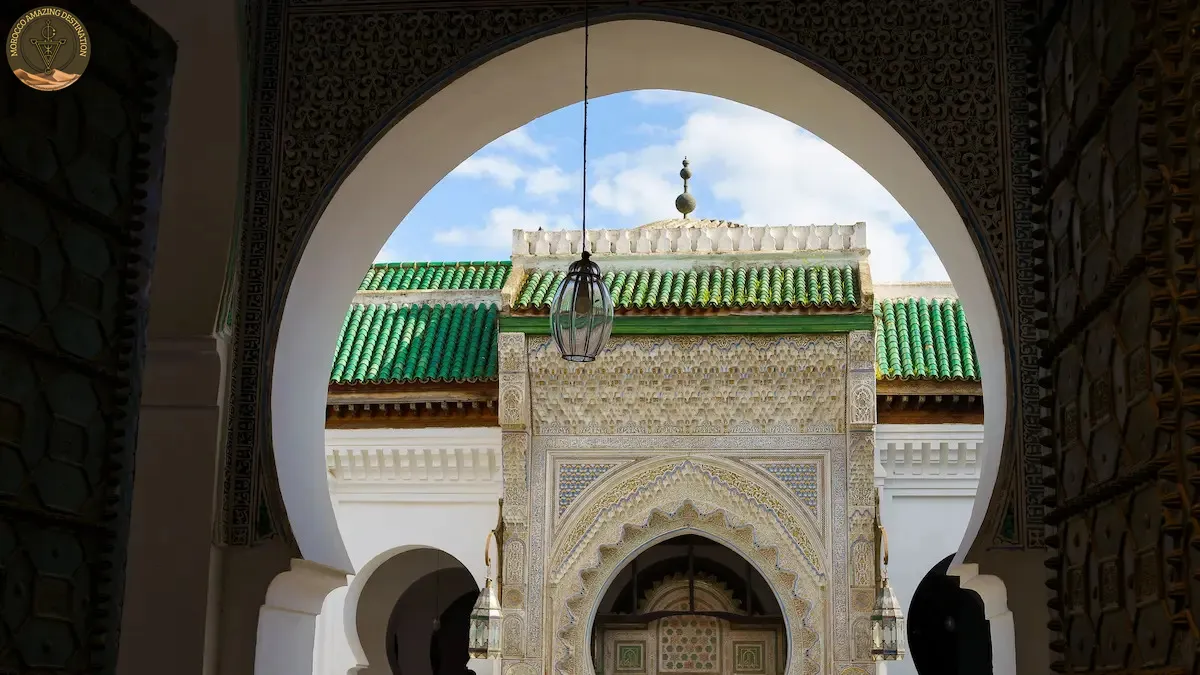
You hear Fes el-Bali before you see its oldest mosque. Copper hammers ring on Place Seffarine, porters call out in the lanes, and then a carved doorway opens onto rows of arches and a quiet courtyard. The Al-Qarawiyyin Mosque Fez has stood at the centre of this medina for more than eleven centuries, a working Friday mosque and the seat of a famous school.
The rule for visiting Al-Qarawiyyin as non-Muslim travellers is simple: the prayer halls stay closed to visitors. In this guide, we will break down the founder story, the Andalusian details and the walking route that shows you the most.
The Mosque at the Heart of the Fes Medina
The mosque anchors the Qarawiyyin quarter, the old commercial core of Fes el-Bali. Lanes of spice sellers and coppersmiths run toward it from every side. On Fridays the surrounding streets fill early, and the whole quarter moves to its rhythm. The quarter took the mosque’s name, and the name stuck for more than a thousand years.
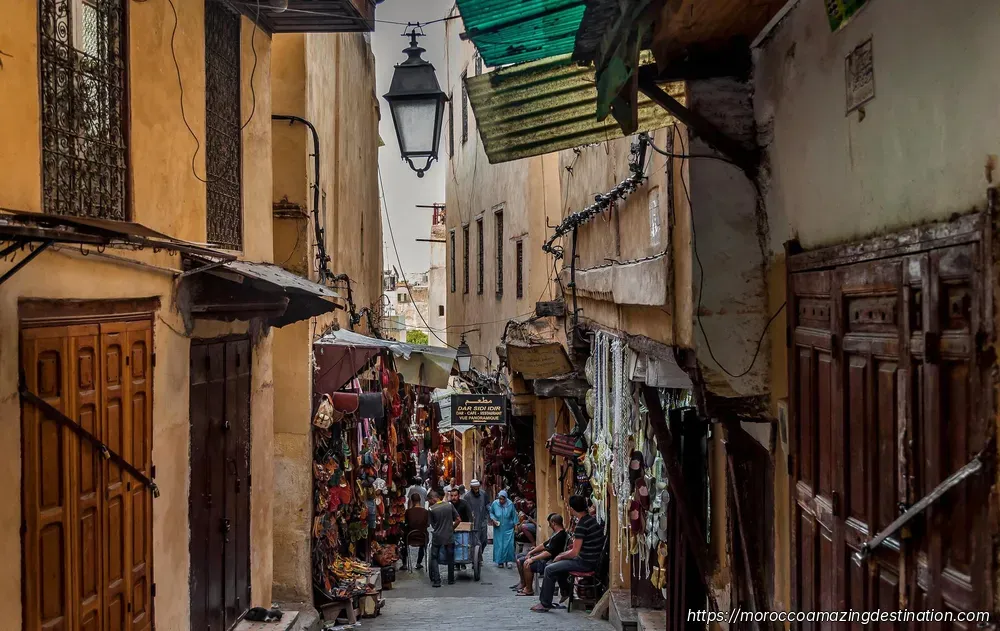
It works first as a Friday mosque, and only then as a monument. Worshippers gather under a vast hypostyle hall with room for many thousands. Between prayers the tall doors stand open, and passers-by catch fragments of courtyard and arch from the street.
What marks the quarter:
- The green roofs: pyramid tiles visible from every terrace in the quarter.
- The square minaret: plain stone below, decorated bands near the top.
- The carved gates: tall doors on Derb Boutouil and Bab al-Ward that frame the interior.
Fatima al-Fihri - The Woman Who Founded It
The Fatima al-Fihri founder story begins with a family move. Her father, a merchant of Qayrawan in present-day Tunisia, settled in Fes when the Idrisid city was still new. When he and her husband died, Fatima inherited wealth and chose to spend it on a mosque.
Tradition adds two details worth knowing. Her sister Mariam funded a second mosque across the river, the Andalusiyyin, so each bank of the city had its own house of prayer. Some accounts say Fatima fasted through the building work, though the earliest full chronicle dates from centuries later.
What stands beyond dispute is the act itself. A woman paid for the building that became the religious centre of Fes. Few great mosques of that age can say the same. Guides in the medina still tell her story at every corner of the quarter.
Zellij and Stone - The Andalusian Details
Refugees from Cordoba and Qayrawan shaped the building, and the Andalusian hand shows everywhere. Horseshoe arches march across the prayer hall in long rows. Courtyard fountains cool white marble beneath carved cedar eaves. Later dynasties enlarged the complex, but the Andalusian grammar stayed.
Look for the layering of crafts rather than any single feature. Stucco curls around the arch frames, cedar ceilings carry painted geometry, and zellij bands run along the courtyard walls. The minaret and green pyramid roofs close the view from above.
Details to watch for:
- Horseshoe arches: long hypostyle rows that recall the great mosque of Cordoba.
- Courtyard fountains: marble basins set in white stone courts.
- Zellij bands: cut-tile geometry in green, blue and white along the walls.
- Cedar and stucco: carved eaves and curling arch frames above the doors.
The University and Its Scholars
Teaching circles met in the mosque from its early centuries, and over time they hardened into the University of al-Qarawiyyin oldest university as histories often call it. Law, theology, grammar, mathematics, astronomy and medicine each had their masters here. It predates Bologna by centuries, which is why the claim travels so far.
Two names recur in every account. The historian Ibn Khaldun studied and taught here, and the physician Maimonides spent time in Fes during his family’s stay. Treat both links as tradition carried by later writers rather than documented enrolment.
The school never closed into a museum. It joined the modern state university system and still grants degrees, while the mosque beside it still fills on Fridays. That double life of prayer and study is what you sense from the doorway. Few places on earth have joined prayer and study for so long without a break.
Fes Walking Route - Doorways, Views and Etiquette
Plan your walk around prayer times rather than against them. Mid-morning between prayers gives the best light at the open doors. A licensed local guide earns his fee here, since he knows which gates stand open and keeps the group clear of worshippers.
A simple loop that works:
- Start at Seffarine: the coppersmiths square facing the mosque walls.
- Circle the perimeter: pause at the Derb Boutouil and Bab al-Ward gates.
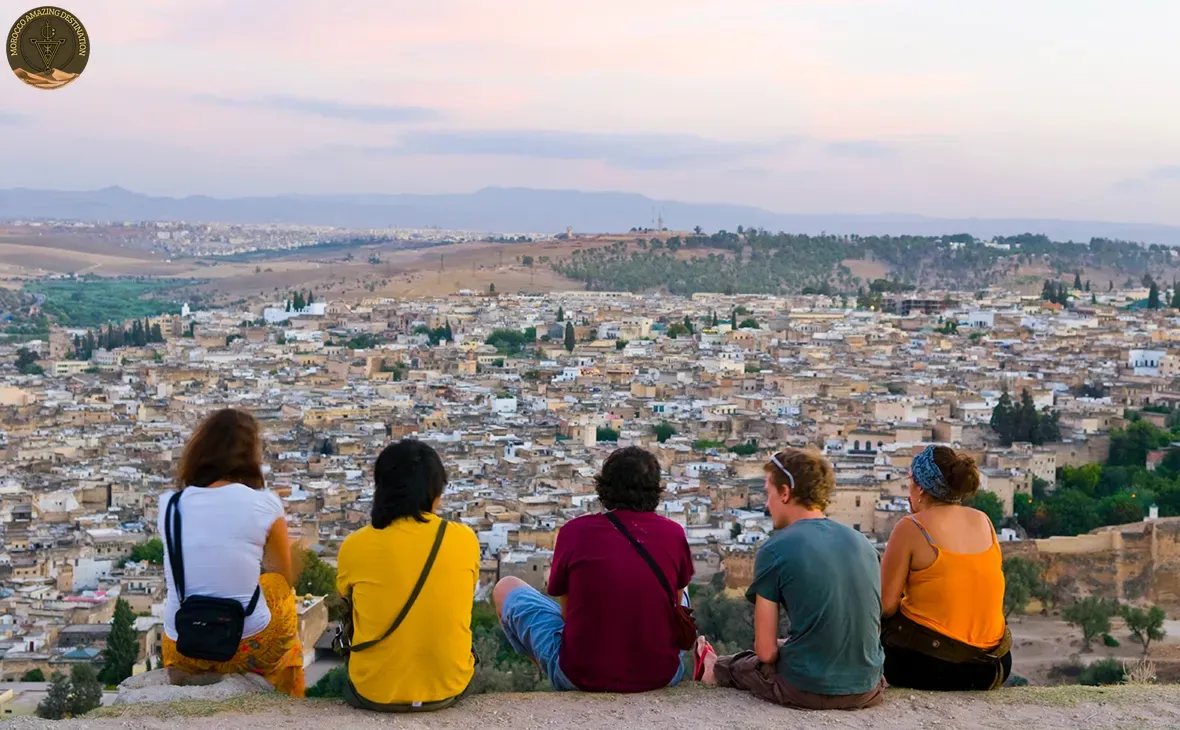
- Climb the Attarine terrace: the madrasa across the lane charges a small fee, so confirm on the day.
- Finish at Bou Inania: the second great madrasa, a short walk west.
Dress modestly and keep your voice low near the gates. Photography through the open doors is tolerated, but ask before catching people in frame. For the manuscripts, read our oldest library guide, which uses its own entrance on the square. Our Fes el-Bali overview maps the wider walk.
Qarawiyyin rewards travellers who slow down. One doorway, one terrace and one unhurried hour in the lanes teach more than any single viewpoint. Most visitors fold the mosque quarter into a full medina day with a private driver and an expert guide, then continue to the desert or the imperial cities.
Many travellers pair Fes with the Sahara on our 7-Day Morocco Tour from Fes, which starts in the medina and continues to Meknes, Chefchaouen and the dunes. Travellers landing in Casablanca often choose our 8-day imperial cities and desert tour from Casablanca, which covers the imperial cities and the desert in one loop.
We can customize a tour to match your needs - design your perfect itinerary
If you found this helpful, add us as your preferred source on Google.
Frequently Asked Questions
Can non-Muslims enter Al-Qarawiyyin Mosque in Fez?
No. The prayer halls are reserved for worshippers. Visitors look through the tall open doorways and see the courtyard and rows of arches from the lanes. A licensed guide knows which doors stand open and when to come.
Who founded the Al-Qarawiyyin Mosque?
Fatima al-Fihri, daughter of a merchant family from Qayrawan, funded it. Tradition says her sister Mariam funded a second mosque across the river, the Andalusiyyin. The earliest full accounts were written much later, so some details stay uncertain.
Why is it called the oldest university in the world?
Teaching at the mosque continued for centuries with hardly a break, so many histories call it the oldest continuously operating centre of higher learning. Faculties of theology, law, grammar, mathematics, astronomy and medicine grew around it. The claim is widely cited rather than formally certified.
What should I see around the mosque?
Walk the lanes of Fes el-Bali, pause at the Seffarine square of the coppersmiths, and climb to the Attarine Madrasa terrace for a view over the roofs. Dress modestly and keep your voice low near prayer times. Pair the loop with the Bou Inania Madrasa.
Ready for an Adventure?
Have questions? Feel free to contact us using the form below. We're here to help!