
· Travel · 5 min read
Zaouia d'Ifrane: Waterfall, Shrine and Berber Village
Zaouia d'Ifrane: a waterfall over red travertine in the Middle Atlas, a Berber village around a marabout's tomb, and how to visit from Fes.
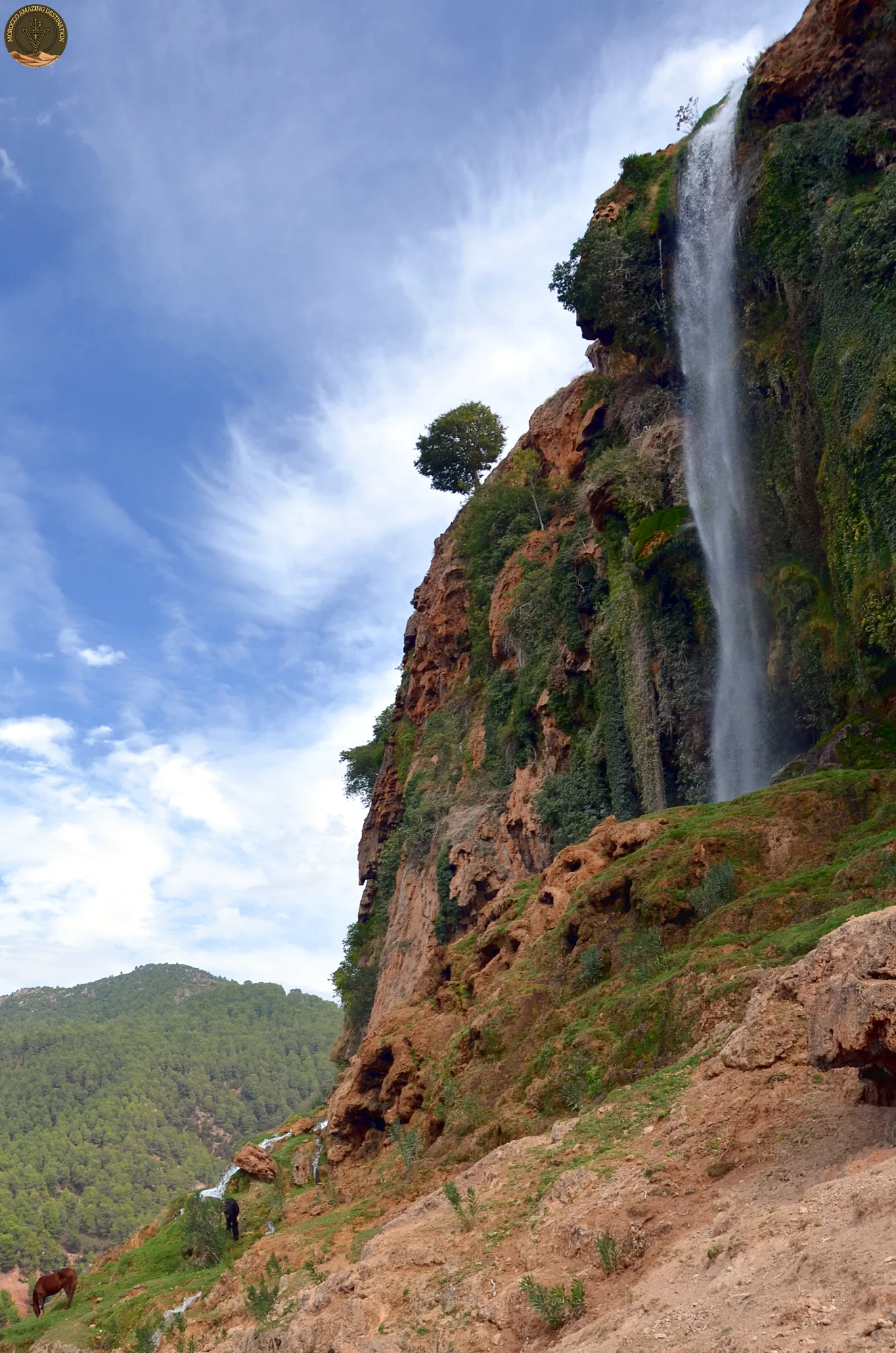
Most travelers cross the Middle Atlas with their eyes on Ifrane’s red roofs or the cedars outside Azrou. At the end of a lane that simply stops, off the Azrou to Khenifra road, sits Zaouia d’Ifrane. It is a village of roughly 2,000 people, built around the tomb of a marabout, with a waterfall that drops through a travertine cliff.
The village sits at about 1,500 m in Ifrane province. It asks something of you first: a dead-end road, no bus, a handful of gites, little in the way of restaurants. What it gives back is a shrine that still works as a shrine. The Zaouia d’Ifrane waterfall runs hardest after the snow melts, and a forest path climbs above the roofs. This guide covers the village, the etiquette at the tomb, the state of the falls through the year and whether the drive fits your route.
The Name, the Shrine and What a Zaouia Actually Is
Ifrane is the plural of ifri, Tamazight for cave, after the hollows in the limestone here. What you walk into is a working Berber village in the Middle Atlas. Earthen and stone houses with timber roofs stack on the slope below the cliff.
The village exists because of one grave. It grew around the burial place of Sidi M’hammed Ou-Boubker, a marabout venerated across the region. The national park dates the foundation to around the 17th century. A zaouia in this sense is a religious house and lodge: part shrine, part school for the Quran, part hostel for travelers. It is not a mosque, and the mausoleum is a working pilgrimage site, busiest around religious festivals.
Treat it as a place of worship first. Four rules cover most visits:
- Cover shoulders and knees, and keep your voice low near the tomb.
- Ask before entering the mausoleum chamber, since access for non-Muslims and for women varies by custodian and by day.
- Ask before photographing villagers, especially women and older men.
- A small donation is normal if a custodian shows you around.
The Waterfall and the Travertine Cliff
The cliff is travertine, roughly 60 m of it, pocked with caves and hung with plants. The Oued Ifrane goes over the edge in a cascade usually given as about 30 m. Below the falls the stream runs on to feed the Oum Er-Rbia basin, while the great river’s own springs rise further south, near Ain Leuh.
Flow follows the weather. March into May is the strong season, when snowmelt off the plateau pushes the falls to full width. Late summer thins them to threads, and autumn storms bring the volume back. The pools and small terraces below are where local families picnic and children swim in summer. The water stays snow-cold even in August, and the gorge can flood fast after heavy rain. There is no ticket office, no railing and very little signage.
A Two-Hour Loop Through Cedar Forest and Plateau
A loop around the cascade runs about 5.7 miles with roughly 340 m of ascent, around two hours at family pace. The plateau section is easy: small fields, orchards, grazing, and a rim path above the village roofs. The descent to the pools is the part to watch. It is steep, and wet travertine is genuinely slippery.
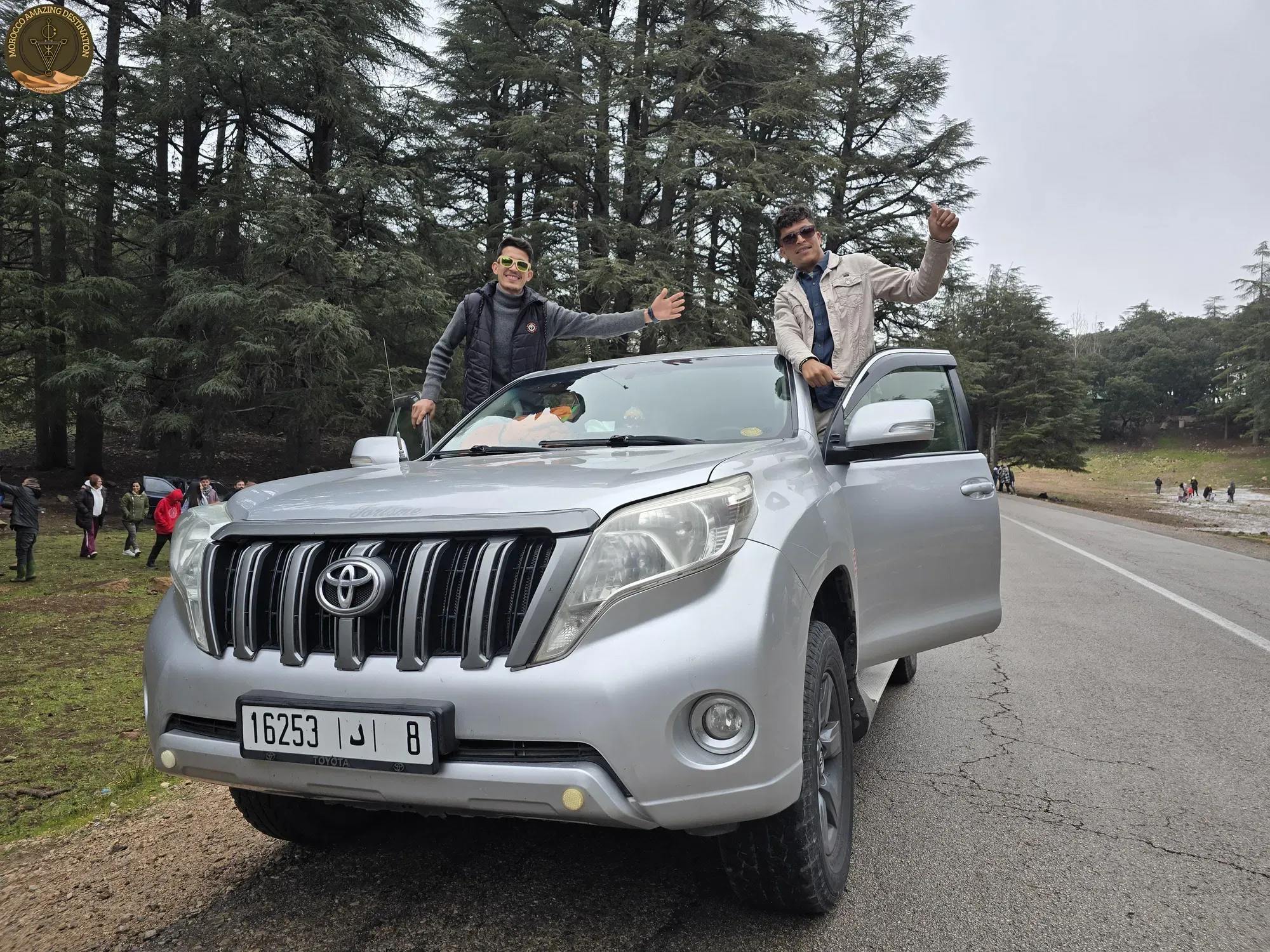
The forest around the village is part of Ifrane National Park, Atlas cedar mixed with holm oak and some pine. It is also home to Barbary macaques, wild boar, deer and raptors. The macaques near the road are habituated and bold. Keep food in the car, do not let children hand-feed them, and ignore anyone selling peanuts at the roadside.
These paths carry daily traffic. The park lists a trail race at the village, so expect a crowd on race weekend and quiet on most other mornings.
The Dead-End Road and How to Get There
From Fes, take the N13 south to Azrou, then the Azrou to Khenifra road, and turn left just after Souk El Had, before Mrirt. The lane dead-ends at the village. Rounded times are the honest ones: about an hour from Azrou, an hour and a quarter from Ifrane town, two and a quarter to two and a half hours from Fes.
No bus reaches it, and the last stretch takes planning:
- Grand taxis wait at Souk El Had and Mrirt and charge a few dozen dirhams for the car, so agree the price before you get in.
- The dead end has no scheduled transport and no signposts, which is why a private driver makes sense here.
- A hired car carries you on to Ifrane, Ain Leuh or the cedar forest the same afternoon.
Drive the return before dusk. The road is unlit, livestock wander, and phone signal is patchy below the cliff.
Is the Drive Worth It, and Can You Do It From Fes in a Day?
A day trip from Fes is possible and long. Two and a half hours each way, plus stops at Ifrane and Azrou, makes a 10 to 11 hour day. The village suits a route south to Marrakech or the desert, or a two-night Middle Atlas stay, better than a city break.
Sleeping means a handful of gites and guesthouses, meals arranged in advance, and a couple of small shops. Most travelers base in Ifrane, an hour and a quarter away, with hotels and restaurants, or Azrou, 45 to 60 minutes off. This is a day stop or one quiet night, not a base for a week.
Ifrane town, with its stone lion and the snow at Michlifen, has its own guide: Ifrane, the little Switzerland of the Middle Atlas.
Day 3 of our 7-Day Morocco Tour from Fes crosses this part of the Middle Atlas. The 3-Day Desert Tour from Fes to Marrakech can take the village road south.
We can customize a tour to match your needs - design your perfect itinerary
If you found this helpful, add us as your preferred source on Google.
Frequently Asked Questions
Is Zaouia d'Ifrane worth the drive?
Yes, if you treat it as a half-day. The village, the shrine and the falls fill two to three hours, and the dead-end road is the price you pay. Pair it with Ifrane and the Azrou cedar forest so the drive earns its keep.
Can non-Muslims visit the shrine of Sidi M'hammed Ou-Boubker?
You can walk through the village and see the shrine from outside. Access to the mausoleum chamber varies by custodian and by day, so ask first and accept a no. Cover shoulders and knees, keep voices low and ask before photographing people.
Can you visit Zaouia d'Ifrane as a day trip from Fes?
It is possible but long. Two and a quarter to two and a half hours each way, plus stops at Ifrane and Azrou, makes a 10 to 11 hour day. It works better as a stop on a route south to Marrakech or the desert, or from a base in Ifrane or Azrou.
When is the Zaouia d'Ifrane waterfall at its strongest?
March into May, when snowmelt from the plateau feeds the Oued Ifrane. Late summer leaves it thin, and autumn storms bring the volume back. The water stays snow-cold even in August.
Ready for an Adventure?
Have questions? Feel free to contact us using the form below. We're here to help!