· Travel · 8 min read
Why Is Morocco Divided in Two? The Story of the French and Spanish Protectorates
Discover why Morocco was divided between French and Spanish protectorates, how the Treaty of Fez shaped the country, and the lasting legacy of this colonial partition.
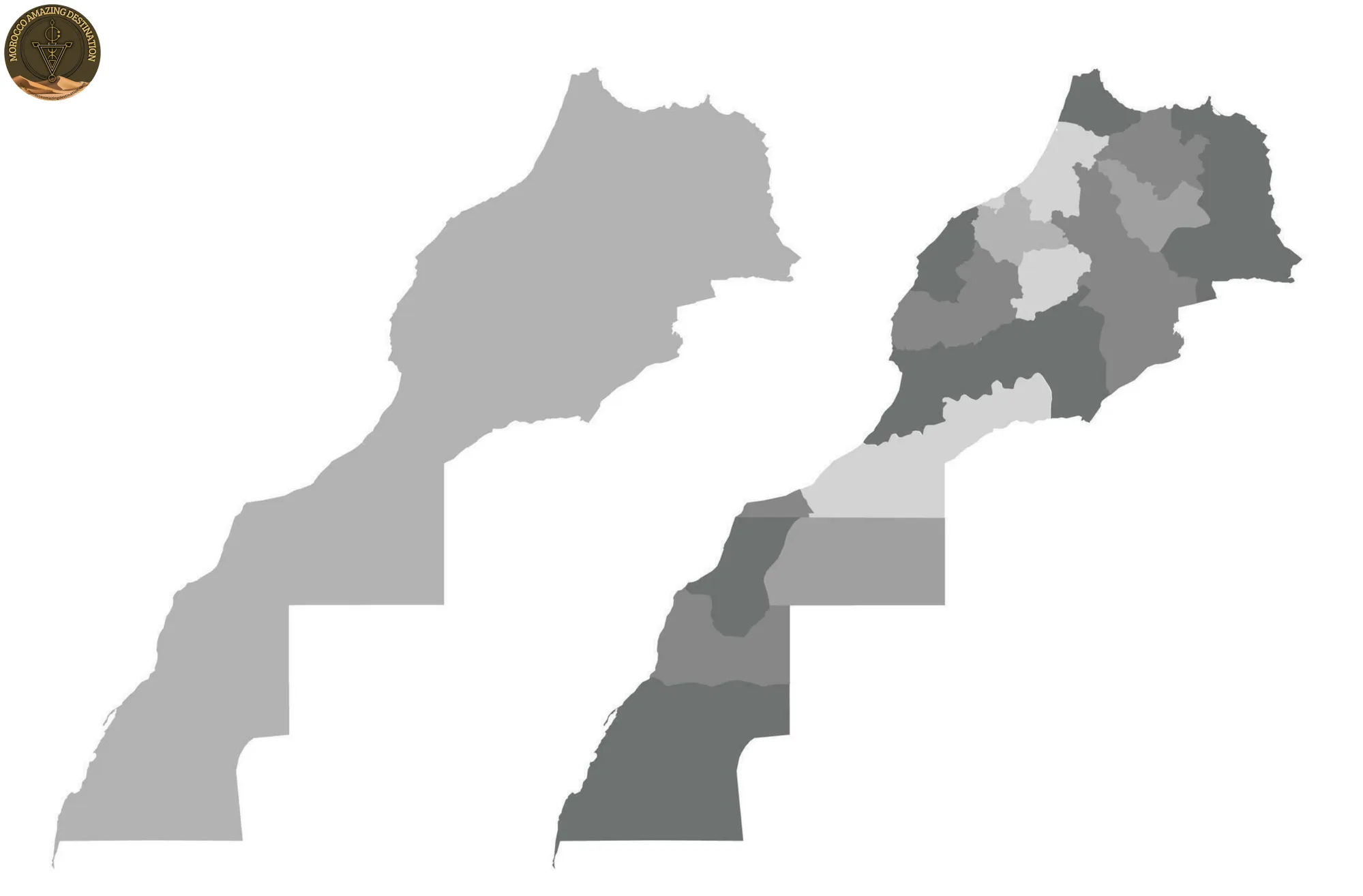
If you travel through Morocco from north to south, you will notice something curious. In Tetouan and Chefchaouen, street signs appear in Spanish. In Casablanca and Rabat, French dominates the public sphere. The architecture shifts from Andalusian-tiled courtyards in the north to wide Parisian-style boulevards in the center. These differences are not random — they are the living remnants of a colonial partition that split Morocco in two.
The question why is Morocco divided in two traces back to one pivotal event: the Treaty of Fez in 1912, which carved the country into French and Spanish protectorates. Understanding this history transforms how you experience the country, revealing the layers beneath its stunning landscapes and vibrant cities.
A Unified Sultanate Before the Partition
Before 1912, Morocco was an independent sultanate under the Alaouite dynasty, which had ruled since the 17th century and continues to reign today. The country was not formally divided — the Sultan’s authority stretched from the Mediterranean coast to the edges of the Sahara, recognized by tribes and urban centers alike.
However, by the late 19th century, Morocco found itself caught in the crosshairs of European imperial ambitions:
- France had already colonized Algeria and Tunisia and sought to complete its North African holdings
- Spain wanted to maintain its historic foothold across the Strait of Gibraltar
- Germany and Britain eyed Morocco’s strategic position at the entrance to the Mediterranean
The Moroccan crises of 1905 and 1911 — diplomatic standoffs between European powers — set the stage for partition. In exchange for concessions elsewhere, Britain and Germany accepted French dominance over most of Morocco, while Spain secured a smaller zone to protect its interests.
The Treaty of Fez: March 30, 1912
On March 30, 1912, Sultan Abdelhafid signed the Treaty of Fez, establishing the french protectorate morocco. Under the treaty, France controlled foreign affairs, the military, and economic policy, while the Sultan remained nominally in power. In practice, the French Resident-General held real authority and the Sultan became a ceremonial figurehead.
Later in 1912, France and Spain signed a separate agreement defining the spanish protectorate morocco. The partition carved Morocco into three distinct zones:
- French zone: roughly 85% of Moroccan territory, including the fertile Atlantic plains, Middle Atlas mountains, and the imperial cities of Fes, Meknes, Marrakech, and Rabat
- Spanish zone: a northern Mediterranean strip and a southern enclave at Cape Juby (Tarfaya)
- Tangier International Zone: a special administration formalized in 1923 and governed by multiple foreign powers
This three-way division defined Morocco’s political map for the next 44 years.
The French Protectorate: Modernization and Control
The french protectorate morocco became the dominant force in the country. Under Marshal Hubert Lyautey, the first Resident-General, France pursued an ambitious modernization program while maintaining Moroccan architectural traditions — an approach later called urbanisme colonial.
What the French Protectorate built:
- Rabat as the administrative capital: Lyautey moved the capital from Fes to Rabat, constructing wide boulevards, government buildings, and the modern Ville Nouvelle alongside the ancient medina
- Casablanca’s transformation: a small coastal town became Morocco’s economic engine, with the largest port in North Africa, Art Deco buildings, and a thriving financial district
- Infrastructure: railways connecting Casablanca to Marrakech, Fes, and Oujda; paved roads; deep-water ports; and electrification projects
- Education: a French-language school system that produced a francophone elite, shaping Morocco’s professional class for generations
Lyautey famously insisted that new buildings incorporate Moroccan architectural elements, such as horseshoe arches, zellige tilework, and internal courtyards. This policy preserved the aesthetic character of Moroccan cities but also reinforced colonial control by separating European and Moroccan populations into Ville Nouvelle and medina quarters.
The Spanish Protectorate: The Northern Strip
The spanish protectorate morocco covered a narrow band of Mediterranean coastline with its capital in Tetouan. While smaller and less developed economically, this zone was strategically vital, controlling the southern shore of the Strait of Gibraltar.
Key features of the Spanish zone:
- Tetouan served as the protectorate capital, developing a distinctive Hispano-Moorish architectural style with wide plazas and tiled fountains
- Chefchaouen, Asilah, and Al Hoceima fell under Spanish administration
- Cape Juby (Tarfaya) formed a southern buffer between French Morocco and the Spanish Sahara
Spanish rule differed from French rule in significant ways. Infrastructure investment was lower, economic integration was looser, and Spanish cultural influence permeated more organically through migration, trade, and intermarriage — much as it had for centuries across the Strait of Gibraltar.
The Rif War: The Spanish Protectorate faced the strongest anti-colonial resistance in Morocco. Between 1921 and 1926, Abdelkrim al-Khattabi led the Rif Berbers in a rebellion that inflicted a devastating defeat on Spanish forces at the Battle of Annual (1921) and established the short-lived Rif Republic. It took combined French and Spanish military operations — including the use of chemical weapons — to suppress the uprising. The Rif War remains a foundational event in Moroccan national consciousness.
Ceuta and Melilla: Unlike the protectorate zones, these two coastal cities were considered integral parts of Spain — a status they have held since the 15th and 16th centuries. Their sovereignty remains contested between Morocco and Spain to this day.
Tangier: The International Zone
Tangier occupies a singular place in the story of Morocco’s division. The Tangier Protocol of 1923 established the city and its hinterland as an International Zone, governed by a committee of foreign powers: France, Spain, Britain, Italy, Portugal, Belgium, the Netherlands, and the United States.
This unique status turned Tangier into a free port and a magnet for an eclectic mix of adventurers, spies, artists, and writers. Paul Bowles, William S. Burroughs, Tennessee Williams, and Jean Genet all lived and worked in Tangier during this period. The city became a crossroads of European and Moroccan cultures — a legacy still palpable in Tangier’s literary cafés, Art Deco cinemas, and the legendary Hafa Café overlooking the Strait of Gibraltar.
Tangier’s international status ended with Moroccan independence in 1956, but its cosmopolitan character endures as one of the city’s defining attractions.
The Road to Independence
The end of the protectorates began with an act of defiance. In 1953, the French deposed Sultan Mohammed V for his pro-independence stance, exiling him to Madagascar. The move backfired catastrophically. The Sultan became a national hero, his image appearing in homes and shops across the country. Resistance movements gained momentum, and urban guerrilla warfare erupted in Casablanca and other cities.
Facing mounting pressure, France allowed Mohammed V to return in November 1955. On March 2, 1956, France formally ended its protectorate and recognized Moroccan independence. Spain followed on April 7, 1956, ending its northern protectorate.
Territorial reunification took longer. Spain returned Tarfaya in 1958 and Sidi Ifni in 1969. Ceuta and Melilla remain under Spanish administration — the last unresolved pieces of the colonial partition.
The Legacy Today: Reading Morocco’s Two Halves
More than half a century after independence, the division between French and Spanish zones remains visible — a fascinating layer of Morocco’s identity for observant travelers.
Language
- Former French zone: French dominates as the second language of business, higher education, and government. Most signs, menus, and official documents appear in Arabic and French.
- Former Spanish zone: Spanish is widely spoken, especially among older generations. Around Tetouan, Chefchaouen, and Nador, you will hear Spanish in cafés and shops, and Spanish-language media from across the Strait remains popular.
Architecture
- Casablanca and Rabat showcase French colonial architecture: wide tree-lined boulevards, landscaped public gardens, and Art Deco apartment blocks with Moroccan flourishes like zellige trim and mashrabiya balconies.
- Tetouan and Chefchaouen retain Spanish-influenced architecture: whitewashed houses with blue accents, tiled plazas, wrought-iron balconies, and Andalusian motifs that echo Spain’s own Moorish heritage.
Infrastructure
The railway network built by the French connects Casablanca to Marrakech, Fes, Rabat, and Tangier — primarily covering the former French zone. The northern Mediterranean coast, by contrast, has limited rail service, reflecting the lighter Spanish investment in infrastructure during the protectorate period.
Cultural Rhythms
Each zone developed distinct social patterns. The French zone fostered a francophone professional class centered on Casablanca and Rabat. The Spanish zone maintained closer ties to Mediterranean rhythms — afternoon siestas remain more common in Tetouan than in Casablanca, and the pace of life in northern towns feels more reminiscent of Andalusia than of Paris.
Conclusion
Why is Morocco divided in two? The answer lies in the scramble for influence at the turn of the 20th century, formalized by the Treaty of Fez in 1912. What began as an imperial partition created lasting marks on Morocco — shaping its languages, its architecture, its cities, and its sense of itself.
Yet what makes Morocco remarkable is not its division but its unity. Despite decades of separate colonial administrations, the country emerged in 1956 as a coherent nation under a single monarchy. The differences that remain are not fractures — they are textures, adding depth and richness to one of the most compelling destinations on Earth.
Explore Both Sides of Morocco
To experience the two faces of Morocco for yourself, consider these tours that bridge the historical divide.
3-Day Tour from Agadir to Tafraoute, Sidi Ifni and Tiznit — Journey through the Anti-Atlas mountains to the former Spanish enclave of Sidi Ifni, returned to Morocco only in 1969. This route explores a rarely visited corner of southern Morocco where Spanish colonial architecture meets Berber tradition. Discover the tour →
8-Day Northern Tour to Imperial Cities and Desert from Tangier — Travel from Tangier, once an International Zone, through the Spanish-influenced Rif Mountains and Chefchaouen, then across the historic French zone to Fes, the Sahara desert at Merzouga, and finally Marrakech. This itinerary crosses every layer of Morocco’s divided past. See the full itinerary →
If you found this helpful, add us as your preferred source on Google.
Frequently Asked Questions
Why was Morocco divided into two protectorates?
Morocco was divided into French and Spanish protectorates by the Treaty of Fez in 1912. France took control of the larger central region, while Spain was given the northern Mediterranean strip and the southern Cape Juby zone. This was a European political arrangement reflecting imperial rivalries, not any internal Moroccan division.
What areas did the Spanish Protectorate cover?
The Spanish Protectorate consisted of two zones: a northern strip along the Mediterranean coast including Tetouan, Chefchaouen, Al Hoceima, and Nador, and a southern zone at Cape Juby near Tarfaya, bordering what was then Spanish Sahara.
What role did Tangier play during the protectorate era?
Tangier was designated as an International Zone in 1923, governed by a committee of foreign powers. This unique status made it a free port and a cosmopolitan hub that attracted diplomats, artists, and writers such as Paul Bowles and William S. Burroughs.
How did the protectorates end and what legacy did they leave?
Morocco regained independence in 1956 under King Mohammed V, ending both protectorates peacefully. The legacy remains visible in bilingualism (French in central Morocco, Spanish in the north), architecture (Art Deco in Casablanca, Spanish plazas in Tetouan), and infrastructure built during the colonial period.
- morocco-colonization
- morocco-history
- morocco-geography
- french-protectorate-morocco
- spanish-protectorate-morocco
Ready for an Adventure?
Have questions? Feel free to contact us using the form below. We're here to help!