· Travel · 10 min read
Which Cars Are Made in Morocco? The Complete Guide to Morocco's Automotive Industry
Discover which cars are made in Morocco, from Renault and Dacia to Peugeot and Citroën. Explore the factories, brands, and why Morocco is Africa's largest car producer.
Which Cars Are Made in Morocco? The Complete Guide to Morocco’s Automotive Industry
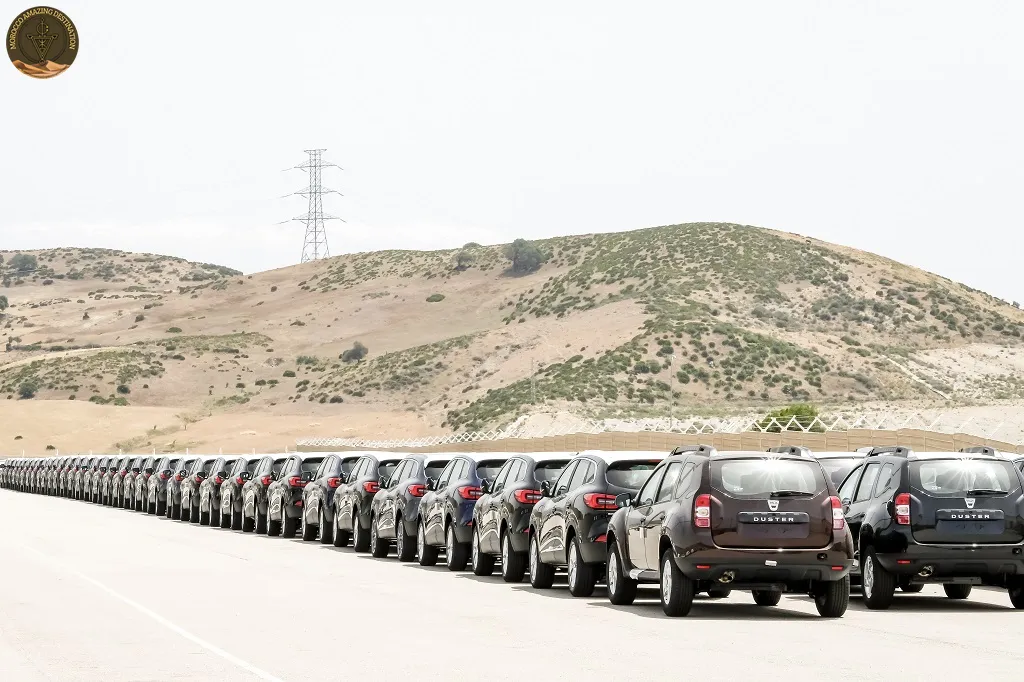
When you think of Morocco, your mind probably drifts to winding medinas, golden Sahara dunes, and aromatic tagines. But behind the scenes, this North African kingdom has quietly built something else entirely: the largest cars made in Morocco industry in Africa. That’s right — Morocco now produces more cars than any other African nation, surpassing South Africa and establishing itself as a global automotive manufacturing hub. From sleek Dacia hatchbacks rolling off assembly lines in Tangier to electric Citroën microcars built in Kenitra, Morocco’s automotive industry is rewriting the country’s economic story.
In this comprehensive guide, we explore every brand, every factory, and every model that makes Morocco the undisputed powerhouse of African car manufacturing. Whether you are a car enthusiast, a traveler curious about Morocco’s modern side, or a business professional tracking global supply chains, here is everything you need to know about which cars are made in Morocco.
Morocco’s Rise as an Automotive Hub
Morocco’s transformation into a car manufacturing giant did not happen overnight. It is the result of a deliberate national strategy launched over two decades ago. The government recognized that the country possessed three critical advantages: a strategic location at the crossroads of Africa and Europe, competitive labor costs, and deep-water ports capable of handling massive container ships.
The turning point came when the Tanger Med port complex was developed. Situated at the mouth of the Strait of Gibraltar, just 14 kilometers from the Spanish coast, it is now the largest container port in Africa and the Mediterranean. This infrastructure, combined with free trade agreements giving Moroccan-made goods preferential access to European Union markets, transformed the country into an irresistible destination for automotive investment.
Today, Morocco’s automotive industry employs more than 220,000 people directly and indirectly. The ecosystem includes not just assembly plants but hundreds of parts suppliers producing everything from wiring harnesses to seats, batteries, and electronic control units. The result is a fully integrated supply chain capable of delivering vehicles to European dealerships within days.
Which Brands and Models Are Made in Morocco?
When asking which cars are made in Morocco, the answer spans multiple global manufacturers and a growing list of models. Here is a detailed breakdown of every major player producing vehicles on Moroccan soil.
Renault Group: The Cornerstone of Moroccan Car Production
Renault is by far the largest automotive manufacturer in Morocco. The French group operates two major facilities in the country, together accounting for the vast majority of car production Morocco sees each year.
Tangier (Melloussa Plant): Built in the Melloussa free trade zone near Tangier, this is one of the largest and most advanced car factories in the world. It was designed from the ground up to be carbon-neutral and water-efficient, earning it the title of Africa’s greenest automotive plant. The Tangier site primarily produces Dacia-branded vehicles, which are the best-selling budget cars across Europe, the Middle East, and North Africa.
Models assembled at Renault Tangier include:
- Dacia Sandero — the workhorse of the Dacia lineup and one of Europe’s best-selling passenger cars
- Dacia Logan — a compact sedan popular across emerging markets
- Dacia Jogger — a versatile seven-seater family vehicle
- Dacia Sandero Stepway — the crossover-style variant
- Renault Express — a light commercial van used extensively by businesses
Casablanca (SOMACA Factory): The Société Marocaine de Constructions Automobiles has operated in Casablanca’s Aïn Sebaâ industrial zone for decades. Under Renault’s ownership, it produces:
- Renault Dokker — a compact utility and passenger van
- Renault Express — additional production lines
- Various Renault and Dacia models for the domestic Moroccan market and African export
Stellantis Group: Peugeot and Citroën in Kenitra
The Stellantis plant Kenitra (formerly PSA Group) represents the second major pillar of Morocco car manufacturing. Inaugurated as a state-of-the-art facility, the Kenitra factory focuses on compact and fuel-efficient models.
Vehicles produced at Kenitra include:
- Peugeot 208 — the award-winning supermini, a European best-seller and the flagship of the Kenitra operation
- Citroën Ami — a tiny, fully electric two-seater designed for urban mobility, making it one of the most affordable EVs on the market. The Ami is a symbol of Morocco’s push into the electric vehicle space.
The Kenitra plant was designed with expansion in mind. Stellantis has publicly stated ambitions to increase the factory’s annual output significantly, adding new models and potentially crossing into the mid-size vehicle segment.
Sopriam and Multi-Brand Assembly
The automotive landscape in Morocco extends beyond Renault and Stellantis. Sopriam, a privately held Moroccan company, operates assembly lines for:
- Fiat models — including the Fiat Tipo and Fiat Doblo
- Jeep models — assembled for select African and Middle Eastern markets
Sopriam’s multi-brand approach allows Morocco to offer production flexibility that appeals to manufacturers who may not yet be ready to build their own dedicated factories in the country.
BYD and the Chinese Wave
The newest chapter in Morocco automotive manufacturing involves Chinese manufacturers. BYD, the world’s largest electric vehicle producer, has announced a major investment in Morocco, building a factory that will produce both electric cars and battery systems. This development is a game-changer for the Moroccan industry:
- BYD plans to manufacture affordable EVs targeting both the African and European markets
- The investment includes a battery production line, adding critical supply chain depth
- Other Chinese brands are reportedly in exploratory talks, sensing the same logistical advantages that attracted Renault and Stellantis
Morocco is rapidly becoming the preferred gateway for Asian automakers seeking access to Western markets without the costs and regulatory complexity of producing in Europe.
Where Are the Factories Located?
Understanding the geography of car factories in Morocco helps explain why the industry has succeeded. Every major plant sits within easy reach of a world-class port.
Tangier Automotive City
The Tangier-Melloussa zone is the crown jewel of Moroccan automotive manufacturing. Anchored by the Renault-Nissan plant, this industrial ecosystem spans thousands of hectares and hosts over 200 parts suppliers. A dedicated railway line connects the zone directly to the Tanger Med port, meaning a car can roll off the assembly line and be loaded onto a ship bound for Europe within hours.
The Tangier region benefits from excellent road and high-speed rail connections to Casablanca, Rabat, and Fes, making it attractive for the skilled workforce needed to sustain automotive production.
Kenitra’s Atlantic Free Zone
The Kenitra industrial area, located along the Atlantic coast north of Rabat, was developed specifically to attract automotive and aeronautical investment. The Stellantis plant sits within the Atlantic Free Zone, a dedicated economic zone offering tax incentives, streamlined customs procedures, and turnkey infrastructure for manufacturers.
Kenitra’s location — midway between the economic hubs of Casablanca and Tangier — gives it access to both the northern human resources pool and the logistics network radiating from Casablanca’s port.
Casablanca’s Industrial Heritage
The SOMACA plant in Casablanca is Morocco’s original automotive factory, with a history stretching back generations. While smaller than the Tangier and Kenitra operations, it plays a vital role in serving the domestic market and provides a base for Renault’s light commercial vehicle strategy in Africa.
Why Morocco Became an Automotive Powerhouse
The success of Morocco car manufacturing boils down to a combination of geography, trade policy, and sustained public investment. Here are the key factors:
- Strategic location — Morocco is a short ferry ride from Spain and within trucking distance of major European markets. Tanger Med port connects directly to 180 ports worldwide, making export logistics remarkably efficient.
- Free trade agreements — Morocco has preferential trade deals with the European Union, the United States, several Arab nations, and most West African countries. Cars manufactured in Morocco enter these markets with reduced or zero tariffs.
- Competitive workforce — Labor costs in Morocco are significantly lower than in Europe, yet the country produces thousands of engineers, technicians, and skilled operators from its network of technical universities and vocational training centers.
- Political stability — Unlike many competing investment destinations, Morocco offers a stable political environment, a predictable regulatory framework, and active government support for foreign direct investment.
- Integrated supply chain — The presence of hundreds of parts suppliers clustered around the main assembly plants means manufacturers can source components locally, reducing inventory costs and lead times.
Electric Vehicles and the Future of Morocco’s Auto Industry
The most exciting frontier for carmaking in Morocco is the electric vehicle sector. The country is leveraging its automotive expertise and abundant renewable energy resources to position itself as Africa’s EV production hub.
Morocco’s Noor solar complex near Ouarzazate — one of the largest concentrated solar power plants on the planet — symbolizes the country’s commitment to clean energy. As global automakers face pressure to decarbonize their supply chains, factories powered by renewable energy become increasingly valuable. The Tangier Renault plant already operates with net-zero carbon emissions, and new facilities are being designed to the same standard.
Morocco also possesses significant reserves of cobalt and phosphates — both essential materials for EV battery production. The combination of raw materials, green energy, modern factories, and duty-free access to Western markets makes Morocco uniquely positioned to capture a significant share of the global EV manufacturing industry in the coming years.
A Driving Force for Moroccan Tourism
The rise of Morocco’s automotive industry is not just a story of factories and assembly lines — it is also fueling a new kind of interest in the country. Business travelers visiting the Tangier and Kenitra industrial zones often extend their trips to explore Morocco’s legendary sights. The Tangier region itself has become a compelling destination, with a revitalized waterfront, a historic medina, and the dramatic meeting point of the Atlantic Ocean and Mediterranean Sea.
Even leisure travelers can appreciate the automotive angle. Driving between Morocco’s imperial cities along the country’s modern highways gives visitors a firsthand look at how infrastructure investment — driven in part by industrial development — has transformed the travel experience. The same roads that carry freshly assembled cars to port also take you from Casablanca to Chefchaouen, from Fes to the Sahara dunes.
Conclusion
Morocco has engineered one of Africa’s most remarkable industrial success stories. From a modest assembly operation in Casablanca to a continent-leading automotive manufacturing ecosystem spanning Tangier, Kenitra, and beyond, the country now produces hundreds of thousands of vehicles each year for drivers across Europe, Africa, and the Middle East.
Whether you drive a Dacia Sandero through the streets of Paris, a Peugeot 208 in Barcelona, or an electric Citroën Ami in Milan, there is a good chance it began its journey in a Moroccan factory. And as the electric vehicle revolution accelerates, cars made in Morocco are set to become an even more common sight on roads around the world — a testament to a country that has quietly, confidently, and brilliantly mastered the art of modern manufacturing.
See Morocco for Yourself — From the Factories to the Desert
The industrial dynamism of modern Morocco is only part of its appeal. Standing at the crossroads of two continents and two seas, this is a country that rewards exploration — whether you are tracing the assembly lines of Tangier or tracing the caravan routes of the Sahara.
Experience the contrast for yourself. The 4-Day Trip from Tangier to Marrakech takes you from the automotive capital of the north — where Renault’s massive plant hums near the port — through the Rif Mountains, the blue city of Chefchaouen, and into the imperial heart of Marrakech. For a longer journey that includes the economic capital of Casablanca alongside Morocco’s greatest cities and desert landscapes, the 8-Day Tour from Casablanca to Morocco Imperial Cities offers a rich itinerary blending modern Morocco with centuries of history, culture, and breathtaking scenery.
If you found this helpful, add us as your preferred source on Google.
Frequently Asked Questions
Which car brands are manufactured in Morocco?
Morocco produces vehicles from several major brands. Renault Group manufactures Dacia models — including the Sandero, Logan, and Jogger — alongside Renault utility vehicles like the Express at its Tangier plant. Stellantis builds the Peugeot 208 and the Citroën Ami electric city car in Kenitra. Sopriam assembles Fiat and Jeep models locally, and Chinese manufacturer BYD has announced substantial investments in Moroccan production facilities.
Is Morocco really the largest car producer in Africa?
Yes, Morocco has overtaken South Africa to become Africa's largest automotive producer. The Renault plant in Tangier alone has an annual production capacity exceeding 400,000 units. Combined with the Stellantis factory in Kenitra, the SOMACA facility in Casablanca, and a growing network of parts suppliers, Morocco's total automotive output firmly places it as the continent's leader.
Where are the car factories located in Morocco?
The main production sites are concentrated in northern Morocco. Renault operates the massive Melloussa plant near Tangier, connected to the Tanger Med port, plus the historic SOMACA factory in Casablanca. The Stellantis plant is in Kenitra, about 50 km north of Rabat. These locations are chosen for their strategic proximity to Europe, deep-water ports, and skilled workforce catchment areas.
Does Morocco produce electric cars?
Yes, Morocco is actively expanding into electric vehicle production. The Stellantis factory in Kenitra manufactures the Citroën Ami, a compact electric quadricycle. Renault has produced electric variants in Morocco, and Chinese EV leaders like BYD are establishing manufacturing operations in the country. With its renewable energy capacity and strategic location, Morocco is positioning itself as a major hub for electric vehicle manufacturing in Africa.
Ready for an Adventure?
Have questions? Feel free to contact us using the form below. We're here to help!