· Travel · 12 min read
What Is Life Like in Morocco? A Complete Guide to Moroccan Daily Life and Culture
Curious about daily life in Morocco? Discover Moroccan culture, traditions, family values, food, cost of living, and what it's really like to live in this vibrant North African country.
Morocco is a country of contrasts — where ancient medinas meet modern boulevards, where the call to prayer mingles with the clatter of café terraces, and where centuries-old traditions coexist with a rapidly modernizing society. But beyond the postcard images of souks and sand dunes, what is life in Morocco really like? Whether you are planning to move, spend an extended stay, or simply curious about the rhythms of Moroccan daily life, this guide offers an honest and detailed look at how people live, work, eat, and celebrate in this fascinating North African kingdom.
Moroccan Society and Family Life
At the heart of Morocco lifestyle is the family. Moroccan society is built on tight-knit family units, often spanning multiple generations under one roof. It is common for elderly parents to live with their adult children, and extended family gatherings are a central part of life — especially on Fridays, the holy day when families share a couscous meal together.
Key aspects of Moroccan family life:
- Respect for elders is paramount. Younger family members defer to older relatives in decisions, and caring for aging parents is considered a duty, not a burden.
- Children are adored. Moroccans are exceptionally warm towards children — expect strangers in the street to smile, wave, and sometimes pinch cheeks affectionately.
- Gender roles are evolving. Traditionally, women managed the household while men worked outside the home, but this is shifting rapidly. More Moroccan women are attending university and building professional careers, particularly in cities like Rabat, Casablanca, and Marrakech.
- Neighborhood bonds are strong. In medinas and residential areas alike, neighbors look out for one another, share food, and celebrate holidays together. This sense of community is one of the most cherished aspects of living in Morocco.
Moroccan Daily Routine: The Rhythm of the Day
A typical day in Morocco follows a gentle and predictable rhythm shaped by climate, culture, and the Islamic call to prayer.
Morning (6:00 AM – 9:00 AM) The day often begins with a light breakfast — bread with olive oil, butter, honey, or amlou (almond and argan oil spread) — accompanied by sweet mint tea or coffee. Children head to school, and shops and souks begin to open around 9:00 AM.
Midday (12:00 PM – 2:00 PM) Lunch is the main meal of the day — a hearty tagine, couscous on Fridays, or grilled meats and salads. Most businesses close for a two-hour lunch break, allowing families to eat together at home. This is a sacred part of Moroccan culture and traditions.
Afternoon (2:00 PM – 5:00 PM) Shops reopen, and the pace picks up again. In summer, the afternoon heat can be intense, and in smaller towns you may notice a quieter, almost siesta-like atmosphere. Cafés fill with men drinking espresso or mint tea — an enduring pillar of Moroccan social life.
Evening (6:00 PM onwards) As temperatures cool, cities truly come alive. Families go for evening strolls along seaside corniches or through medina streets. Dinner is served late — often around 9:00 PM or later — and can include harira (a hearty soup), fresh bread, olives, and lighter dishes. On weekends, restaurants and cafés buzz until well past midnight.
Religion and Traditions in Everyday Life
Islam is woven into the fabric of Moroccan daily life. The adhan (call to prayer), heard five times a day from countless minarets, serves as a natural timekeeper.
How religion shapes daily life:
- Friday prayers are the most important of the week. Many businesses close for several hours around midday on Friday to allow men to attend the mosque.
- Ramadan transforms the country for an entire month. During daylight hours, Muslims fast from food and drink. The pace of life slows, and non-Muslims are expected to avoid eating, drinking, and smoking in public out of respect. After sunset, the iftar meal brings families and communities together in a celebration that can last late into the night.
- Eid celebrations — both Eid al-Fitr (end of Ramadan) and Eid al-Adha (Festival of Sacrifice) — are major holidays marked by family gatherings, special meals, new clothes, and gift-giving.
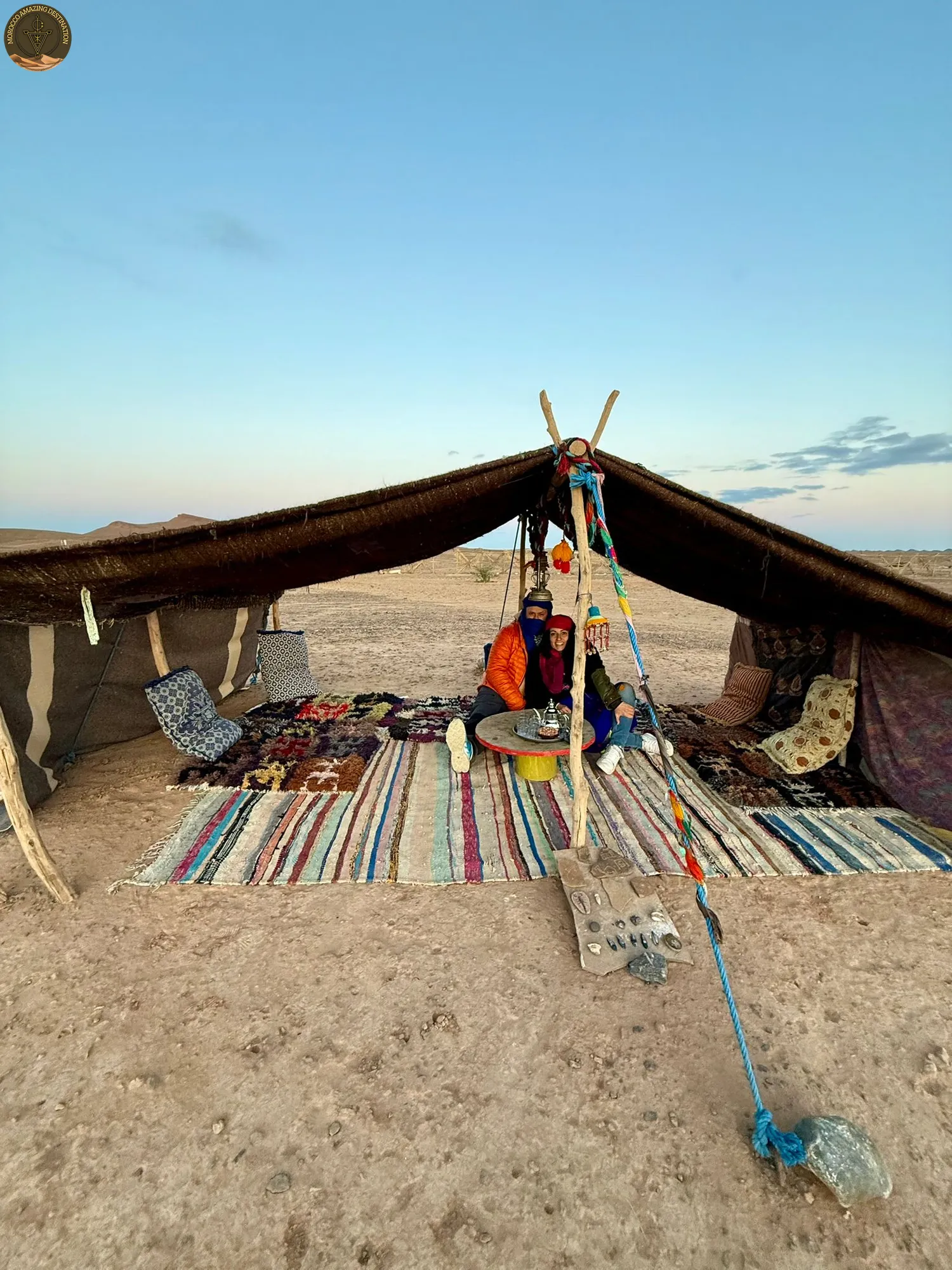
Beyond religious observances, Moroccan hospitality is legendary. Even in the simplest homes, guests are offered mint tea — refusing it is considered impolite. This tradition, rooted in Amazigh and Arab customs, embodies the warmth and generosity that define the Morocco lifestyle.
Moroccan Food Culture: Eating as a Social Ritual
Food in Morocco is far more than sustenance — it is a social ritual, a source of pride, and one of the most joyful aspects of life in Morocco.
What Moroccans eat daily:
- Tagine — a slow-cooked stew of meat or fish with vegetables, olives, and preserved lemons, named after the conical clay pot it is cooked in. Each region has its own variation.
- Couscous — steamed semolina grains served with vegetables and meat, traditionally eaten on Fridays.
- Harira — a tomato-based soup with lentils, chickpeas, and herbs, often eaten to break the Ramadan fast.
- Mechoui — whole lamb roasted in a clay oven, reserved for special occasions.
- Street food — from steaming bowls of bissara (fava bean soup) to sizzling merguez sausages and freshly fried sfenj (Moroccan doughnuts), the streets of Morocco are a feast.
Meals are communal. Dishes are placed at the center of the table, and everyone eats from the same plate — traditionally using pieces of bread (khobz) rather than utensils. Bread is considered sacred; you will never see a Moroccan throw it away.
Mint tea, often called “Berber whiskey,” is the national drink and a symbol of hospitality. The ritual of pouring tea from a height, creating a delicate foam, is an art form passed down through generations.
Cost of Living in Morocco
One of the most common questions from those considering living in Morocco is how far their money will go. The cost of living in Morocco varies significantly depending on lifestyle and location.
| Expense | Budget Lifestyle | Comfortable Lifestyle |
|---|---|---|
| 1-bedroom apartment (city center) | $200–$400/month | $500–$900/month |
| Utilities (electricity, water, internet) | $40–$70/month | $80–$150/month |
| Groceries (local markets) | $150–$250/month | $300–$500/month |
| Dining out (local restaurant) | $3–$6 per meal | $10–$25 per meal |
| Transportation (taxis, petit taxi) | $1–$3 per ride | $5–$10 per ride |
Key points about living costs:
- Fresh produce is incredibly cheap — buy directly from local souks for the best prices. A kilo of oranges can cost as little as $0.30 in season.
- Rent is the biggest variable. A traditional riad in the Marrakech medina can range from $400 to $2,000+ per month depending on condition and location.
- Imported goods are expensive. If you insist on familiar Western brands, expect to pay a premium.
- Healthcare is affordable. Private clinics in major cities offer excellent care at a fraction of Western prices. Many expats maintain international health insurance.
- No taxes for many retirees. Morocco has tax treaties with several countries, and many foreign retirees pay little to no income tax.
Moroccan Homes and Architecture
The places where Moroccans live tell a story of climate, culture, and craftsmanship. Understanding Moroccan architecture helps you appreciate what life in Morocco looks like from the inside.
Traditional homes:
- Riads — traditional courtyard houses found in medinas, built around a central garden or fountain. Typically two or three stories, with rooms opening inward onto the courtyard. Riads prioritize privacy and family life, with few outward-facing windows. Today, many have been restored into boutique guesthouses.
- Dars — similar to a riad but smaller, without a full garden. Often found in Fes and Marrakech.
- Traditional Moroccan houses in rural areas are often made of pisé (rammed earth), which provides natural insulation against heat and cold.
Modern housing: In newer parts of cities, apartment buildings dominate. They range from basic units to luxury residences with pools and security. In upscale neighborhoods like Guéliz (Marrakech), Souissi (Rabat), or Maarif (Casablanca), you will find European-style apartments with modern amenities.
Interior design reflects the rich Moroccan culture and traditions: intricately carved woodwork, zellige tile mosaics in geometric patterns, tadelakt (polished lime plaster) walls, and colorful Berber rugs and textiles create warm, inviting spaces that blend artistry with daily life.
Language and Communication
Morocco is a multilingual country, and navigating its linguistic landscape is part of the Morocco lifestyle.
Languages you will encounter daily:
- Darija (Moroccan Arabic) — the spoken language of the street, home, and marketplace. Distinct from Modern Standard Arabic used in formal contexts.
- Amazigh (Berber) — recognized as an official language alongside Arabic. Three main dialects: Tachelhit (south), Tamazight (central), and Tarifit (north).
- French — widely used in business, education, government, and signage. The default second language for most educated Moroccans. In cities, many conversations flow seamlessly between French and Darija.
- Spanish — common in the northern regions around Tangier and Tetouan, a legacy of the Spanish protectorate.
- English — increasingly popular among younger generations, especially in tourism and technology.
For foreigners living in Morocco, learning at least basic French or Darija makes a tremendous difference in daily interactions — from haggling in the souk to navigating bureaucracy.
Working and Education
Work culture in Morocco:
- The standard workweek runs Monday to Friday, with public sector offices typically open 8:30 AM to 4:30 PM. Private companies often work longer hours.
- The minimum wage is around $300 per month, though skilled professionals in cities like Casablanca earn considerably more.
- Unemployment, especially among university graduates, remains a challenge, driving many young Moroccans to seek opportunities abroad.
- The informal economy — souk vendors, artisans, small-scale agriculture — employs a significant portion of the population.
- Remote workers and digital nomads are a growing presence in cities like Marrakech and Essaouira, drawn by the affordable cost of living in Morocco and the vibrant lifestyle.
Education:
- Public education is free and compulsory through age 15. Schools use Arabic and increasingly Amazigh, with French introduced early.
- Private schools, many following the French curriculum, are popular among middle-class and expat families.
- Universities in cities like Rabat, Fes, and Casablanca offer a range of programs, though many Moroccan students also pursue degrees in France and other European countries.
Shopping: From Supermarkets to Souks
Shopping is a window into Moroccan daily life. The experience varies dramatically depending on where you go.
Souks (traditional markets):
- Found in every medina, souks are a sensory overload — colorful spices piled in pyramids, fresh-baked bread, leather goods, ceramics, lanterns, and the sound of haggling.
- Haggling is expected and part of the culture. Start at about half the asking price and negotiate with good humor.
- Locals shop at souks for fresh produce, meat, spices, and household goods.
- Each city specializes in certain crafts: leather in Fes, carpets in the Atlas region, pottery in Safi, argan oil products in Essaouira.
Modern stores:
- Supermarket chains like Marjane and Carrefour offer familiar Western-style shopping with fixed prices.
- These are the go-to for imported goods, packaged foods, electronics, and household items.
- Prices in supermarkets are higher than souks for fresh food.
What Foreigners Should Know Before Moving to Morocco
Thousands of foreigners have made Morocco their home. Here is what they wish they had known before arriving.
Practical considerations:
- Residency permits: Most foreigners need a carte de séjour for stays over 90 days. The process can be bureaucratic — patience and a local contact who speaks French are invaluable.
- Healthcare: Private clinics in major cities are excellent and affordable. Prescriptions that require a doctor’s visit in the West are often available over the counter. Still, comprehensive health insurance is recommended.
- Banking: Opening a Moroccan bank account requires a residency permit and patience. Many expats initially rely on international accounts and ATMs.
- Transportation: Petit taxis (city taxis) are cheap and abundant. Grand taxis connect towns. Trains run between major cities. Driving yourself requires nerves of steel and a tolerance for creative interpretations of traffic rules.
- Internet and connectivity: High-speed internet is available in cities. 4G mobile data is fast and affordable.
Cultural integration:
- Learn to slow down. The Moroccan pace of life does not rush — meetings start late, bureaucracy crawls, and “Inshallah” (God willing) is both a philosophy and a coping mechanism.
- Dress modestly. While not as conservative as some Middle Eastern countries, covering shoulders and knees shows respect and helps you blend in.
- Public displays of affection between couples should be discreet. Holding hands is acceptable in cities but overt kissing is not.
- The left hand is considered unclean — eat, shake hands, and handle money with your right hand.
- During Ramadan, be mindful and avoid eating, drinking, or smoking in public during daylight hours.
The expat experience: The expat communities in Marrakech, Rabat, Tangier, Essaouira, and Casablanca are welcoming and diverse — artists, retirees, entrepreneurs, and remote workers from Europe, America, and beyond. Finding your tribe is usually the easy part. Adapting to the pace, the paperwork, and the cultural nuances takes time — but those who do often describe life in Morocco as the richest chapter of their lives.
Conclusion: What Life in Morocco Is Really Like
Life in Morocco is a tapestry of contrasts. It is a place where ancient traditions are alive in the daily routines of modern families, where you can buy groceries at a centuries-old souk in the morning and work remotely from a chic rooftop café in the afternoon. It is a country that will test your patience with bureaucracy and reward you with breathtaking hospitality. It asks you to slow down, to share your meal, to drink more tea, and to accept that not everything goes according to plan — and that is perfectly okay.
Whether you are drawn by the warm climate, the affordable cost of living in Morocco, the rich Moroccan culture and traditions, or simply the promise of sunsets over ancient medinas and Atlantic waves, Morocco offers a way of life that lingers in the soul long after you have left — or long after you have decided to stay.
If experiencing authentic Moroccan daily life sounds like your kind of adventure, consider exploring the country beyond the surface. A guided cultural tour offers the perfect introduction to the people, traditions, and landscapes that make living in Morocco so unforgettable.
Experience Moroccan Culture Firsthand — 15-Day Grand Cultural Tour Through Morocco — an immersive journey from Tangier through imperial cities, Berber villages, and the Sahara.
Discover the Desert and Beyond — 4-Day Guided Morocco Tour: Desert Adventure from Ouarzazate — explore kasbahs, valleys, and desert landscapes while connecting with local culture along the way.
If you found this helpful, add us as your preferred source on Google.
Frequently Asked Questions
What is daily life like in Morocco?
Daily life in Morocco revolves around family, community, and a relaxed pace. Meals are social events — lunch is the main meal, often eaten at home with family around midday. Afternoons can be quiet, especially in smaller towns, and evenings come alive with people strolling, sipping mint tea at cafés, and shopping in bustling souks. The call to prayer five times a day sets the rhythm, and hospitality is deeply ingrained in Moroccan culture.
Is Morocco expensive to live in?
Compared to Western Europe and North America, the cost of living in Morocco is significantly lower. A couple can live comfortably on $1,200 to $2,000 per month, including rent for a modern apartment, utilities, groceries, and dining out. Fresh produce from local souks is remarkably affordable, and eating out at local restaurants costs a fraction of what you would pay in Europe. Imported goods and Western-style housing in expat-heavy neighborhoods can raise costs considerably.
Can a foreigner live in Morocco?
Yes, many foreigners live in Morocco successfully. The most common path is a residency permit (carte de séjour), which can be obtained through employment, investment, studying, marriage to a Moroccan citizen, or proving sufficient independent income for retirement. The process involves paperwork and patience, but cities like Marrakech, Rabat, Tangier, and Essaouira have well-established expat communities. Learning some French or Darija greatly improves daily life and integration.
What language do Moroccans speak in daily life?
In daily life, most Moroccans speak Darija — Moroccan Arabic — which is the colloquial language used at home, in markets, and on the street. French is widely spoken in business, education, and administration. In the north, many people also speak Spanish, and in rural areas, Amazigh (Berber) dialects such as Tachelhit and Tarifit are commonly used. In tourist areas, English is increasingly understood, but knowing some basic French or Darija goes a long way.
- daily-life-morocco
- morocco-lifestyle
- living-in-morocco
- cost-of-living-morocco
- morocco-culture
- morocco-traditions
- moroccan-cuisine
- moroccan-hospitality
- morocco-languages
- traditional-moroccan-houses
- culture
- medina
Ready for an Adventure?
Have questions? Feel free to contact us using the form below. We're here to help!