
· Travel · 6 min read
Telouet Kasbah: Inside the Glaoui Palace of the High Atlas
Telouet Kasbah in Morocco: the Glaoui palace story, the painted rooms inside, and the detour maths before you drive up.
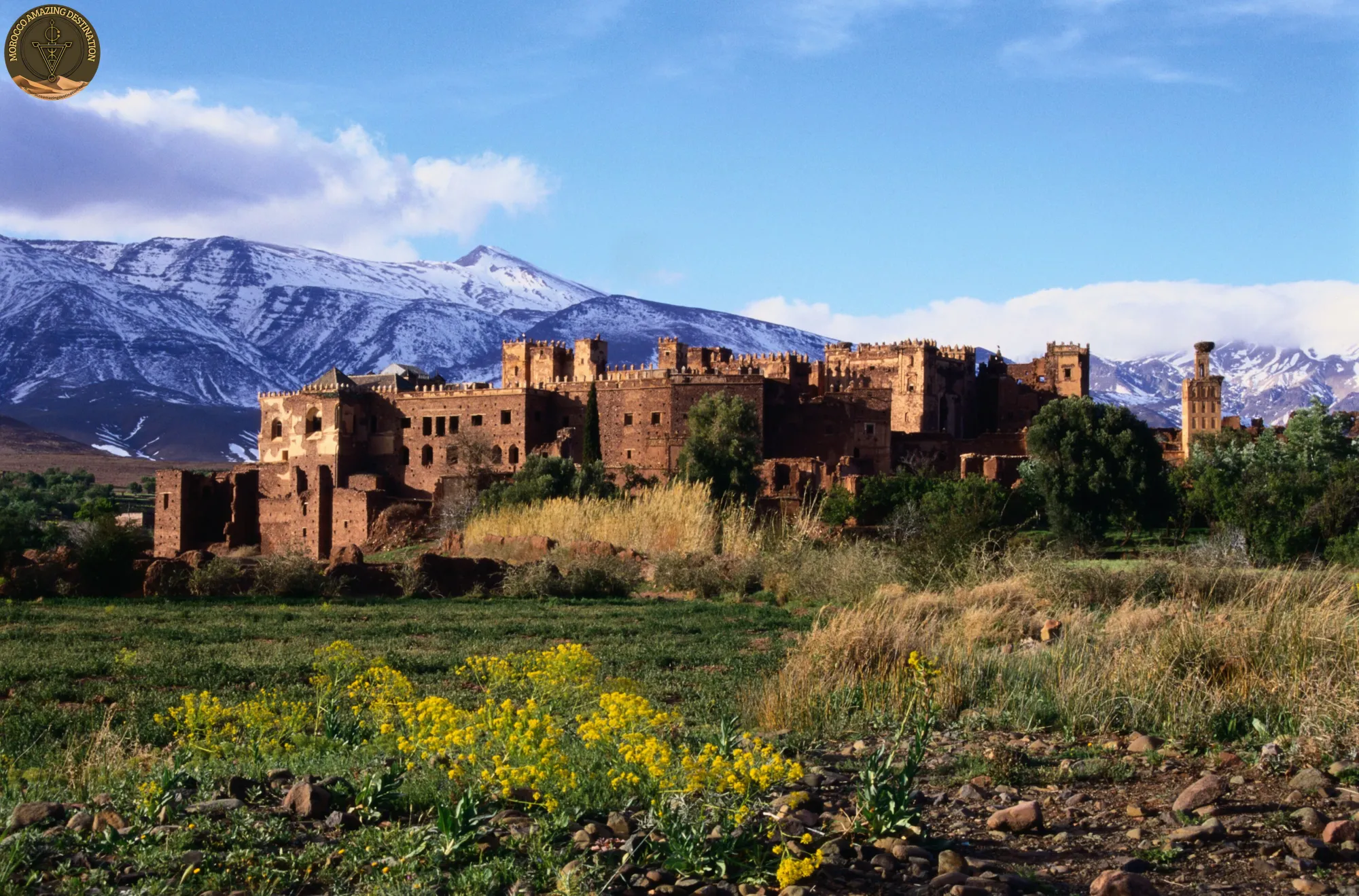
Telouet Kasbah is the abandoned palace of the Glaoui family, begun in the 1860s at the head of the Ounila valley, about 1,800 metres up in the High Atlas. From the road it reads as a walled village of mud towers, with terraced fields falling away below. Those walls paid for what sits inside: rooms lined with cut tile, carved plaster and painted cedar.
This guide covers how a toll post on a caravan road became a palace, why the family who built the Glaoui palace lost it, what survives of the decoration, and the driving maths that decide whether the detour fits your day.
A Palace at the Head of the Ounila Valley
Telouet sits where the Ounila corridor meets the climb to the Tizi n Tichka, on the old road between Marrakesh and the oases south of the Atlas. Before the paved route this was one of the few practical crossings. Salt from the mines nearby, dates, leather and slaves moved along it, and whoever held Telouet could charge for passage.
Tolls paid for the palace. Building began in the 1860s beside an older kasbah and continued in campaigns for roughly ninety years. By the end the complex held reception halls, a court, garrison quarters, stables and rooms for travellers, so it worked like a small palatial town.
Building at 1,800 metres meant snow that can close the approach for days. The family accepted that because traffic on the road paid better than the climate ever did.
The Glaoui Family and the End of Their Power
In 1893 Sultan Hassan I was caught in a snowstorm near Telouet on his way back from Tafilalet. Madani El Glaoui sheltered the court for weeks and was repaid with wide authority over the surrounding country. He became Grand Vizier in 1908 and died in 1918. His brother Thami took a role the French had already confirmed: Pasha of Marrakesh from 1912.
- Income came from the caravan road, family estates and protected trade.
- Thami raised armed columns, the harka, and used them against rivals.
- French backing brought weapons, roads and a free hand in the mountains.
That alliance split how the family is remembered. Nationalist memory treats it as betrayal. In the south, some families still describe Thami as the man who kept the roads open.
His position depended on the French staying, and after the Second World War they were leaving. In 1953 he backed the removal and exile of Sultan Mohammed V. The Sultan returned in late 1955, Thami submitted that November, and he died in Marrakesh on 23 January 1956, weeks before independence. Family property was confiscated in 1957 and the palace was looted.
The Decorated Interior: Zellige, Stucco and Cedar
What remains of the Telouet kasbah interior is mostly an upper floor. You cross bare earthen passages and a plain court, then a doorway opens into a hall finished in the Andalusian-Moroccan manner: glazed tile underfoot, carved plaster at eye level, painted cedar overhead.
Local accounts credit a large crew of craftsmen brought up from Fez and Marrakesh, and give figures for how long they worked. The materials are what can still be checked: the tile, the plaster, the cedar. The payroll is tradition, so treat the numbers you hear on site as story rather than record.
- Glazed zellige tiles cover the lower walls in geometric panels around the doorways.
- Carved stucco runs above the tile in lacework and calligraphic bands.
- Painted cedar covers the ceilings in faded reds, greens and blues.
- Muqarnas vaulting and polylobed arches frame the main reception rooms.
Outside, the walls are mud and stone. Inside, the finish says who could pay to bring craftsmen up from the cities, and what that money was meant to prove.
The Tizi n Tichka to Telouet Detour
The Tizi n Tichka to Telouet side road leaves the N9 about 6 km south of the pass summit. From there it runs roughly 20 km on a narrow, winding surface, patched in places, which takes 30 to 40 minutes each way. Add it up and the detour costs 60 to 90 minutes of driving before you park.
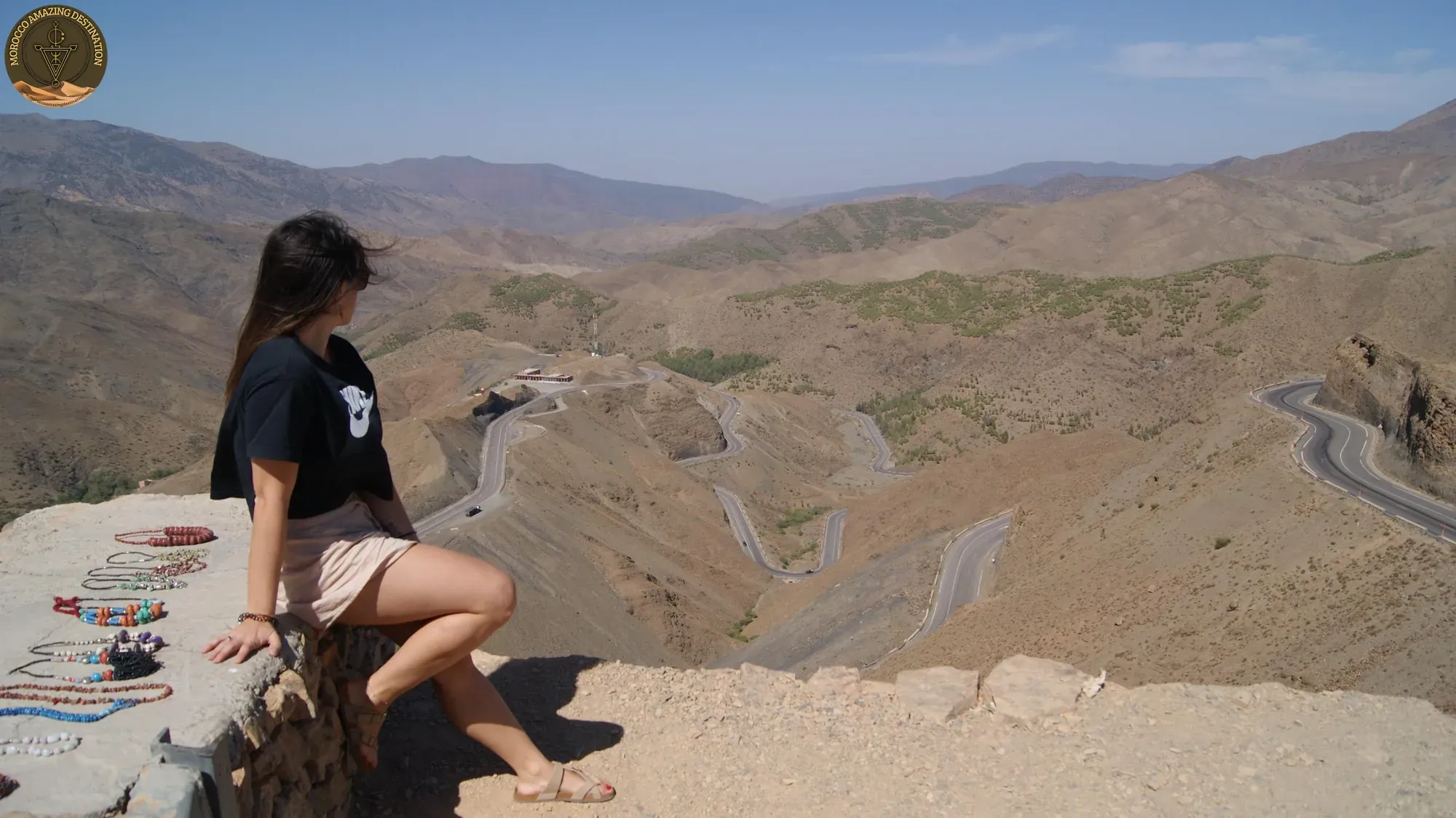
In dry weather an ordinary car is fine. Snow and heavy rain change that, and the pass closes in bad winters. There is no public bus to Telouet and no fuel in the village, so fill up before you leave the N9.
The second way in is the P1506 down the Ounila valley to Ait Ben Haddou, which turns Telouet into a half-day scenic route rather than an out-and-back. Most itineraries treat the palace as a ten minute photo stop. Give it more than that, or take the valley road and let the drive be the point.
Visiting Telouet Kasbah Today
Access has changed more than once since the earthquake of 8 September 2023. The palace closed, reopened in part, and some sections remain fenced. Confirm locally on the day and keep to the marked route.
Entry is ticketed, recently around 50 dirhams with a local guide often included. Confirm the price and the opening hours at the gate, since both have moved. Telouet is not a UNESCO World Heritage site; the listing on this road belongs to Ait Ben Haddou, about 40 km south.
- From Ait Ben Haddou it is about 40 km on the P1506, so allow 90 minutes to two hours with stops.
- From Ouarzazate it is about 76 km through the valley.
- From Marrakesh it is about 130 km over the Tizi n Tichka, roughly three hours.
- On site, an hour to 90 minutes covers the decorated rooms, the outer courts and the view.
Mornings give the softer light. Spring and autumn are the comfortable months, and winter needs a weather check the night before. For the drive itself, our guide to the valley road from Ait Ben Haddou to Telouet covers every stop, including Tamdaght kasbah and its collapsed towers.
A private driver takes the parking, the narrow bends and the timing off your hands, and leaves the story to the guide. Our 4-Day Guided Morocco Tour: Ouarzazate to Marrakech passes this way, and the 3-Day Trip from Marrakech to Merzouga pairs the kasbah road with the desert.
We can customize a tour to match your needs - design your perfect itinerary
If you found this helpful, add us as your preferred source on Google.
Frequently Asked Questions
What is Telouet Kasbah?
Telouet Kasbah is the abandoned palace of the Glaoui family, begun in the 1860s at the head of the Ounila valley, about 1,800 metres up in the High Atlas. The family grew rich on tolls from the caravan road between Marrakesh and the south, and two decorated reception rooms still stand above the village.
Is Telouet Kasbah open after the earthquake?
Partly, and it changes. The palace closed after the earthquake of 8 September 2023, then reopened some sections after safety work while others stay fenced off. Ask locally on the day and keep to the marked route.
How much does it cost to enter Telouet Kasbah?
Entry is ticketed, recently around 50 dirhams with a local guide often included. Confirm the current price and opening hours at the gate, since both have changed since the earthquake.
How do you get to Telouet from Ait Ben Haddou or Marrakesh?
From Ait Ben Haddou, take the P1506 north for about 40 km, which takes 90 minutes to two hours with stops. From Marrakesh, drive the N9 over the Tizi n Tichka, about 130 km and roughly three hours. The turn-off sits about 6 km south of the pass summit, then 20 km of side road.
Ready for an Adventure?
Have questions? Feel free to contact us using the form below. We're here to help!