
· Travel · 5 min read
Tamdaght Kasbah Morocco: History, Ruins, Visit Guide
Visit Tamdaght kasbah in Morocco: Glaoui history, ruined towers, stork nests and gardens near Ait Benhaddou. Plan your trip.
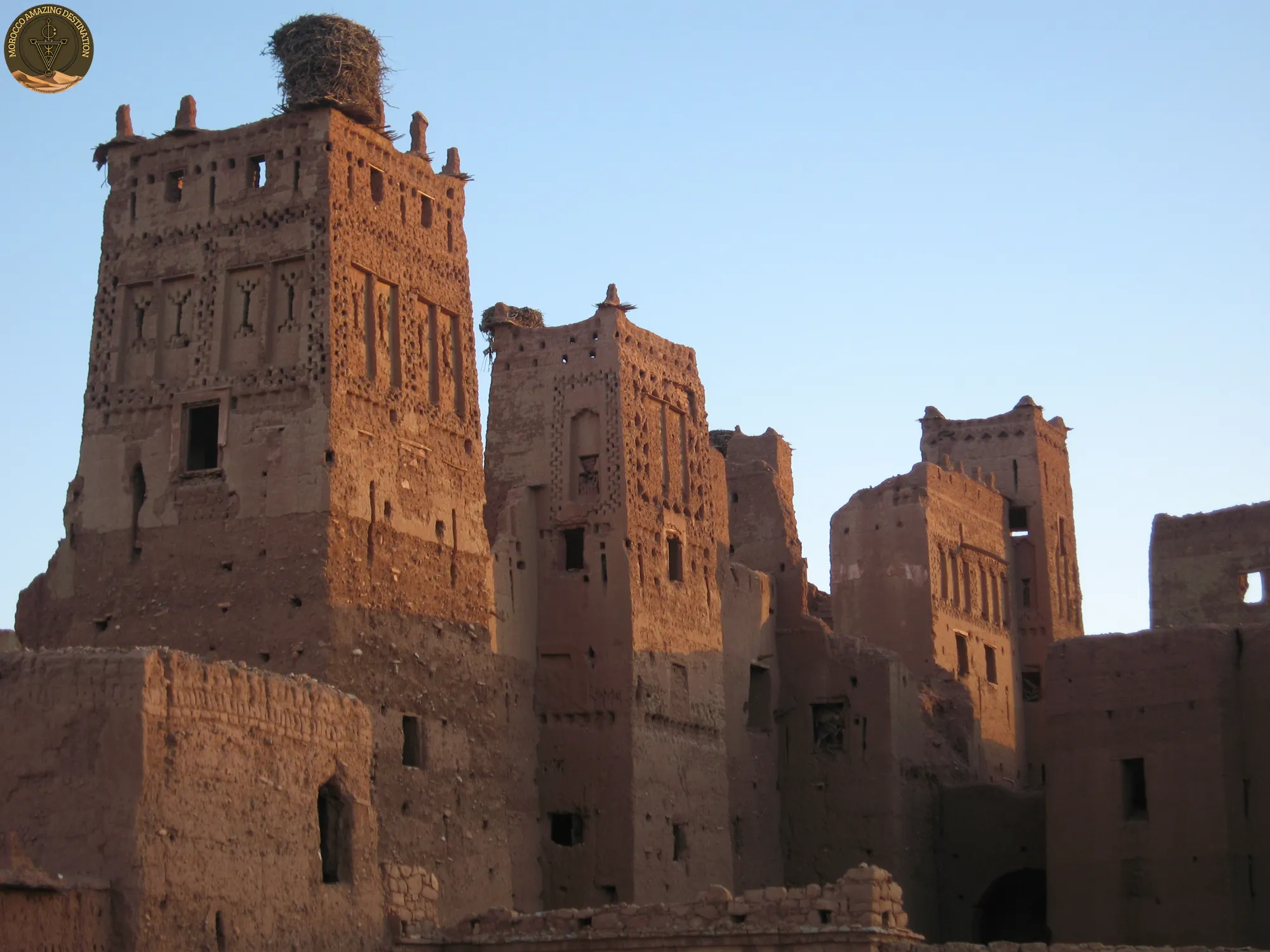
Most visitors photograph Ait Benhaddou from the riverbank and drive back to Ouarzazate. Ten minutes up the valley, a second fortress rises above green gardens, quieter and half in ruins. That is Tamdaght kasbah, a former Glaoui stronghold about 6 km north of its famous neighbour. It asks for about an hour of your time. It shows a side of Tamdaght kasbah Morocco that many travellers miss: lived-in walls, stork nests and working gardens.
In this guide, we explain where the kasbah sits and its Glaoui past. We show what the ruins and village look like today, and how you can visit them.
Where Tamdaght Sits in the Ounila Valley
Tamdaght stands where the Ounila and Mellah valleys meet, at the southern mouth of the Ounila gorge. Red slopes close in behind the village, and terraced gardens spread below the walls toward the river. The setting feels wilder than Ait Benhaddou, and you will likely share it with only a handful of other visitors.
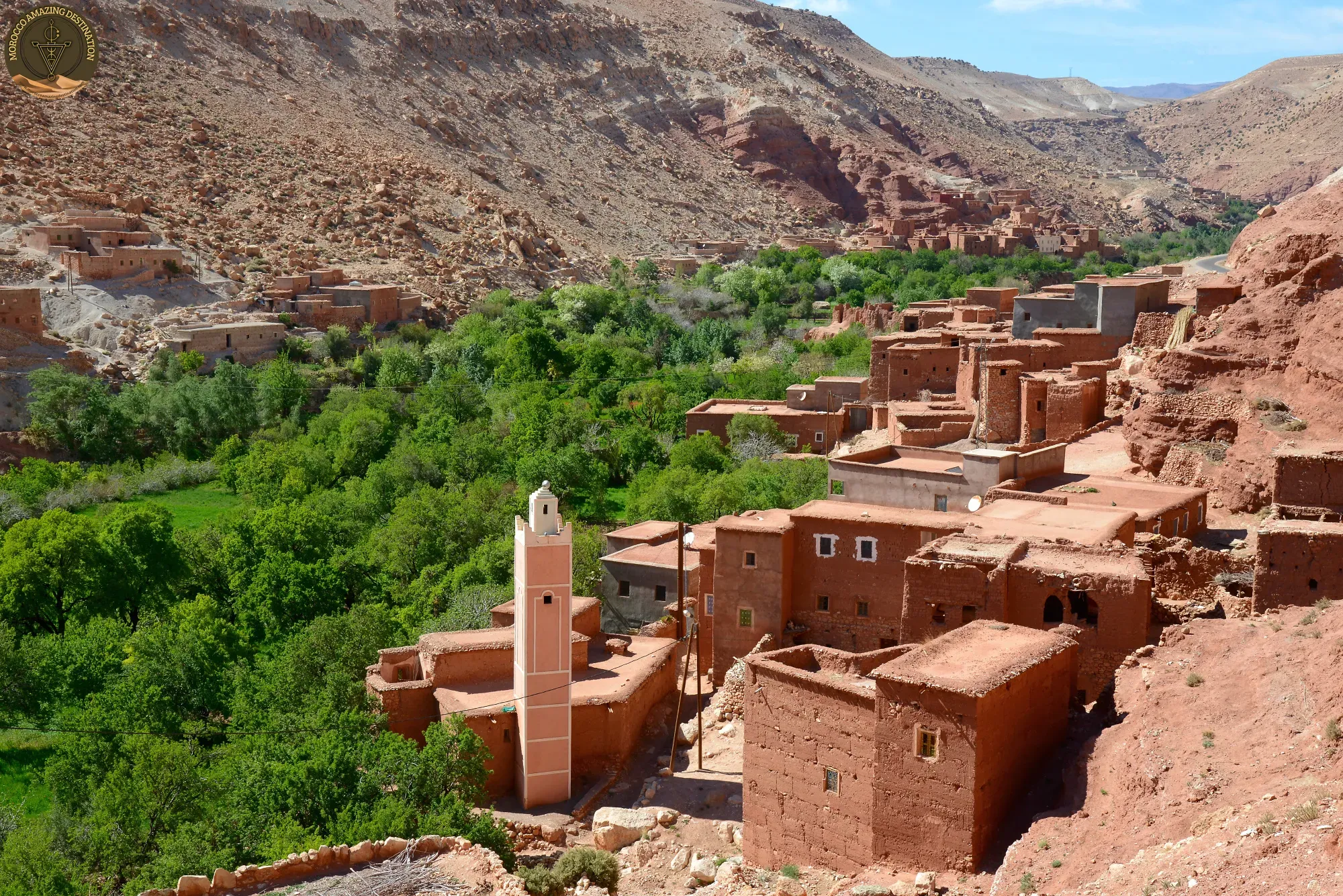
The kasbah is easy to place on a map, and the distances are short. The paved P1506 road runs right past the village, and an ordinary car handles it in dry conditions.
- Ait Benhaddou: about 6 km south, roughly 10 minutes by car.
- Ouarzazate: 30 to 40 km southeast, under an hour away.
- Telouet: about 40 km north up the Ounila road, allow two hours with stops.
For the full drive north, read our Ounila Valley route guide, which covers the road stop by stop from Ait Benhaddou to Telouet.
A Glaoui Kasbah and Its Ruin Atmosphere
The kasbah Tamdaght history starts with resistance. The fortress belonged to a local chief who blocked Glaoui caravan tolls through the valley. Around 1900, Thami El Glaoui arrived with a large harka force and artillery, breached the pise walls with cannon fire, and took the stronghold. Glaoui administrators then extended it through the 1920s to 1940s into the large complex seen today.
What you see now is a mix of survival and decay. High earthen walls and decorated corner towers still dominate the skyline, while other sections have melted back into the slope. Some rooms keep painted ceilings, and some floors have collapsed. After independence the building served briefly as a prison, then emptied, and recent earthquake damage has kept some interiors closed. Treat closures as final and check locally before assuming anything is open.
The half-ruined state is exactly the point. Restored Ait Benhaddou shows the polished version of earthen architecture. Tamdaght shows how these buildings age when families, weather and maintenance decide their fate.
Village Lanes, Gardens and Kasbah Architecture
Walk past the outer walls and the visit turns into a village stroll. The lanes around the kasbah hold a white marabout shrine, an old mosque and school, and traces of a former Jewish quarter. Residents still farm the plots below, and the smell of woodsmoke hangs over the lanes on cool mornings.
Below the walls, channel irrigation feeds a patchwork of orchards and fields. This is the greenest part of the visit, and spring brings blossom across the valley floor.
- Stork nests: big stick nests crown several towers, best watched in spring.
- Orchards: almond, fig, pomegranate, date palm and olive trees mixed with wheat plots.
- Lanes: the shrine, the old mosque and quiet residential passages behind the walls.
- Viewpoints: the riverbank path gives the widest view of walls above gardens.
Guides often wait near the mosque parking area and will offer a walk of 30 to 40 minutes. Agree the price first, carry small change, and ask before photographing people or entering doorways.
Film Studios and Shoots Around the Kasbah
Tamdaght has a habit of appearing in film histories. Local guides point to the surrounding slopes and riverbed as ground used by productions such as Gladiator. Bond location guides list the area around Tamdakht for The Living Daylights. Treat both credits as reportedly rather than certain, since studio records rarely name this exact spot.
What is certain is the connection. Ouarzazate and its Atlas studios sit within an hour, and crews have worked all along this valley for decades. The landscape explains why: red gorge walls, earthen towers and green river plots sit within a single camera pan. Claims about other famous series circulate in blogs, but single-source mentions are best ignored unless a guide can show you the exact ground.
Planning Your Visit and Where to Base Yourself
There is no formal ticket office, so the visit runs on local arrangements. Park by the mosque, expect to be approached by a guide, and allow about an hour for walls, gardens and lanes. The classic pairing is Tamdaght to Ait Benhaddou in one morning. See the UNESCO World Heritage site of Ait Benhaddou first, then Tamdaght while the light softens. Note that Tamdaght itself is not a UNESCO site.
- Timing: morning or late afternoon gives the best light on the walls.
- Season: the months from October to April feel most comfortable, with orchard blossom in late winter.
- Guides: expect around 100 dirhams per group for a short walk, plus a small tip of 20 to 50 dirhams if a family opens rooms.
- Supplies: carry water and fuel from Ait Benhaddou or Ouarzazate, since the valley has little beyond small shops.
Base yourself in Ait Benhaddou for the shortest drive or in Ouarzazate for more hotels and restaurants. Either works as a launch point, and a private driver removes the parking and direction questions entirely. For the longer valley context, our Ounila Valley route guide shows how Tamdaght fits between Ait Benhaddou and Telouet.
Tamdaght pairs naturally with a private route through kasbah country. Our 4-Day Guided Morocco Tour from Ouarzazate to Marrakech passes through this region, and the 3-Day Trip from Marrakech to Merzouga combines Ait Benhaddou with the desert road.
We can customize a tour to match your needs - design your perfect itinerary
If you found this helpful, add us as your preferred source on Google.
Frequently Asked Questions
Where is Tamdaght kasbah?
Tamdaght kasbah stands in the village of Tamdaght, about 6 km north of Ait Benhaddou and 30 to 40 km from Ouarzazate. It sits at the mouth of the Ounila Valley on the paved P1506 road toward Telouet, roughly 10 minutes by car from Ait Benhaddou.
Who built Tamdaght kasbah?
The site began as an Amazigh stronghold and passed to the Glaoui family around 1900 after a siege with cannon fire. The Glaoui extended it through the 1920s to 1940s, and it served briefly as a prison after independence before falling into ruin.
Can you go inside Tamdaght kasbah?
Sometimes. Parts of the kasbah are lived in and other parts are ruined or closed, so interior access varies and depends on local families and guides. Ask at the village, agree any tip in advance, and stay out of cordoned or unstable sections.
How do I combine Tamdaght with Ait Benhaddou?
See Ait Benhaddou first, then drive 10 minutes north to Tamdaght for about an hour among the walls, gardens and village lanes. The pair also works as the first stop on the Ounila Valley road toward Telouet.
Ready for an Adventure?
Have questions? Feel free to contact us using the form below. We're here to help!