
· Travel · 5 min read
Royal Theatre of Rabat: Zaha Hadid's Late Masterpiece
The Royal Theatre of Rabat is open to the public. Here is who designed it, what its three stages seat, and the dress code to know before you book.
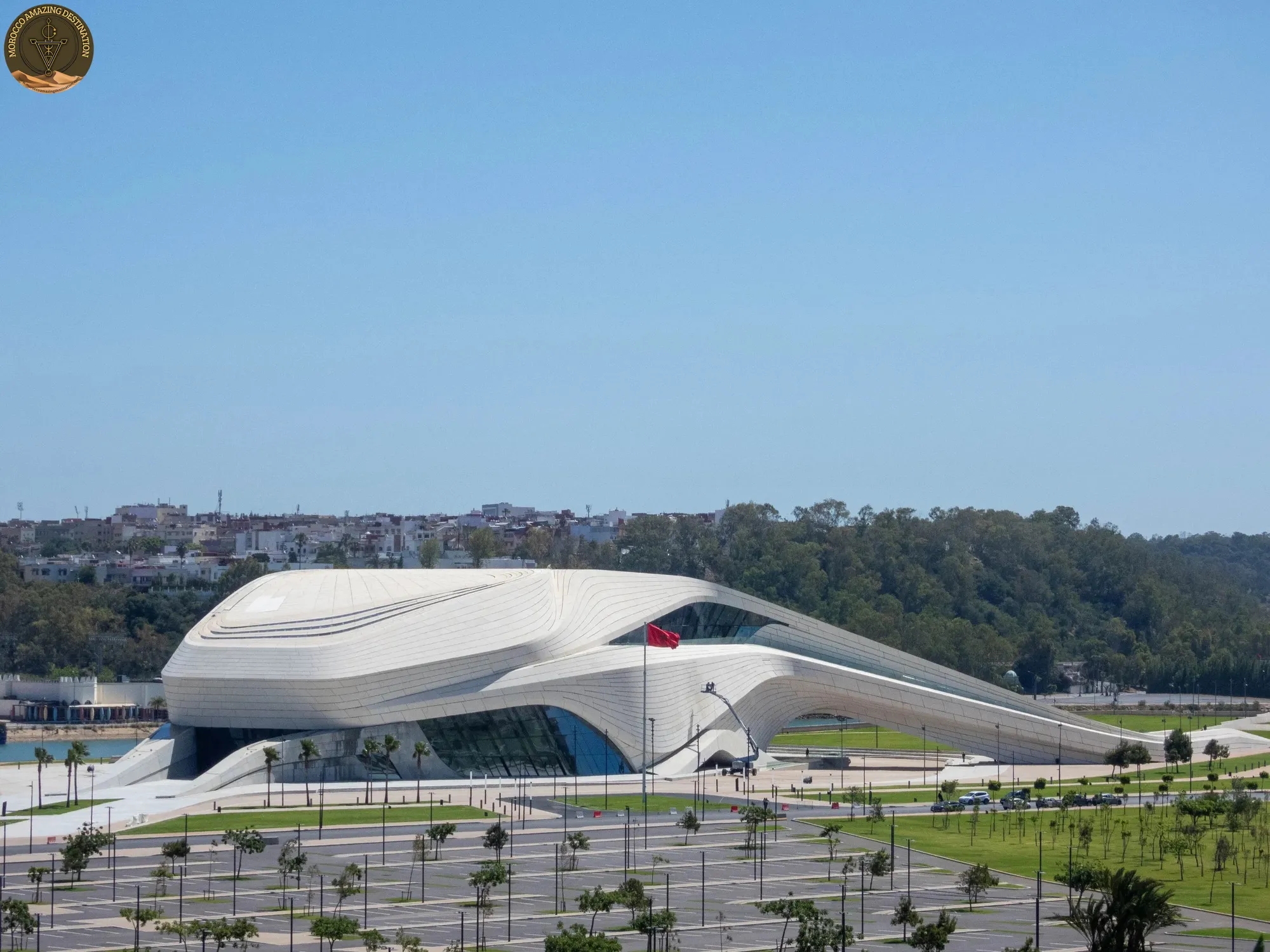
From the Hassan Tower esplanade, a short walk downstream brings you to a white form that leans out over the Bouregreg. The Royal Theatre of Rabat occupies the left bank between the capital and Salé, roughly 500 m from the tower, and it is the building locals point to when they want to show you what the city is doing now.
Zaha Hadid drew it as her last commission. Her studio finished the work after her death, and the building opened to the public only recently, after standing complete and unused for years. In this guide, we will break down what the building is, what each of its three stages seats, and how to build an evening around it.
A Curtain of White Above the Bouregreg
Grand Theatre de Rabat is the name on the original drawings, and taxi drivers still use it. The building is the Royal Theatre of Rabat now, and the rename did not touch the silhouette: a long white shell rising off the riverbank, folding over the entrance in one unbroken curve.
The best first look is from the water side. Walk the bridge towards Salé and turn around, or take the corniche path on the Rabat side, and the building reads as a single line of white with the water moving under it. From there the shell looks wider than it does from the road, and the approach ramp disappears into the fold.
Up close the surface is plain white, and the interest sits in the fold above the entrance rather than in applied ornament. Come at dusk: the panels hold the last light and the white takes on the colour of the sky.
Zaha Hadid’s Last Commission, Completed by Her Studio
Hadid was born in Baghdad and studied at the Architectural Association in London. Her first completed building was the Vitra Fire Station, and she became the first woman to win the Pritzker Prize. The Zaha Hadid Rabat story starts with a single commission: King Mohammed VI asked her studio to design a national theatre for the capital.
She died in Miami aged 65, before the building opened. The practice she left behind, led by Patrik Schumacher, carried the design through construction and through the years the finished shell sat closed. More than fifteen years passed between her first drawings and the first audience.
Three Stages, One Riverbank
Each of the three stages behaves differently on the night.
- Grand auditorium: 1,821 seats across tiers and boxes, built for a full orchestra and for amplified voice. The opening programme put 76 musicians and 40 choristers on this stage, conducted by Dina Bensaïd.
- Petit Théâtre: 170 seated, about 250 standing, the room for chamber music, spoken word and smaller formats.
- Open-air amphitheatre: 7,000 on the river side, used for the biggest nights of the year.
The programming leans Moroccan. The opening run alone brought together around 100 Moroccan artists, the Orchestre Philharmonique du Maroc and the Orchestre Symphonique Royal, and mixed Western classical with Andalusian classical and contemporary Moroccan composition. The Royal Theatre of Rabat Foundation runs the house, with Princess Lalla Hasnaa as its chair.
Programmes change through the season, so check the calendar before you plan a night around the theatre.
Before You Book: Dress, Doors and Cameras
The house enforces its rules at the door, and the dress code is the one that catches people out.
- Attire: the house asks for proper dress and refuses jeans, shorts, beachwear, flip-flops and beach sandals outright. Trousers and closed shoes are the safe choice.
- Timing: exterior doors open two hours before curtain and close ten minutes before it. Auditorium doors shut five minutes before the start.
- What stays outside: no food, no drink, no water bottles. Phones go on silent.
- Cameras: photography, video and audio recording are prohibited unless the organiser authorises it.
- Daytime visits: the building opens 09:00-18:00 on days without an evening performance. Access to the auditorium depends on the programme, so check before you go.
Parking is not a problem, with 736 spaces under and beside the building. There is a gift shop, and a restaurant on the fourth floor with two terraces over the river. Ticket prices vary by show.
An Evening in Rabat Around the Theatre
The theatre sits inside a walkable stretch of the capital, so a night around a curtain time takes little planning. The forecourt is an easy walk from the river and a short taxi ride from the medina. Eat on the Rabat side of the river after the show, or cross to Salé for a busier late dinner and walk back over the bridge.
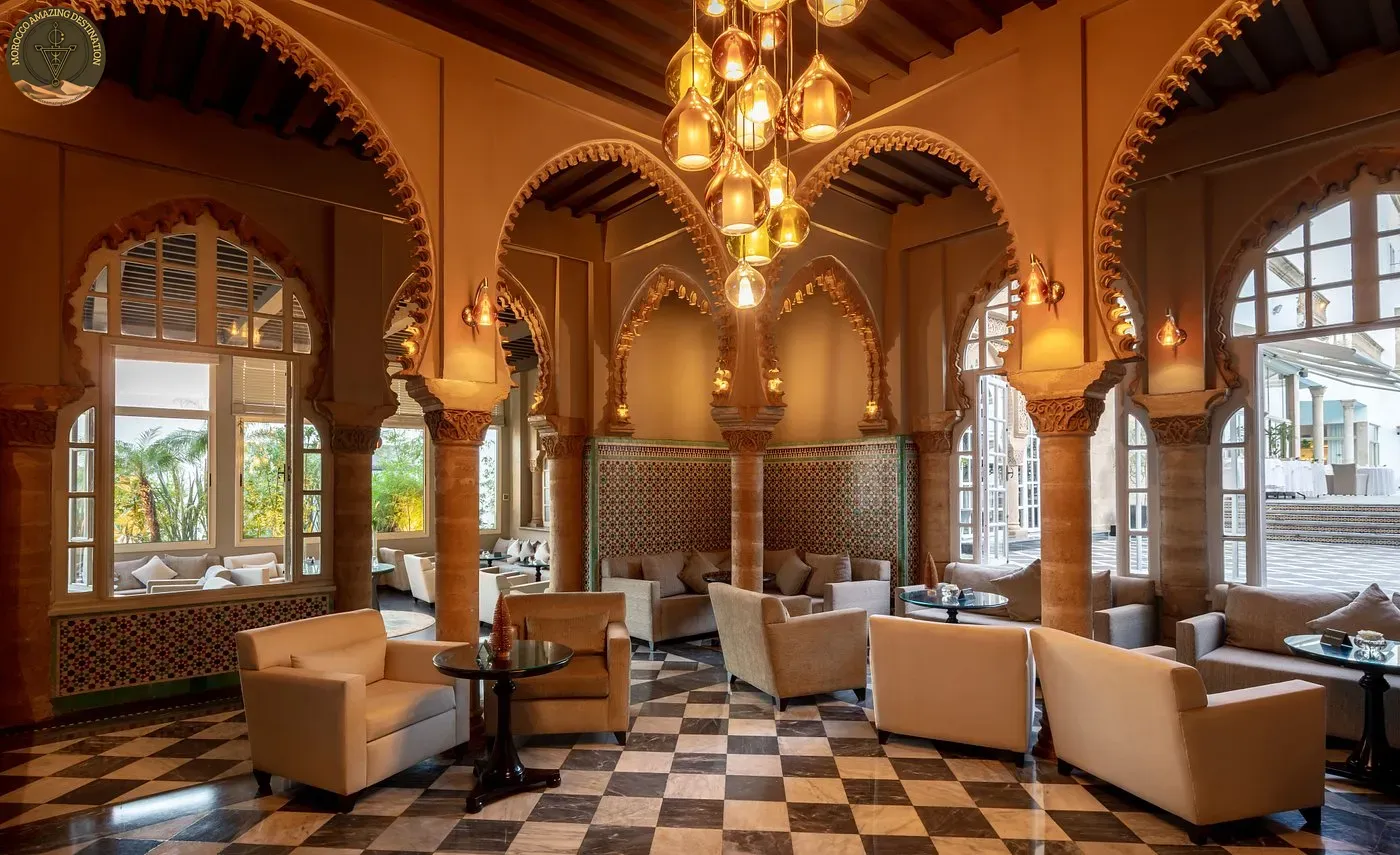
For things to do in Rabat at night, the evening runs like this: the Hassan Tower esplanade while it is still light, then the performance, then a late dinner near the medina. After the show the corniche is calm and the bridge is lit. If you want the older layers of the city in the same trip, our guide to Rabat’s older architecture covers the Almohad esplanade, Chellah and the kasbah.
Our 8-day imperial cities and desert tour from Casablanca sleeps in Rabat on its first night, which leaves that evening free if the calendar lines up.
We can customize a tour to match your needs - design your perfect itinerary
If you found this helpful, add us as your preferred source on Google.
Frequently Asked Questions
Can you visit the Royal Theatre of Rabat without seeing a show?
Yes. On days without an evening performance the building opens from 09:00 to 18:00. Access to the auditorium depends on that week's programme, so confirm it with the house before you travel. The foyer, the terraces and the exterior are the reliable parts of a daytime visit.
What is the dress code at the Royal Theatre of Rabat?
The house asks for proper attire and refuses jeans, shorts, beachwear, flip-flops and beach sandals. Trousers and closed shoes are the safe choice for any performance. There is no jacket requirement, but door staff apply the rule without exceptions.
How many seats does the Royal Theatre of Rabat have?
The main auditorium holds 1,821 seats, the Petit Théâtre holds 170 seated or about 250 standing, and the open-air amphitheatre takes 7,000. Those three rooms are the whole house, and each one is programmed separately. Check which stage your ticket is for before you book.
Did Zaha Hadid see the Royal Theatre of Rabat finished?
No. Hadid died in Miami aged 65 before the building opened, and her studio completed it under Patrik Schumacher. More than fifteen years passed between her first drawings and the first public performance. The design is hers; the delivery was the team's.
Ready for an Adventure?
Have questions? Feel free to contact us using the form below. We're here to help!