
· Travel · 6 min read
Ouirgane Morocco: Guide to a High Atlas Village Base
Ouirgane Morocco is a Berber village at 1,000 m and a slow base for the High Atlas. Plan the souk, the drive, the beds and the walks.
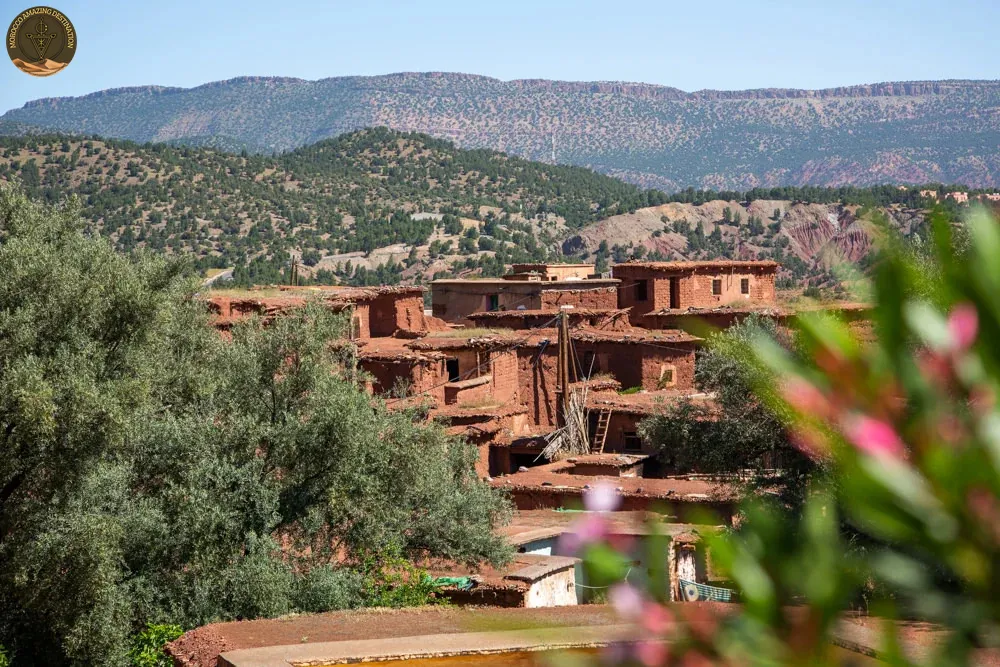
Ouirgane Morocco is a Berber village at roughly 1,000 m inside Toubkal National Park, and it is the kind of Atlas stop you settle into instead of driving through. Marrakech lies 60 to 65 km north, the road climbs through olive and walnut country, and the village is a thin ribbon of red clay houses along the Nfis, on the eastern bank of the reservoir.
This guide covers what the village is, the two roads down from Marrakech, the Thursday souk, where to sleep and what Ouirgane lacks, and the walks that start at the door.
A Berber Village at 1,000 m in Toubkal National Park
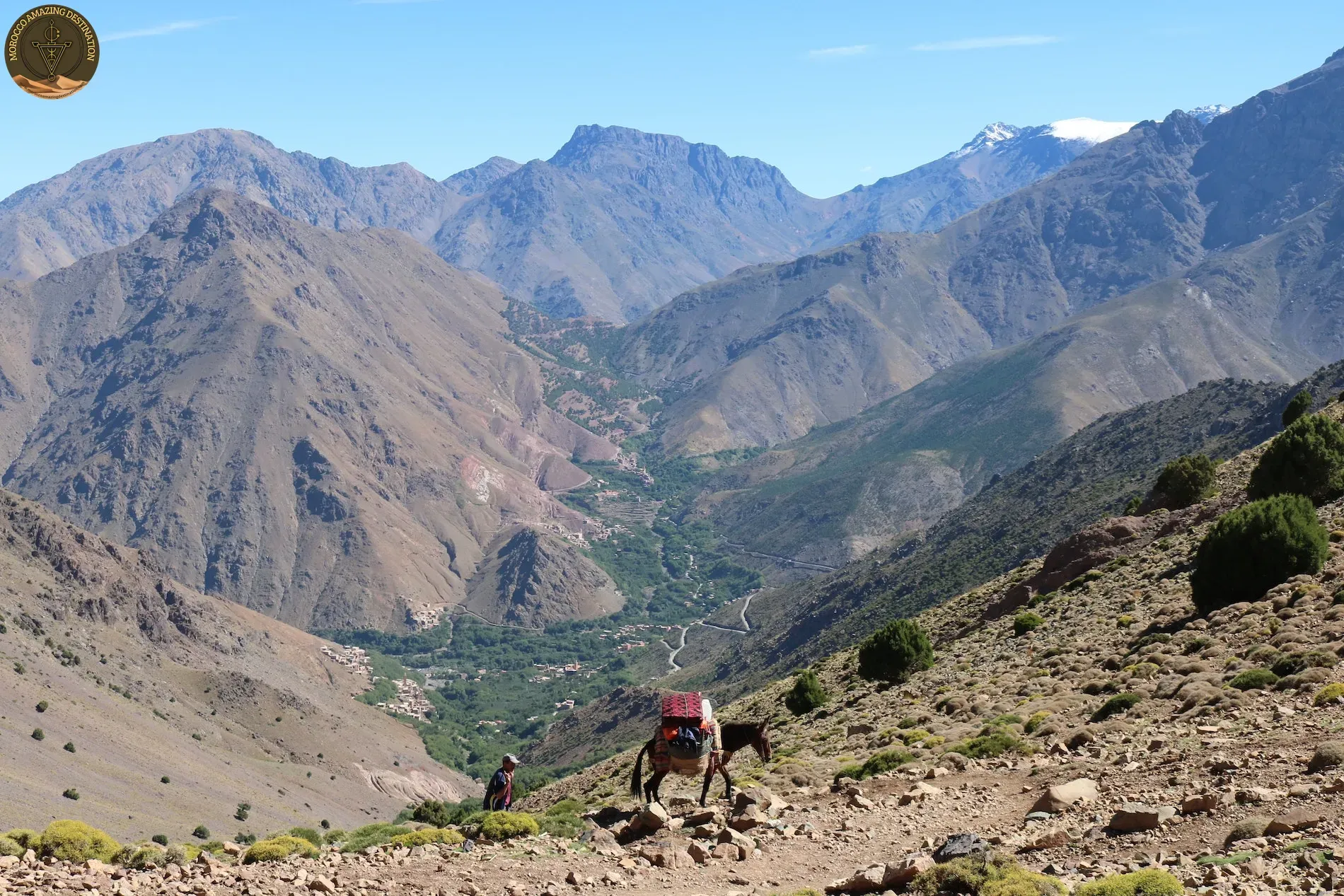
Toubkal National Park, Morocco’s first, protects about 380 square km of High Atlas. Jbel Toubkal stands above the valley to the south at 4,167 m. The commune around the village held about 7,700 people in roughly 1,830 households at the last census, a population spread thin across a slope of hamlets.
Houses here are red clay and stone, and daily life still turns on the communal bread ovens and the irrigation channels. Terraced plots carry barley, alfalfa, onion and potato, while plum, fig, almond, carob, walnut and olive trees line the water. Every channel in this Ouirgane High Atlas village has its turn and a household behind it.
The reservoir below the village is held back by the Yacoub el Mansour dam, built to supply Marrakech. Its shoreline swings hard between seasons and can be mud flats by a dry spring. The older reservoir at Lalla Takerkoust lies downstream, and the Tin Mal mosque sits 20 to 25 minutes south, covered in our Tin Mal guide.
The Drive from Marrakech into the Atlas
The drive is 60 to 65 km and takes 1h15 to 1h30, longer if the city exit is slow. The usual road runs by Tahanaout and Asni, about 47 km to Asni and 14 km more to the village, and the last stretch is the twistiest.
The second road goes by Amizmiz. It is emptier and redder, and the better drive if you are not the one at the wheel. Buses and shared taxis will get you to Asni, where you change to a local taxi.
Fill the tank in Marrakech or at Asni, because there is no pump in the valley. Heavy rain can damage the Amizmiz road and the dirt tracks, and snow shuts the Asni to Imlil road higher up, though the village itself rarely sees any. A shared grand taxi from Marrakech costs around 40 EUR equivalent for the whole car, indicative rather than fixed.
The Thursday Souk Is a Village Morning
The Ouirgane Thursday souk sets up along the village road and is finished in an hour. Produce, household goods, tools, clothing, some livestock and Berber pottery change hands, then the vans load and the road turns back into a road. Come in the morning, because by midday it is over.
There are no souvenirs and no ticket, and many of the women selling have walked down from the higher hamlets or arrived by donkey. Ask before you photograph anyone, keep your dress modest, and carry cash, since there is no ATM in the valley.
Asni on a Saturday runs the big regional market about 20 minutes away, and the Tuesday souk at Amizmiz is the market town for this side of the Atlas, and neither one is staged for visitors.
Where to Stay in Ouirgane, and What the Village Lacks
Where to stay in Ouirgane comes down to garden guesthouses, small country hotels and a handful of eco-lodges, some with pools. Most hold 4 to 20 rooms. Half-board is the norm because independent restaurants number two or three, so dinner usually comes with the bed. Weekends fill when Marrakech empties into the valley, and midweek in winter some places simply close.
What the village lacks is worth knowing before you book:
- There is no ATM or bank, so bring the cash you need for the whole stay.
- There is no petrol station and no pharmacy in the village, and the nearest hospital is in Asni or Marrakech.
- Shops are limited, Wi-Fi is uneven, and Berber and French come before English, which is mostly spoken inside the lodges.
Ouirgane was among the communes hit by the Al Haouz earthquake. Several properties have rebuilt and reopened, others stayed shut, so confirm opening status directly before you book, and expect building work around the village.
Walks from the Door and the Atlas Seasons
The classic walk is a loop through five hamlets, Ouirgane, Tikhfist, Agouni and their neighbours, on mule tracks through orchards. Allow 3 to 4 hours at a slow pace with lunch in a Berber house, and take a local guide for roughly 30 to 40 EUR, which is worth it at the path junctions.
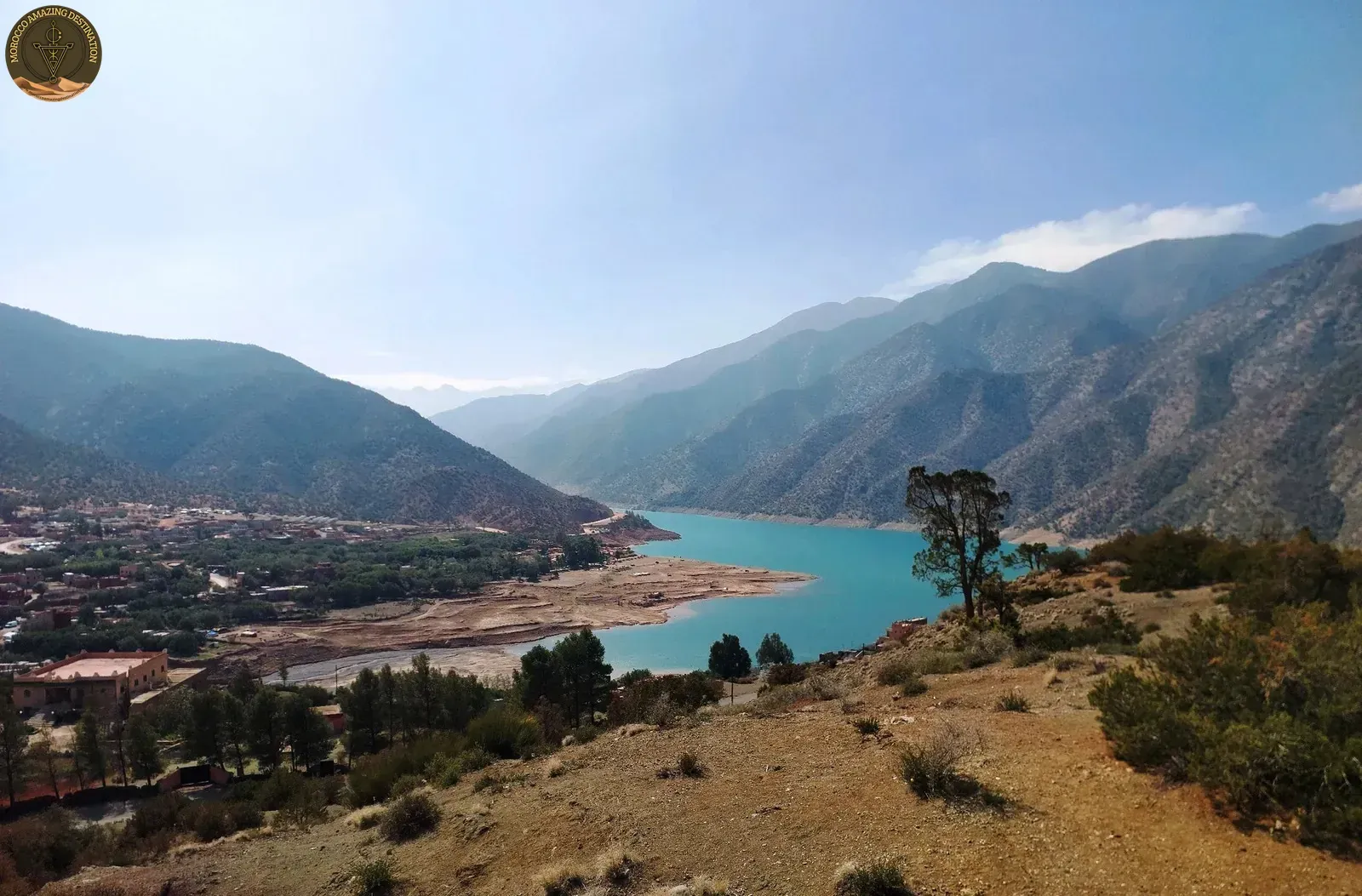
- The reservoir and dam viewpoint is flat, 1 to 2 hours along the shore and the road above, where herons, storks and migrants gather.
- The salt pans at Marigha, 4 to 6 km northeast, are shallow basins fed by saline springs, and the salt is sold back in the village.
- The Azzadene day trip drives to Tassa Ouirgane and Azerfsane, then climbs 8.5 km and about 500 m to Tizi Oussem at 1,900 m, 2h15 up and 5 hours round trip. Our Azzaden valley trek covers the longer version.
On foot, the walk to Tin Mal along the Nfis takes 2 to 3 hours each way, a time worth confirming locally; the mosque is under restoration, so check access. Wildflowers come from late March to May. From mid-September to November the days run clear, and the olive harvest starts in November. Summer is 5 to 8 C cooler than Marrakech, and winter is mild by day and cold and wet at night, with snow above 2,000 m.
One night covers the souk and one walk. Three nights let you add the reservoir, the salt pans and the Azzadene day without rushing.
Neither itinerary stops in Ouirgane, and both open and close in Marrakech, so a village night fits at either end: the 10-day Morocco tour from Marrakech or the 9-day Morocco tour from Marrakesh.
We can customize a tour to match your needs - design your perfect itinerary
If you found this helpful, add us as your preferred source on Google.
Frequently Asked Questions
Is Ouirgane worth staying in, or only a stop on the road?
It rewards a stay. The village has guesthouses, a Thursday market and walks that start at the door, and the reservoir and orchards make it the gentlest base on the Marrakech side of the High Atlas.
What day is the Ouirgane souk?
Thursday, in the morning only. Stalls line the village road with produce, tools, clothing and some livestock, and the market is usually over within an hour. Asni holds its big market on Saturdays and Amizmiz on Tuesdays.
How do you get to Ouirgane from Marrakech?
By road, 60 to 65 km south, which takes 1h15 to 1h30 by car. The usual route is via Tahanaout and Asni, and a second road comes in by Amizmiz. Buses and grand taxis reach Asni, where you change to a local taxi.
What does Ouirgane not have?
No ATM or bank, no petrol station, no pharmacy and no hospital, and Wi-Fi is uneven. Bring cash, fill the tank in Marrakech or Asni, and carry any medication you need. The nearest hospital is in Asni or Marrakech.
Ready for an Adventure?
Have questions? Feel free to contact us using the form below. We're here to help!