· Travel · 10 min read
Must-See in Essaouira: Top Attractions & What Not to Miss
Discover the must-see in Essaouira from the UNESCO medina to the Skala ramparts. A complete guide to Essaouira's top attractions, hidden gems, and insider tips for an unforgettable coastal escape.
Essaouira is unlike any other city in Morocco. Where Marrakech pulses with chaotic energy and Fes feels like stepping into a medieval labyrinth, Essaouira breathes — slowly, deeply, with the rhythm of Atlantic waves crashing against its ancient ramparts. If you are planning a trip to the Moroccan coast, knowing the must-see in Essaouira is your ticket to experiencing a city that has enchanted travelers, artists, and musicians for centuries.
This guide walks you through every essential sight, hidden corner, and unforgettable experience that makes Essaouira one of Morocco’s most beloved destinations.
Why Essaouira Belongs on Your Morocco Itinerary
Essaouira, formerly known as Mogador, sits on Morocco’s Atlantic coast about two and a half hours west of Marrakech. Its UNESCO-listed medina is a masterpiece of 18th-century military architecture, designed by a French engineer who gave the city its distinctive grid layout — a rarity in Moroccan old towns. The result is a medina that feels open, walkable, and impossibly photogenic.
But Essaouira is more than its postcard looks. It is a working fishing port, a haven for windsurfers and kitesurfers, a hub for Gnaoua music, and home to some of the finest artisan workshops in the country. The constant ocean breeze carries the scent of grilled sardines and salt, while seagulls circle above bright blue fishing boats bobbing in the harbor.
Whether you are here for a day trip from Marrakech or a week-long coastal escape, this guide to the must-see in Essaouira attractions ensures you do not miss a thing.
Top Must-See Attractions in Essaouira
These are the sights that define the city — the ones you will tell friends about, the ones that will fill your camera roll, and the ones that capture Essaouira’s singular spirit.
The Medina (UNESCO World Heritage Site)
The Essaouira Medina is where your exploration begins and where you will want to lose yourself for hours. Unlike the famously disorienting medinas of Marrakech and Fes, Essaouira’s old city was built on a rational grid — wide enough for carts, bright enough for photographs, and gentle enough for aimless wandering.
Whitewashed walls with cobalt-blue trim line every street. Artisan workshops spill onto the sidewalks: woodcarvers shaping fragrant thuya wood, silversmiths crafting intricate Berber jewelry, and painters capturing the city’s distinctive light. Duck into small art galleries, pause at a spice shop to inhale saffron and cumin, and let the medina reveal itself at its own pace.
Pro tip: The medina comes alive in the late afternoon when the golden light turns every wall into a canvas. This is when local photographers flock to the narrow alleys for the best shots.
Skala du Port (The Port Bastion)
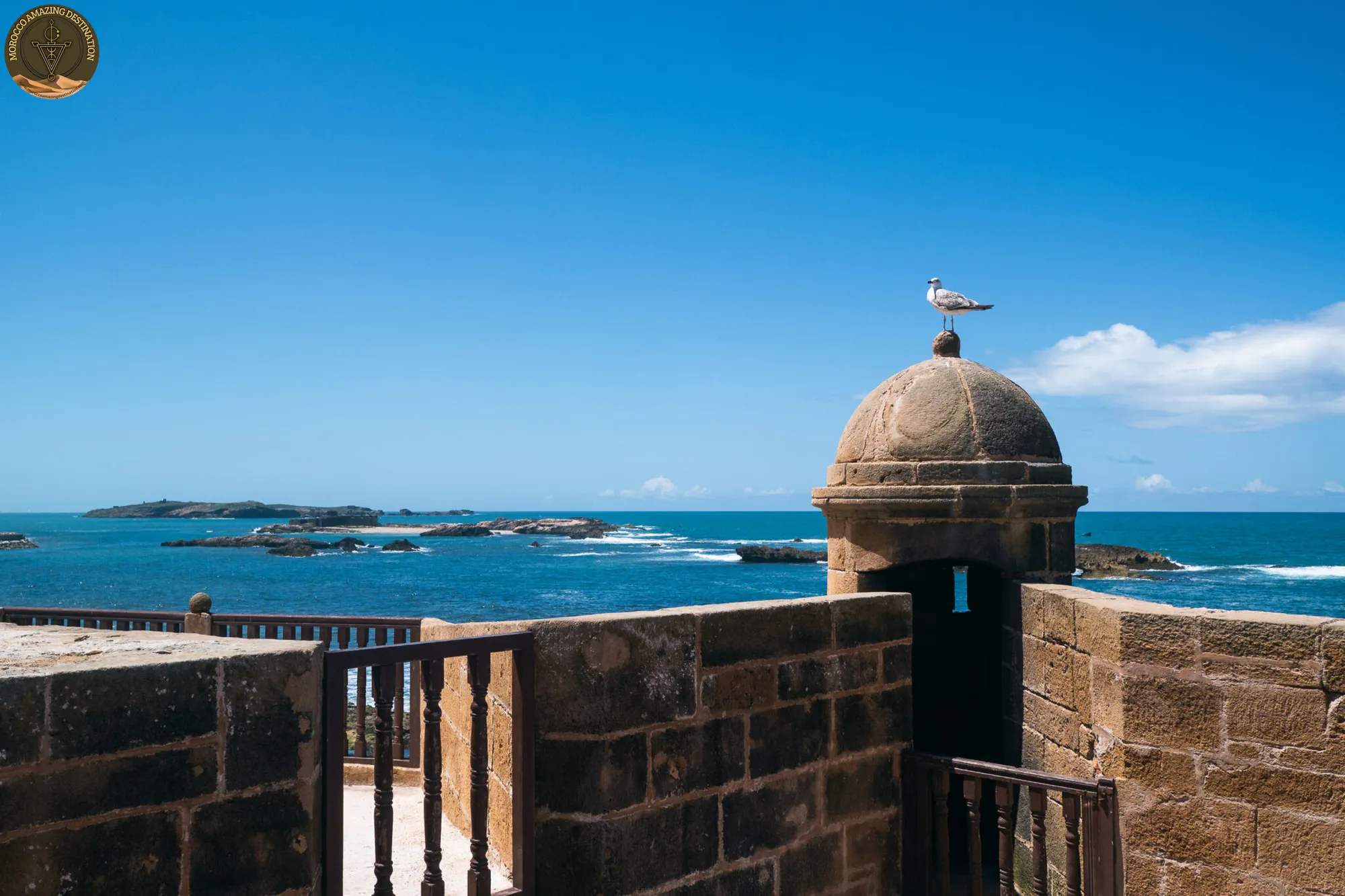
If there is one single view that defines the must-see in Essaouira, it is the panorama from Skala du Port. This 18th-century sea bastion — complete with rows of brass cannons pointing toward the Atlantic — overlooks the fishing port, Mogador Island, and the endless ocean beyond.
Time your visit for late afternoon. The sun drops behind the island, the sky turns shades of orange and pink, and the blue fishing boats return with the day’s catch. The ramparts are lined with old bronze cannons that have stood guard for centuries, and the scene is so cinematic it has been a filming location for productions including Game of Thrones.
Walk the full length of the rampart, watch fishermen mending their nets below, and breathe in the salt air. This is Essaouira at its most iconic.
Skala de la Ville (The City Ramparts)
Just a short walk from Skala du Port, Skala de la Ville offers a different but equally stunning perspective. While the port bastion faces the harbor, the city ramparts look out over the vast Essaouira beach and the crashing Atlantic surf.
Climb the stone steps, walk along the fortified walls, and take in the sweep of sand that stretches for miles to the south. On a clear day, you can see all the way to the distant foothills. The juxtaposition of the ancient stonework against the wild ocean is pure Essaouira — rugged, romantic, and unforgettable.
Moulay Hassan Square
The beating heart of Essaouira is Moulay Hassan Square, a vast open plaza where the medina meets the port. By day, it is a sun-drenched gathering spot where locals sip mint tea and children chase pigeons. By night, it transforms into a lively dining scene with seafood stalls grilling the day’s fresh catch.
This is where you sit and do nothing — and that is exactly the point. Order a nouss-nouss (half coffee, half milk) at one of the terrace cafes, watch the world go by, and soak in the laid-back rhythm that defines this city.
The Fishing Port
Just steps from Moulay Hassan Square, the Essaouira fishing port is a sensory spectacle and a photographer’s dream. Hundreds of bright blue wooden boats crowd the harbor, their nets spread out to dry on the quayside. Fishermen unload glistening sardines, sea bass, and sole straight onto wooden tables, where they are sold within minutes to restaurants and local buyers.
Visit in the morning to see the boats heading out to sea, or in the late afternoon when the day’s catch comes in. The air is thick with the smell of salt, fish, and sea — it is gritty, real, and absolutely essential to understanding Essaouira’s soul.
Essaouira Beach
Stretching for miles to the south of the medina, Essaouira Beach is a vast expanse of golden sand that offers something for everyone. The consistent trade winds that give Essaouira its nickname — the Wind City of Africa — also make it one of the world’s premier destinations for windsurfing and kitesurfing.
If water sports are not your thing, the beach is perfect for long walks, camel rides at sunset, or simply sprawling on the sand with a book. The northern end near the port is livelier; walk south and the crowds thin out, leaving you with nothing but ocean and sky.
The Mellah (Jewish Quarter)
Tucked into the northern edge of the medina, the Essaouira Mellah is a poignant reminder of the city’s once-thriving Jewish community, which at its peak made up nearly half of Essaouira’s population. The narrow streets of the Mellah still bear traces of that heritage — Stars of David carved into doorframes, former synagogues, and the distinctive architectural style of Jewish-Moroccan homes with their street-level shops and upstairs living quarters.
The Bayt Dakira (House of Memory) museum, housed in a beautifully restored former family home, tells the story of Jewish-Muslim coexistence in Essaouira through photographs, artifacts, and oral histories. It is a quiet, moving space that adds deep cultural context to any visit.
Sidi Mohamed Ben Abdallah Museum
For a deeper dive into the region’s history and culture, the Sidi Mohamed Ben Abdallah Museum is well worth an hour of your time. Housed in a restored 19th-century riad within the medina, the museum displays a rich collection of local artifacts including traditional Berber jewelry, musical instruments, ancient pottery, woodwork, and historical photographs of Essaouira through the ages.
The building itself — with its central courtyard, carved cedar ceilings, and intricate zellige tilework — is as much an attraction as the exhibits it holds.
Hidden Gems & Unforgettable Essaouira Experiences
Beyond the headline attractions, the real magic of the must-see in Essaouira often lies in the experiences and lesser-known corners.
Argan Oil Cooperatives
The countryside around Essaouira is home to Morocco’s argan trees — a species found nowhere else on Earth. Visiting a local argan oil cooperative is a chance to see Berber women cracking argan nuts by hand and pressing them into the liquid gold that fuels Moroccan cuisine and cosmetics. Many cooperatives welcome visitors for free tours and tastings, and buying directly supports the women who produce it.
The Gnaoua Sound
Essaouira is the spiritual home of Gnaoua music, a hypnotic fusion of African, Berber, and Islamic traditions rooted in the rituals of formerly enslaved sub-Saharan peoples. If your visit coincides with the annual Gnaoua World Music Festival, you are in for one of Africa’s most extraordinary cultural events. Even if not, you can often hear Gnaoua musicians performing in the medina’s squares and cafes, their deep bass rhythms and clacking krakebs (metal castanets) creating a trance-like atmosphere.
Thuya Wood Workshops
Essaouira is famous for its thuya wood — a fragrant, richly grained hardwood from a tree native to the region. Walking through the medina, you will see and smell the workshops where artisans transform raw thuya burls into polished boxes, chess sets, and furniture. Ask a craftsman to show you his work; many are happy to explain their craft and the generations of tradition behind it.
Practical Tips for Visiting Essaouira
How to Get There
Essaouira has its own small airport with flights from a few European cities, but most visitors arrive by road. The drive from Marrakech takes roughly two and a half hours on a well-maintained highway. Regular buses and shared taxis also connect Essaouira with Marrakech, Agadir, and Casablanca.
How Long to Stay
- One day: Cover the medina, Skala du Port, the port, and grab a seafood lunch. It is a whirlwind but you will get the essence.
- Two days: The ideal minimum. Add Skala de la Ville, the Mellah, a relaxed beach afternoon, and a sunset drink on the ramparts.
- Three or more days: Now you are really living. Add the museum, an argan cooperative visit, a hammam, and perhaps a kitesurfing lesson or a cooking class.
What to Wear
Essaouira is more relaxed than inland cities, but modesty is still appreciated. Light layers are your best friend — the sun is warm, but the wind can be surprisingly cool, especially in winter and evenings. A windbreaker or light jacket is essential no matter the season.
Where to Eat
The seafood is the star here. For the full experience, head to the fish stalls near the port, where you pick your fish from the ice and they grill it on the spot. For a sit-down meal, try one of the port-side restaurants serving grilled sardines, calamari, and sea bass with views over the fishing boats.
Experience Essaouira with a Guided Tour
The best way to experience everything this coastal gem has to offer is with a thoughtfully planned itinerary. Our 8-Day Morocco Tour: Marrakech, Sahara Desert & Essaouira Adventure combines the best of the coast with the magic of the Sahara — from the dramatic dunes of Merzouga to the blue-and-white streets of Essaouira, this is the ultimate Moroccan journey.
If you want to take your trip even deeper, our 9 Days Morocco Tour from Marrakesh: Sahara Desert, Essaouira & Cultural Highlights adds extra time to explore the cultural and natural wonders at a more relaxed pace, with more time dedicated to Essaouira’s medina, coast, and surrounding argan country.
Every tour is fully customizable to match your pace, interests, and travel style. Whether you want to add extra days on the coast, combine Essaouira with the imperial cities, or design something entirely unique, we will craft the perfect itinerary for you. Get in touch to design your tailor-made Morocco tour and let us bring your dream trip to life.
If you found this helpful, add us as your preferred source on Google.
Frequently Asked Questions
What are the absolute must-see places in Essaouira?
The essential must-see in Essaouira are the UNESCO-listed Medina with its blue-and-white streets, the Skala du Port and Skala de la Ville ramparts, Moulay Hassan Square, the bustling fishing port, Essaouira Beach, and the historic Mellah (Jewish Quarter). Together they capture the city's coastal charm, rich history, and vibrant artisan culture.
How many days do you need to see the best of Essaouira?
Two full days is the sweet spot for experiencing the must-see in Essaouira without rushing. One day lets you cover the medina, ramparts, and port, while two days gives you time for the beach, a hammam, the Mellah, and sunset at Skala du Port. If you love slow travel, three days allows for day trips to nearby argan cooperatives and coastal villages.
Is Essaouira worth visiting as a day trip from Marrakech?
Absolutely. Essaouira is one of the most popular day trips from Marrakech — the drive takes about two and a half hours each way. A day trip lets you experience the medina, port, and ramparts, but staying overnight is highly recommended to enjoy sunset on the ramparts, fresh seafood dinners, and the relaxed evening atmosphere.
When is the best time to visit Essaouira?
Spring (March to May) and autumn (September to November) offer the most pleasant weather, with mild temperatures and manageable winds. Summer is perfect for escaping Marrakech's heat since Essaouira's coastal breeze keeps temperatures comfortable. Winter is cooler but still enjoyable; just pack a windbreaker — Essaouira is known as the Wind City of Africa for a reason.
Ready for an Adventure?
Have questions? Feel free to contact us using the form below. We're here to help!