· Food · 5 min read
Moroccan Bread Types: Khobz, Msemen, Baghrir Traveller Guide
A traveller's guide to Moroccan bread types: khobz, msemen and baghrir, plus where to taste each one in Morocco.
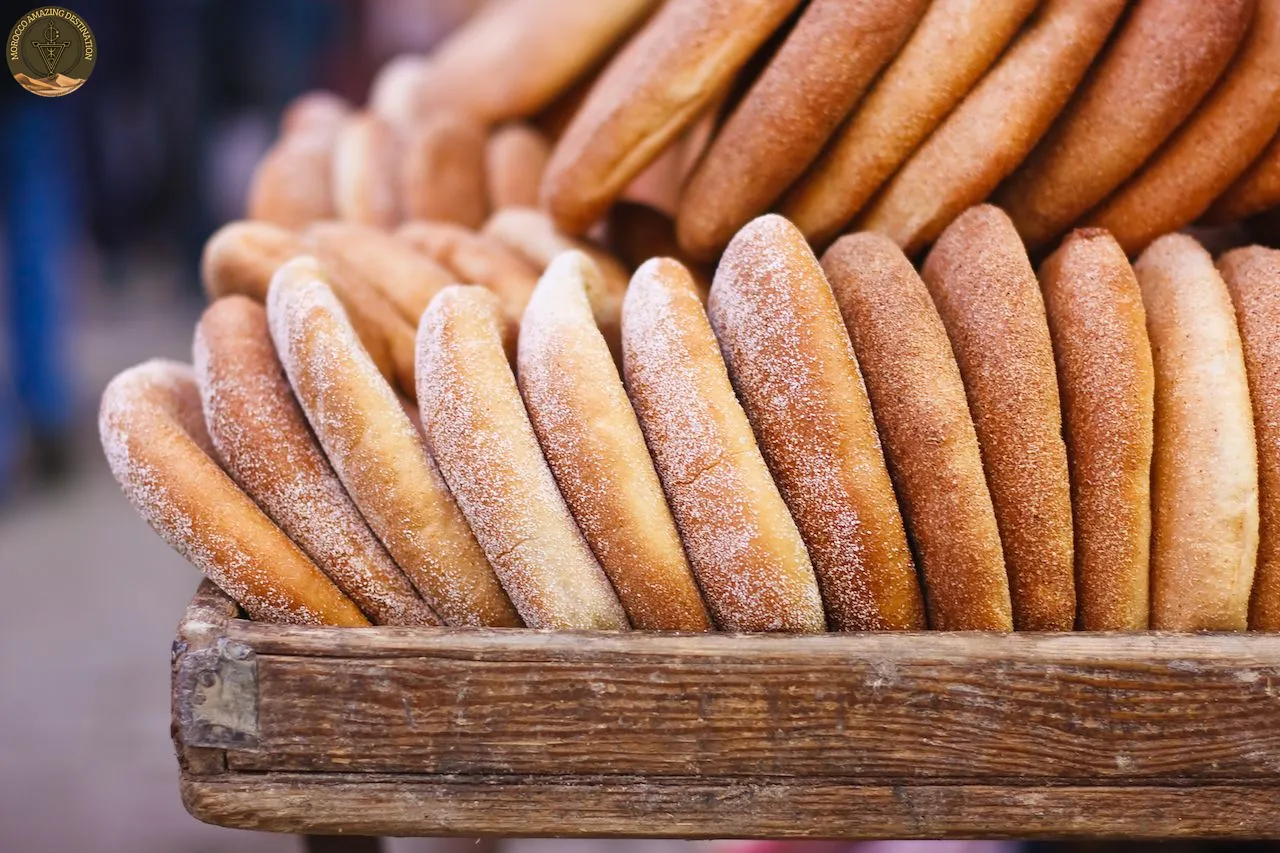
Bread reaches the table before anything else in Morocco, and it keeps showing up all day. This guide to moroccan bread types walks through the loaves you will actually meet, from round khobz at lunch to thin griddle breads at breakfast. Most travellers taste five or six kinds in a week without even trying.
In this guide, we will break down what each bread is, how it is baked, and how you can taste it on your trip.
Khobz: the everyday loaf
khobz is the round daily loaf that sits next to nearly every lunch and dinner in Morocco. Bakers slash the top before baking, which gives a firm crust and a soft centre. At the table, pieces are torn by hand and used to scoop tagine, couscous, and salads.
Many neighbourhoods still bake at a communal farran, a wood-fired oven shared by local households. Families drop off trays of shaped dough in the morning, each marked so the baker knows the owner. If you pass one with a local guide, step inside for a look at how the morning batch comes out.
Wheat is the standard flour, though you will also find barley and bran versions with a denser bite. Ask for the barley version if you spot a darker loaf on the counter. Whatever the grain, khobz is eaten fresh the same day. Stale pieces go into soups or salads, so little goes to waste.
Msemen, baghrir and harcha at breakfast
Breakfast belongs to the griddle. msemen is the square layered bread cooks stretch, fold with oil, and press on a hot plate until the outside turns crisp. Vendors sometimes call the same bread rghaif, so one name on a menu board and the other from your waiter mean the same thing. Both spellings point to the same crisp, foldable square.
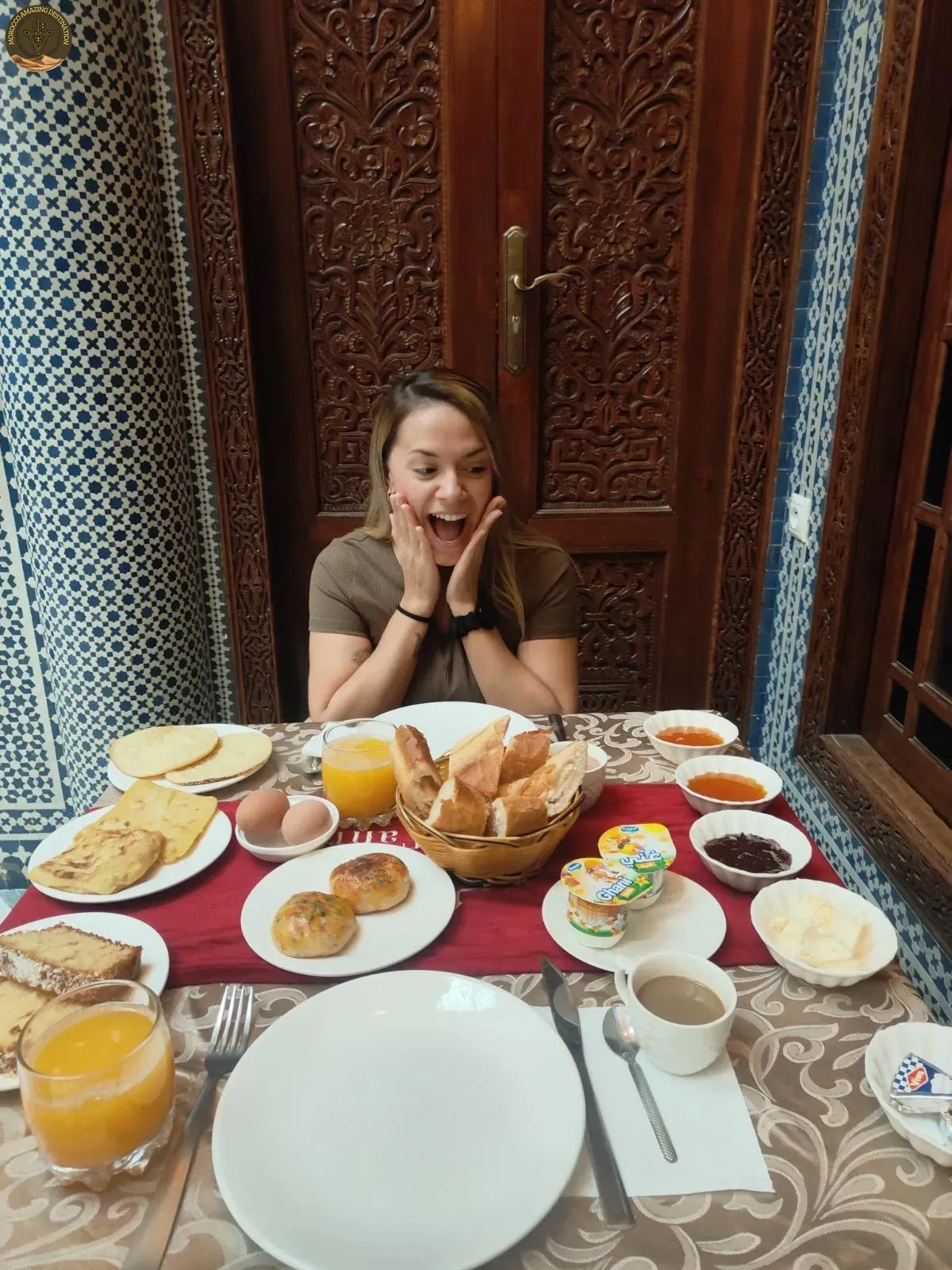
- Baghrir: spongy semolina pancake cooked on one side, with holes that soak up butter and honey.
- Harcha: small semolina cakes with a crumbly bite, common in the Middle Atlas, served warm with honey or cheese.
- How to order: ask for a mixed breakfast and you will usually get two or three kinds with mint tea.
baghrir deserves its own mention because travellers often confuse it with a pancake from home. The batter uses semolina, the top stays pale and full of holes, and the bottom turns golden. It shows up at breakfast and during evening meals in the fasting month, always with something sweet on top. A drizzle of olive oil works too, the way many locals take it.
Batbout and krachel with afternoon tea
Later in the day the breads turn soft and small. batbout is a puffy pan-cooked bread that opens into a pocket, filled with cheese or egg at snack stalls. Plain versions come with breakfast too, but stuffed ones belong to the afternoon. Fillings stay simple, which keeps the bread itself the star.
- Batbout: pocket bread for sweet or savoury fillings, from honey to fried egg.
- Krachel: round sesame buns with anise, mildly sweet, made for dunking in tea.
- Where to find them: neighbourhood bakeries and tea houses from mid-afternoon onward.
Krachel leans sweet with sesame and anise, and pairs well with mint tea rather than a full meal. Sweet versions with honey or soft cheese come out first, while savoury ones follow the lunch crowd. Buy a small bag warm and share it at a cafe terrace. Your driver-guide knows which bakery in each town pulls them out at the right hour.
Medfouna and tanourt in the south
medfouna is the stuffed bread of the southeast, often called Berber pizza by guides. A thin wheat crust wraps minced meat with onion and spices, then bakes until crisp. The town of Rissani treats it as a full meal, and camps near Merzouga serve it before drum circles start.
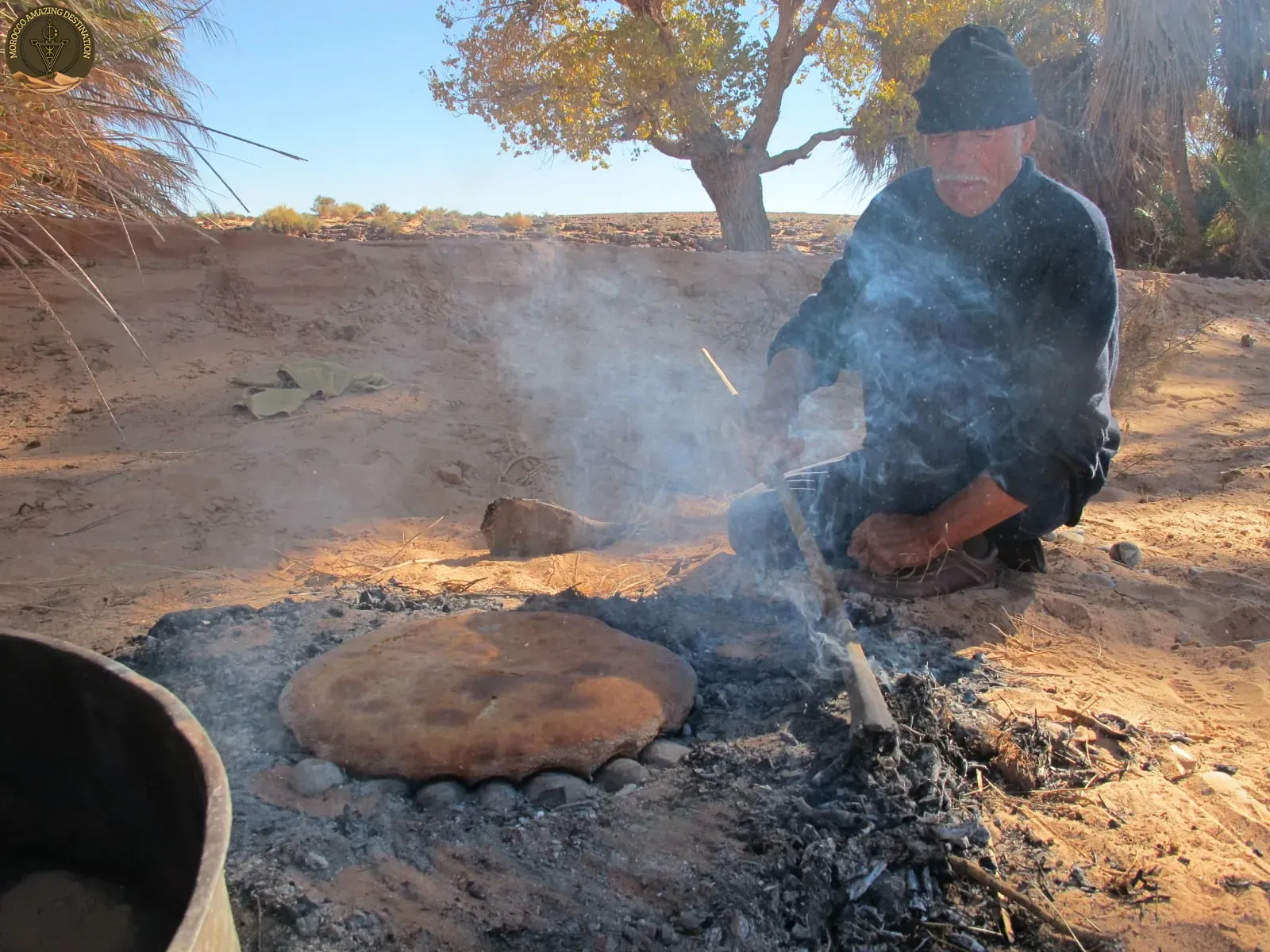
Tanourt, also called tafarnout in Amazigh areas, bakes flat against the wall of a clay oven. Women shape the dough by hand and press it onto the hot surface, where it puffs in minutes. It usually reaches the table beside slow-cooked tagines. Watching it puff against the clay wall is half the fun.
If your route crosses the southeast, plan lunch in Rissani for medfouna and watch a bakery fire tanourt the same day. Bakers slide the stuffed round into a wood-fired oven and turn it once so both sides crisp evenly. Both taste best straight from the heat with nothing fancy beside them.
How to taste bread on your trip
You do not need a food tour to eat well here, though a guide helps you find the right bakery at the right hour. Order the full cooked breakfast at least once, say yes when bread lands beside your tagine, and stop at markets when you smell fresh baking. Tear, fold, scoop, and repeat, since extra bread keeps arriving until the plates are cleared.
- Mornings: order msemen and baghrir with honey, soft cheese, and mint tea.
- Midday: let khobz do the work and scoop your tagine instead of asking for cutlery.
- Afternoon: pick up krachel or stuffed batbout for tea time at a terrace cafe.
- South: time medfouna for lunch in Rissani or dinner at your desert camp.
For the dishes these breads go with, read our Moroccan cuisine guide and what to eat in Morocco before you go. Together they cover the tagines, couscous, and street snacks you will scoop, wrap, and dunk.
Travellers who want bakery stops built into the route often pick our 4-Day Morocco Desert Tour from Marrakech, which crosses Rissani and Merzouga, or the 7-Day Morocco Tour from Fes for markets and the desert in one loop. Our local team shapes each day around your pace, with hand-picked riads and a private driver throughout.
We can customize a tour to match your needs - design your perfect itinerary
If you found this helpful, add us as your preferred source on Google.
Frequently Asked Questions
What is khobz in Morocco?
Khobz is the round daily loaf served with most lunches and dinners. Moroccans tear it by hand and use it to scoop tagine, couscous, and salads. Many neighbourhoods bake it in a shared wood-fired farran oven.
What is the difference between msemen and baghrir?
Msemen is a square, layered bread fried on a griddle until crisp outside and soft inside. Baghrir is a spongy semolina pancake cooked on one side only, full of small holes that soak up butter and honey.
Which Moroccan bread do you eat with tagine?
Khobz. The round loaf works as both bread and cutlery: tear a piece, fold it, and scoop. Most restaurants place it on the table without you asking.
What is medfouna?
Medfouna is a stuffed bread from the southeast, especially Rissani near Merzouga. A thin crust wraps minced meat, onion, and spices, then bakes until crisp. It is served as a full meal.
Ready for an Adventure?
Have questions? Feel free to contact us using the form below. We're here to help!