· Travel · 6 min read
Midelt Minerals and Fossils: Morocco's Mining Country
Midelt minerals and fossils: vanadinite from Mibladen, lead from Aouli, apples from the Moulouya. What this High Atlas town really produces.
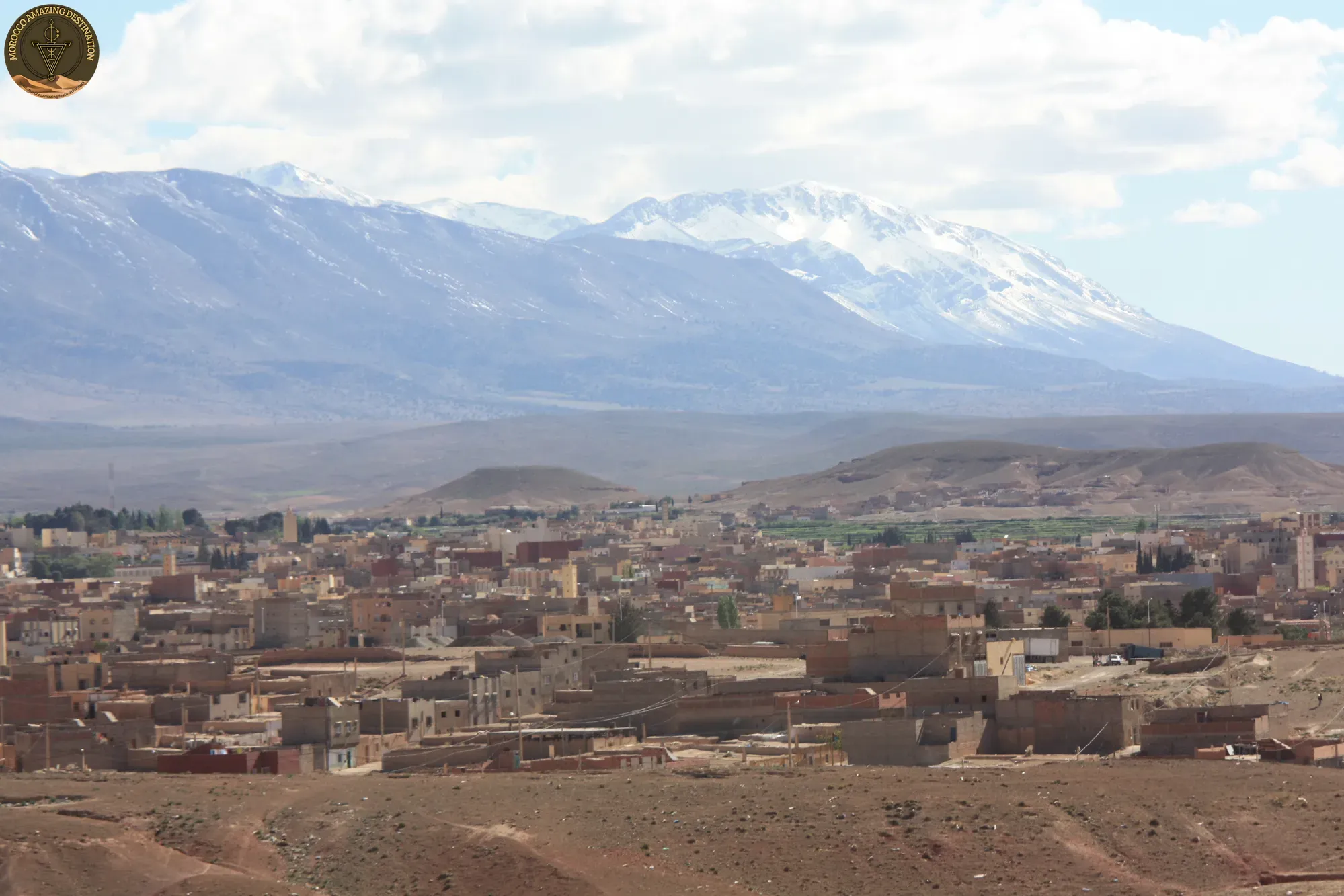
Most travellers meet Midelt through a windscreen. The town sits on the N13 between the Middle Atlas and the High Atlas, about 200 km south of Fes, and the car usually stops just long enough for coffee. Midelt minerals are the reason to get out. Midelt, Morocco is one of the few places where a high-street shop, a working mining district and a museum-grade crystal sit within half an hour of each other.
The town stands at 1,508 m on the High Moulouya plateau, in Drâa-Tafilalet, and has been the capital of its own province since the administrative reform that created it. There is no grand medina here. What Midelt has is ground that pays: lead, zinc, barite, gypsum and vanadinite, plus a fossil trade and the apples that now outrank all of it in volume. This guide covers what the district actually produces, why Mibladen vanadinite ends up in museums, and how to tell local Midelt fossils from stock trucked in from the Anti-Atlas.
Where Midelt Sits Between Two Atlases
Midelt occupies a high plateau where the Middle Atlas runs into the eastern High Atlas. North of town the N13 climbs through Ifrane and Azrou, roughly 200 km and three and a half hours from Fes. South of it the road crosses the Tizi n’Talghomt pass and drops towards Errachidia, about 140 km away. Midelt is the last service town before the Tafilalet, which is why it became a market before it became a mining centre.
Jurassic limestones and dolomites lie folded and faulted under these plains, and mineral-rich fluids pushed lead and zinc into cracks in the rock. Where those metals met vanadium, oxygen and chlorine near the surface, vanadinite formed. Where the limestone kept its marine shells, the result is the ammonite beds that give the region its second resource.
The Mines That Built the Town
Modern Midelt is a twentieth-century creation, grown around a French administrative post and then accelerated by what came out of the ground. The Aouli mine, in a canyon north-east of town, was a lead-zinc vein system. It employed several hundred men and produced tens of thousands of tonnes of lead and zinc before the big operations wound down. Mibladen, about 25 km by road, was the lead field that made the district famous.
Neither site is a museum. At Aouli the old buildings stand in a rocky valley, unsupervised, and the galleries are dangerous. Look from the surface and stay out of the shafts.
What the district produces, or produced:
- Lead and zinc: the base metals that funded the town, mined at Aouli and Mibladen.
- Barite: barium sulphate, the white matrix that makes Mibladen specimens so photogenic.
- Gypsum: still quarried for local use, along with aggregate for construction.
- Vanadinite: no longer an ore target, now dug by small artisanal teams for collectors.
Why Mibladen Vanadinite Is World-Famous
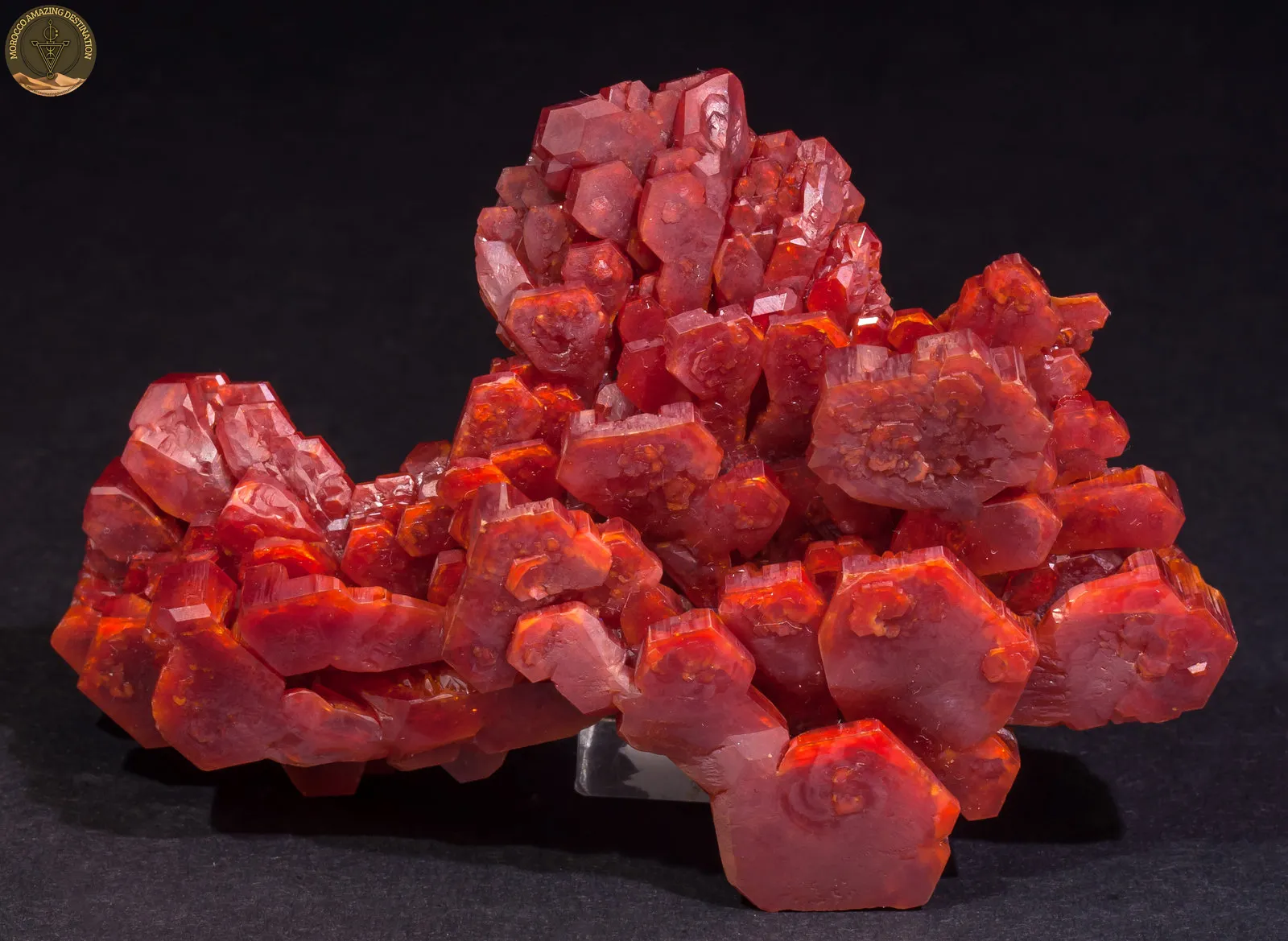
Vanadinite is lead chlorovanadate, a soft and unusually heavy mineral that crystallises in hexagonal barrels and tablets. At Mibladen it comes out red to orange, usually 3 to 10 mm across, sitting on white barite or brown goethite. Collectors treat the district as the reference locality for the species, so a “Mibladen” label means that shape, colour and contrast.
Two workings carry most of the reputation. The ACF mine was the deep one, reaching about 100 m, and the Coud’a sector opened later and produced some of the finest plates. The same field also yields cerussite, wulfenite, anglesite, galena and calcite, so a single cabinet tells the whole oxidation story.
If you are buying:
- Read the matrix: white barite under red crystals is the classic Mibladen signature.
- Check the heft: the lead content makes vanadinite heavier than it looks.
- Ask about repairs: assembled and repaired pieces are normal, hiding it is not.
- Handle it gently: hardness 3 means it scratches easily, and acid or an ultrasonic bath will strip it.
Midelt Fossils: Local Beds, Mixed Shelves
Walk the main street and you will see fossils everywhere: ammonites, orthoceras, trilobites, shark teeth. Not all of them come from here. Traders bring much of the stock, especially the trilobites, up from the Anti-Atlas hundreds of kilometres south. The town’s fossil reputation rests on the Jurassic ammonites of the surrounding limestone, including the beds near the Tizi n’Talghomt pass. The other local product is the small cut and polished ammonites sold by the handful.
That makes Midelt fossils a smaller, quieter trade than the fossil-marble industry of Erfoud. Erfoud cuts limestone into tables and basins; Midelt is the mineral town where the good material is crystalline. If fossils are your main interest, our guide to Erfoud, Morocco’s fossil capital covers the workshops and the ethics of buying there.
One rarer story ties the two resources together: vanadinite occasionally crystallises straight onto marine fossils, coating bivalves, gastropods and crinoid stems, a collector curiosity that only this district produces.
Apples, Workshops and When to Stop
The resource that now defines the province is not underground. Midelt Province grows roughly nine tenths of Morocco’s apples, mostly on smallholder orchards strung along the Moulouya and its side valleys. The “Midelt apple” is a labelled local product built on Golden Delicious, Starking and Starkimson varieties, and the national apple fair fills the town with cooperatives every autumn. Spring brings blossom; late summer brings crates along the roadside.
Plan the stop:
- Two to four hours: town-centre mineral shops, a workshop or two, and the old ksour on the edge of the modern grid.
- A full day: add the Cirque de Jaffar, about 30 km out on tracks that need a proper vehicle and local advice.
- Overnight: the Jbel Ayachi massif tops 3,700 m and deserves an early start, not a lunch break.
- Best seasons: spring for blossom, autumn for harvest and the fair; winter snow can close the passes.
Midelt makes more sense once you know what comes out of it. Two private routes pass through on day one, the 3-day desert tour from Fes to Merzouga and the 4-day desert tour from Fes to Marrakech, and both can add a mineral stop.
Design your perfect itinerary and we will build the day around what you want to see, from the Mibladen dumps to the apple stalls.
If you found this helpful, add us as your preferred source on Google.
Frequently Asked Questions
What minerals is Midelt known for?
Midelt is the gateway to the High Moulouya lead field. The district produces lead, zinc, barite and gypsum, and Mibladen is the world reference locality for red vanadinite, usually found on white barite.
Are there fossils in Midelt?
Yes, mainly Jurassic ammonites from the limestone around town and near the Tizi n'Talghomt pass. Many fossils sold in Midelt shops, especially trilobites, are brought in from the Anti-Atlas further south.
Is Midelt worth stopping for?
Yes, if minerals interest you. Two to four hours covers the town-centre shops and a workshop. Add a full day for the Cirque de Jaffar, or sleep over before climbing in the Jbel Ayachi massif.
Can you buy minerals and fossils in Midelt?
Yes. Check whether a piece has been repaired or assembled, ask where it was found, and ask your guide about current export rules before taking anything unusual home.
Ready for an Adventure?
Have questions? Feel free to contact us using the form below. We're here to help!